Forma&ve 
Assessment 
SFU 
Student 
Teachers 
Sept 
3, 
2014 
Faye 
Brownlie 
ww.slideshare.net
The teeter totter 
kids curriculum 
kids
Assessment 
OF 
Learning 
Purpose: 
repor&ng 
out, 
summa&ve 
assessment, 
measuring 
learning 
Audience: 
parents 
and 
public 
Timing: 
end 
Form: 
leFer 
grades, 
rank 
order, 
percentage 
scores
Assessment 
FOR 
Learning 
Purpose: 
guide 
instruc&on, 
improve 
learning 
Audience: 
teacher 
and 
student 
Timing: 
at 
the 
beginning, 
day 
by 
day, 
minute 
by 
minute 
Form: 
descrip&ve 
feedback
Formative assessment 
to determine students 
strengths and needs 
Brownlie, Feniak & Schnellert, 2006; Earl & Katz, 2005; Schnellert, Butler & Higginson, in press; Smith & Wilhelm, 2006
Dylan 
Wiliam, 
2011 
Pedagogy 
trumps 
curriculum 
How 
you 
are 
taught 
is 
more 
important 
than 
what 
you 
are 
taught…greatest 
impact 
on 
learning
• “… 
numbers 
do 
not 
take 
the 
place 
of 
a 
teacher’s 
professional 
judgment.” 
(7) 
• Cameron 
& 
Gregory
• “…people 
rarely 
ques&on 
whether 
percentage 
scores 
truly 
represent 
student 
learning…. 
Teacher 
judgment 
is 
replaced 
by 
the 
‘power 
of 
the 
points’” 
(86) 
• Marzano 
as 
quoted 
in 
Cameron 
& 
Gregory 
(10)
• How 
do 
you 
find 
&me 
in 
each 
lesson 
to 
provide 
1:1 
feedback 
for 
all 
students?
1. Learning Intentions 
“Students 
can 
reach 
any 
target 
as 
long 
as 
it 
holds 
s&ll 
for 
them.” 
-­‐ 
S&ggins 
-­‐ 
2. Criteria 
Work 
with 
learners 
to 
develop 
criteria 
so 
they 
know 
what 
quality 
looks 
like. 
3. Questions 
Increase 
quality 
ques&ons 
to 
show 
evidence 
of 
learning 
Whose 
ques&ons? 
Who 
answers?
4. 
Descrip5ve 
Feedback 
Timely, 
relevant, 
personal, 
descrip&ve 
feedback 
contributes 
most 
powerfully 
to 
student 
learning! 
5. Self & Peer Assessment 
Involve 
learners 
more 
in 
self 
& 
peer 
assessment 
6. Ownership 
Have 
students 
understand 
their 
learning 
and 
Communicate 
It 
with 
others
Descriptive Feedback 
• What’s 
working? 
• What’s 
not? 
• What’s 
next?
“The 
most 
powerful 
single 
influence 
enhancing 
achievement 
is 
feedback”-­‐Dylan 
Wiliam 
• Quality 
feedback 
is 
needed, 
not 
just 
more 
feedback 
• Students 
with 
a 
Growth 
Mindset 
welcome 
feedback 
and 
are 
more 
likely 
to 
use 
it 
to 
improve 
their 
performance 
• Oral 
feedback 
is 
much 
more 
effec&ve 
than 
wriFen 
• The 
most 
powerful 
feedback 
is 
provided 
from 
the 
student 
to 
the 
teacher
You’re 
born 
with 
what 
you 
got… 
and 
that’s 
that! 
It’s 
fixed......or…
Your 
brain 
is 
like 
a 
muscle. 
It 
can 
grow…and 
will 
with 
prac&ce
Gallery Walk – writing lesson 
• In 
groups, 
3 
things 
that 
count 
in 
wri&ng 
• Made 
class 
list 
and 
categorized 
• Focus 
on 
meaning 
and 
thinking 
– Descrip&on 
– Imagina&on 
– Detail 
– Knowledge 
– Focus 
– Ideas 
– Passion 
– Intriguing 
– Understandable
• Place 
a 
series 
of 
pictures 
around 
the 
room 
• Students 
in 
groups 
of 
3 
• 3 
minutes 
per 
picture 
• Chat 
– 
How 
could 
you 
use 
this 
image 
in 
your 
wri&ng? 
• Build 
on 
one 
another’s 
thinking 
• View 
4 
pictures
• Eagle 
Dreams 
-­‐ 
WriKen 
by 
Sheryl 
McFarlane 
; 
Illustra5ons 
by 
Ron 
Lightburn; 
• ISBN: 
1-­‐55143-­‐016-­‐9
• Task: 
a 
piece 
of 
wri&ng, 
choose 
your 
genre, 
think 
about 
the 
criteria 
• As 
you 
are 
moving 
to 
your 
desk, 
keep 
walking 
un&l 
you 
have 
your 
first 
line 
in 
your 
head 
• 12 
minutes 
to 
write 
• As 
students 
are 
wri&ng, 
move 
about 
the 
room, 
underlining 
something 
powerful 
(criteria 
connected) 
in 
each 
person’s 
wri&ng
• Each 
student 
shares 
what 
was 
underlined 
• Listen 
to 
hear 
something 
you 
might 
want 
to 
borrow 
• As 
a 
class, 
decide 
on 
why 
each 
was 
underlined 
• Create 
the 
criteria: 
– Words 
that 
are 
WOW 
– Details 
that 
showed 
emo&on 
or 
made 
a 
picture 
– Hook 
– 
first 
line 
made 
me 
want 
to 
keep 
reading
Sample 
1 
One 
cool 
and 
breezy 
night, 
in 
a 
prairie, 
a 
boy 
sat 
on 
the 
rim 
of 
his 
open 
window, 
looking 
out 
at 
the 
moon, 
hoping 
for 
something 
to 
happen. 
Amer 
a 
few 
minutes, 
he 
went 
back 
in 
and 
close 
his 
window. 
Robin 
sighed. 
“I 
wished 
my 
life 
has 
more 
excitement 
in 
it, 
“ 
he 
thought, 
before 
he 
turned 
off 
his 
light 
and 
went 
to 
bed, 
he 
took 
one 
quick 
look 
at 
his 
kite 
on 
top 
of 
his 
bed 
that’s 
shaped 
like 
an 
eagle, 
and 
went 
to 
sleep.
Sample 
3 
Once 
upon 
a 
&me 
there 
was 
a 
boy 
that 
was 
facinated 
by 
eagles, 
he 
asked 
his 
father 
to 
get 
one 
for 
him 
but 
he 
couldn’t. 
Then 
the 
boy 
thought 
about 
a 
way 
to 
catch 
an 
eagle 
and 
then 
a 
different 
gender 
one 
for 
more 
eagles. 
Delighted 
with 
his 
idea 
that 
he 
thought 
of 
last 
night, 
he 
con&nued 
his 
plan. 
He 
put 
3 
fishes 
in 
the 
open 
with 
a 
trap, 
and 
went 
to 
bed. 
Then 
he 
heard 
a 
noise 
that 
sounded 
like 
an 
eagle. 
When 
he 
had 
checked 
the 
trap, 
he 
found 
an 
eagle 
that 
was 
in 
his 
trap. 
Happily 
jumping 
around, 
the 
eagle 
made 
him 
inspired 
to 
make 
a 
home 
for 
the 
eagle. 
He 
created 
a 
bond 
with 
the 
eagle. 
He 
remembered 
how 
much 
his 
father 
despised 
eagles. 
He 
lead 
the 
eagle 
to 
a 
secret 
place 
in 
the 
forest 
where 
his 
father 
never 
went. 
He 
came 
downstairs 
and 
his 
father 
was 
in 
a 
rage. 
He 
threatened 
to 
ground 
his 
son 
if 
he 
didn’t 
kill 
the 
eagles. 
Shocked, 
the 
boy 
asked 
why 
he 
told 
him 
so. 
The 
father 
said 
they 
…
Sample 
4 
At 
Sunday, 
the 
Ximing 
and 
his 
father 
mother 
go 
travel. 
On, 
Ximing 
say 
“I’m 
see 
a 
eagle!” 
His 
father 
and 
his 
mother 
is 
going 
to 
his. 
And 
his 
mother 
say 
“Oh, 
Help 
it!” 
OK. 
It 
was 
heal. 
OK. 
We 
are 
go 
back 
home! 
At 
home: 
Today 
is 
very 
funning. 
Because 
we 
are 
helpa 
eagle! 
I’m 
so 
happy 
now! 
Ximing 
is 
&me 
to 
eat 
a 
dinner 
say 
mother 
say 
…
• Kids 
can 
add/edit/con&nue 
to 
work 
• Set 
up 
for 
next 
class 
– Work 
on 
same 
criteria 
– Hear 
again, 
pieces 
that 
work 
– Move 
to 
where 
kids 
can 
iden&fy 
criteria 
in 
their 
own 
work 
and 
ask 
for 
help 
with 
criteria 
that 
are 
struggling 
with 
• Amer 
repeated 
prac&ce, 
students 
choose 
one 
piece 
to 
work 
up, 
edit, 
revise, 
and 
hand 
in 
for 
marking 
• Feedback 
is 
con&nuous, 
personal, 
&mely, 
focused
Intro 
to 
Circula&on 
– 
Gr. 
12 
Biology 
Natalie 
Burns, 
Burnaby 
Central 
The 
Challenge: 
– A 
hook 
– More 
discussion 
– Thinking 
more 
deeply 
about 
the 
content 
– Building 
community 
in 
the 
classroom
First 
Class 
– 
80 
minutes 
• I 
wonder 
pictures 
• Big 
idea 
– 
circula&on 
• 2 
minute 
quick 
write 
– 
what 
I 
remember 
• 20 
min. 
– 
alone 
or 
with 
a 
partner, 
terms 
– 
heart, 
blood, 
arteries, 
veins, 
capillaries, 
immune 
system, 
circulatory 
disorders 
– 
then 
mindmap 
• Connect 
to 
heart 
image 
• 10 
min. 
– 
lecture, 
3 
slides 
• 15 
min. 
-­‐ 
essen&al 
ques&ons 
– 
in 
groups, 
discuss 
each 
• Class 
discussion 
on 
essen&al 
ques&ons 
• Exit 
slip 
– 
1 
thing 
I 
remembered, 
2 
things 
I 
am 
excited 
to 
learn
What 
do 
you 
know 
about 
the 
circulatory 
system?
BCircula&on: 
An 
Overview 
•Blood 
vessels 
Circulatransport 
5on: 
An 
blood 
Overview 
around 
the 
body 
-­‐Arteries 
carry 
blood 
away 
from 
the 
heart 
-­‐Veins 
carry 
blood 
to 
the 
heart 
-­‐Capillaries 
allow 
for 
gas, 
nutrient 
and 
waste 
exchange 
between 
blood 
cells 
and 
body 
cells 
• ood 
vessels 
transport 
blood 
around 
the 
body 
- 
Arteries 
carry 
blood 
away 
from 
the 
heart 
- 
Veins 
carry 
blood 
towards 
the 
heart 
- 
Capillaries 
allow 
for 
gas, 
nutrient 
& 
waste 
exchange 
between 
blood 
cells 
and 
body 
cells
• The 
heart 
is 
responsible 
for 
pumping 
blood 
throughout 
your 
whole 
body 
-­‐There 
are 
chambers 
to 
separate 
oxygenated 
and 
deoxygenated 
blood 
-­‐The 
right 
side 
of 
the 
heart 
pumps 
blood 
to 
the 
lungs 
and 
the 
lem 
side 
of 
the 
heart 
pumps 
blood 
throughout 
the 
body
• Blood 
is 
made 
up 
of 
more 
than 
just 
red 
stuff! 
-­‐Most 
of 
blood 
is 
plasma 
(liquid) 
-­‐White 
blood 
cells 
help 
our 
immune 
system 
by 
figh&ng 
diseases 
-­‐Platelets 
allow 
our 
blood 
to 
clot 
-­‐Red 
blood 
cells 
carry 
O2 
& 
nutrients 
to 
cells, 
and 
CO2 
& 
waste 
away 
from 
cells
3 
Essen&al 
Ques&ons 
1. How 
cri&cal 
is 
a 
heart 
to 
the 
life 
of 
an 
organism? 
2. How 
do 
the 
differences 
between 
arteries 
and 
veins 
affect 
their 
jobs 
and 
their 
loca&on? 
3. Why 
must 
blood 
always 
be 
flowing?
Math 
Centres 
– 
gr. 
1/2 
Michelle 
Hikada 
• 4 
groups 
• 1 
with 
Michelle, 
working 
on 
graphing 
(direct 
teaching, 
new 
material) 
• 1 
making 
paFerns 
with 
different 
materials 
(prac&ce) 
• 1 
making 
paFerns 
with 
s&ckers 
(prac&ce) 
• 1 
graphing 
in 
partners 
(prac&ce)
• With 
your 
partner, 
choose 
a 
bucket 
of 
materials 
and 
make 
a 
bar 
graph. 
• Ask 
(and 
answer) 
at 
least 
3 
ques&ons 
about 
your 
graph. 
• Make 
another 
graph 
with 
a 
different 
material.
Resources 
• Grand 
Conversa,ons, 
Though2ul 
Responses 
– 
a 
unique 
approach 
to 
literature 
circles 
– 
Brownlie, 
2005 
• Student 
Diversity, 
2nd 
ed. 
– 
Brownlie, 
Feniak 
& 
Schnellert, 
2006 
• Reading 
and 
Responding, 
gr. 
4,5,&6 
– 
Brownlie 
& 
Jeroski, 
2006 
• It’s 
All 
about 
Thinking 
– 
collabora,ng 
to 
support 
all 
learners 
(in 
English, 
Social 
Studies 
and 
Humani,es) 
– 
Brownlie 
& 
Schnellert, 
2009 
• It’s 
All 
about 
Thinking 
– 
collabora,ng 
to 
support 
all 
learners 
(in 
Math 
and 
Science) 
-­‐ 
Brownlie, 
Fullerton 
& 
Schnellert, 
2011 
• Learning 
in 
Safe 
Schools, 
2nd 
ed 
– 
Brownlie 
& 
King, 
Oct., 
2011 
• Assessment 
& 
Instruc,on 
of 
ESL 
Learners, 
2nd 
ed 
– 
Brownlie, 
Feniak, 
& 
McCarthy, 
in 
press

SFU.formative assessment

  • 1.
    Forma&ve Assessment SFU Student Teachers Sept 3, 2014 Faye Brownlie ww.slideshare.net
  • 2.
    The teeter totter kids curriculum kids
  • 3.
    Assessment OF Learning Purpose: repor&ng out, summa&ve assessment, measuring learning Audience: parents and public Timing: end Form: leFer grades, rank order, percentage scores
  • 4.
    Assessment FOR Learning Purpose: guide instruc&on, improve learning Audience: teacher and student Timing: at the beginning, day by day, minute by minute Form: descrip&ve feedback
  • 5.
    Formative assessment todetermine students strengths and needs Brownlie, Feniak & Schnellert, 2006; Earl & Katz, 2005; Schnellert, Butler & Higginson, in press; Smith & Wilhelm, 2006
  • 6.
    Dylan Wiliam, 2011 Pedagogy trumps curriculum How you are taught is more important than what you are taught…greatest impact on learning
  • 7.
    • “… numbers do not take the place of a teacher’s professional judgment.” (7) • Cameron & Gregory
  • 8.
    • “…people rarely ques&on whether percentage scores truly represent student learning…. Teacher judgment is replaced by the ‘power of the points’” (86) • Marzano as quoted in Cameron & Gregory (10)
  • 9.
    • How do you find &me in each lesson to provide 1:1 feedback for all students?
  • 10.
    1. Learning Intentions “Students can reach any target as long as it holds s&ll for them.” -­‐ S&ggins -­‐ 2. Criteria Work with learners to develop criteria so they know what quality looks like. 3. Questions Increase quality ques&ons to show evidence of learning Whose ques&ons? Who answers?
  • 11.
    4. Descrip5ve Feedback Timely, relevant, personal, descrip&ve feedback contributes most powerfully to student learning! 5. Self & Peer Assessment Involve learners more in self & peer assessment 6. Ownership Have students understand their learning and Communicate It with others
  • 12.
    Descriptive Feedback •What’s working? • What’s not? • What’s next?
  • 13.
    “The most powerful single influence enhancing achievement is feedback”-­‐Dylan Wiliam • Quality feedback is needed, not just more feedback • Students with a Growth Mindset welcome feedback and are more likely to use it to improve their performance • Oral feedback is much more effec&ve than wriFen • The most powerful feedback is provided from the student to the teacher
  • 14.
    You’re born with what you got… and that’s that! It’s fixed......or…
  • 15.
    Your brain is like a muscle. It can grow…and will with prac&ce
  • 16.
    Gallery Walk –writing lesson • In groups, 3 things that count in wri&ng • Made class list and categorized • Focus on meaning and thinking – Descrip&on – Imagina&on – Detail – Knowledge – Focus – Ideas – Passion – Intriguing – Understandable
  • 17.
    • Place a series of pictures around the room • Students in groups of 3 • 3 minutes per picture • Chat – How could you use this image in your wri&ng? • Build on one another’s thinking • View 4 pictures
  • 21.
    • Eagle Dreams -­‐ WriKen by Sheryl McFarlane ; Illustra5ons by Ron Lightburn; • ISBN: 1-­‐55143-­‐016-­‐9
  • 22.
    • Task: a piece of wri&ng, choose your genre, think about the criteria • As you are moving to your desk, keep walking un&l you have your first line in your head • 12 minutes to write • As students are wri&ng, move about the room, underlining something powerful (criteria connected) in each person’s wri&ng
  • 23.
    • Each student shares what was underlined • Listen to hear something you might want to borrow • As a class, decide on why each was underlined • Create the criteria: – Words that are WOW – Details that showed emo&on or made a picture – Hook – first line made me want to keep reading
  • 24.
    Sample 1 One cool and breezy night, in a prairie, a boy sat on the rim of his open window, looking out at the moon, hoping for something to happen. Amer a few minutes, he went back in and close his window. Robin sighed. “I wished my life has more excitement in it, “ he thought, before he turned off his light and went to bed, he took one quick look at his kite on top of his bed that’s shaped like an eagle, and went to sleep.
  • 25.
    Sample 3 Once upon a &me there was a boy that was facinated by eagles, he asked his father to get one for him but he couldn’t. Then the boy thought about a way to catch an eagle and then a different gender one for more eagles. Delighted with his idea that he thought of last night, he con&nued his plan. He put 3 fishes in the open with a trap, and went to bed. Then he heard a noise that sounded like an eagle. When he had checked the trap, he found an eagle that was in his trap. Happily jumping around, the eagle made him inspired to make a home for the eagle. He created a bond with the eagle. He remembered how much his father despised eagles. He lead the eagle to a secret place in the forest where his father never went. He came downstairs and his father was in a rage. He threatened to ground his son if he didn’t kill the eagles. Shocked, the boy asked why he told him so. The father said they …
  • 26.
    Sample 4 At Sunday, the Ximing and his father mother go travel. On, Ximing say “I’m see a eagle!” His father and his mother is going to his. And his mother say “Oh, Help it!” OK. It was heal. OK. We are go back home! At home: Today is very funning. Because we are helpa eagle! I’m so happy now! Ximing is &me to eat a dinner say mother say …
  • 27.
    • Kids can add/edit/con&nue to work • Set up for next class – Work on same criteria – Hear again, pieces that work – Move to where kids can iden&fy criteria in their own work and ask for help with criteria that are struggling with • Amer repeated prac&ce, students choose one piece to work up, edit, revise, and hand in for marking • Feedback is con&nuous, personal, &mely, focused
  • 29.
    Intro to Circula&on – Gr. 12 Biology Natalie Burns, Burnaby Central The Challenge: – A hook – More discussion – Thinking more deeply about the content – Building community in the classroom
  • 30.
    First Class – 80 minutes • I wonder pictures • Big idea – circula&on • 2 minute quick write – what I remember • 20 min. – alone or with a partner, terms – heart, blood, arteries, veins, capillaries, immune system, circulatory disorders – then mindmap • Connect to heart image • 10 min. – lecture, 3 slides • 15 min. -­‐ essen&al ques&ons – in groups, discuss each • Class discussion on essen&al ques&ons • Exit slip – 1 thing I remembered, 2 things I am excited to learn
  • 34.
    What do you know about the circulatory system?
  • 35.
    BCircula&on: An Overview •Blood vessels Circulatransport 5on: An blood Overview around the body -­‐Arteries carry blood away from the heart -­‐Veins carry blood to the heart -­‐Capillaries allow for gas, nutrient and waste exchange between blood cells and body cells • ood vessels transport blood around the body - Arteries carry blood away from the heart - Veins carry blood towards the heart - Capillaries allow for gas, nutrient & waste exchange between blood cells and body cells
  • 36.
    • The heart is responsible for pumping blood throughout your whole body -­‐There are chambers to separate oxygenated and deoxygenated blood -­‐The right side of the heart pumps blood to the lungs and the lem side of the heart pumps blood throughout the body
  • 37.
    • Blood is made up of more than just red stuff! -­‐Most of blood is plasma (liquid) -­‐White blood cells help our immune system by figh&ng diseases -­‐Platelets allow our blood to clot -­‐Red blood cells carry O2 & nutrients to cells, and CO2 & waste away from cells
  • 38.
    3 Essen&al Ques&ons 1. How cri&cal is a heart to the life of an organism? 2. How do the differences between arteries and veins affect their jobs and their loca&on? 3. Why must blood always be flowing?
  • 40.
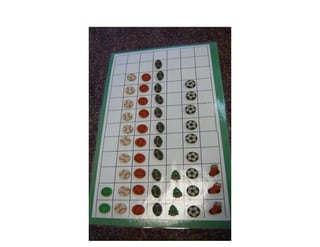
    Math Centres – gr. 1/2 Michelle Hikada • 4 groups • 1 with Michelle, working on graphing (direct teaching, new material) • 1 making paFerns with different materials (prac&ce) • 1 making paFerns with s&ckers (prac&ce) • 1 graphing in partners (prac&ce)
  • 41.
    • With your partner, choose a bucket of materials and make a bar graph. • Ask (and answer) at least 3 ques&ons about your graph. • Make another graph with a different material.
  • 45.
    Resources • Grand Conversa,ons, Though2ul Responses – a unique approach to literature circles – Brownlie, 2005 • Student Diversity, 2nd ed. – Brownlie, Feniak & Schnellert, 2006 • Reading and Responding, gr. 4,5,&6 – Brownlie & Jeroski, 2006 • It’s All about Thinking – collabora,ng to support all learners (in English, Social Studies and Humani,es) – Brownlie & Schnellert, 2009 • It’s All about Thinking – collabora,ng to support all learners (in Math and Science) -­‐ Brownlie, Fullerton & Schnellert, 2011 • Learning in Safe Schools, 2nd ed – Brownlie & King, Oct., 2011 • Assessment & Instruc,on of ESL Learners, 2nd ed – Brownlie, Feniak, & McCarthy, in press