Principals and Literacy
Coaches: Understanding
Quality Literacy Instruction
Brandon for the Southwest
Oct 7, 2019
Faye Brownlie
Learning Intentions
• I can use my data to view my class in terms of literacy strengths and
stretches.
• I can use this data to develop a plan to support the literacy development of
all my learners.
• I have a plan to improve my formative assessment practices.
• I have a better idea of ‘what counts’ in effective literacy instruction.
• Every Child, Every Day
• CR4YR
• Burkins and Yaris
assess
(What can my students do?)
re-assess analyze
(Is my teaching making a difference?) (What is missing?)
plan and implement
(What do I need to teach?)
(What is my teaching plan?)
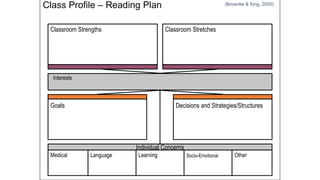
Class Profile – Reading Plan
Interests
Classroom Strengths Classroom Stretches
Individual Concerns
(Brownlie & King, 2000)
Goals Decisions and Strategies/Structures
Medical Language Learning Socio-Emotional Other
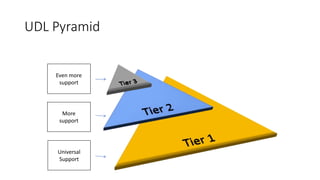
UDL Pyramid
Even more
support
More
support
Universal
Support
Who are your learners?
• Performance-based reading assessment
• Using performance standards
• Writing samples
• Using performance standards
• 1:1 reading conferences
• Choice text
• Assigned text
• Benchmarks or DRA
• Observation
• Conversation
• 1:1 and small group phonics and phonemic awareness tasks
• Work samples
What counts in effective literacy
instruction?
Teachers’ Reflections
• What made a difference for vulnerable learners
(CR4YR, 2012-2013)
• 1:1 support
• Relationship
• Choice
• Focus on meaning
Exploring the 2017 NAEP Reading Results:
Systemic Reforms Beat Simplistic Solutions
Literacy Leadership Brief, ILA, 2018
• Coordinate across the district and schools: curriculum, instruction,
assessment
• Structure: principal, curriculum leader, teacher leaders from each
school (principal, classroom teacher, support staff)
• Develop a shared buy-in from the teams
• Create a shared vision of the reader (the literate learner)
• Develop expectations along the way (performance standards)
• What would you see and hear in a high‐quality literacy classroom?
• What would the students be doing?
• What would the teacher be doing?
• Compare this with a partner. In teams of 4. What is common? What is
not? How do these ‘images’ reflect what matters most to you as a
community of educators?
• How does your vision align with the district’s vision?
• **Coherence counts when aiming for success for all students.

Quality Literacy Instruction

  • 1.
    Principals and Literacy Coaches:Understanding Quality Literacy Instruction Brandon for the Southwest Oct 7, 2019 Faye Brownlie
  • 2.
    Learning Intentions • Ican use my data to view my class in terms of literacy strengths and stretches. • I can use this data to develop a plan to support the literacy development of all my learners. • I have a plan to improve my formative assessment practices. • I have a better idea of ‘what counts’ in effective literacy instruction. • Every Child, Every Day • CR4YR • Burkins and Yaris
  • 3.
    assess (What can mystudents do?) re-assess analyze (Is my teaching making a difference?) (What is missing?) plan and implement (What do I need to teach?) (What is my teaching plan?)
  • 4.
    Class Profile –Reading Plan Interests Classroom Strengths Classroom Stretches Individual Concerns (Brownlie & King, 2000) Goals Decisions and Strategies/Structures Medical Language Learning Socio-Emotional Other
  • 6.
  • 7.
    Who are yourlearners?
  • 8.
    • Performance-based readingassessment • Using performance standards • Writing samples • Using performance standards • 1:1 reading conferences • Choice text • Assigned text • Benchmarks or DRA • Observation • Conversation • 1:1 and small group phonics and phonemic awareness tasks • Work samples
  • 9.
    What counts ineffective literacy instruction?
  • 10.
    Teachers’ Reflections • Whatmade a difference for vulnerable learners (CR4YR, 2012-2013) • 1:1 support • Relationship • Choice • Focus on meaning
  • 11.
    Exploring the 2017NAEP Reading Results: Systemic Reforms Beat Simplistic Solutions Literacy Leadership Brief, ILA, 2018 • Coordinate across the district and schools: curriculum, instruction, assessment • Structure: principal, curriculum leader, teacher leaders from each school (principal, classroom teacher, support staff) • Develop a shared buy-in from the teams • Create a shared vision of the reader (the literate learner) • Develop expectations along the way (performance standards)
  • 12.
    • What wouldyou see and hear in a high‐quality literacy classroom? • What would the students be doing? • What would the teacher be doing? • Compare this with a partner. In teams of 4. What is common? What is not? How do these ‘images’ reflect what matters most to you as a community of educators? • How does your vision align with the district’s vision? • **Coherence counts when aiming for success for all students.

Editor's Notes