CSR 2.0:
Reinventing Corporate Social Responsibility
for 21st Century
PROF.DR.AUNG TUN THET
Problem
RISE & FALL OF CSR
CSR
 Concept not new
 Evolved over time
 “Doing Well, Doing Good”
 3 Ps (Profit, People, Planet)
Failure of CSR
 Three factors
 Triple Curse
Curse 1: Incremental CSR
 Tackling social, environmental and
ethical challenges
 Fail on two counts:
1. Speed
2. Scale
Curse 1: Incremental CSR
 Micro-scale
 Gradual improvements
 No impact on massive sustainability crises
Curse 2: Peripheral CSR
 Lack of top management commitment
 Peripheral function
 Obsession with short-term financial measures
 Culture of greed embedded in DNA
Curse 3: Uneconomic CSR
 Need for ‘business case’
 Evidence CSR pays
 ‘Inconvenient truth’ - sometimes pays
Solution
BURYING THE PAST
CSR 1.0
 Outdated
 Outmoded
 Admit failure
CSR 1.0
 Redefine contribution
 No serious impact on social,
environmental and ethical challenges
CSR 1.0
 Beyond outmoded approach as
philanthropy or public relations
 More interactive, stakeholder-driven
CSR 2.0
EMBRACING THE FUTURE
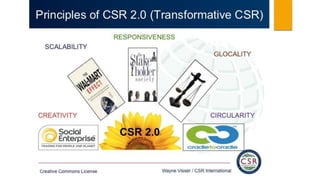
Principle 1: Creativity
 ‘Creative destruction’
 “Cannot solve today’s problems with
yesterday’s thinking.”
Principle 1: Creativity
 Business creativity directed to solving social and
environmental problems
 M-PESA
 Freeplay’s battery-free wind-up technology
 Social enterprise or Social business
 Age of Responsibility
Principle 2: Scalability
 Shining pilot projects and best practice
examples
 No vision to transform core business
 CSR solutions cannot match scale and
urgency
Principle 2: Scalability
 Not limited to retail sector
 Financial services - Grameen Bank - from
$74 loan in 1974 to $2.5 billion enterprise
 Tata’s $2,500 Nano, cheap and eco-
friendly car
Principle 3: Responsiveness
 Uncomfortable
 Transformative
 Industry or business part of solution or part
of problem
Principle 3: Responsiveness
 Greater transparency
 Exchange platforms - connect directly
with beneficiaries via web, tapping ‘long
tail of CSR’
Principle 4: Glocality
 Global localization
 ‘Think global, act local’
 Local solutions without forsaking universal
principles
Principle 4: Glocality
 Replaces ‘either/or’ with ‘both/and’
thinking
 Harmonious society - dynamic
productive tension of opposites – Tai Chi
of CSR, balancing yin and yang
Principle 5: Circularity
 ‘Spaceship economy’ - verything constantly recycle
 Three basic rules for sustainability:
1. Waste equals food
2. Nature runs off current solar income
3. Nature depends on diversity
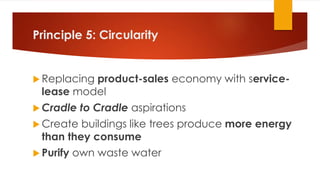
Principle 5: Circularity
 Replacing product-sales economy with service-
lease model
 Cradle to Cradle aspirations
 Create buildings like trees produce more energy
than they consume
 Purify own waste water
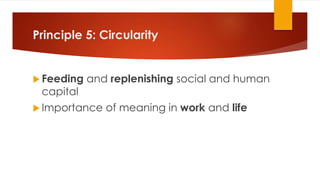
Principle 5: Circularity
 Feeding and replenishing social and human
capital
 Importance of meaning in work and life
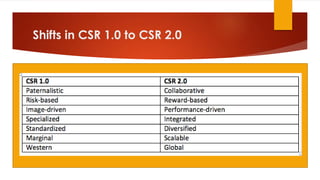
Shifts in CSR 1.0 to CSR 2.0
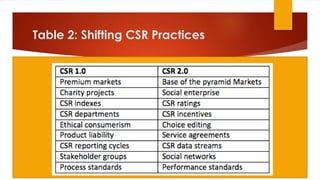
Table 2: Shifting CSR Practices
CSR 2.0
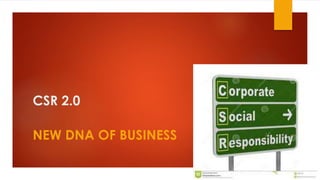
NEW DNA OF BUSINESS
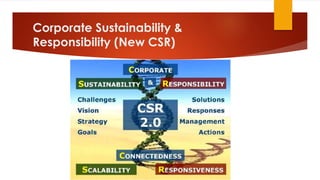
CSR 2.0 Model
 Corporate Sustainability and Responsibility’
 ‘Sustainability’ (environmental)
 ‘Responsibility’ (social activist)
CSR 2.0 Model
 Like two intertwined strands of DNA
 Sustainability and responsibility different yet
complementary
CSR 2.0 Model
 Sustainability - destination - challenges, vision,
strategy and goals
 Responsibility - journey – solutions, responses,
management and action
Corporate Sustainability &
Responsibility (New CSR)
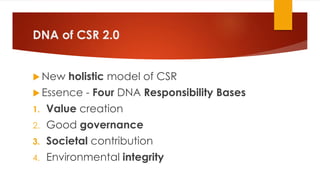
DNA of CSR 2.0
 New holistic model of CSR
 Essence - Four DNA Responsibility Bases
1. Value creation
2. Good governance
3. Societal contribution
4. Environmental integrity
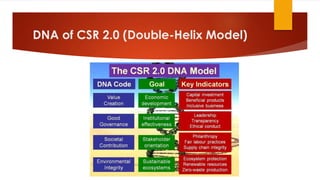
DNA of CSR 2.0 (Double-Helix Model)
Value Creation
 More than financial profitability
 Goal economic development
 Beneficial products
 Inclusive business
Good Governance
 Institutional effectiveness as important as social
and environmental ideals
 Transparency - social media and brand or
product-linked public databases
Societal Contribution
 Philanthropy rightful place
 Fair labour practices
 Stakeholder engagement, community
participation and supply chain integrity
Environmental Integrity
 Maintaining and improving ecosystem
sustainability
 Not gamble with climate change
CSR 2.0
 Purpose of business:
 Serve society
 Provision of safe, high quality products and
services
 Enhance wellbeing, without erosion of
ecological and community life-support systems
CSR 2.0
 Positive contribution to society
 Not as marginal afterthought
 Way of business!
Evolution from CSR 1.0 to CSR 2.0
Five actions
1. Re-assess
2. Re-align
3. Re-define
4. Re-design
5. Re-structure
Embrace Responsible Capitalism
 Investment
 Long termism
 Transparency
 Full cost accounting
 Inclusion
Today
 Exciting times
 New model of sustainable business
 Purpose-inspired business
Sustainable Future
 Pick it up
 Push forward
 Believe in what we are building
 New form of business - serves society and sustain
planet

CSR 2.0

  • 1.
    CSR 2.0: Reinventing CorporateSocial Responsibility for 21st Century PROF.DR.AUNG TUN THET
  • 2.
  • 4.
    CSR  Concept notnew  Evolved over time  “Doing Well, Doing Good”  3 Ps (Profit, People, Planet)
  • 5.
    Failure of CSR Three factors  Triple Curse
  • 6.
    Curse 1: IncrementalCSR  Tackling social, environmental and ethical challenges  Fail on two counts: 1. Speed 2. Scale
  • 7.
    Curse 1: IncrementalCSR  Micro-scale  Gradual improvements  No impact on massive sustainability crises
  • 8.
    Curse 2: PeripheralCSR  Lack of top management commitment  Peripheral function  Obsession with short-term financial measures  Culture of greed embedded in DNA
  • 9.
    Curse 3: UneconomicCSR  Need for ‘business case’  Evidence CSR pays  ‘Inconvenient truth’ - sometimes pays
  • 10.
  • 11.
    CSR 1.0  Outdated Outmoded  Admit failure
  • 12.
    CSR 1.0  Redefinecontribution  No serious impact on social, environmental and ethical challenges
  • 13.
    CSR 1.0  Beyondoutmoded approach as philanthropy or public relations  More interactive, stakeholder-driven
  • 14.
  • 16.
    Principle 1: Creativity ‘Creative destruction’  “Cannot solve today’s problems with yesterday’s thinking.”
  • 17.
    Principle 1: Creativity Business creativity directed to solving social and environmental problems  M-PESA  Freeplay’s battery-free wind-up technology  Social enterprise or Social business  Age of Responsibility
  • 18.
    Principle 2: Scalability Shining pilot projects and best practice examples  No vision to transform core business  CSR solutions cannot match scale and urgency
  • 19.
    Principle 2: Scalability Not limited to retail sector  Financial services - Grameen Bank - from $74 loan in 1974 to $2.5 billion enterprise  Tata’s $2,500 Nano, cheap and eco- friendly car
  • 20.
    Principle 3: Responsiveness Uncomfortable  Transformative  Industry or business part of solution or part of problem
  • 21.
    Principle 3: Responsiveness Greater transparency  Exchange platforms - connect directly with beneficiaries via web, tapping ‘long tail of CSR’
  • 22.
    Principle 4: Glocality Global localization  ‘Think global, act local’  Local solutions without forsaking universal principles
  • 23.
    Principle 4: Glocality Replaces ‘either/or’ with ‘both/and’ thinking  Harmonious society - dynamic productive tension of opposites – Tai Chi of CSR, balancing yin and yang
  • 24.
    Principle 5: Circularity ‘Spaceship economy’ - verything constantly recycle  Three basic rules for sustainability: 1. Waste equals food 2. Nature runs off current solar income 3. Nature depends on diversity
  • 25.
    Principle 5: Circularity Replacing product-sales economy with service- lease model  Cradle to Cradle aspirations  Create buildings like trees produce more energy than they consume  Purify own waste water
  • 26.
    Principle 5: Circularity Feeding and replenishing social and human capital  Importance of meaning in work and life
  • 27.
    Shifts in CSR1.0 to CSR 2.0
  • 28.
    Table 2: ShiftingCSR Practices
  • 29.
    CSR 2.0 NEW DNAOF BUSINESS
  • 30.
    CSR 2.0 Model Corporate Sustainability and Responsibility’  ‘Sustainability’ (environmental)  ‘Responsibility’ (social activist)
  • 31.
    CSR 2.0 Model Like two intertwined strands of DNA  Sustainability and responsibility different yet complementary
  • 32.
    CSR 2.0 Model Sustainability - destination - challenges, vision, strategy and goals  Responsibility - journey – solutions, responses, management and action
  • 33.
  • 34.
    DNA of CSR2.0  New holistic model of CSR  Essence - Four DNA Responsibility Bases 1. Value creation 2. Good governance 3. Societal contribution 4. Environmental integrity
  • 35.
    DNA of CSR2.0 (Double-Helix Model)
  • 36.
    Value Creation  Morethan financial profitability  Goal economic development  Beneficial products  Inclusive business
  • 37.
    Good Governance  Institutionaleffectiveness as important as social and environmental ideals  Transparency - social media and brand or product-linked public databases
  • 38.
    Societal Contribution  Philanthropyrightful place  Fair labour practices  Stakeholder engagement, community participation and supply chain integrity
  • 39.
    Environmental Integrity  Maintainingand improving ecosystem sustainability  Not gamble with climate change
  • 40.
    CSR 2.0  Purposeof business:  Serve society  Provision of safe, high quality products and services  Enhance wellbeing, without erosion of ecological and community life-support systems
  • 41.
    CSR 2.0  Positivecontribution to society  Not as marginal afterthought  Way of business!
  • 42.
    Evolution from CSR1.0 to CSR 2.0
  • 43.
    Five actions 1. Re-assess 2.Re-align 3. Re-define 4. Re-design 5. Re-structure
  • 44.
    Embrace Responsible Capitalism Investment  Long termism  Transparency  Full cost accounting  Inclusion
  • 45.
    Today  Exciting times New model of sustainable business  Purpose-inspired business
  • 46.
    Sustainable Future  Pickit up  Push forward  Believe in what we are building  New form of business - serves society and sustain planet