

Towards a Brighter
Future:
Promoting Learning &
Knowledge Society
Prof.Dr.Aung Tun Thet
Knowledge Society
Knowledge Society
• Society of shared knowledge
• Prospect for human and sustainable
development
Knowledge Society
• Social, ethical and political dimensions
• Nurtured by diversity and capacities
• Technological breakthroughs
Knowledge Society
• Multidimensional
• No single, ready-made model
• Education
• Critical thinking
Knowledge Society
• Access to knowledge
• Production of knowledge
Knowledge Society
• Foster knowledge-sharing
• Integrate all members
• Promote new forms of solidarity
• No one excluded
Knowledge Society
• Present and future generations
• Knowledge public good available to everyone
Knowledge Society
• Young people play major role - first to use new technologies
• Older people also important – experience – knowledge
road to wisdom
• Focus on human rights and inclusive
participatory character
Knowledge Society
• Freedom of opinion and expression
• Freedom of information, media pluralism and
academic freedom
• Right to education
ICT
• New opportunities for development
• Simultaneous growth of Internet, Mobile
telephony and digital technologies
• Revolutionized role of knowledge
ICT
• Important role1 in:
• Economic development (spread of innovation and
productivity gains)
• Human Development
• “Technological leapfrogging”
Knowledge Society
• Virtuous circle
• Acceleration of knowledge production
• Values and practices of creativity and innovation
Knowledge Society
• Not limited to Information Society
• Information knowledge-generating tool - not
knowledge itself
• “Useful” and “Useless” information
Knowledge Society
• New approach to development
• Rethink development
• New value placed on “human capital”
Knowledge Society
• Heightened awareness of global problems
• Environmental damage, technological hazards,
economic crises and poverty
• Infostructure and capacity-building
• Massive investments in education and R&D
Knowledge Society
• Fresh possibilities for human and sustainable
development
• “Information society”
• “Knowledge-based economies”
• “Learning societies”
Knowledge Society
• Heightened awareness of global problems
• Environmental damage, technological hazards,
economic crises and poverty
• Infostructure and capacity-building
• Massive investments in education and R&D
Knowledge Society
• Three pillars
1. Better enhancement of value of existing forms of
knowledge to narrow knowledge divide
2. More participatory approach to access to knowledge
3. Better integration of knowledge policies
1. Better enhancement of value of existing
forms of knowledge to narrow knowledge divide
• Raise awareness of richness of knowledge
possessed
• Identify weak points with regard to access
• Assessing skills
2. More Participatory Approach to
Access to Knowledge
• Mobilization of all players
• Identifying “local or indigenous of knowledge”
or “traditional knowledge”
• Knowledge producers not only consumers of
already available knowledge
2. . More Participatory Approach to
Access to Knowledge
• Key players – teachers, researchers, artists, designers,
journalists and NGOs
• Modalities completely rethought
• New institutional forms – hybrid forums, citizens’
conferences and debates associating decision-makers, lawmakers,
private sector and civil society
3. Better integration of Knowledge
Policies
• Clarification of goals of ”knowledge society”
• Deepening of research on social impact
• Broader consultation in area of higher education
Recommendations
1. Invest more in quality education for all to ensure equal
opportunity
2. Increase access to ICT
3. Widen contents available for universal access to knowledge
4. Develop collaboratories: towards better knowledge sharing
5. Share knowledge for sustainable development
Recommendations
6. Making linguistic diversity
7. Move towards knowledge certification on internet: quality labels
8. Intensify creation of partnerships for digital solidarity - “digital
twinning arrangements”
9. Increase women’s contribution
10.Measure knowledge
Towards Learning
Society
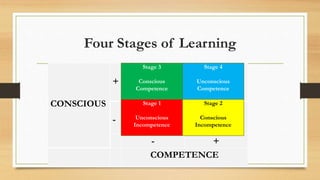
Four Stages of Learning
CONSCIOUS
+
-
- +
COMPETENCE
Stage 1
Unconscious
Incompetence
Stage 2
Conscious
Incompetence
Stage 3
Conscious
Competence
Stage 4
Unconscious
Competence
Society
• Segments endowed with high degree of:
• Lateral instead of vertical learning
• Ideational instead of functional learning
• Dialectical instead of consensual learning systems
• Elitist social structures
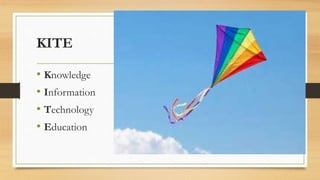
KITE
• Knowledge
• Information
• Technology
• Education
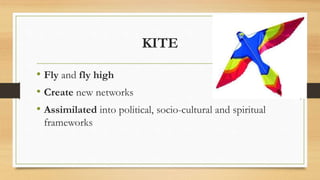
KITE
• Fly and fly high
• Create new networks
• Assimilated into political, socio-cultural and spiritual
frameworks
Courting Obsolescence
• Build upon local knowledge
• Share openly and widely
• Innovate and improvise
Ensuring Optimal Consensus
• Cooperation and competition co-exist
• Nurtured and encouraged
• Heterogeneity spurs healthy growth
Life long Learning
• Discover new value in new knowledge, technologies and
information exchange mechanisms
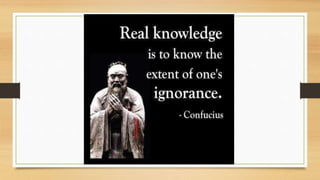
• “You ‘never arrive
• The more you learn,
• the more acutely aware you become of your ignorance.”
Dissolving Distances, Expanding Horizons
• Overcome barriers of language, literacy, and localism
• Create learning communities across age, class,
language, skill, status and spatial boundary
Learning Society
• Liberating society
• Encourage pluralism
• Foster creativity and innovation
Ways Ahead
• Strong learning society
• Pool all knowledge, information, insights and
perspectives
• Build bridges with global pool of knowledge and
learnings
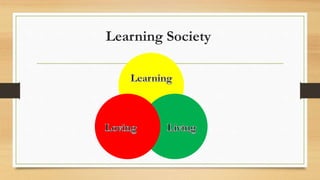
Learning Society
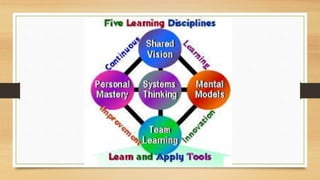
Five Learning
Disciplines
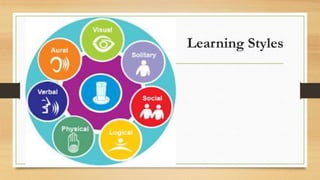
Learning Styles
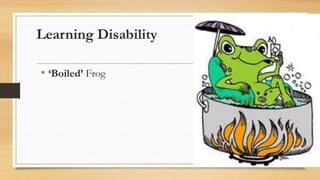
Learning Disability
• ‘Boiled’ Frog
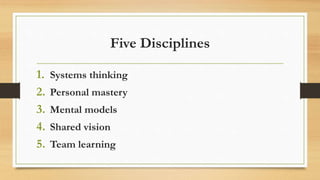
Five Disciplines
1. Systems thinking
2. Personal mastery
3. Mental models
4. Shared vision
5. Team learning
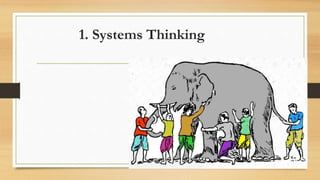
1. Systems Thinking
1. Systems Thinking
• See ‘wholes’
• ‘The big picture’
• See interrelationships and patterns
• Determine cause and effect
2. Personal Mastery
• To perceive or think differently is more important than
knowledge gained
• Personal growth and learning
• Never-ending quests for self- improvement and self-
discovery
• Spiritual growth
3. Mental Models
• People don’t grow old.
• When they stop growing, they become old.
• Assumptions, views and prejudices
4. Shared Vision
• Force in peoples’ hearts
• Focus and energy for learning
5. Team Learning
• Aligning and developing capacity
1. Probe and explore complex issues
2. Work in concert, coordinating efforts and
communicating openly and closely
3. Interact with each other
Final Note
• The choice is Ours!
Thank You!

Toward the Brighter Future

  • 1.
    Towards a Brighter Future: PromotingLearning & Knowledge Society Prof.Dr.Aung Tun Thet
  • 4.
  • 6.
    Knowledge Society • Societyof shared knowledge • Prospect for human and sustainable development
  • 7.
    Knowledge Society • Social,ethical and political dimensions • Nurtured by diversity and capacities • Technological breakthroughs
  • 8.
    Knowledge Society • Multidimensional •No single, ready-made model • Education • Critical thinking
  • 9.
    Knowledge Society • Accessto knowledge • Production of knowledge
  • 10.
    Knowledge Society • Fosterknowledge-sharing • Integrate all members • Promote new forms of solidarity • No one excluded
  • 11.
    Knowledge Society • Presentand future generations • Knowledge public good available to everyone
  • 12.
    Knowledge Society • Youngpeople play major role - first to use new technologies • Older people also important – experience – knowledge road to wisdom • Focus on human rights and inclusive participatory character
  • 13.
    Knowledge Society • Freedomof opinion and expression • Freedom of information, media pluralism and academic freedom • Right to education
  • 14.
    ICT • New opportunitiesfor development • Simultaneous growth of Internet, Mobile telephony and digital technologies • Revolutionized role of knowledge
  • 15.
    ICT • Important role1in: • Economic development (spread of innovation and productivity gains) • Human Development • “Technological leapfrogging”
  • 16.
    Knowledge Society • Virtuouscircle • Acceleration of knowledge production • Values and practices of creativity and innovation
  • 17.
    Knowledge Society • Notlimited to Information Society • Information knowledge-generating tool - not knowledge itself • “Useful” and “Useless” information
  • 18.
    Knowledge Society • Newapproach to development • Rethink development • New value placed on “human capital”
  • 19.
    Knowledge Society • Heightenedawareness of global problems • Environmental damage, technological hazards, economic crises and poverty • Infostructure and capacity-building • Massive investments in education and R&D
  • 20.
    Knowledge Society • Freshpossibilities for human and sustainable development • “Information society” • “Knowledge-based economies” • “Learning societies”
  • 21.
    Knowledge Society • Heightenedawareness of global problems • Environmental damage, technological hazards, economic crises and poverty • Infostructure and capacity-building • Massive investments in education and R&D
  • 22.
    Knowledge Society • Threepillars 1. Better enhancement of value of existing forms of knowledge to narrow knowledge divide 2. More participatory approach to access to knowledge 3. Better integration of knowledge policies
  • 23.
    1. Better enhancementof value of existing forms of knowledge to narrow knowledge divide • Raise awareness of richness of knowledge possessed • Identify weak points with regard to access • Assessing skills
  • 24.
    2. More ParticipatoryApproach to Access to Knowledge • Mobilization of all players • Identifying “local or indigenous of knowledge” or “traditional knowledge” • Knowledge producers not only consumers of already available knowledge
  • 25.
    2. . MoreParticipatory Approach to Access to Knowledge • Key players – teachers, researchers, artists, designers, journalists and NGOs • Modalities completely rethought • New institutional forms – hybrid forums, citizens’ conferences and debates associating decision-makers, lawmakers, private sector and civil society
  • 26.
    3. Better integrationof Knowledge Policies • Clarification of goals of ”knowledge society” • Deepening of research on social impact • Broader consultation in area of higher education
  • 27.
    Recommendations 1. Invest morein quality education for all to ensure equal opportunity 2. Increase access to ICT 3. Widen contents available for universal access to knowledge 4. Develop collaboratories: towards better knowledge sharing 5. Share knowledge for sustainable development
  • 28.
    Recommendations 6. Making linguisticdiversity 7. Move towards knowledge certification on internet: quality labels 8. Intensify creation of partnerships for digital solidarity - “digital twinning arrangements” 9. Increase women’s contribution 10.Measure knowledge
  • 31.
  • 33.
    Four Stages ofLearning CONSCIOUS + - - + COMPETENCE Stage 1 Unconscious Incompetence Stage 2 Conscious Incompetence Stage 3 Conscious Competence Stage 4 Unconscious Competence
  • 34.
    Society • Segments endowedwith high degree of: • Lateral instead of vertical learning • Ideational instead of functional learning • Dialectical instead of consensual learning systems • Elitist social structures
  • 35.
  • 36.
    KITE • Fly andfly high • Create new networks • Assimilated into political, socio-cultural and spiritual frameworks
  • 37.
    Courting Obsolescence • Buildupon local knowledge • Share openly and widely • Innovate and improvise
  • 38.
    Ensuring Optimal Consensus •Cooperation and competition co-exist • Nurtured and encouraged • Heterogeneity spurs healthy growth
  • 39.
    Life long Learning •Discover new value in new knowledge, technologies and information exchange mechanisms • “You ‘never arrive • The more you learn, • the more acutely aware you become of your ignorance.”
  • 40.
    Dissolving Distances, ExpandingHorizons • Overcome barriers of language, literacy, and localism • Create learning communities across age, class, language, skill, status and spatial boundary
  • 41.
    Learning Society • Liberatingsociety • Encourage pluralism • Foster creativity and innovation
  • 42.
    Ways Ahead • Stronglearning society • Pool all knowledge, information, insights and perspectives • Build bridges with global pool of knowledge and learnings
  • 43.
  • 45.
  • 47.
  • 48.
  • 50.
    Five Disciplines 1. Systemsthinking 2. Personal mastery 3. Mental models 4. Shared vision 5. Team learning
  • 51.
  • 52.
    1. Systems Thinking •See ‘wholes’ • ‘The big picture’ • See interrelationships and patterns • Determine cause and effect
  • 53.
    2. Personal Mastery •To perceive or think differently is more important than knowledge gained • Personal growth and learning • Never-ending quests for self- improvement and self- discovery • Spiritual growth
  • 54.
    3. Mental Models •People don’t grow old. • When they stop growing, they become old. • Assumptions, views and prejudices
  • 55.
    4. Shared Vision •Force in peoples’ hearts • Focus and energy for learning
  • 56.
    5. Team Learning •Aligning and developing capacity 1. Probe and explore complex issues 2. Work in concert, coordinating efforts and communicating openly and closely 3. Interact with each other
  • 57.
    Final Note • Thechoice is Ours!
  • 60.