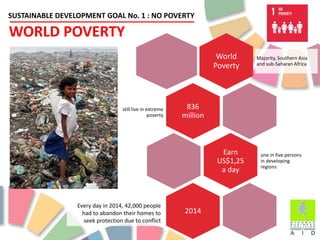
World
Poverty
Majority, Southern Asia
and sub-Saharan Africa
836
million
still live in extreme
poverty
Earn
US$1,25
a day
one in five persons
in developing
regions
2014
Every day in 2014, 42,000 people
had to abandon their homes to
seek protection due to conflict
SUSTAINABLE DEVELOPMENT GOAL No. 1 : NO POVERTY
WORLD POVERTY
SUSTAINABLE DEVELOPMENT GOAL No. 1 : NO POVERTY
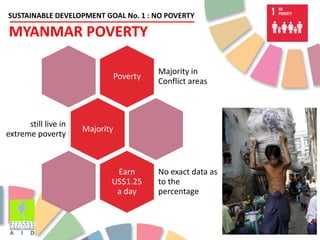
MYANMAR POVERTY
Poverty
Majority in
Conflict areas
Majority
still live in
extreme poverty
Earn
US$1.25
a day
No exact data as
to the
percentage
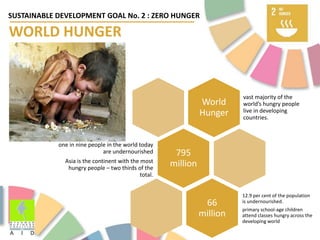
World
Hunger
vast majority of the
world’s hungry people
live in developing
countries.
795
million
one in nine people in the world today
are undernourished
Asia is the continent with the most
hungry people – two thirds of the
total.
66
million
12.9 per cent of the population
is undernourished.
primary school-age children
attend classes hungry across the
developing world
SUSTAINABLE DEVELOPMENT GOAL No. 2 : ZERO HUNGER
WORLD HUNGER
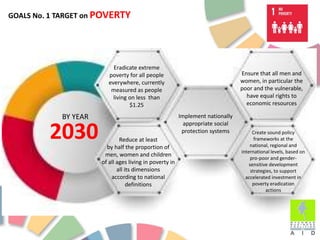
GOALS No. 1 TARGET on POVERTY
Eradicate extreme
poverty for all people
everywhere, currently
measured as people
living on less than
$1.25
Reduce at least
by half the proportion of
men, women and children
of all ages living in poverty in
all its dimensions
according to national
definitions
Implement nationally
appropriate social
protection systems
Ensure that all men and
women, in particular the
poor and the vulnerable,
have equal rights to
economic resources
Create sound policy
frameworks at the
national, regional and
international levels, based on
pro-poor and gender-
sensitive development
strategies, to support
accelerated investment in
poverty eradication
actions
2030
BY YEAR
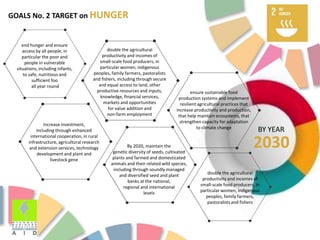
GOALS No. 2 TARGET on HUNGER
2030
BY YEAR
end hunger and ensure
access by all people, in
particular the poor and
people in vulnerable
situations, including infants,
to safe, nutritious and
sufficient foo
all year round
double the agricultural
productivity and incomes of
small-scale food producers, in
particular women, indigenous
peoples, family farmers, pastoralists
and fishers, including through secure
and equal access to land, other
productive resources and inputs,
knowledge, financial services,
markets and opportunities
for value addition and
non-farm employment
ensure sustainable food
production systems and implement
resilient agricultural practices that
increase productivity and production,
that help maintain ecosystems, that
strengthen capacity for adaptation
to climate change
double the agricultural
productivity and incomes of
small-scale food producers, in
particular women, indigenous
peoples, family farmers,
pastoralists and fishers
By 2020, maintain the
genetic diversity of seeds, cultivated
plants and farmed and domesticated
animals and their related wild species,
including through soundly managed
and diversified seed and plant
banks at the national,
regional and international
levels
Increase investment,
including through enhanced
international cooperation, in rural
infrastructure, agricultural research
and extension services, technology
development and plant and
livestock gene
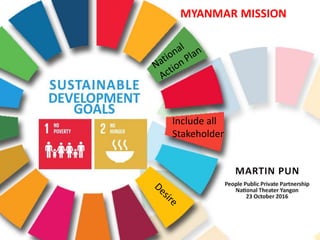
Include all
Stakeholder
MYANMAR MISSION

BFBM(12-2016) Presentation

  • 2.
    World Poverty Majority, Southern Asia andsub-Saharan Africa 836 million still live in extreme poverty Earn US$1,25 a day one in five persons in developing regions 2014 Every day in 2014, 42,000 people had to abandon their homes to seek protection due to conflict SUSTAINABLE DEVELOPMENT GOAL No. 1 : NO POVERTY WORLD POVERTY
  • 3.
    SUSTAINABLE DEVELOPMENT GOALNo. 1 : NO POVERTY MYANMAR POVERTY Poverty Majority in Conflict areas Majority still live in extreme poverty Earn US$1.25 a day No exact data as to the percentage
  • 4.
    World Hunger vast majority ofthe world’s hungry people live in developing countries. 795 million one in nine people in the world today are undernourished Asia is the continent with the most hungry people – two thirds of the total. 66 million 12.9 per cent of the population is undernourished. primary school-age children attend classes hungry across the developing world SUSTAINABLE DEVELOPMENT GOAL No. 2 : ZERO HUNGER WORLD HUNGER
  • 5.
    GOALS No. 1TARGET on POVERTY Eradicate extreme poverty for all people everywhere, currently measured as people living on less than $1.25 Reduce at least by half the proportion of men, women and children of all ages living in poverty in all its dimensions according to national definitions Implement nationally appropriate social protection systems Ensure that all men and women, in particular the poor and the vulnerable, have equal rights to economic resources Create sound policy frameworks at the national, regional and international levels, based on pro-poor and gender- sensitive development strategies, to support accelerated investment in poverty eradication actions 2030 BY YEAR
  • 6.
    GOALS No. 2TARGET on HUNGER 2030 BY YEAR end hunger and ensure access by all people, in particular the poor and people in vulnerable situations, including infants, to safe, nutritious and sufficient foo all year round double the agricultural productivity and incomes of small-scale food producers, in particular women, indigenous peoples, family farmers, pastoralists and fishers, including through secure and equal access to land, other productive resources and inputs, knowledge, financial services, markets and opportunities for value addition and non-farm employment ensure sustainable food production systems and implement resilient agricultural practices that increase productivity and production, that help maintain ecosystems, that strengthen capacity for adaptation to climate change double the agricultural productivity and incomes of small-scale food producers, in particular women, indigenous peoples, family farmers, pastoralists and fishers By 2020, maintain the genetic diversity of seeds, cultivated plants and farmed and domesticated animals and their related wild species, including through soundly managed and diversified seed and plant banks at the national, regional and international levels Increase investment, including through enhanced international cooperation, in rural infrastructure, agricultural research and extension services, technology development and plant and livestock gene
  • 7.