Types of Client Server Models
Agenda
 Introduction


 Logical Layers
   Presentation layer
   Application layer
   Data layer


 Client / Server Models
   Distributed presentation
   Remote presentation
   Distributed logic
   Remote data
   Distributed data
Introduction
 The Client-Server model is the most prevalent

 model for distributed computing protocols.

 It is the basis of all distributed computing

 paradigms at a higher level of abstraction.

 It is service-oriented, and employs a request-

 response protocol.
Introduction
 Client
   A client is an individual user's computer or a user
    application that does a certain amount of
    processing on its own. It also sends and receives
    requests to and from one or more servers for other
    processing and/or data.

 Server
   A server consists of one or more computers that
    receive and process requests from one or more
    client machines. A server is typically designed with
    some redundancy in power, network, computing
    and file storage.
The Client / Server Model
 A server process, running on a server
  host, provides access to a service.
 A client process, running on a client
  host, accesses the service via the server
  process.
 The interaction of the process proceeds
  according to a protocol.
 An application based on the client-server
  model is a    client-server application.
Logical Layers

 In general, application software can be
 divided into 3 logical layers:

   Presentation layer
   Application layer
   Data layer
Presentation Layer
 Presentation layer is responsible for
 displaying the information and interacting with
 the user .

 It must make the information available in a
 suitable form to the user and must respond
 appropriately to input from the user.
Application Layer
 Application layer processes
 commands, makes logical decisions, performs
 calculations, and coordinates the application

 It also moves and processes data between
 the presentation layer and data layer
Data Layer
 Data layer refers to the management of
 underlying databases

 It is responsible for storing and retrieving the
 data according to the requirements of the
 application layer.
Client Server Models
 Distributed presentation

 Remote presentation

 Distributed logic

 Remote data

 Distributed data
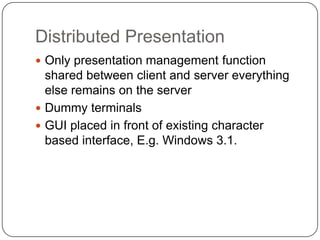
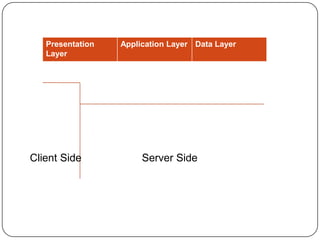
Distributed Presentation
 Only presentation management function
  shared between client and server everything
  else remains on the server
 Dummy terminals
 GUI placed in front of existing character
  based interface, E.g. Windows 3.1.
Presentation   Application Layer Data Layer
   Layer


Client Side            Server Side
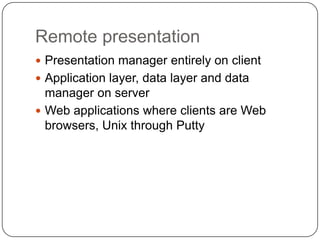
Remote presentation
 Presentation manager entirely on client
 Application layer, data layer and data
  manager on server
 Web applications where clients are Web
  browsers, Unix through Putty
Presentation   Application Layer Data Layer
Layer


Client Side             Server Side
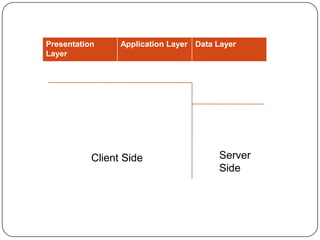
Distributed Logic
 Application is split into presentation layer and
  data layer component
 All presentation management activities on
  client
 All data management activities on the server
Presentation    Application Layer Data Layer
Layer


      Client Side               Server Side
Remote Data
 Database manager resides on server
 Presentation management and data logic reside
  on client
 Typical of client/server DBMSs
  (DB2, Oracle, Informix, etc.)
Presentation     Application Layer Data Layer
Layer


           Client Side                  Server
                                        Side
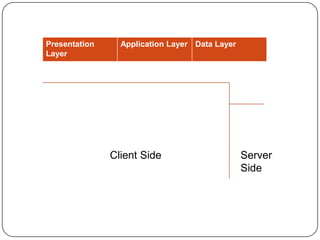
Distributed Data
 Portions of the database reside on client
 Portions of the database reside on server
 DBMS manages communication involved
 Limited implementation of full-fledged DDBMS
 functionality
Presentation     Application Layer Data Layer
Layer


               Client Side                      Server
                                                Side
THANK YOU

Client Server models in JAVA

  • 1.
    Types of ClientServer Models
  • 2.
    Agenda  Introduction  LogicalLayers  Presentation layer  Application layer  Data layer  Client / Server Models  Distributed presentation  Remote presentation  Distributed logic  Remote data  Distributed data
  • 3.
    Introduction  The Client-Servermodel is the most prevalent model for distributed computing protocols.  It is the basis of all distributed computing paradigms at a higher level of abstraction.  It is service-oriented, and employs a request- response protocol.
  • 4.
    Introduction  Client  A client is an individual user's computer or a user application that does a certain amount of processing on its own. It also sends and receives requests to and from one or more servers for other processing and/or data.  Server  A server consists of one or more computers that receive and process requests from one or more client machines. A server is typically designed with some redundancy in power, network, computing and file storage.
  • 5.
    The Client /Server Model  A server process, running on a server host, provides access to a service.  A client process, running on a client host, accesses the service via the server process.  The interaction of the process proceeds according to a protocol.  An application based on the client-server model is a client-server application.
  • 6.
    Logical Layers  Ingeneral, application software can be divided into 3 logical layers:  Presentation layer  Application layer  Data layer
  • 7.
    Presentation Layer  Presentationlayer is responsible for displaying the information and interacting with the user .  It must make the information available in a suitable form to the user and must respond appropriately to input from the user.
  • 8.
    Application Layer  Applicationlayer processes commands, makes logical decisions, performs calculations, and coordinates the application  It also moves and processes data between the presentation layer and data layer
  • 9.
    Data Layer  Datalayer refers to the management of underlying databases  It is responsible for storing and retrieving the data according to the requirements of the application layer.
  • 10.
    Client Server Models Distributed presentation  Remote presentation  Distributed logic  Remote data  Distributed data
  • 11.
    Distributed Presentation  Onlypresentation management function shared between client and server everything else remains on the server  Dummy terminals  GUI placed in front of existing character based interface, E.g. Windows 3.1.
  • 12.
    Presentation Application Layer Data Layer Layer Client Side Server Side
  • 13.
    Remote presentation  Presentationmanager entirely on client  Application layer, data layer and data manager on server  Web applications where clients are Web browsers, Unix through Putty
  • 14.
    Presentation Application Layer Data Layer Layer Client Side Server Side
  • 15.
    Distributed Logic  Applicationis split into presentation layer and data layer component  All presentation management activities on client  All data management activities on the server
  • 16.
    Presentation Application Layer Data Layer Layer Client Side Server Side
  • 17.
    Remote Data  Databasemanager resides on server  Presentation management and data logic reside on client  Typical of client/server DBMSs (DB2, Oracle, Informix, etc.)
  • 18.
    Presentation Application Layer Data Layer Layer Client Side Server Side
  • 19.
    Distributed Data  Portionsof the database reside on client  Portions of the database reside on server  DBMS manages communication involved  Limited implementation of full-fledged DDBMS functionality
  • 20.
    Presentation Application Layer Data Layer Layer Client Side Server Side
  • 21.