Transport Layer Security (TLS)
What is Transport Layer Security (TLS)
• TLS is the successor to the Secure Sockets Layer (SSL).
• Transport Layer Security (TLS) is a protocol that ensures privacy
between communicating applications and their users on the Internet.
-Techtarget.com
Why do we need it?
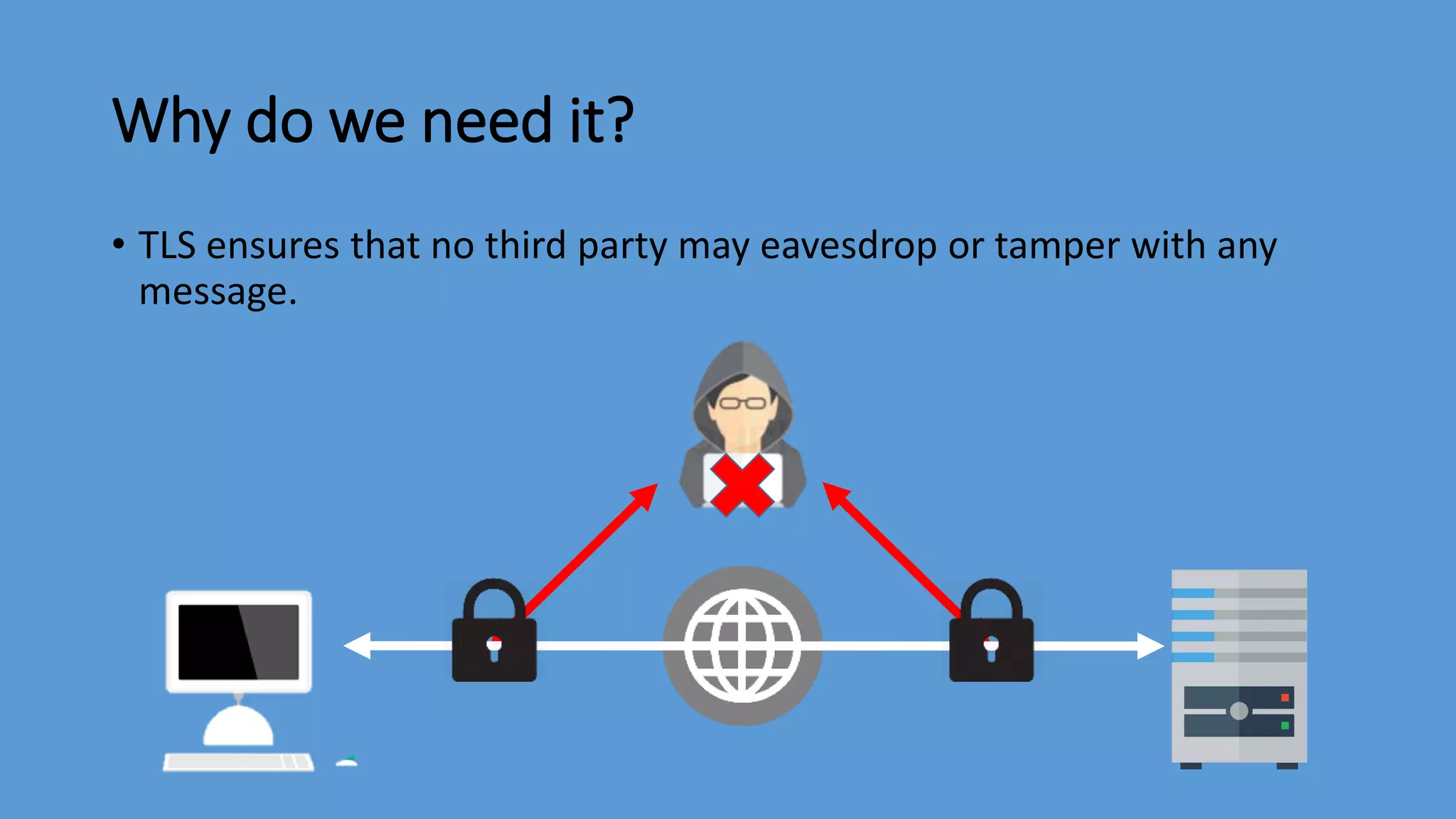
• TLS ensures that no third party may eavesdrop or tamper with any
message.
Benefits of TLS
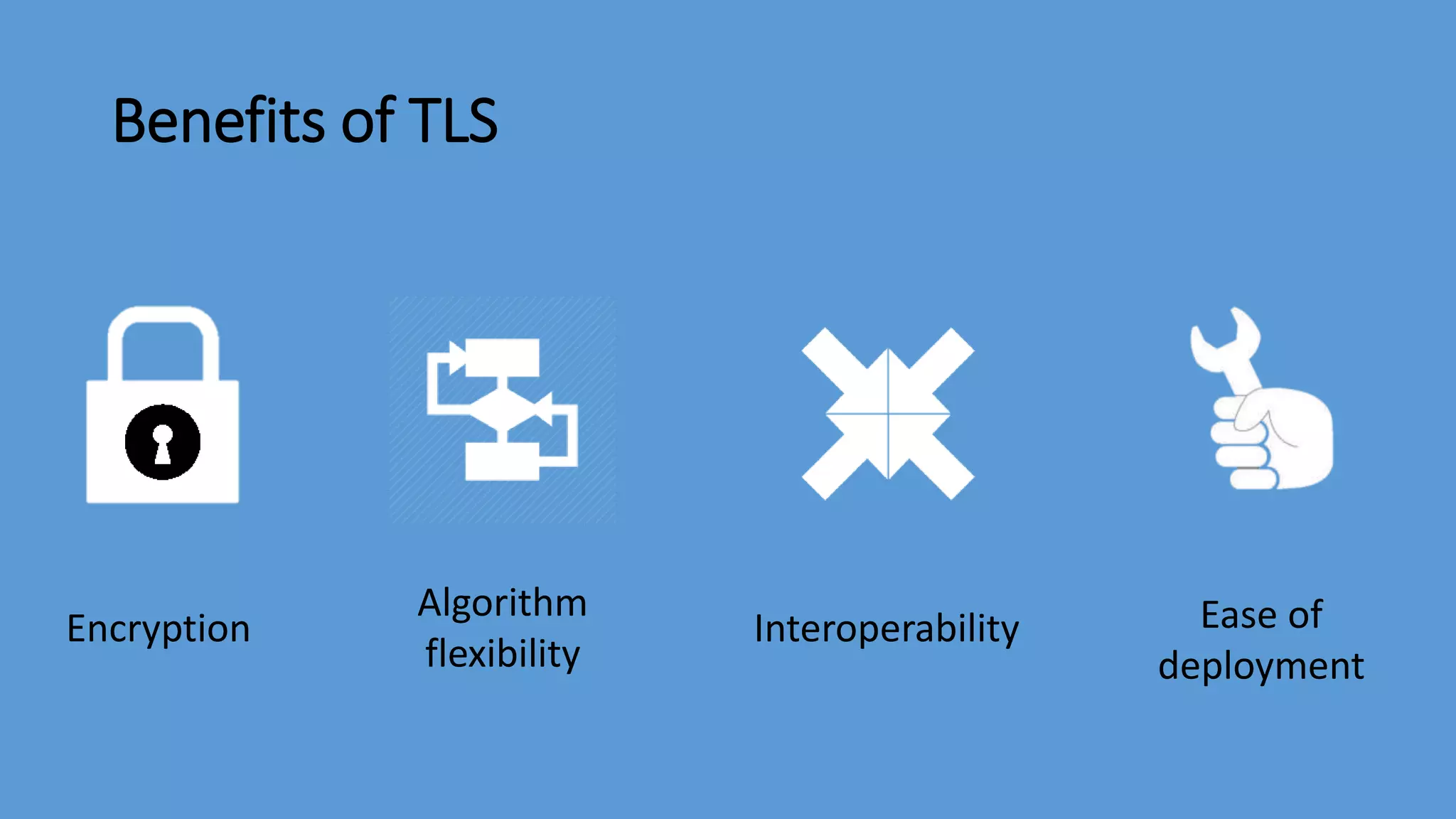
Encryption Interoperability
Algorithm
flexibility
Ease of
deployment
Benefits of TLS
• Encryption
• TLS/SSL can help to secure transmitted data using encryption.
• Interoperability
• TLS/SSL works with most Web browsers, including Microsoft Internet Explorer and
Netscape Navigator, and on most operating systems and Web servers.
• Algorithm flexibility
• TLS/SSL provides options for the authentication mechanisms, encryption algorithms,
and hashing algorithms that are used during the secure session.
• Ease of deployment
• Many applications use TLS/SSL transparently on a Windows Server 2003 operating
systems.
• Ease of use
• Because you implement TLS/SSL beneath the application layer, most of its operations
are completely invisible to the client.
Transport Layer Security (Basics)
• SSL & TLS are protocols that operates directly on top of TCP
Transport
TLS
TCP
Network (IP)
Data Link
Physical
Working of Transport Layer Security
• The Client connect to server (using TCP). The client can be anything.
• The Client sends a number of specifications :
• Version of SSL/TLS
• Which cipher suites, compression method it wants to use.
Ver : TLS 1.2
CS:RSA,DSA,RC4
COMPMETHOD
Working of Transport Layer Security
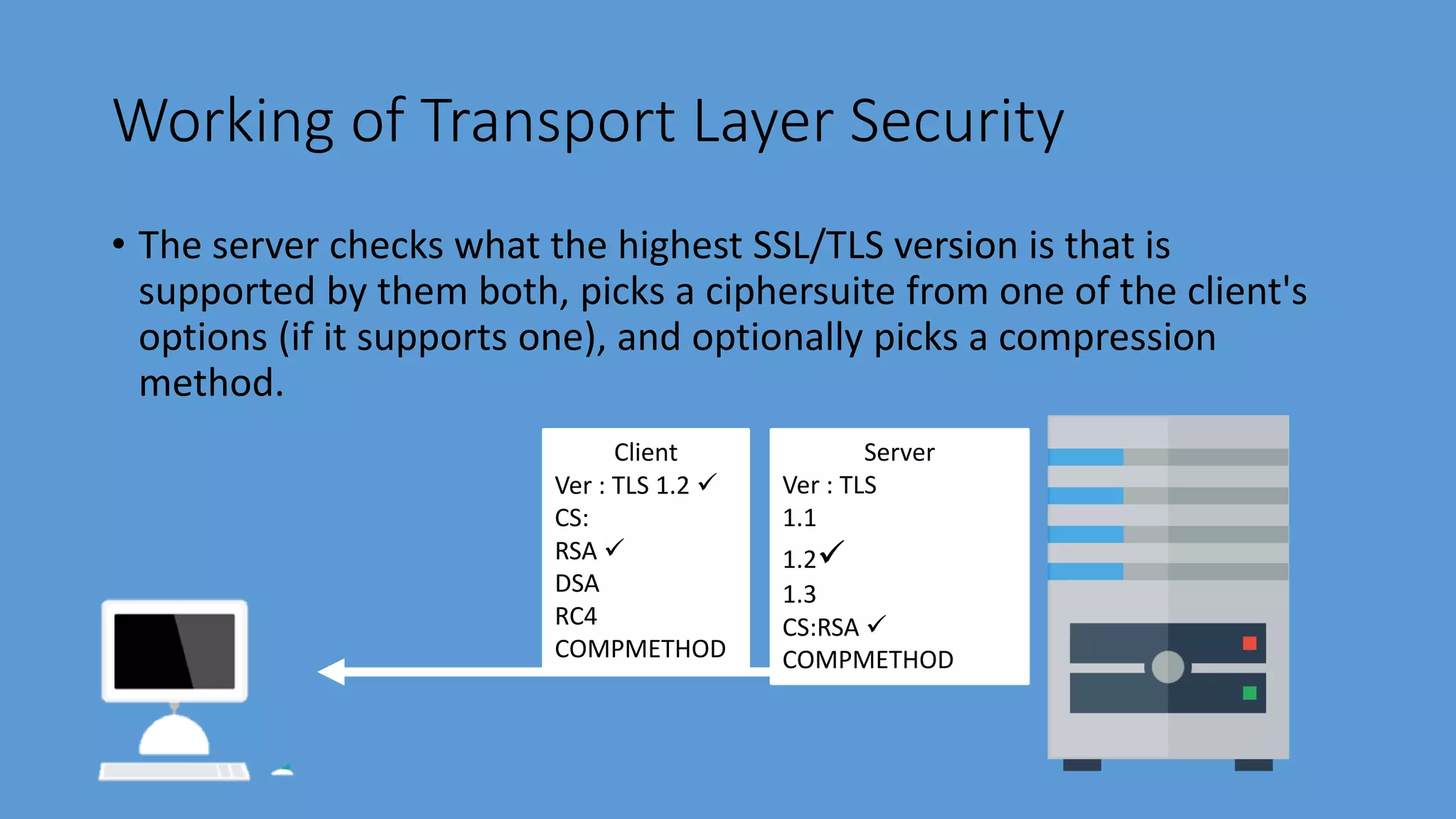
• The server checks what the highest SSL/TLS version is that is
supported by them both, picks a ciphersuite from one of the client's
options (if it supports one), and optionally picks a compression
method.
Client
Ver : TLS 1.2 
CS:
RSA 
DSA
RC4
COMPMETHOD
Server
Ver : TLS
1.1
1.2
1.3
CS:RSA 
COMPMETHOD
Working of Transport Layer Security
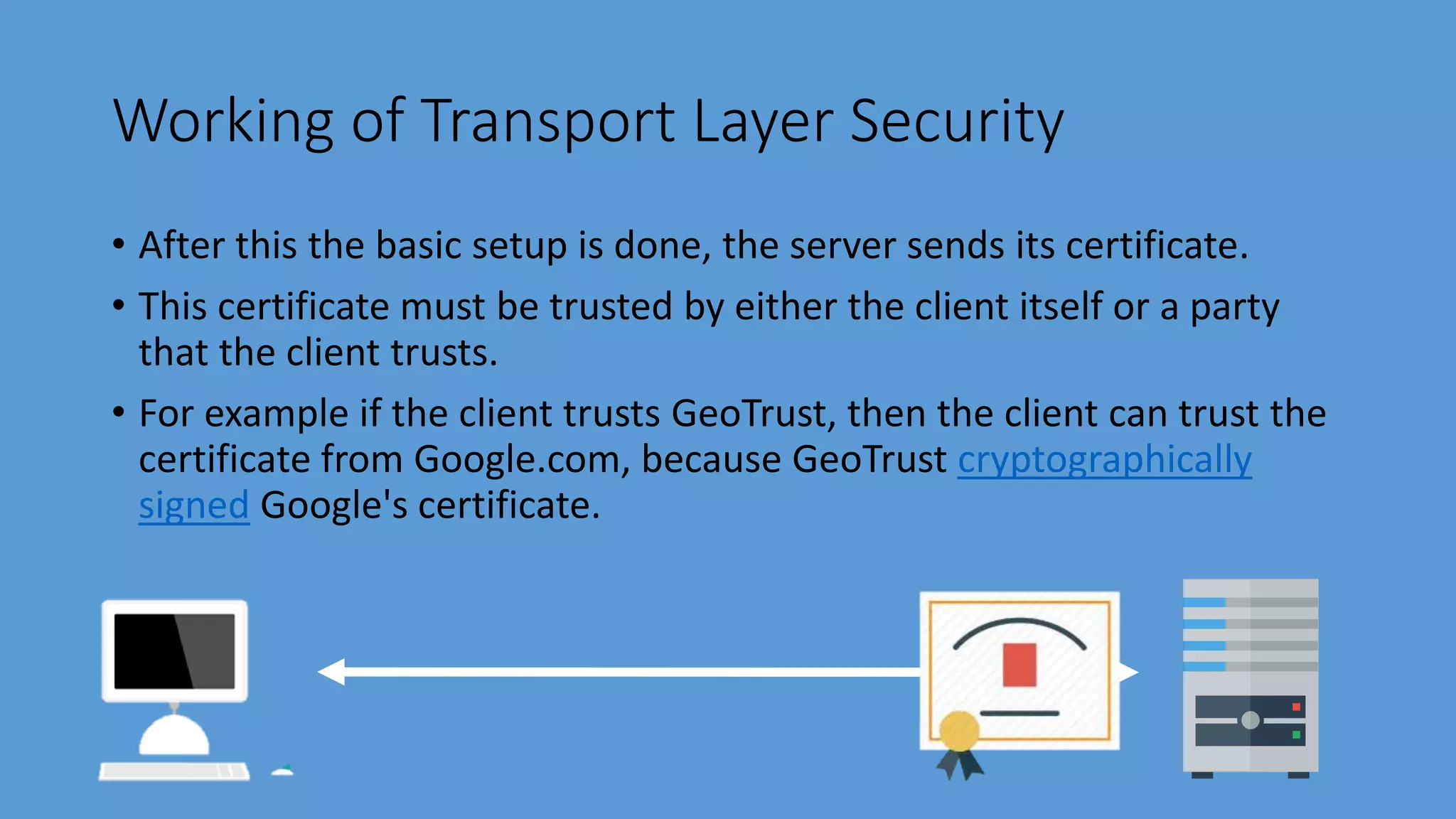
• After this the basic setup is done, the server sends its certificate.
• This certificate must be trusted by either the client itself or a party
that the client trusts.
• For example if the client trusts GeoTrust, then the client can trust the
certificate from Google.com, because GeoTrust cryptographically
signed Google's certificate.
Working of Transport Layer Security
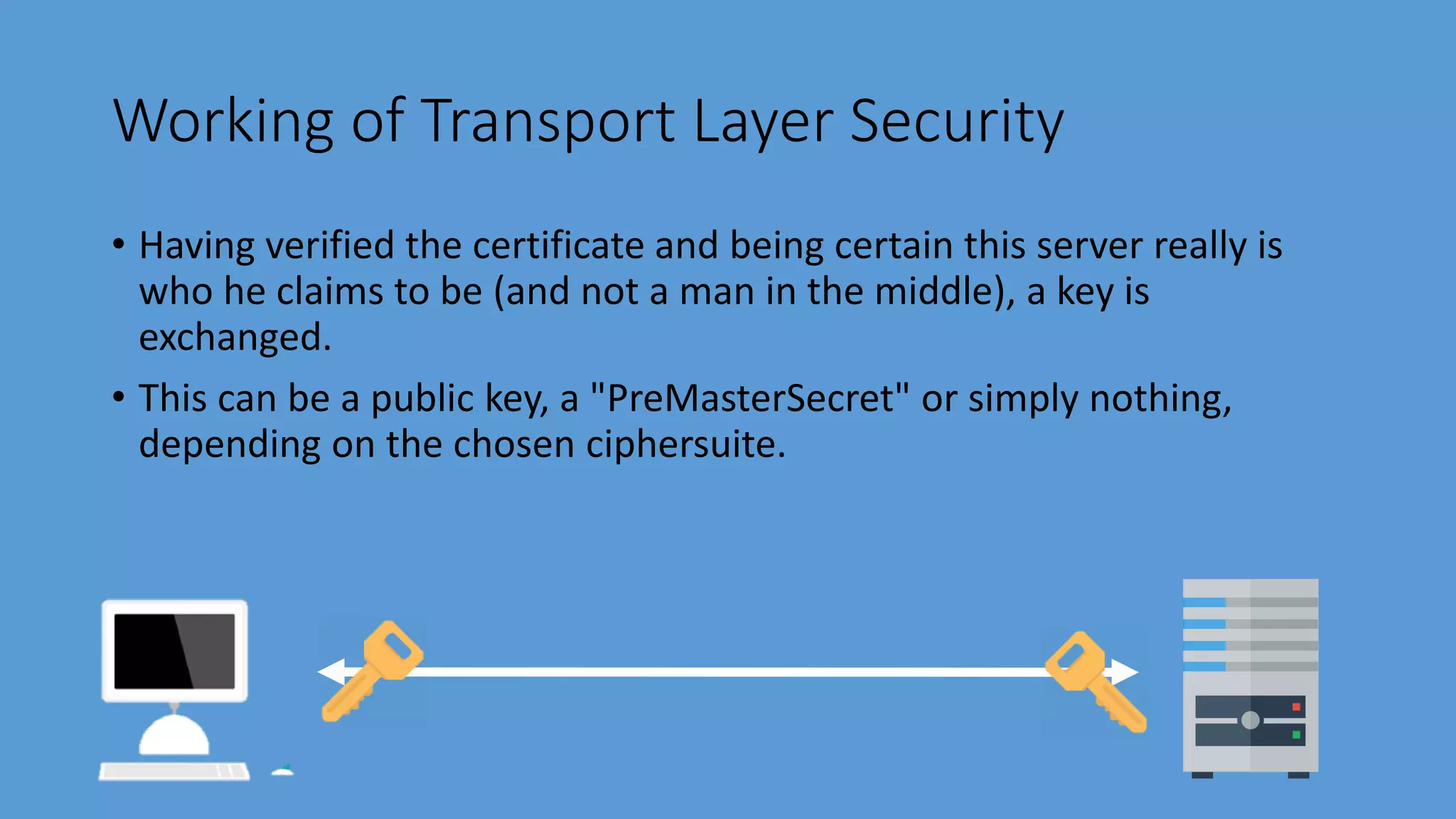
• Having verified the certificate and being certain this server really is
who he claims to be (and not a man in the middle), a key is
exchanged.
• This can be a public key, a "PreMasterSecret" or simply nothing,
depending on the chosen ciphersuite.
Working of Transport Layer Security
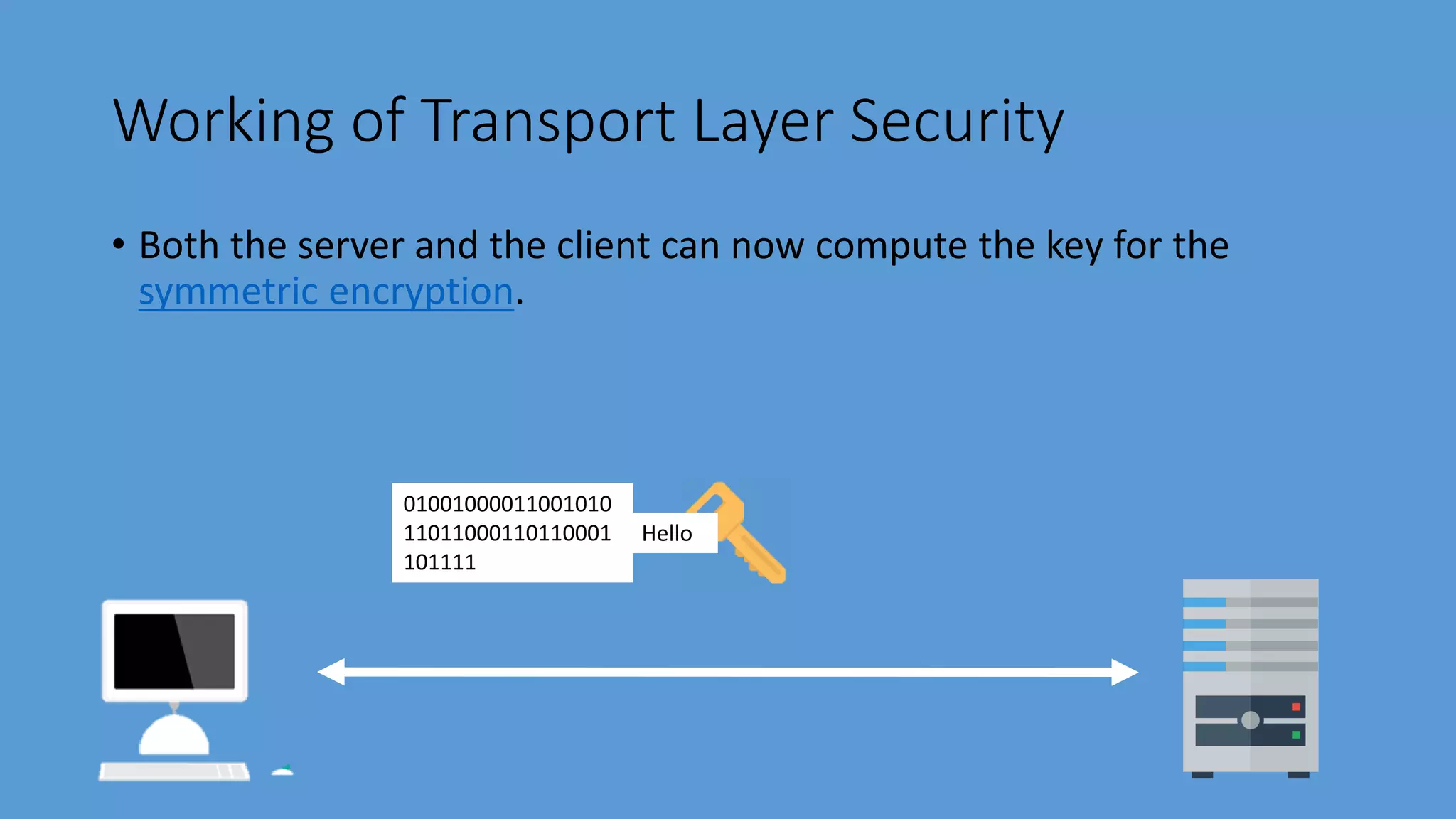
• Both the server and the client can now compute the key for the
symmetric encryption.
01001000011001010
11011000110110001
101111
Hello
Working of Transport Layer Security
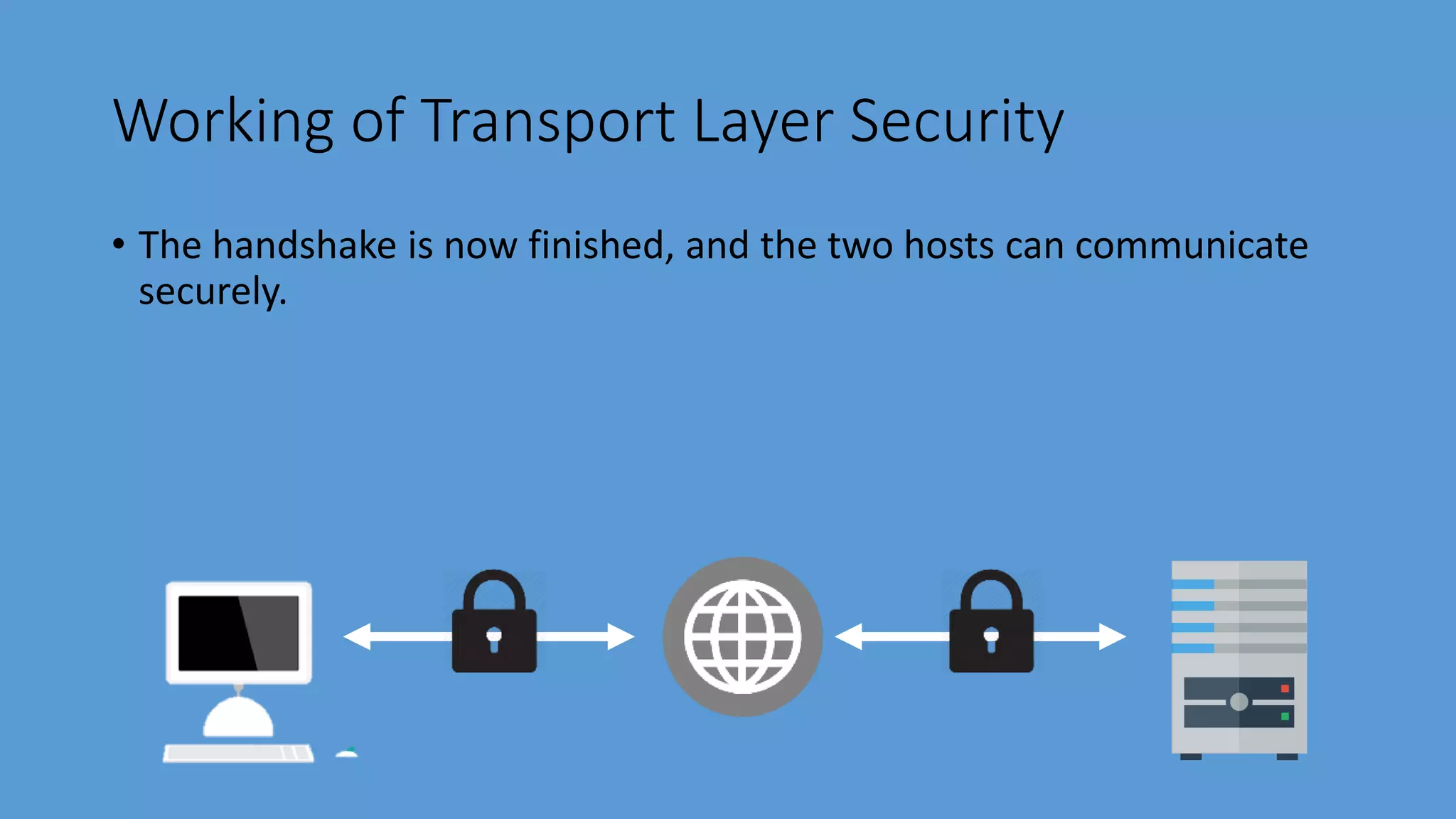
• The handshake is now finished, and the two hosts can communicate
securely.
Working of Transport Layer Security
• To close the connection, a close_notify 'alert' is used. If an attacker
tries to terminate the connection by finishing the TCP connection
(injecting a FIN packet), both sides will know the connection was
improperly terminated. The connection cannot be compromised by
this though, merely interrupted
Ok. Gtg bye.. Ok see you
later. TC
How to detect secure connections
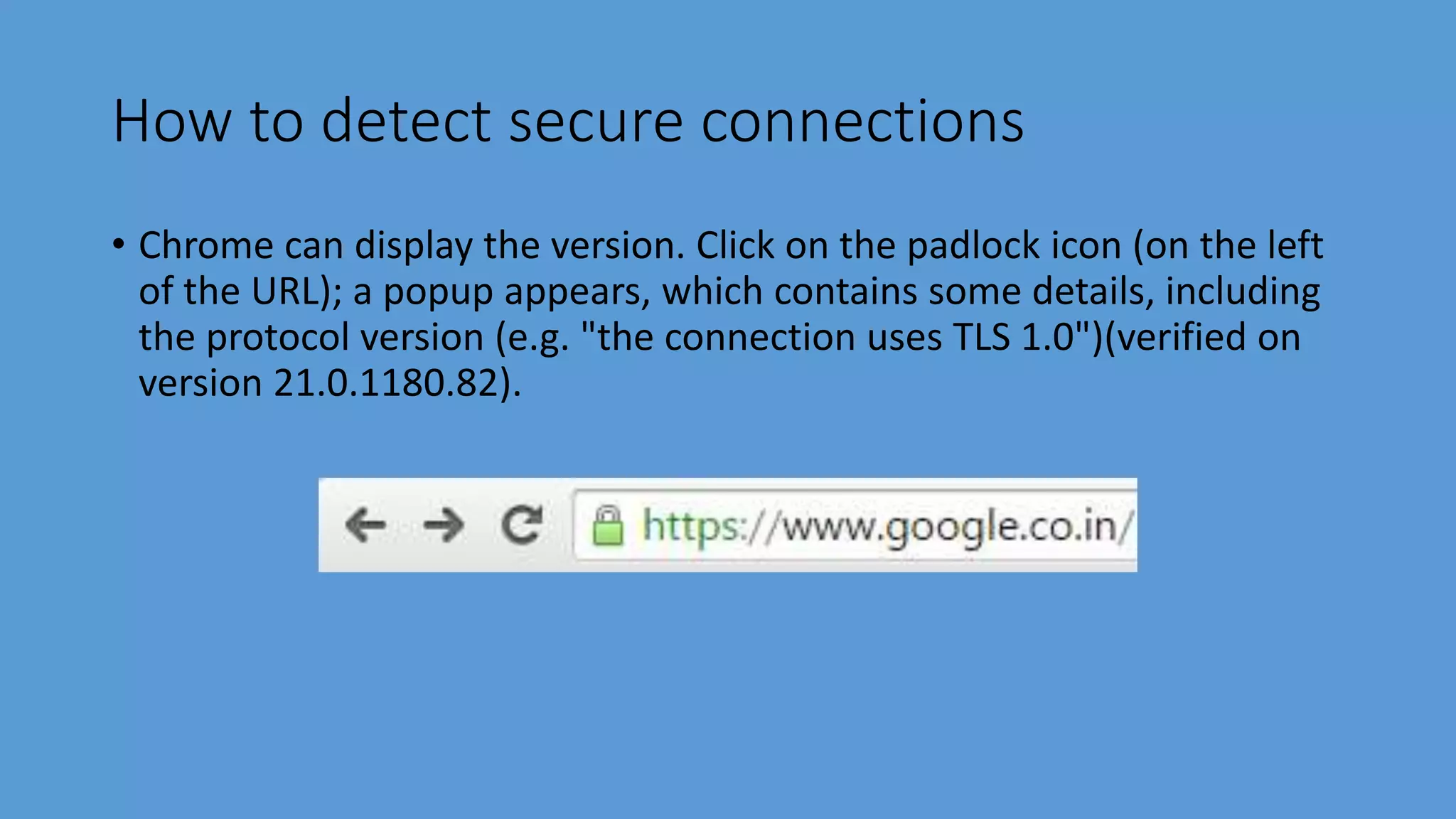
• Chrome can display the version. Click on the padlock icon (on the left
of the URL); a popup appears, which contains some details, including
the protocol version (e.g. "the connection uses TLS 1.0")(verified on
version 21.0.1180.82).
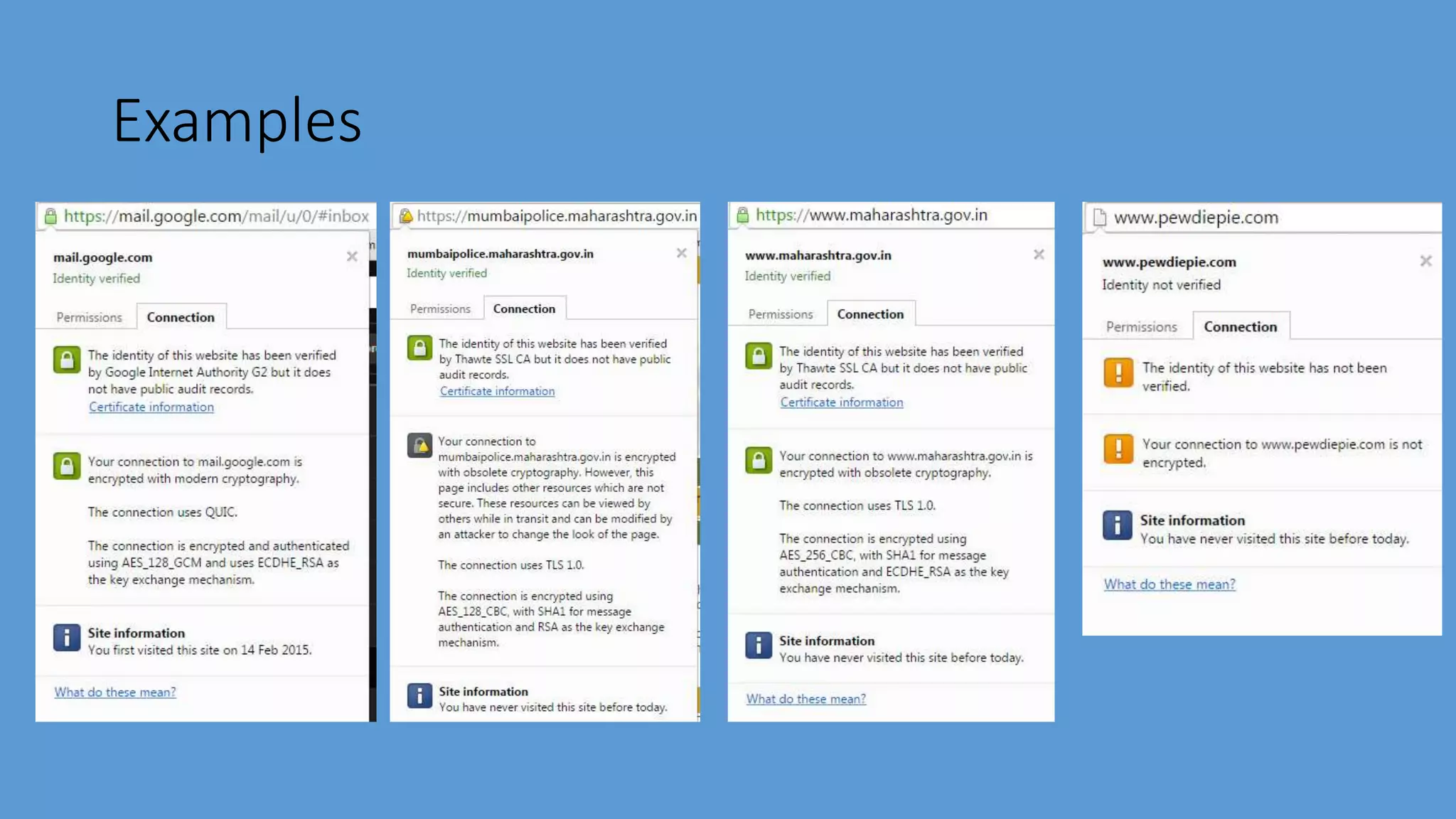
Examples
Examples
• The site identity is verified & is secure
• maharashtra.gov.in uses
• SSL
• The Certificate has been verified by Thawte SSL CA
• The key exchanging mechanism
Thank you

Transport layer security (tls)

  • 1.
  • 2.
    What is TransportLayer Security (TLS) • TLS is the successor to the Secure Sockets Layer (SSL). • Transport Layer Security (TLS) is a protocol that ensures privacy between communicating applications and their users on the Internet. -Techtarget.com
  • 3.
    Why do weneed it? • TLS ensures that no third party may eavesdrop or tamper with any message.
  • 4.
    Benefits of TLS EncryptionInteroperability Algorithm flexibility Ease of deployment
  • 5.
    Benefits of TLS •Encryption • TLS/SSL can help to secure transmitted data using encryption. • Interoperability • TLS/SSL works with most Web browsers, including Microsoft Internet Explorer and Netscape Navigator, and on most operating systems and Web servers. • Algorithm flexibility • TLS/SSL provides options for the authentication mechanisms, encryption algorithms, and hashing algorithms that are used during the secure session. • Ease of deployment • Many applications use TLS/SSL transparently on a Windows Server 2003 operating systems. • Ease of use • Because you implement TLS/SSL beneath the application layer, most of its operations are completely invisible to the client.
  • 6.
    Transport Layer Security(Basics) • SSL & TLS are protocols that operates directly on top of TCP Transport TLS TCP Network (IP) Data Link Physical
  • 7.
    Working of TransportLayer Security • The Client connect to server (using TCP). The client can be anything. • The Client sends a number of specifications : • Version of SSL/TLS • Which cipher suites, compression method it wants to use. Ver : TLS 1.2 CS:RSA,DSA,RC4 COMPMETHOD
  • 8.
    Working of TransportLayer Security • The server checks what the highest SSL/TLS version is that is supported by them both, picks a ciphersuite from one of the client's options (if it supports one), and optionally picks a compression method. Client Ver : TLS 1.2  CS: RSA  DSA RC4 COMPMETHOD Server Ver : TLS 1.1 1.2 1.3 CS:RSA  COMPMETHOD
  • 9.
    Working of TransportLayer Security • After this the basic setup is done, the server sends its certificate. • This certificate must be trusted by either the client itself or a party that the client trusts. • For example if the client trusts GeoTrust, then the client can trust the certificate from Google.com, because GeoTrust cryptographically signed Google's certificate.
  • 10.
    Working of TransportLayer Security • Having verified the certificate and being certain this server really is who he claims to be (and not a man in the middle), a key is exchanged. • This can be a public key, a "PreMasterSecret" or simply nothing, depending on the chosen ciphersuite.
  • 11.
    Working of TransportLayer Security • Both the server and the client can now compute the key for the symmetric encryption. 01001000011001010 11011000110110001 101111 Hello
  • 12.
    Working of TransportLayer Security • The handshake is now finished, and the two hosts can communicate securely.
  • 13.
    Working of TransportLayer Security • To close the connection, a close_notify 'alert' is used. If an attacker tries to terminate the connection by finishing the TCP connection (injecting a FIN packet), both sides will know the connection was improperly terminated. The connection cannot be compromised by this though, merely interrupted Ok. Gtg bye.. Ok see you later. TC
  • 14.
    How to detectsecure connections • Chrome can display the version. Click on the padlock icon (on the left of the URL); a popup appears, which contains some details, including the protocol version (e.g. "the connection uses TLS 1.0")(verified on version 21.0.1180.82).
  • 15.
  • 16.
    Examples • The siteidentity is verified & is secure • maharashtra.gov.in uses • SSL • The Certificate has been verified by Thawte SSL CA • The key exchanging mechanism
  • 17.