Guided by : Prof. D. B. Morvadia
Prepared by : Mihir Lodhia
Std. : MBA Sem II
Sub. : MIS
Institute : NRVIBMS, Junagadh, Guajrat, India
 A device performing the task of modulation and de-
modulation.
 Conversion of Digital (signal) to Analog (signal) is
called Modulation.
 Conversion of Analog (signal) to Digital (signal) is
called De-modulation.
 It simply stands for modulator-demodulator.
 Modems are available in different speed ranging from
300 to 600 bps and high speed modem ranging from
600 bps to 11 mbps.
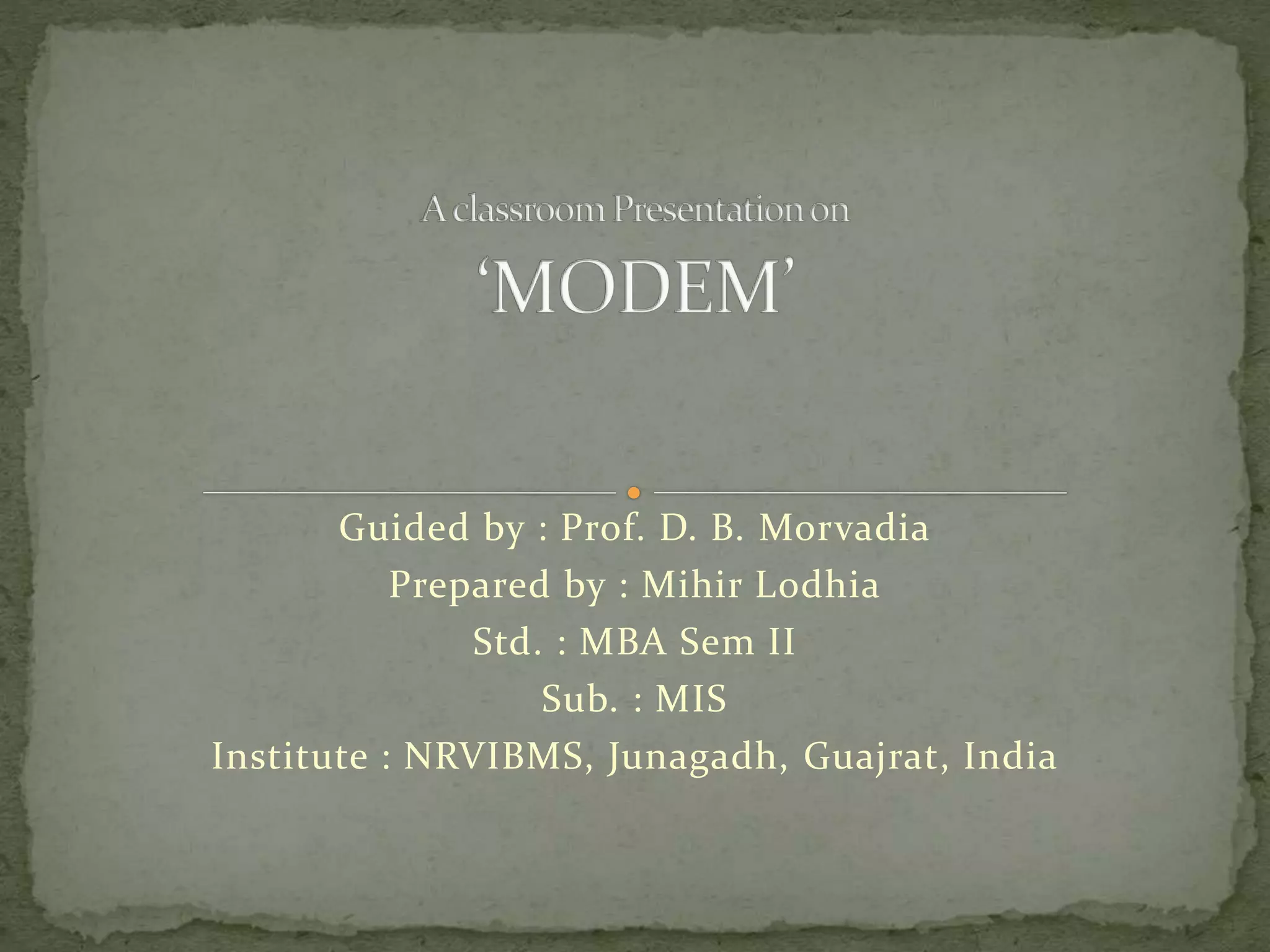
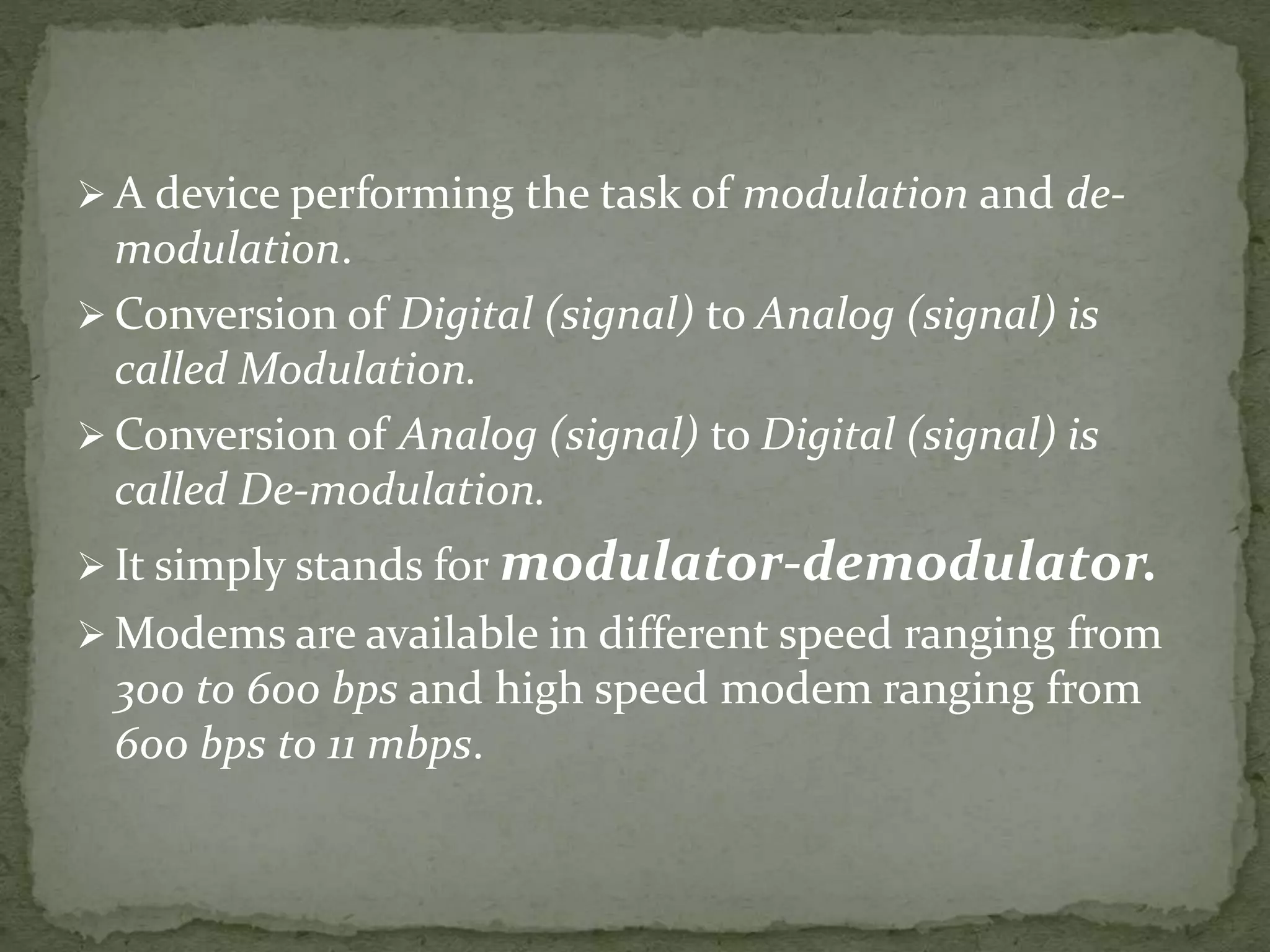
(A) Internal Modem :-
 An integrated part of system cabinet.
 It’s a circuit board to be put inside CPU.
 Contains no lights as indicator of active device.
 Also called on-board modem
 Mainly of two types :
1) Dial-up :
2) Wi-Fi :
Merits of Internal Modem :
 Required less space on desk.
 Less expensive.
 Doesn’t require separate power supply.
 Problems of dust, humidity can be avoided.
Demerits of Internal Modem :
 Can not used for multi plugging task.
 Difficult to find problems when not working.
 Can not used for different computers.
Internal Modem
Internal Modem
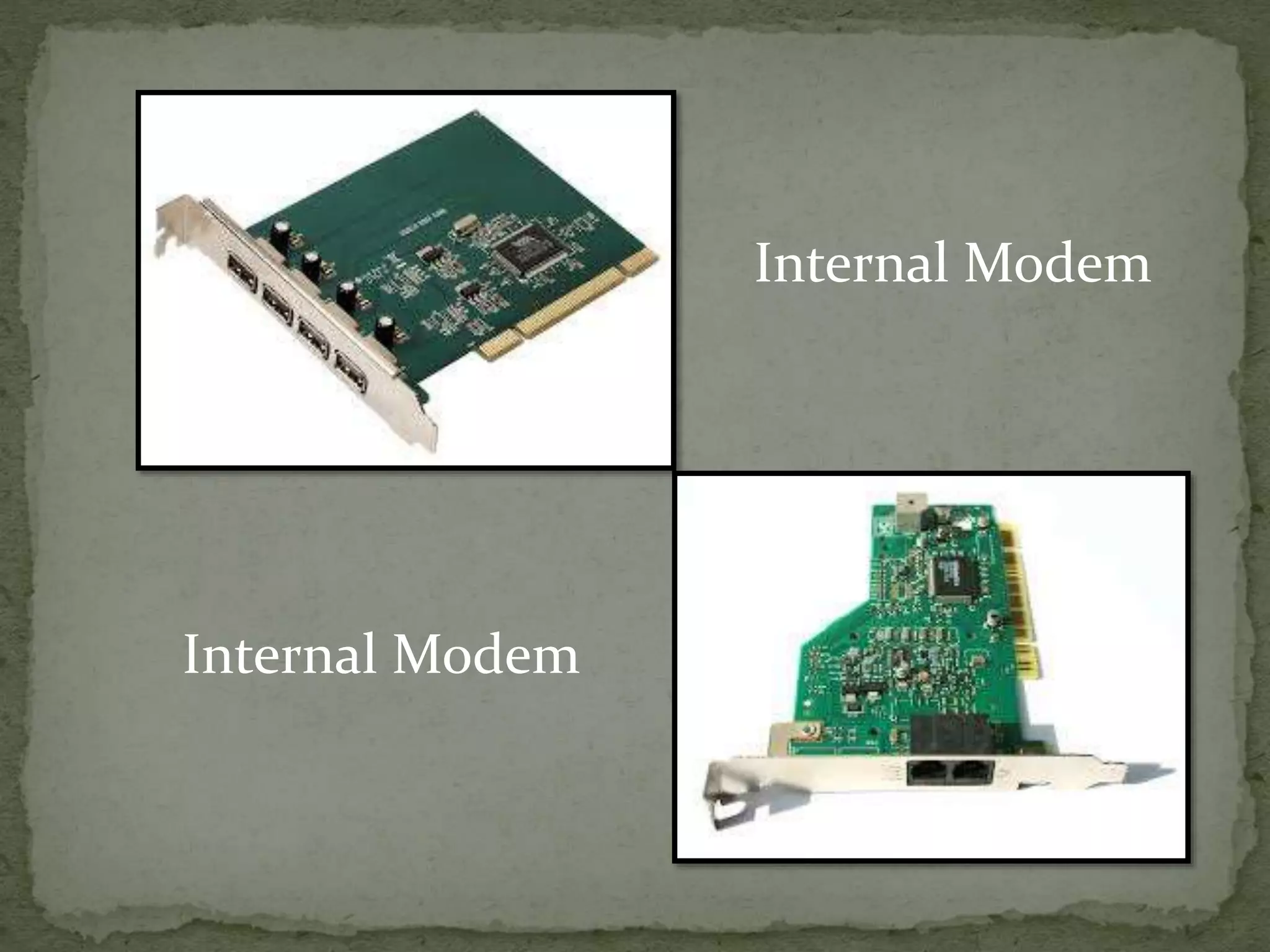
(B) External Modem :-
 A separate device from the computer.
 A portable pocket sized device.
 It is connected to computer through cable.
 It has a separate power supply with an adapter and
a power code.
 It is connected to telephone line for internet
access.
 A light , antenna and plug-ins are available in it.
Merits of External Modem :
 Can use for more computer together.
 Problems of working can be found through power light
and network connectivity light.
 Wi-Fi faculties can also be availed.
 Problems of connection lost are not seen as cable is
connected.
Demerits of External Modem :
 Can require separate space to put on desk.
 Costly if single system operated.
 Problem of dust, humidity and Case break can be
happened
External Modem
MODEM - By Mihir Lodhia

MODEM - By Mihir Lodhia

  • 1.
    Guided by :Prof. D. B. Morvadia Prepared by : Mihir Lodhia Std. : MBA Sem II Sub. : MIS Institute : NRVIBMS, Junagadh, Guajrat, India
  • 3.
     A deviceperforming the task of modulation and de- modulation.  Conversion of Digital (signal) to Analog (signal) is called Modulation.  Conversion of Analog (signal) to Digital (signal) is called De-modulation.  It simply stands for modulator-demodulator.  Modems are available in different speed ranging from 300 to 600 bps and high speed modem ranging from 600 bps to 11 mbps.
  • 5.
    (A) Internal Modem:-  An integrated part of system cabinet.  It’s a circuit board to be put inside CPU.  Contains no lights as indicator of active device.  Also called on-board modem  Mainly of two types : 1) Dial-up : 2) Wi-Fi :
  • 6.
    Merits of InternalModem :  Required less space on desk.  Less expensive.  Doesn’t require separate power supply.  Problems of dust, humidity can be avoided. Demerits of Internal Modem :  Can not used for multi plugging task.  Difficult to find problems when not working.  Can not used for different computers.
  • 7.
  • 8.
    (B) External Modem:-  A separate device from the computer.  A portable pocket sized device.  It is connected to computer through cable.  It has a separate power supply with an adapter and a power code.  It is connected to telephone line for internet access.  A light , antenna and plug-ins are available in it.
  • 9.
    Merits of ExternalModem :  Can use for more computer together.  Problems of working can be found through power light and network connectivity light.  Wi-Fi faculties can also be availed.  Problems of connection lost are not seen as cable is connected. Demerits of External Modem :  Can require separate space to put on desk.  Costly if single system operated.  Problem of dust, humidity and Case break can be happened
  • 10.