CRYSTAL FIELD THEORY
By:
18311A0304
18311A0313
18311A0315
18311A0324
18311A0329
18311A0338
18311A0340
HISTORY OF CRYSTAL FIELD THEORY
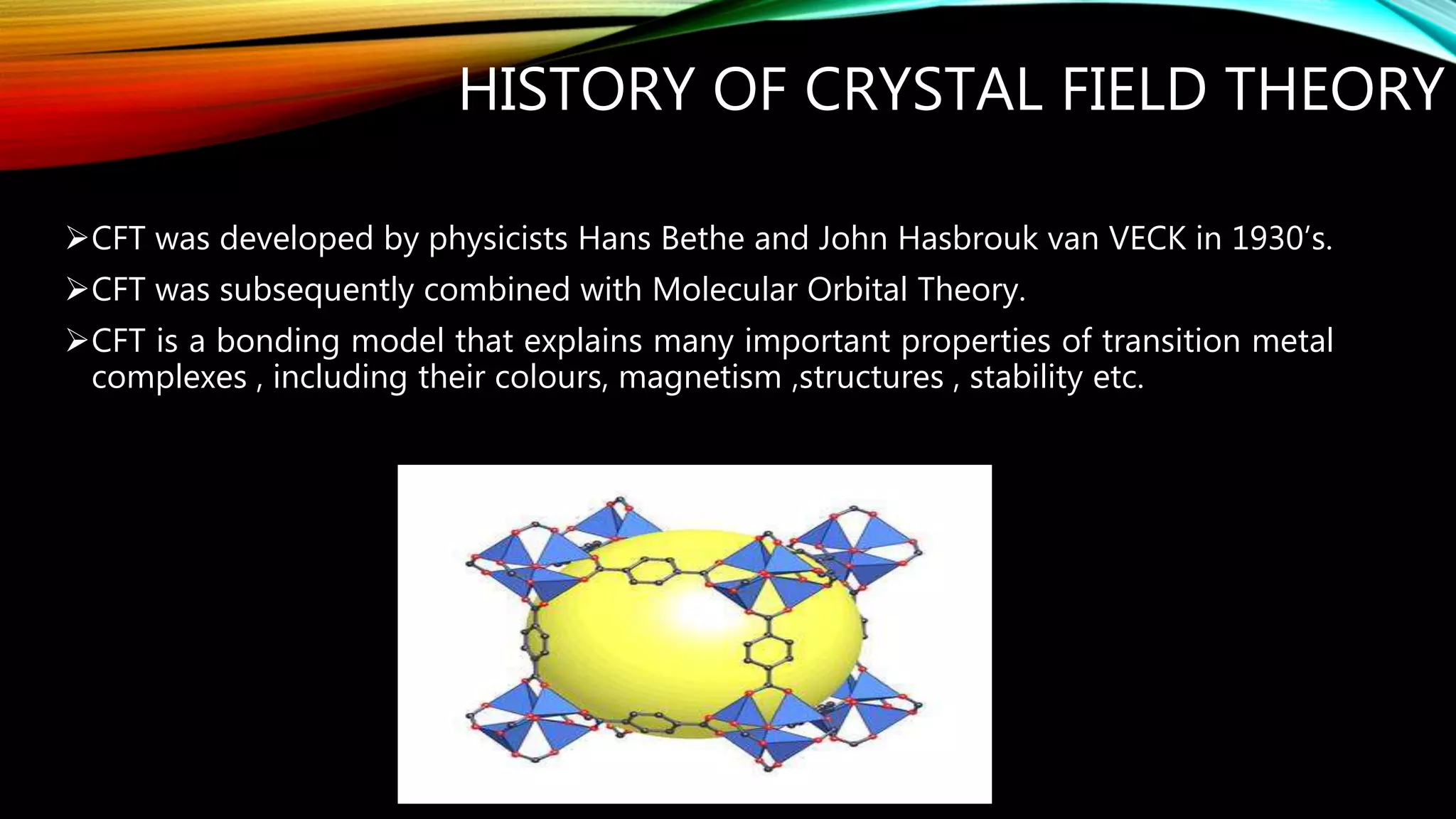
CFT was developed by physicists Hans Bethe and John Hasbrouk van VECK in 1930’s.
CFT was subsequently combined with Molecular Orbital Theory.
CFT is a bonding model that explains many important properties of transition metal
complexes , including their colours, magnetism ,structures , stability etc.
FEATURES OF CRYSTAL FIELD THEORY
CFT assume that bonds between central metal atom or ion and ligands are
purely ionic.
Examples of central metal atoms are Cu ,Mg ,Ca etc.
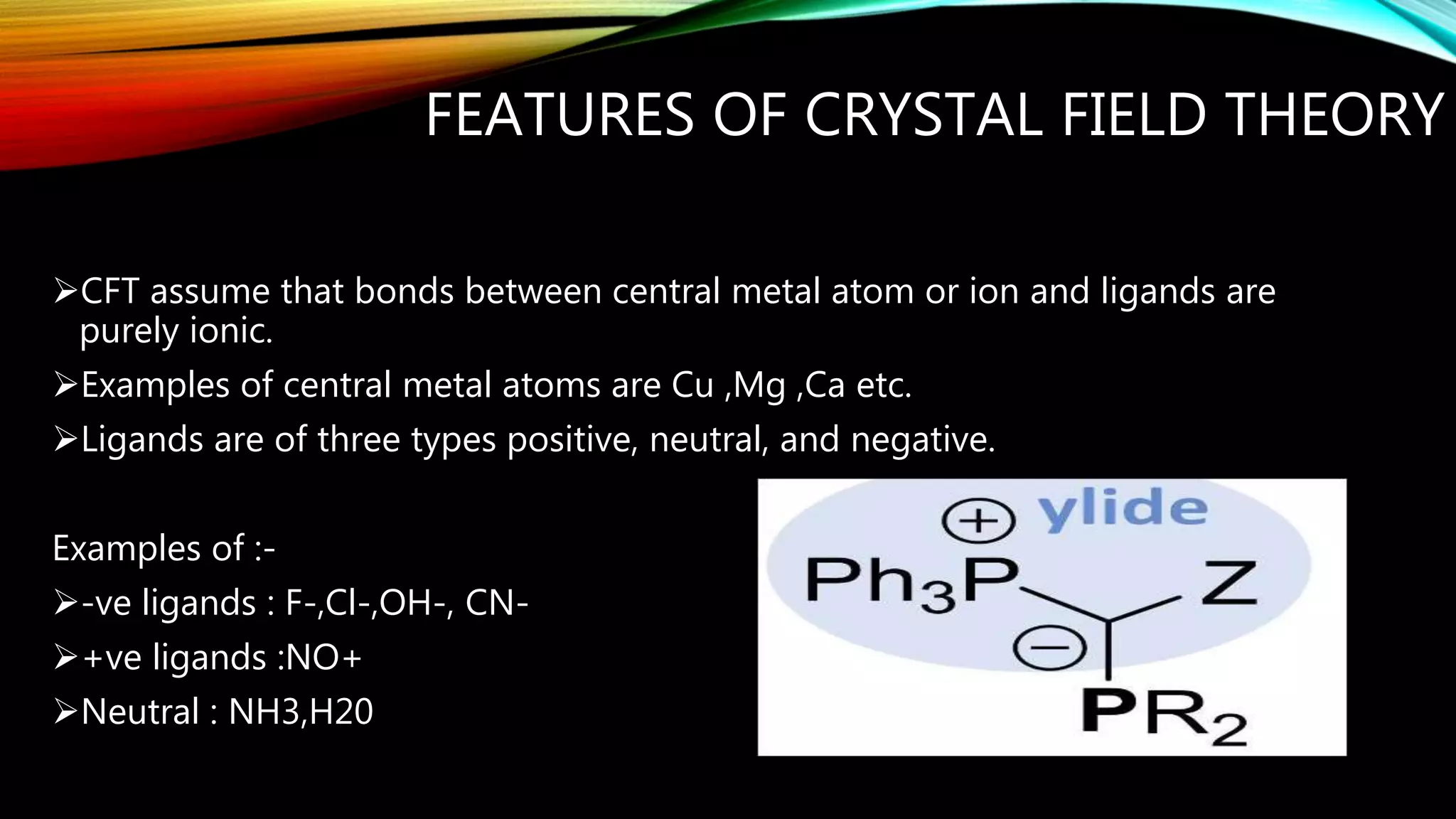
Ligands are of three types positive, neutral, and negative.
Examples of :-
-ve ligands : F-,Cl-,OH-, CN-
+ve ligands :NO+
Neutral : NH3,H20
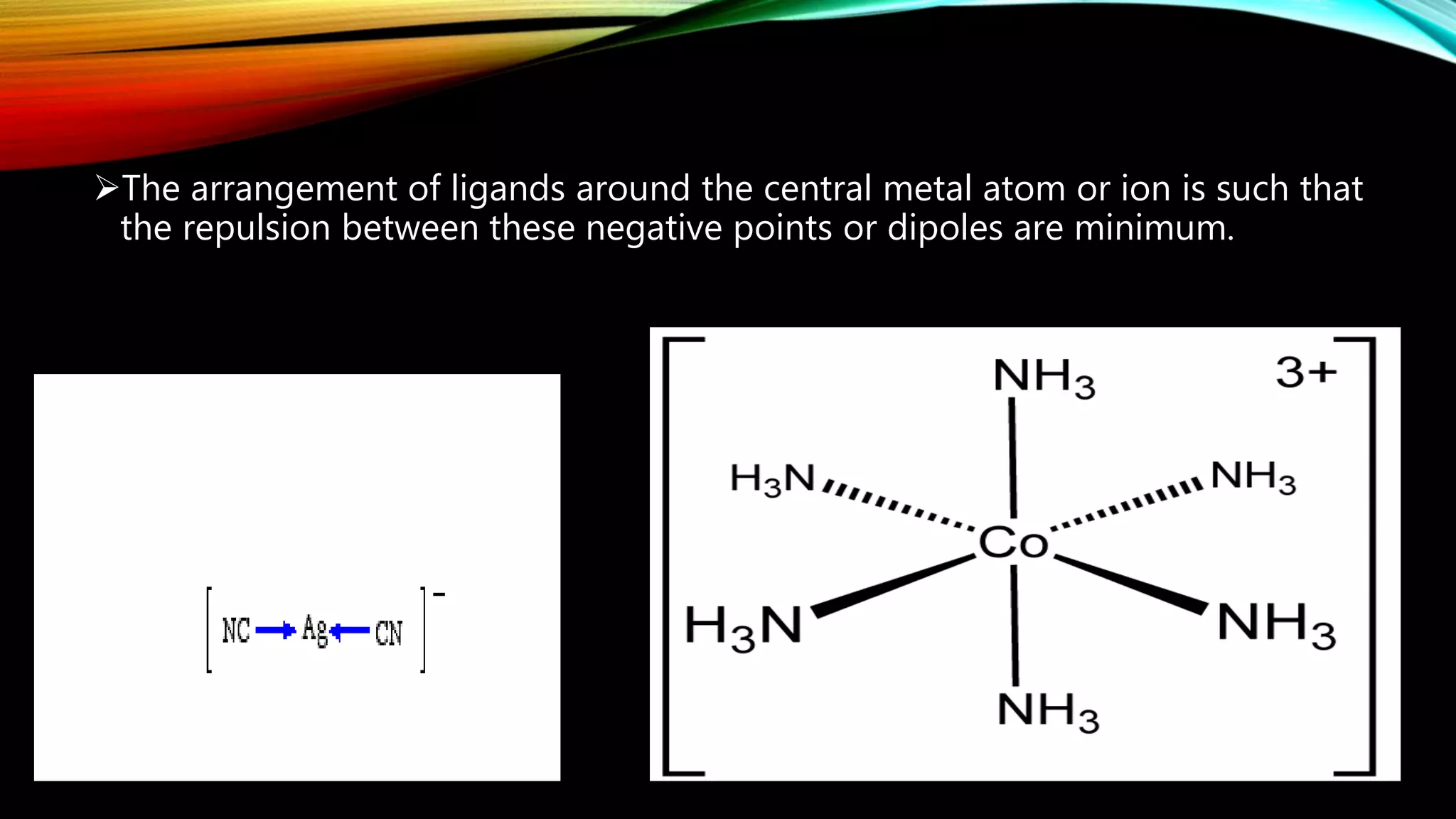
The arrangement of ligands around the central metal atom or ion is such that
the repulsion between these negative points or dipoles are minimum.
The forces between metals and ligands are of two types :-
1. Attraction Force :-
positive charge of the central metal atom and negative charge of ligands.
2. Repulsion Force :-
D-electrons of central metal atom and lone pair electrons of ligands.
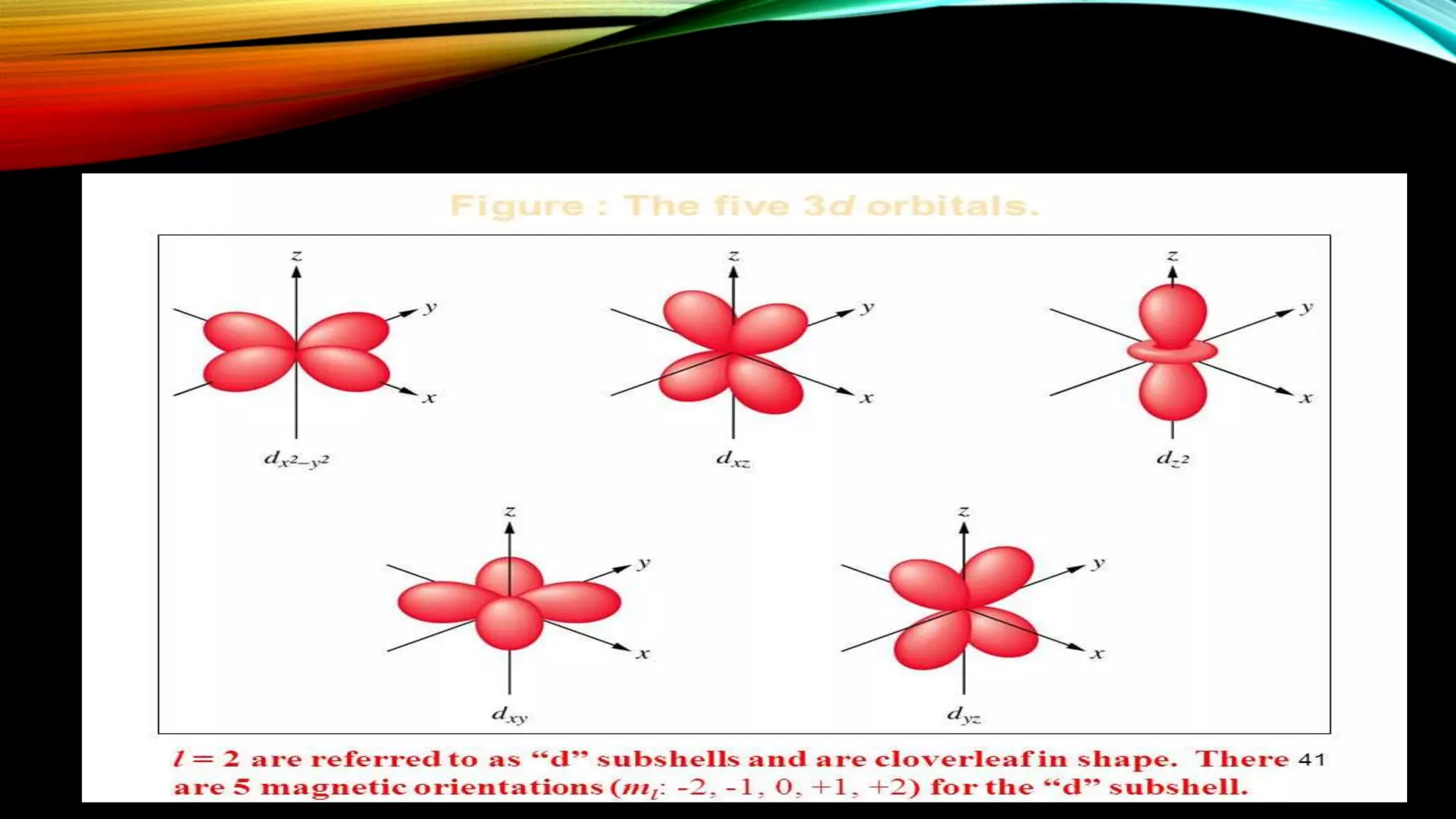
D-orbitals of central metal atom are divided into two sets depending on their
orientation.
Non-axial orbitals/ t2g orbitals/ three fold degenerate orbitals :-
dxy, dyz, dxz
Axial orbitals/ eg orbitals/ two fold degenerate orbitals :-
dx2-y2, dz2
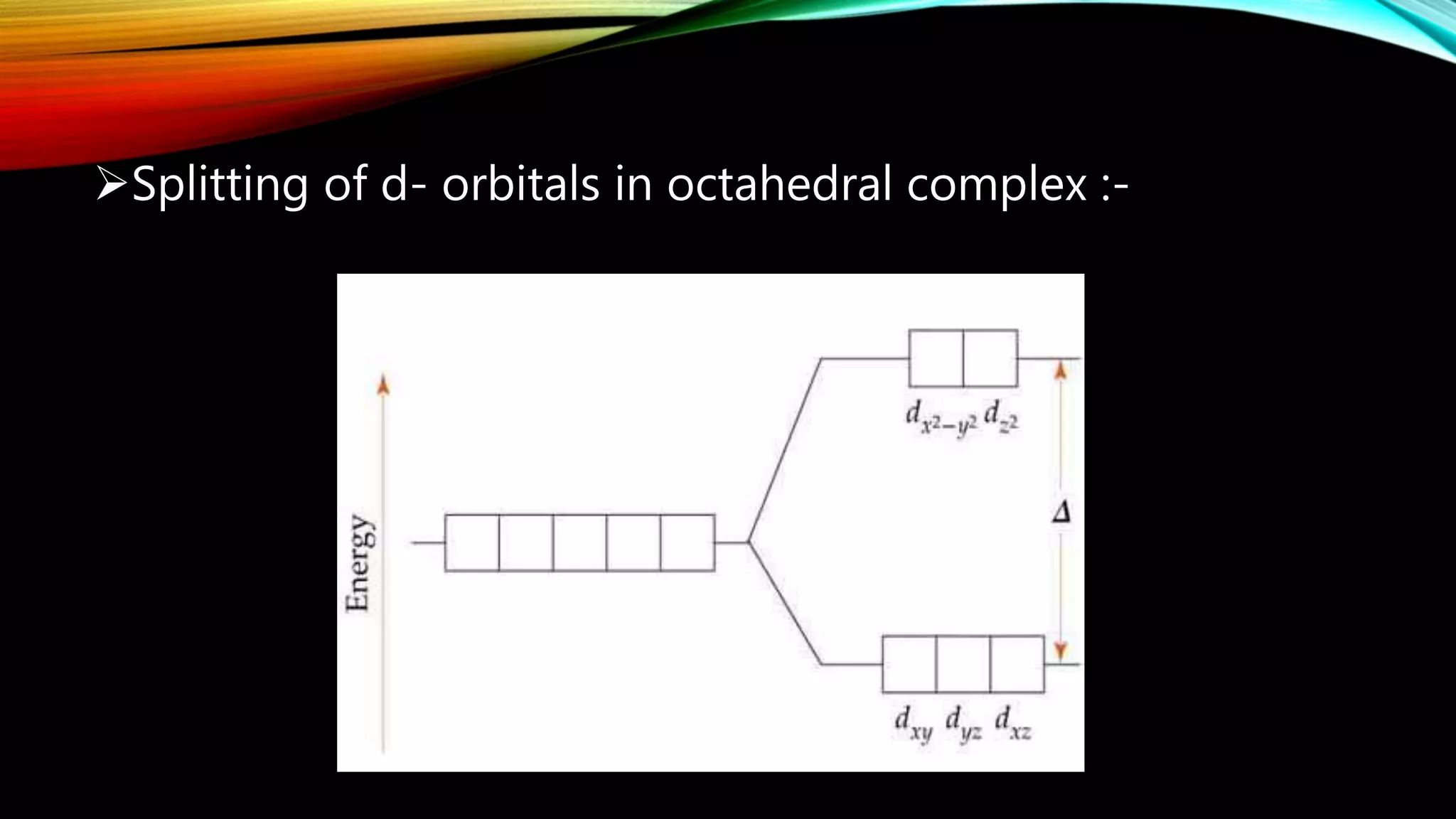
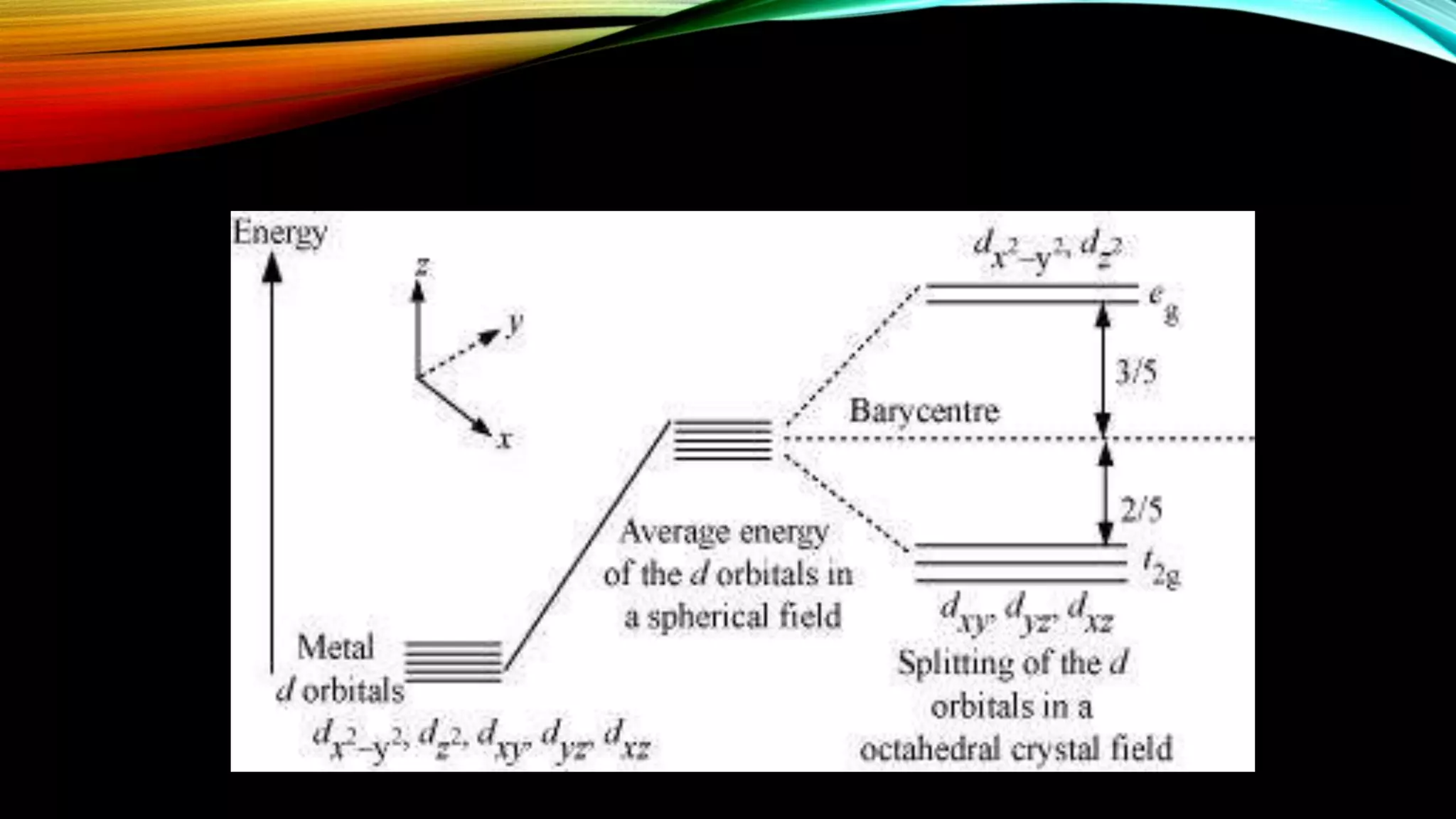
Splitting of d- orbitals in octahedral complex :-
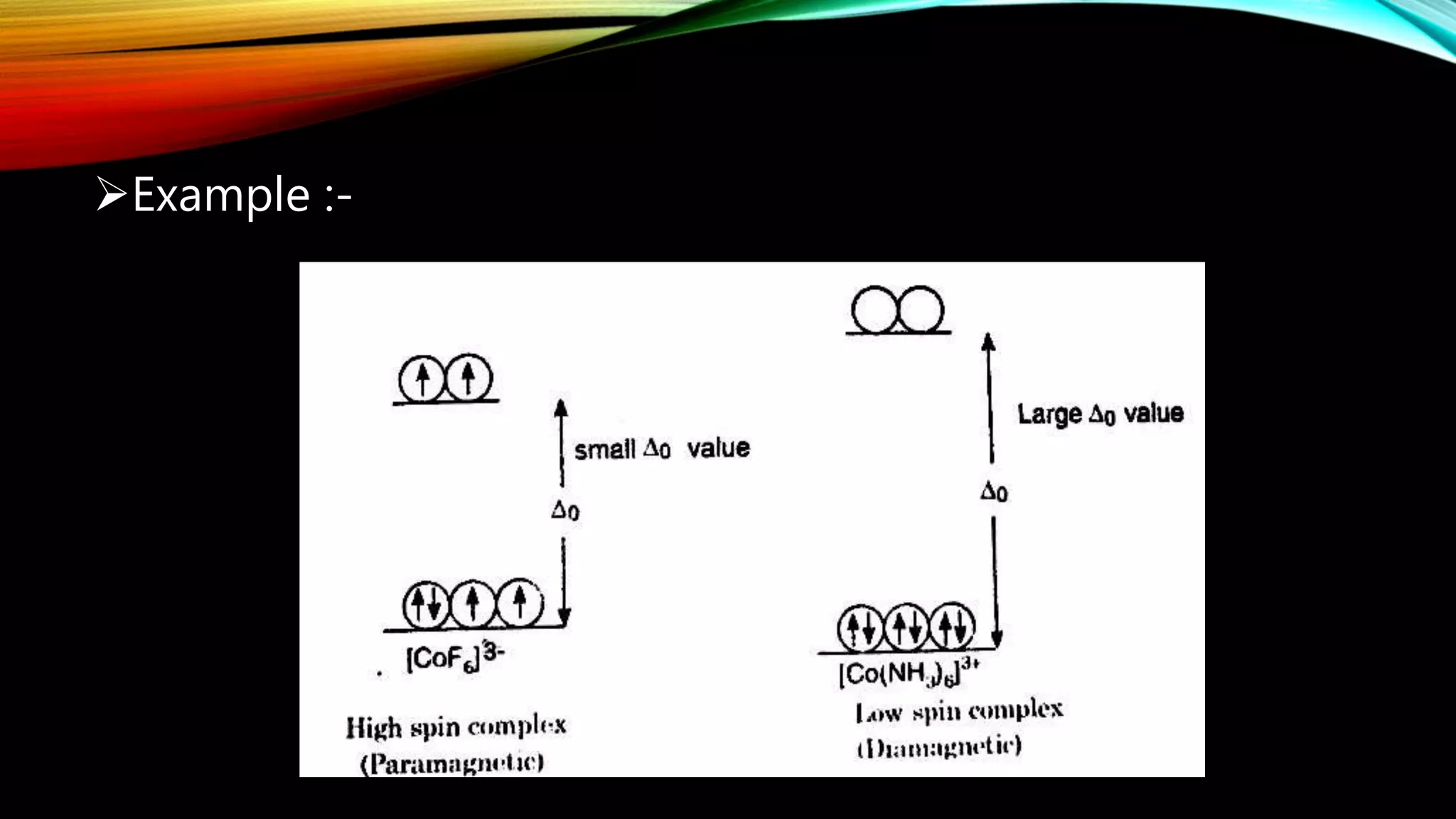
Example :-
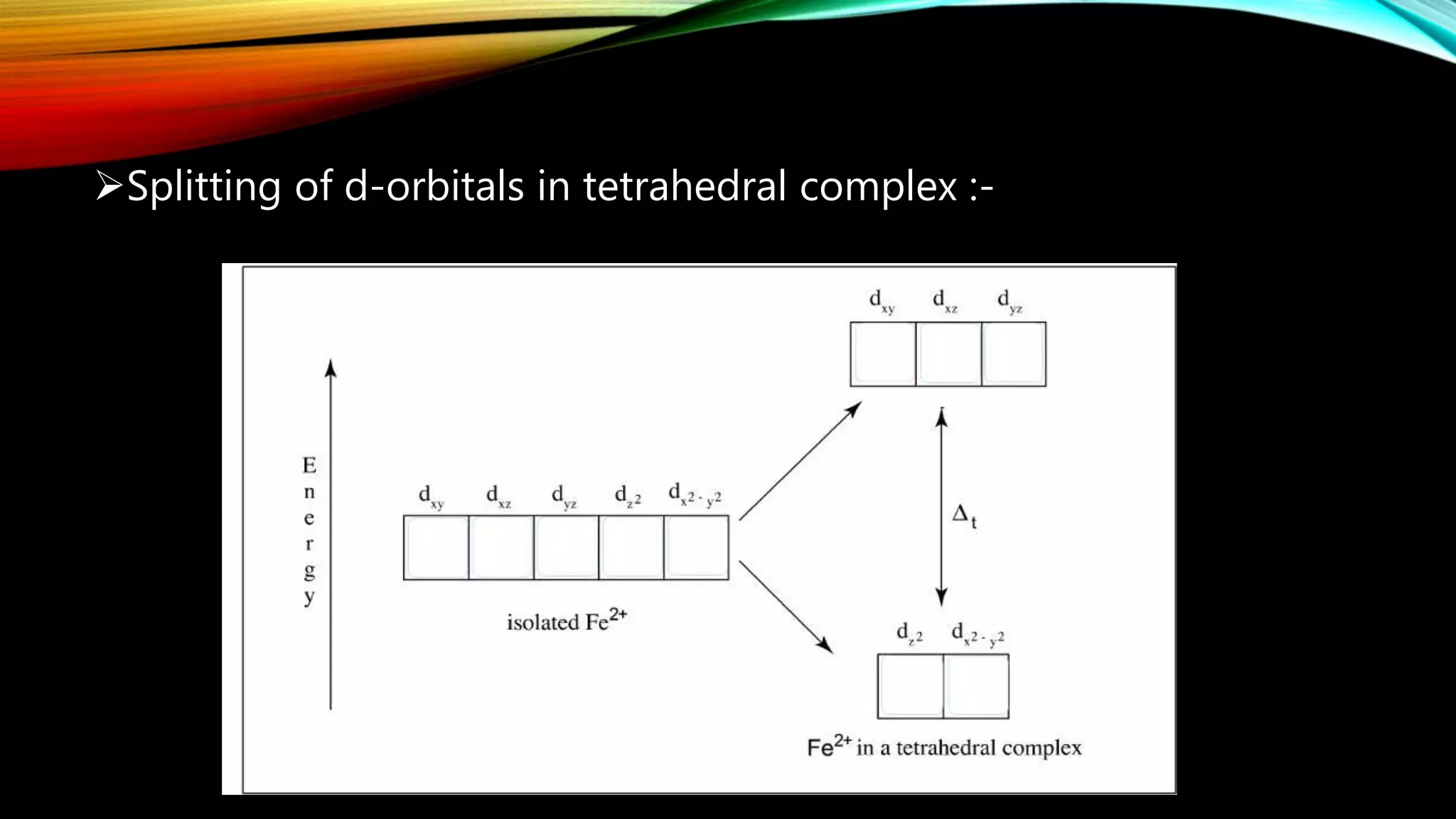
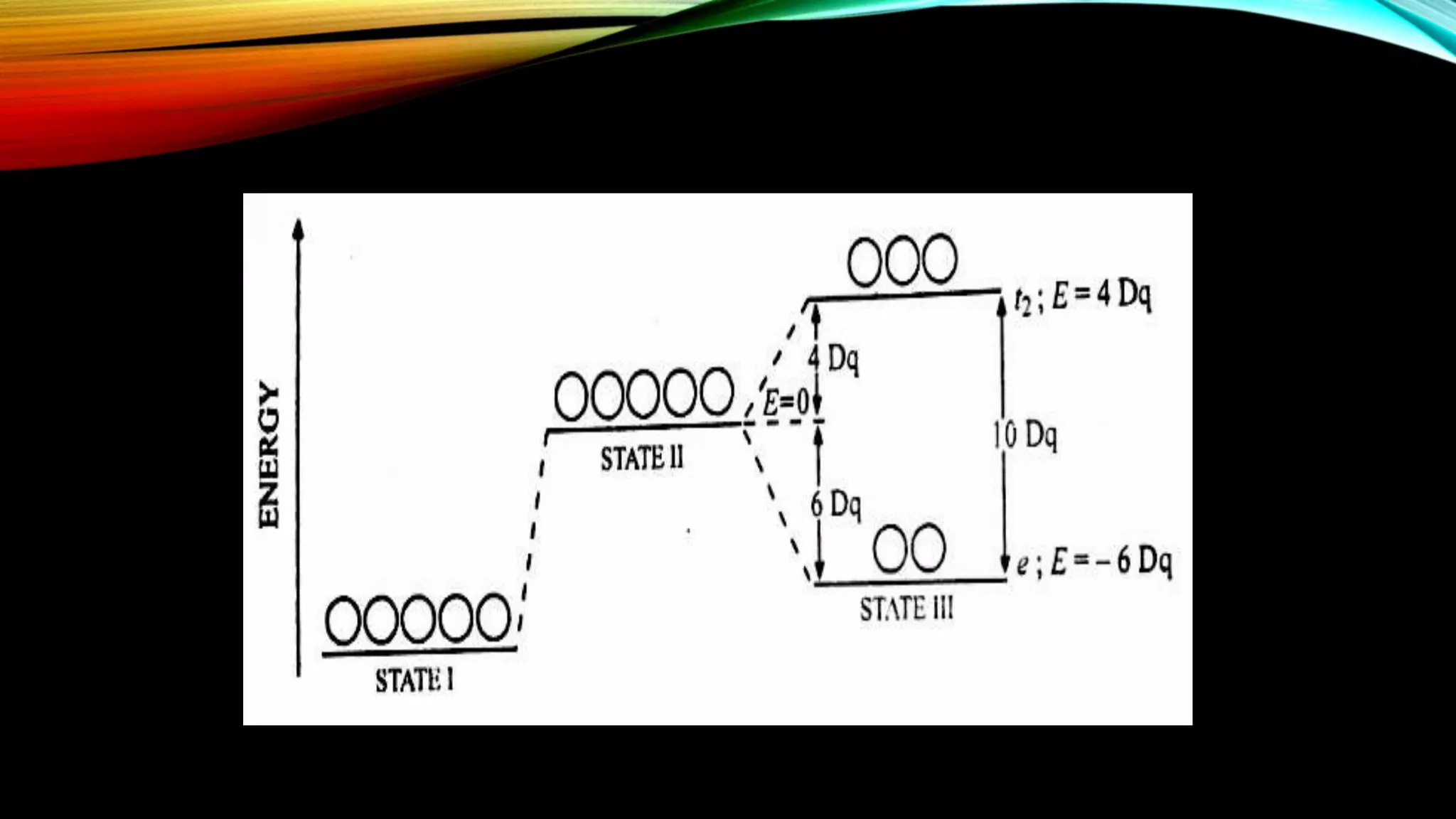
Splitting of d-orbitals in tetrahedral complex :-
Example :-
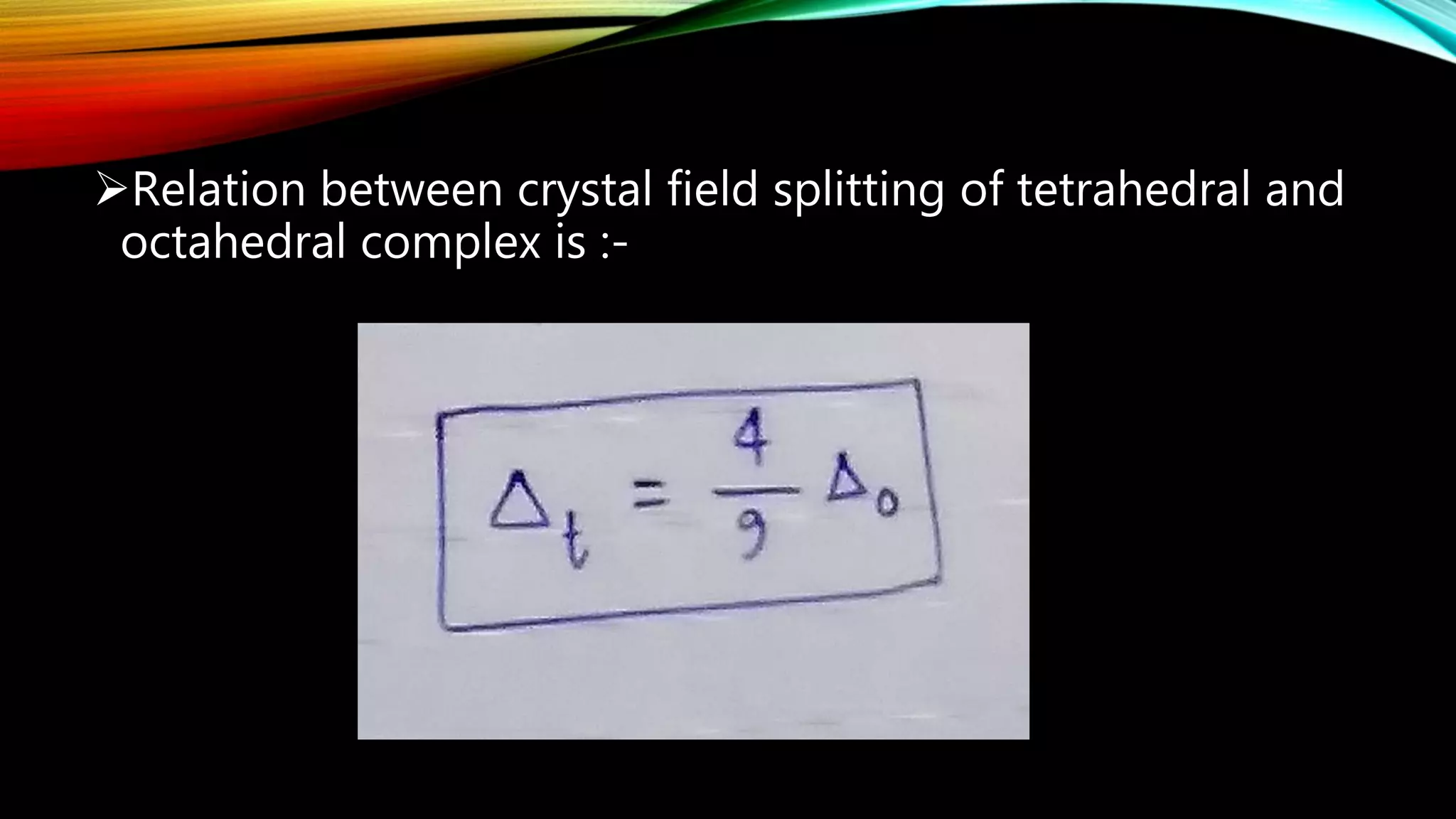
Relation between crystal field splitting of tetrahedral and
octahedral complex is :-
Uses of Crystal Field Theory :-
1. It can explain high spin and low spin state of coordinate compounds.
2. It can explain magnetic properties of complex compounds.
3. It also explains colour of complex compounds.
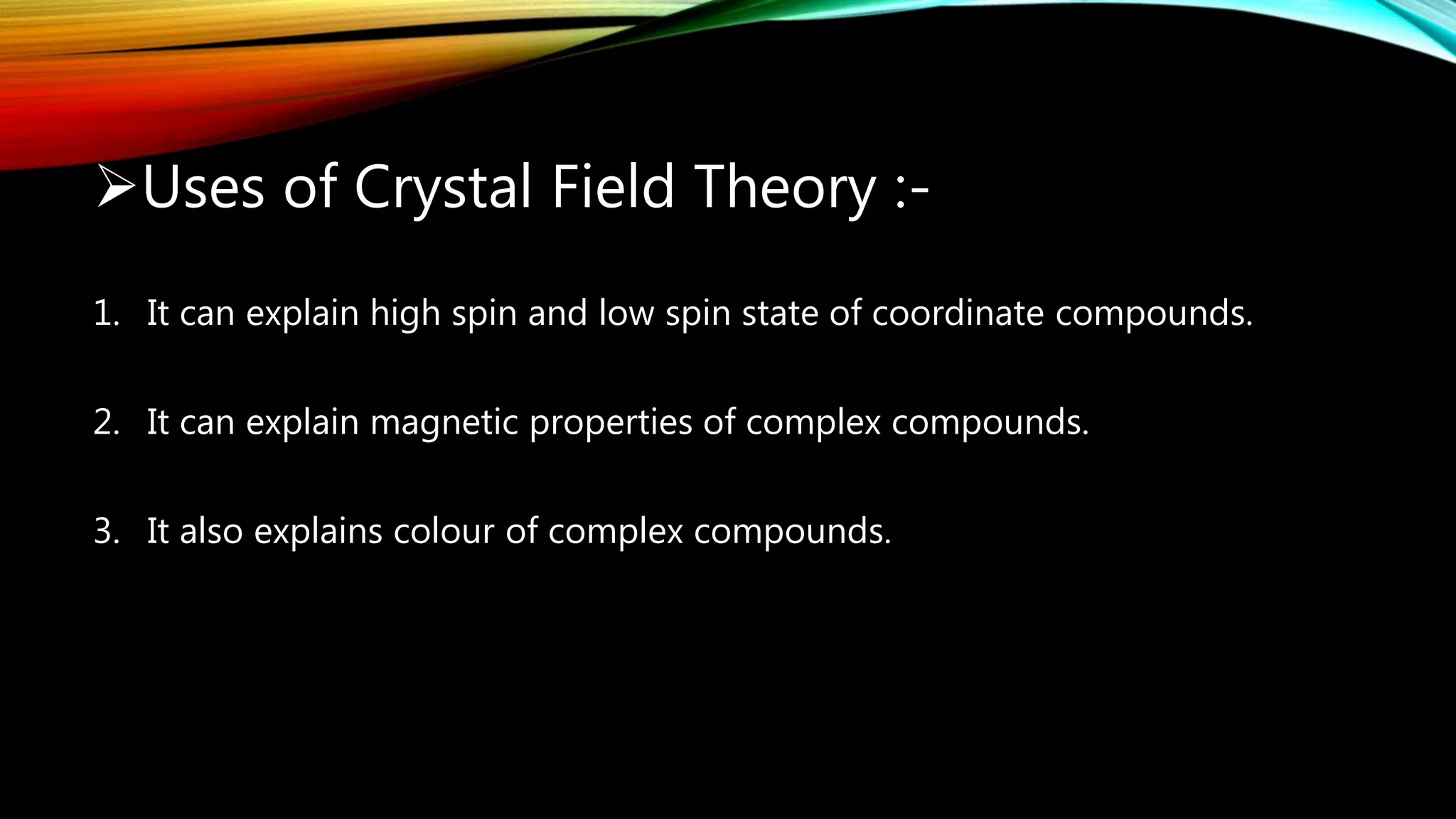
Pentagonal bipyramidal :-
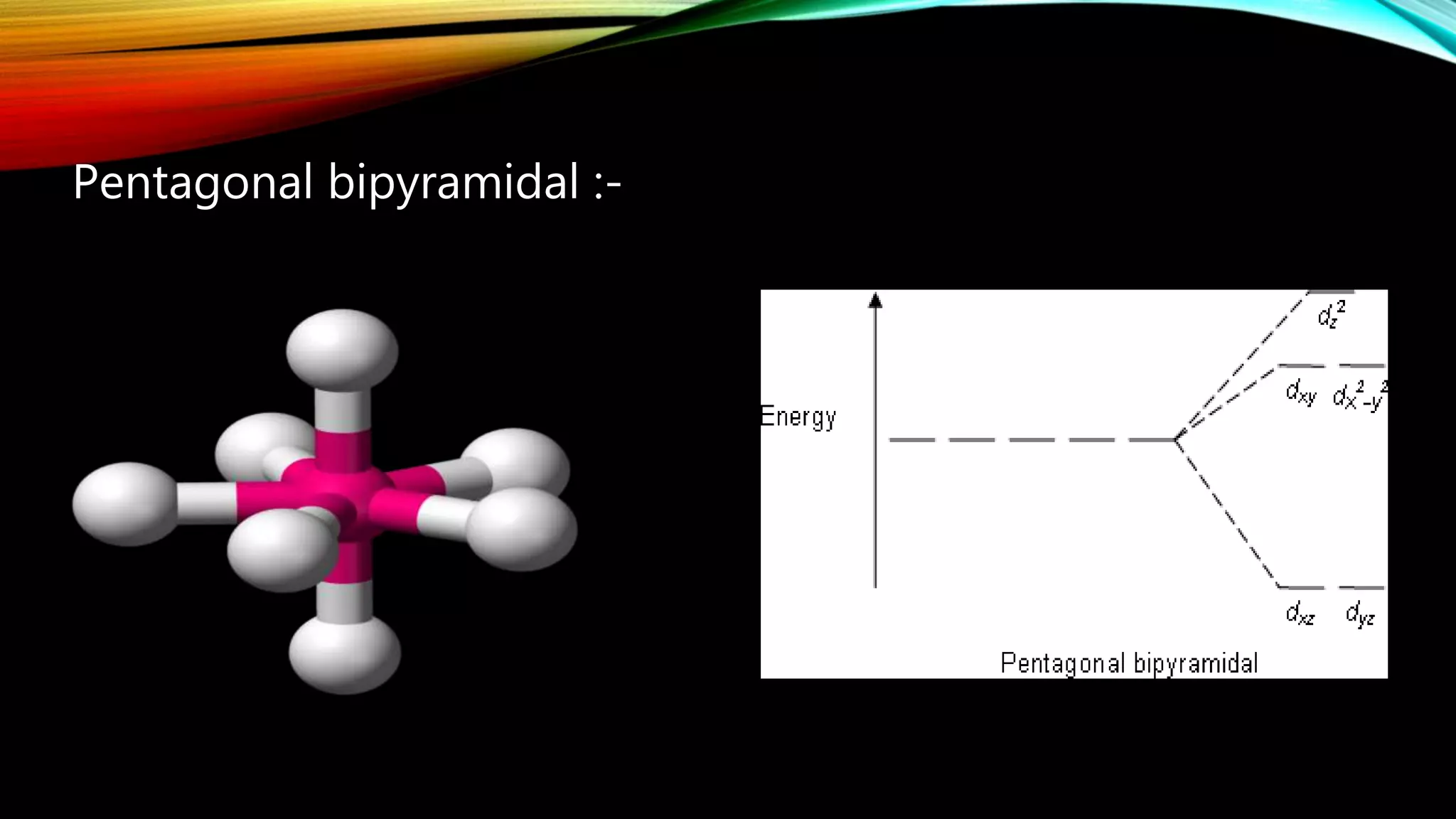
Square antiprismatic :-
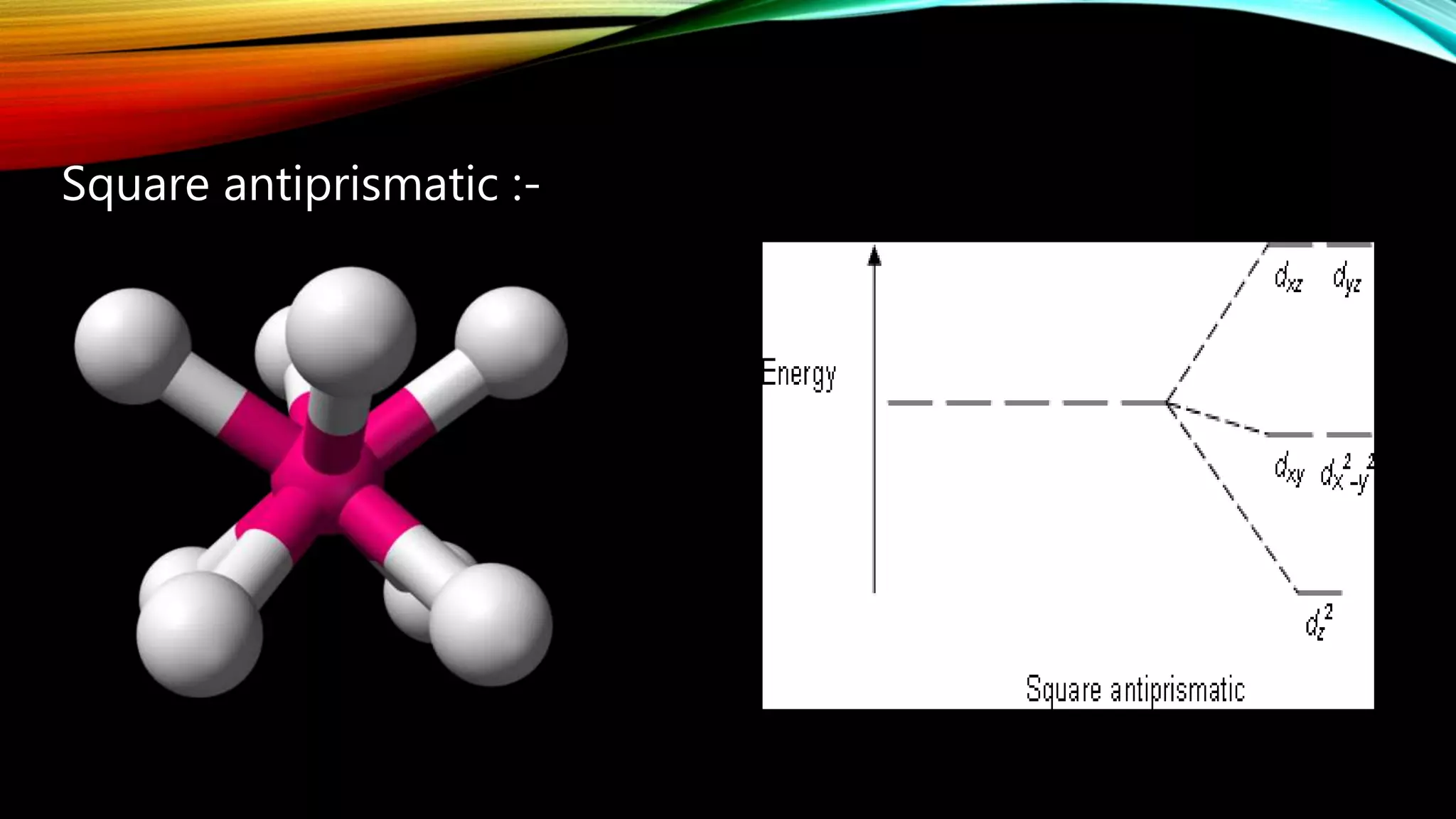
Sauare planar :-
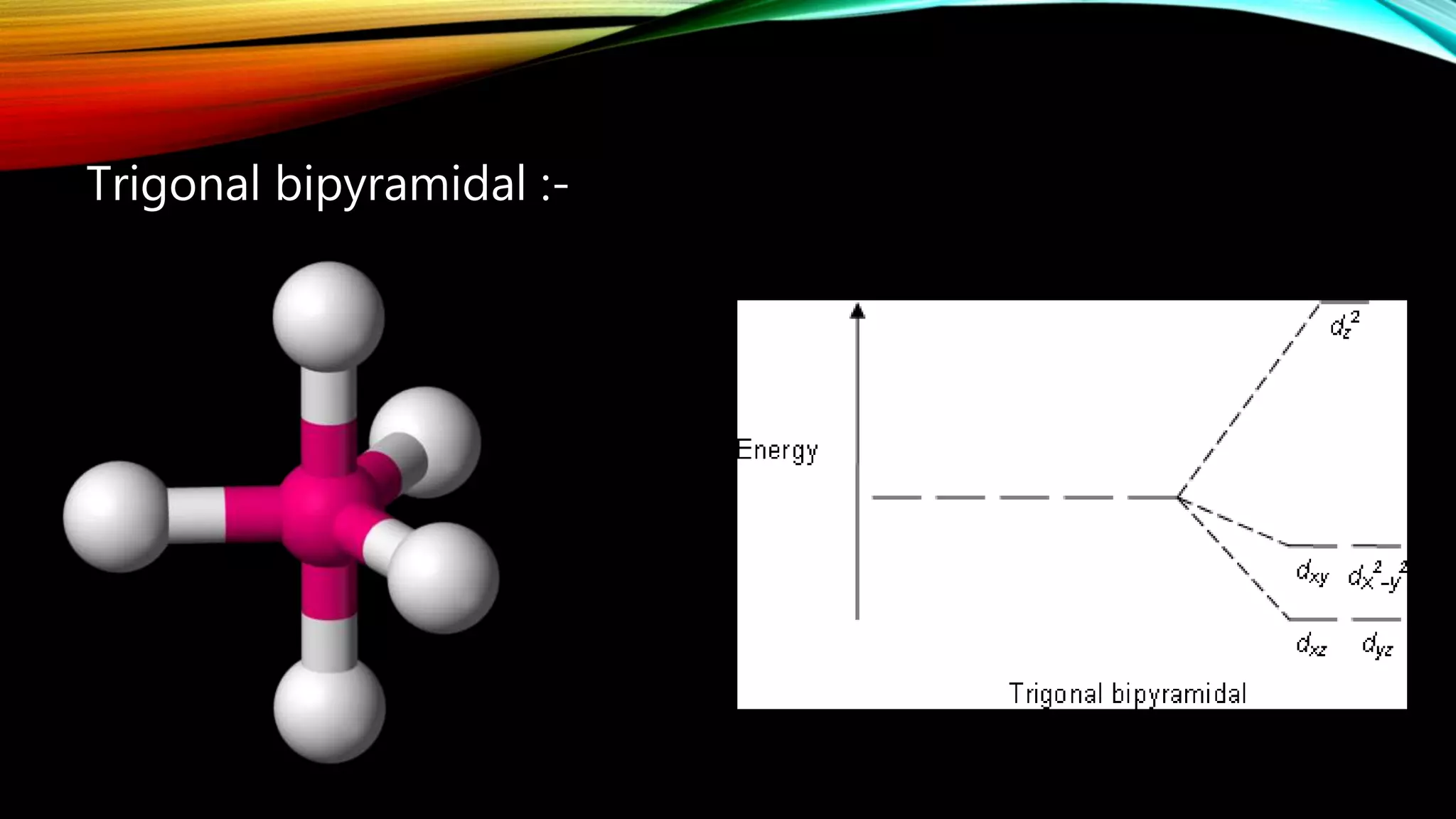
Trigonal bipyramidal :-
Crystal field theory

Crystal field theory

  • 1.
  • 2.
    HISTORY OF CRYSTALFIELD THEORY CFT was developed by physicists Hans Bethe and John Hasbrouk van VECK in 1930’s. CFT was subsequently combined with Molecular Orbital Theory. CFT is a bonding model that explains many important properties of transition metal complexes , including their colours, magnetism ,structures , stability etc.
  • 3.
    FEATURES OF CRYSTALFIELD THEORY CFT assume that bonds between central metal atom or ion and ligands are purely ionic. Examples of central metal atoms are Cu ,Mg ,Ca etc. Ligands are of three types positive, neutral, and negative. Examples of :- -ve ligands : F-,Cl-,OH-, CN- +ve ligands :NO+ Neutral : NH3,H20
  • 4.
    The arrangement ofligands around the central metal atom or ion is such that the repulsion between these negative points or dipoles are minimum.
  • 5.
    The forces betweenmetals and ligands are of two types :- 1. Attraction Force :- positive charge of the central metal atom and negative charge of ligands. 2. Repulsion Force :- D-electrons of central metal atom and lone pair electrons of ligands. D-orbitals of central metal atom are divided into two sets depending on their orientation. Non-axial orbitals/ t2g orbitals/ three fold degenerate orbitals :- dxy, dyz, dxz Axial orbitals/ eg orbitals/ two fold degenerate orbitals :- dx2-y2, dz2
  • 7.
    Splitting of d-orbitals in octahedral complex :-
  • 8.
  • 10.
    Splitting of d-orbitalsin tetrahedral complex :-
  • 12.
  • 13.
    Relation between crystalfield splitting of tetrahedral and octahedral complex is :-
  • 14.
    Uses of CrystalField Theory :- 1. It can explain high spin and low spin state of coordinate compounds. 2. It can explain magnetic properties of complex compounds. 3. It also explains colour of complex compounds.

  • 15.
  • 16.
  • 17.
  • 18.