CLASS PRESENTATION
ON
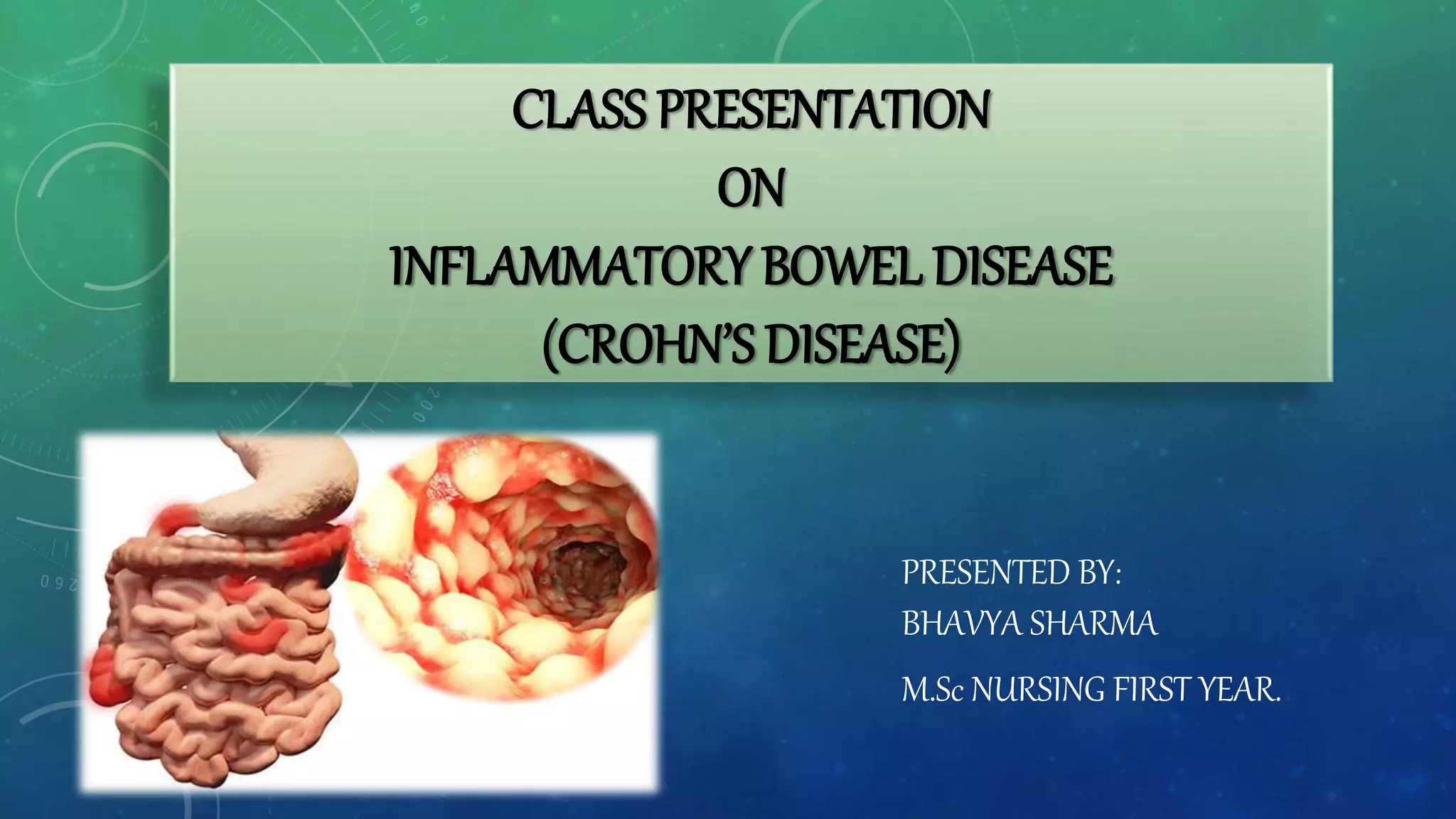
INFLAMMATORY BOWEL DISEASE
(CROHN’S DISEASE)
PRESENTED BY:
BHAVYA SHARMA
M.Sc NURSING FIRST YEAR.
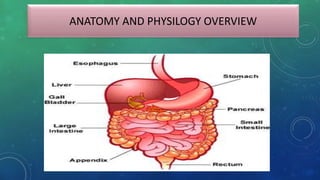
ANATOMY AND PHYSILOGY OVERVIEW
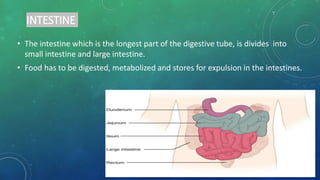
INTESTINE
• The intestine which is the longest part of the digestive tube, is divides into
small intestine and large intestine.
• Food has to be digested, metabolized and stores for expulsion in the intestines.
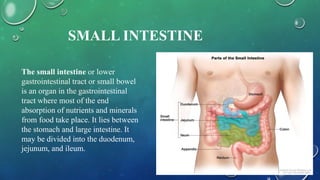
SMALL INTESTINE
The small intestine or lower
gastrointestinal tract or small bowel
is an organ in the gastrointestinal
tract where most of the end
absorption of nutrients and minerals
from food take place. It lies between
the stomach and large intestine. It
may be divided into the duodenum,
jejunum, and ileum.
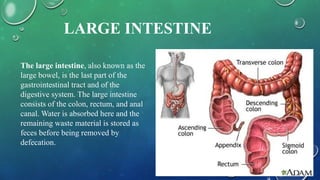
LARGE INTESTINE
The large intestine, also known as the
large bowel, is the last part of the
gastrointestinal tract and of the
digestive system. The large intestine
consists of the colon, rectum, and anal
canal. Water is absorbed here and the
remaining waste material is stored as
feces before being removed by
defecation.
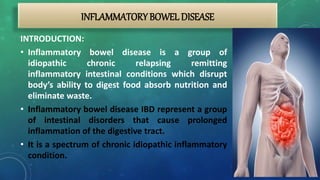
INFLAMMATORYBOWEL DISEASE
INTRODUCTION:
• Inflammatory bowel disease is a group of
idiopathic chronic relapsing remitting
inflammatory intestinal conditions which disrupt
body’s ability to digest food absorb nutrition and
eliminate waste.
• Inflammatory bowel disease IBD represent a group
of intestinal disorders that cause prolonged
inflammation of the digestive tract.
• It is a spectrum of chronic idiopathic inflammatory
condition.
DEFINITION
 Conditions characterized by presence of IDIOPATHIC intestinal
Inflammation- Biley and love
 Chronic Conditions resulting from Inappropriate Mucosal Immune
Activation. – Robbins and Cotran
CLASSIFICATION
• In 85% cases IBD can be differentiated into Ulcerative
Colitis or Crohn’s disease based on – Distribution of
affected Sites and Morphological expression of Disease.
• In 15% cases differentiation is impossible these patients
are classified as having Indeterminate Colitis.
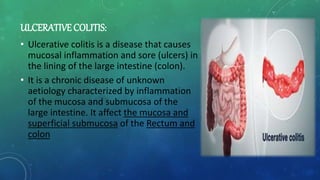
ULCERATIVE COLITIS:
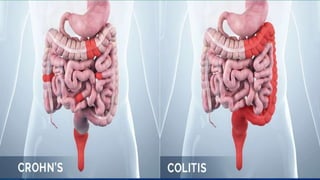
• Ulcerative colitis is a disease that causes
mucosal inflammation and sore (ulcers) in
the lining of the large intestine (colon).
• It is a chronic disease of unknown
aetiology characterized by inflammation
of the mucosa and submucosa of the
large intestine. It affect the mucosa and
superficial submucosa of the Rectum and
colon
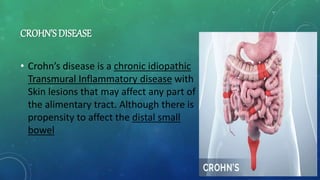
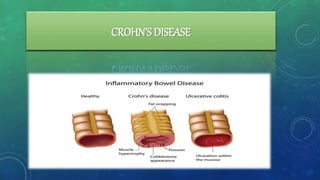
CROHN’S DISEASE
• Crohn’s disease is a chronic idiopathic
Transmural Inflammatory disease with
Skin lesions that may affect any part of
the alimentary tract. Although there is
propensity to affect the distal small
bowel
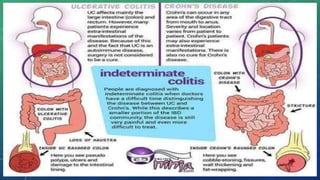
INDETERMINATE COLITIS
• Indeterminate colitis (IC) originally referred to those 10–
15% of cases of inflammatory bowel disease (IBD) in
which there was difficulty distinguishing between
ulcerative colitis (UC) and Crohn's disease (CD) in the
colectomy specimen.
CROHN’SDISEASE
• Its is also know as Regional Enteritis
1. It is a chronic inflammatory bowel disease that affects the lining
of the digestive tract. It causes inflammation of digestive tract,
which lead to abdominal pain, severe diarrhoea, fatigue, weight
loss and malnourishment
2. It is a chronic inflammatory disease of the intestines, especially
the colon and ileum, associated with ulcers and fistulae.
• Most case involve the small bowel, particularly the terminal
ileum.
HISTORY
• 1806: first reported case of Crohn’s by Combe and Sanders to the
Royal college of Physicians in London England.
• 1913: Surgical evidence of the disease reported in the paper
‘Chronic intestinal enteritis’ written by Dr. Kennedy.
• Described in 1932 by Crohn, Ginsburg and oppenheimer of Mount
Sinai Hospital in New York
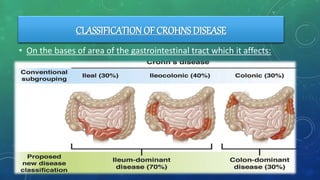
CLASSIFICATION OF CROHNS DISEASE
• On the bases of area of the gastrointestinal tract which it affects:
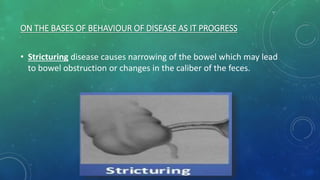
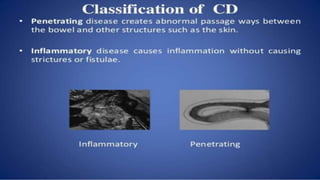
ON THE BASES OF BEHAVIOUR OF DISEASE AS IT PROGRESS
• Stricturing disease causes narrowing of the bowel which may lead
to bowel obstruction or changes in the caliber of the feces.
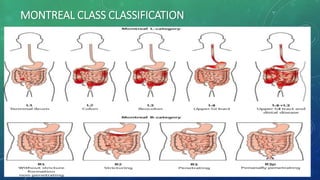
MONTREAL CLASS CLASSIFICATION
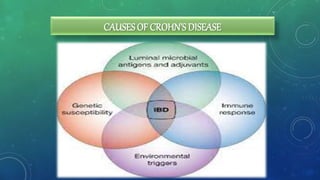
CAUSES OF CROHN’S DISEASE
GENETICS
• The disease runs in families then 30 times more likely to develop
CD, particularly if a first degree relative has the disease.
• Mutations in the NOD2 /CARD15 gene are associated with

Crohn's disease.
• Anomalies in the XBP1 gene have recently been identified as a
factor, pointing towards a role for the unfolded protein response
pathway of the endoplasmic reticulum in inflammatory bowel
diseases
IMMUNE SYSTEM
• Crohn's disease is thought to be an autoimmune disease, with
inflammation stimulated by an over-active Th1 cytokine response.
• Recent gene to be implicated in Crohn's disease is ATG16L1, which may
induce autophagy and hinder the body's ability to attack invasive
bacteria
ENVIROMENTAL FACTORS
• Smoking has been shown to increase the risk of the return of
active disease, or "flares".
• Hormonal contraception is also linked with a dramatic increase in
the incidence rate of Crohn's disease.
MICROBES
• Mycobacterium avium subspecies paratuberculosis (MAP),
• Yersinia spp and Listeria spp contribute to Crohn’s disease.
PSYCHOLOGICAL CONDITIONS
• ANXIETY
• DEPRESSION
1.AGE: People with 15 to 30 year of the age followed by
those between 50 to 70 years of age.
2.Gender: Women and men tend to be equally affected,
 Others : Pesticides, Tobacco, Radiations, Steroidal
Therapy.
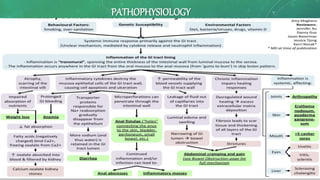
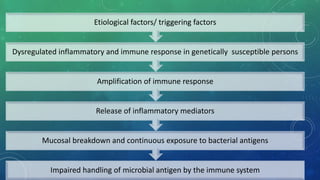
PATHOPHYSIOLOGY
Impaired handling of microbial antigen by the immune system
Mucosal breakdown and continuous exposure to bacterial antigens
Release of inflammatory mediators
Amplification of immune response
Dysregulated inflammatory and immune response in genetically susceptible persons
Etiological factors/ triggering factors
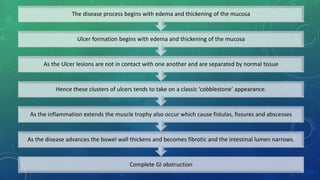
Complete GI obstruction
As the disease advances the bowel wall thickens and becomes fibrotic and the intestinal lumen narrows.
As the inflammation extends the muscle trophy also occur which cause fistulas, fissures and abscesses
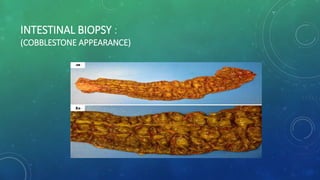
Hence these clusters of ulcers tends to take on a classic ‘cobblestone’ appearance.
As the Ulcer lesions are not in contact with one another and are separated by normal tissue
Ulcer formation begins with edema and thickening of the mucosa
The disease process begins with edema and thickening of the mucosa
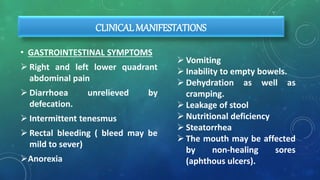
CLINICAL MANIFESTATIONS
• GASTROINTESTINAL SYMPTOMS
 Right and left lower quadrant
abdominal pain
 Diarrhoea unrelieved by
defecation.
 Intermittent tenesmus
 Rectal bleeding ( bleed may be
mild to sever)
Anorexia
 Vomiting
 Inability to empty bowels.
 Dehydration as well as
cramping.
 Leakage of stool
 Nutritional deficiency
 Steatorrhea
 The mouth may be affected
by non-healing sores
(aphthous ulcers).
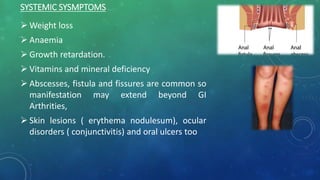
SYSTEMIC SYSMPTOMS
 Weight loss
 Anaemia
 Growth retardation.
 Vitamins and mineral deficiency
 Abscesses, fistula and fissures are common so
manifestation may extend beyond GI
Arthrities,
 Skin lesions ( erythema nodulesum), ocular
disorders ( conjunctivitis) and oral ulcers too
DIAGNOSTICFINDINGS
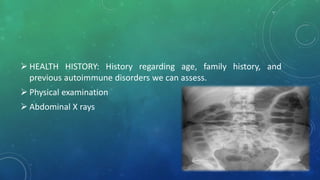
 HEALTH HISTORY: History regarding age, family history, and
previous autoimmune disorders we can assess.
 Physical examination
 Abdominal X rays
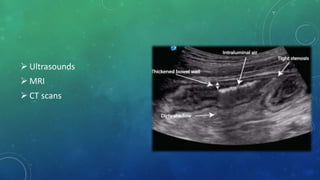
 Ultrasounds
 MRI
 CT scans
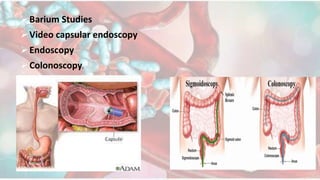
PROCTOSIGMOIDOSCOPY
Barium Studies
Video capsular endoscopy
Endoscopy
Colonoscopy.
INTESTINAL BIOPSY :
(COBBLESTONE APPEARANCE)
 Testing for anti-Saccharomyces cerevisiae antibodies (ASCA) and
anti-neutrophil cytoplasmic antibodies (ANCA) has been
evaluated to identify inflammation of the intestine.
 Complete blood count
 ESR
 Albumin level.
 Gene test
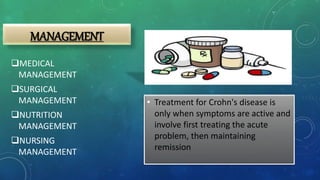
MANAGEMENT
• Treatment for Crohn's disease is
only when symptoms are active and
involve first treating the acute
problem, then maintaining
remission
MEDICAL
MANAGEMENT
SURGICAL
MANAGEMENT
NUTRITION
MANAGEMENT
NURSING
MANAGEMENT
GOALS:
 To relieve symptoms
 To reduce the underlying cause
 To improve the health status of the individual.
 To achieve the Crohn’s free status of the client.
 To improve the patients functional status and quality of the life
MEDICAL MANAGEMENT:
• ANTI- INFLAMATORY DRUGS:
• anti-inflammatory drugs are the first step in the treatment of Cronh’s
disease and are appropriate for the majority of people with this
condition. These drugs include:
• 5-aminosalicylates [sulfazine which help to control moderate
symptoms]
• Corticosteroids [prednisone, hydrocortisone, methylprednisolone and
budesonide]
• >Immunomodulators such as azathioprine, mercaptopurine,
methotrexate, infliximab, adalimumab
• >Antibiotics: Metaclopramide
• >Antiemetic: Ondesterone
• >Antispasmodic: Buscopane
• >Anti diarrhoeal: Loperamide
• >Anti metabolite drug: Methotrexate
• >Non steroidal anti inflammatory drugs: Decrease pain, reduce
inflammation and reduce fever
• >Antibiotics: Broad spectrum antibiotics can be given
• >Omega 3 fatty acids
• >Multivitamins and folic acids
• >Iron supplements
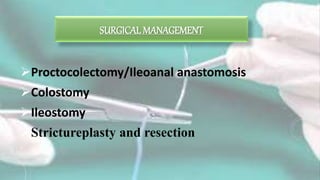
SURGICAL MANAGEMENT
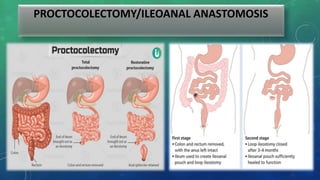
Proctocolectomy/Ileoanal anastomosis
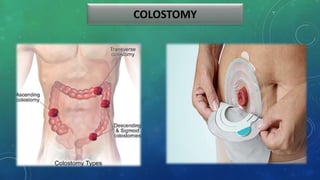
Colostomy
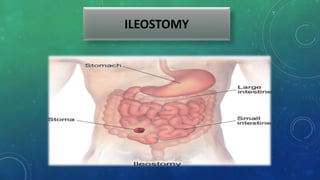
Ileostomy
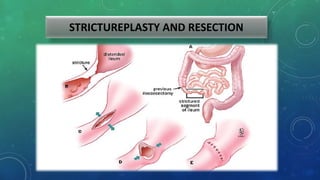
Strictureplasty and resection
•
STRICTUREPLASTY AND RESECTION
PROCTOCOLECTOMY/ILEOANAL ANASTOMOSIS
COLOSTOMY
ILEOSTOMY
NUTRITIONAL MANAGEMENT
• >Take pre-digested nutritional drinks to give bowel a rest and
replenish lost nutrients.
• >Limit caffeine, alcohol and sorbitol .
• >Limit gas-producing foods such as broccoli, cabbage,
cauliflower, brussels sprouts, dried peas ,lentils, onions, and
carbonated drinks.
• >Reduce fat intake if part of the intestines has been surgically
removed.
• >Studies found that fish oil and flax seed oil may be helpful in
managing .
• >Drink lots of fluid to keep body hydrated and prevent
constipation.
• >Take multivitamin-mineral supplement to replace lost nutrients
• >Eat a high fiber diet when CD is under control.
• >During a flare up, limit high fiber foods and follow a low fiber
diet.
• >Avoid lactose-containing foods if one has lactose intolerance or
use lactase enzymes and lactase pretreated foods.
• >Try small frequent meals.
• >Eating a high protein diet with lean meats, fish and eggs, may
help relieve symptoms of Crohn’s
NURSING MANAGEMENT
NURSING ASSESSMENT
 Health History
 Physical Examination
• NURSING DIAGNOSIS:
 Diarrhoea related to inflammation, irritation, or malabsorption of the bowel
 Risk for deficient fluid volume related to severe frequent diarrhoea, vomiting
 Anxiety related to change in health status
 Acute pain related to prolonged diarrhoea, hyperperistalsis
 Ineffective coping related to multiple stressors, situational crisis
 Imbalance nutrition less than body requirements related to altered absorption
of nutrition
NURSING INTERVENTION
 Limit dairy products: problems such as diarrhoea, abdominal
pain and gas improve by limiting or eliminating dairy products.
 Not drink carbonated drink
 Not eating high-fibre foods such as popcorn, nuts while you have
symptoms
 Eat small meals
 Drink plenty of liquids
 Talk to a dietitian; if begin to lose weight or diet has become
very limited.
 Use low fibre diet, lean protein, residue and calorie diet.
 Regular relaxation and breathing exercises.
COMPLICATIONS OF CROHN’S DISEASE
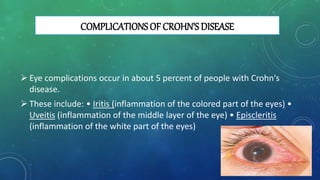
 Eye complications occur in about 5 percent of people with Crohn's
disease.
 These include: • Iritis (inflammation of the colored part of the eyes) •
Uveitis (inflammation of the middle layer of the eye) • Episcleritis
(inflammation of the white part of the eyes)
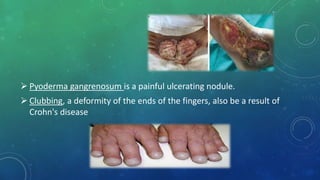
 Pyoderma gangrenosum is a painful ulcerating nodule.
 Clubbing, a deformity of the ends of the fingers, also be a result of
Crohn's disease
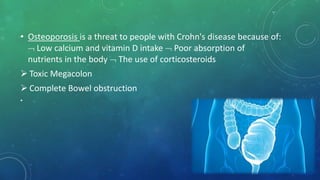
• Osteoporosis is a threat to people with Crohn's disease because of:
 Low calcium and vitamin D intake  Poor absorption of
nutrients in the body  The use of corticosteroids
 Toxic Megacolon
 Complete Bowel obstruction
•
RESEARCHOVERVIEW
A qualitative study of the impact of Crohn's disease from a patient's
perspective
• Jeanette Wilburn, James Twiss, Karen Kemp, and Stephen P
McKenna
• Published on May 2016
• Frontline Gastrentrology
• Objective
• To understand how the lives of people with Crohn's disease (CD) are
affected. Most research in CD has focused on symptoms and
functioning rather than on how these outcomes influence quality of
life (QoL).
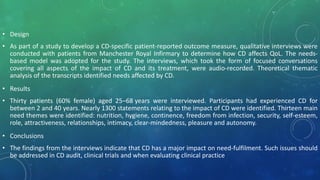
• Design
• As part of a study to develop a CD-specific patient-reported outcome measure, qualitative interviews were
conducted with patients from Manchester Royal Infirmary to determine how CD affects QoL. The needs-
based model was adopted for the study. The interviews, which took the form of focused conversations
covering all aspects of the impact of CD and its treatment, were audio-recorded. Theoretical thematic
analysis of the transcripts identified needs affected by CD.
• Results
• Thirty patients (60% female) aged 25–68 years were interviewed. Participants had experienced CD for
between 2 and 40 years. Nearly 1300 statements relating to the impact of CD were identified. Thirteen main
need themes were identified: nutrition, hygiene, continence, freedom from infection, security, self-esteem,
role, attractiveness, relationships, intimacy, clear-mindedness, pleasure and autonomy.
• Conclusions
• The findings from the interviews indicate that CD has a major impact on need-fulfilment. Such issues should
be addressed in CD audit, clinical trials and when evaluating clinical practice
Crohns disease presentation

Crohns disease presentation

  • 1.
    CLASS PRESENTATION ON INFLAMMATORY BOWELDISEASE (CROHN’S DISEASE) PRESENTED BY: BHAVYA SHARMA M.Sc NURSING FIRST YEAR.
  • 2.
  • 3.
    INTESTINE • The intestinewhich is the longest part of the digestive tube, is divides into small intestine and large intestine. • Food has to be digested, metabolized and stores for expulsion in the intestines.
  • 4.
    SMALL INTESTINE The smallintestine or lower gastrointestinal tract or small bowel is an organ in the gastrointestinal tract where most of the end absorption of nutrients and minerals from food take place. It lies between the stomach and large intestine. It may be divided into the duodenum, jejunum, and ileum.
  • 5.
    LARGE INTESTINE The largeintestine, also known as the large bowel, is the last part of the gastrointestinal tract and of the digestive system. The large intestine consists of the colon, rectum, and anal canal. Water is absorbed here and the remaining waste material is stored as feces before being removed by defecation.
  • 6.
    INFLAMMATORYBOWEL DISEASE INTRODUCTION: • Inflammatorybowel disease is a group of idiopathic chronic relapsing remitting inflammatory intestinal conditions which disrupt body’s ability to digest food absorb nutrition and eliminate waste. • Inflammatory bowel disease IBD represent a group of intestinal disorders that cause prolonged inflammation of the digestive tract. • It is a spectrum of chronic idiopathic inflammatory condition.
  • 7.
    DEFINITION  Conditions characterizedby presence of IDIOPATHIC intestinal Inflammation- Biley and love  Chronic Conditions resulting from Inappropriate Mucosal Immune Activation. – Robbins and Cotran
  • 8.
    CLASSIFICATION • In 85%cases IBD can be differentiated into Ulcerative Colitis or Crohn’s disease based on – Distribution of affected Sites and Morphological expression of Disease. • In 15% cases differentiation is impossible these patients are classified as having Indeterminate Colitis.
  • 9.
    ULCERATIVE COLITIS: • Ulcerativecolitis is a disease that causes mucosal inflammation and sore (ulcers) in the lining of the large intestine (colon). • It is a chronic disease of unknown aetiology characterized by inflammation of the mucosa and submucosa of the large intestine. It affect the mucosa and superficial submucosa of the Rectum and colon
  • 10.
    CROHN’S DISEASE • Crohn’sdisease is a chronic idiopathic Transmural Inflammatory disease with Skin lesions that may affect any part of the alimentary tract. Although there is propensity to affect the distal small bowel
  • 13.
    INDETERMINATE COLITIS • Indeterminatecolitis (IC) originally referred to those 10– 15% of cases of inflammatory bowel disease (IBD) in which there was difficulty distinguishing between ulcerative colitis (UC) and Crohn's disease (CD) in the colectomy specimen.
  • 14.
  • 15.
    • Its isalso know as Regional Enteritis 1. It is a chronic inflammatory bowel disease that affects the lining of the digestive tract. It causes inflammation of digestive tract, which lead to abdominal pain, severe diarrhoea, fatigue, weight loss and malnourishment 2. It is a chronic inflammatory disease of the intestines, especially the colon and ileum, associated with ulcers and fistulae. • Most case involve the small bowel, particularly the terminal ileum.
  • 16.
    HISTORY • 1806: firstreported case of Crohn’s by Combe and Sanders to the Royal college of Physicians in London England. • 1913: Surgical evidence of the disease reported in the paper ‘Chronic intestinal enteritis’ written by Dr. Kennedy. • Described in 1932 by Crohn, Ginsburg and oppenheimer of Mount Sinai Hospital in New York
  • 17.
    CLASSIFICATION OF CROHNSDISEASE • On the bases of area of the gastrointestinal tract which it affects:
  • 18.
    ON THE BASESOF BEHAVIOUR OF DISEASE AS IT PROGRESS • Stricturing disease causes narrowing of the bowel which may lead to bowel obstruction or changes in the caliber of the feces.
  • 20.
  • 21.
  • 22.
    GENETICS • The diseaseruns in families then 30 times more likely to develop CD, particularly if a first degree relative has the disease. • Mutations in the NOD2 /CARD15 gene are associated with Crohn's disease. • Anomalies in the XBP1 gene have recently been identified as a factor, pointing towards a role for the unfolded protein response pathway of the endoplasmic reticulum in inflammatory bowel diseases
  • 23.
    IMMUNE SYSTEM • Crohn'sdisease is thought to be an autoimmune disease, with inflammation stimulated by an over-active Th1 cytokine response. • Recent gene to be implicated in Crohn's disease is ATG16L1, which may induce autophagy and hinder the body's ability to attack invasive bacteria
  • 24.
    ENVIROMENTAL FACTORS • Smokinghas been shown to increase the risk of the return of active disease, or "flares". • Hormonal contraception is also linked with a dramatic increase in the incidence rate of Crohn's disease.
  • 25.
    MICROBES • Mycobacterium aviumsubspecies paratuberculosis (MAP), • Yersinia spp and Listeria spp contribute to Crohn’s disease.
  • 26.
  • 27.
    1.AGE: People with15 to 30 year of the age followed by those between 50 to 70 years of age. 2.Gender: Women and men tend to be equally affected,  Others : Pesticides, Tobacco, Radiations, Steroidal Therapy.
  • 28.
  • 29.
    Impaired handling ofmicrobial antigen by the immune system Mucosal breakdown and continuous exposure to bacterial antigens Release of inflammatory mediators Amplification of immune response Dysregulated inflammatory and immune response in genetically susceptible persons Etiological factors/ triggering factors
  • 30.
    Complete GI obstruction Asthe disease advances the bowel wall thickens and becomes fibrotic and the intestinal lumen narrows. As the inflammation extends the muscle trophy also occur which cause fistulas, fissures and abscesses Hence these clusters of ulcers tends to take on a classic ‘cobblestone’ appearance. As the Ulcer lesions are not in contact with one another and are separated by normal tissue Ulcer formation begins with edema and thickening of the mucosa The disease process begins with edema and thickening of the mucosa
  • 31.
    CLINICAL MANIFESTATIONS • GASTROINTESTINALSYMPTOMS  Right and left lower quadrant abdominal pain  Diarrhoea unrelieved by defecation.  Intermittent tenesmus  Rectal bleeding ( bleed may be mild to sever) Anorexia  Vomiting  Inability to empty bowels.  Dehydration as well as cramping.  Leakage of stool  Nutritional deficiency  Steatorrhea  The mouth may be affected by non-healing sores (aphthous ulcers).
  • 32.
    SYSTEMIC SYSMPTOMS  Weightloss  Anaemia  Growth retardation.  Vitamins and mineral deficiency  Abscesses, fistula and fissures are common so manifestation may extend beyond GI Arthrities,  Skin lesions ( erythema nodulesum), ocular disorders ( conjunctivitis) and oral ulcers too
  • 33.
  • 34.
     HEALTH HISTORY:History regarding age, family history, and previous autoimmune disorders we can assess.  Physical examination  Abdominal X rays
  • 35.
  • 36.
  • 37.
    Barium Studies Video capsularendoscopy Endoscopy Colonoscopy.
  • 38.
  • 39.
     Testing foranti-Saccharomyces cerevisiae antibodies (ASCA) and anti-neutrophil cytoplasmic antibodies (ANCA) has been evaluated to identify inflammation of the intestine.  Complete blood count  ESR  Albumin level.  Gene test
  • 40.
    MANAGEMENT • Treatment forCrohn's disease is only when symptoms are active and involve first treating the acute problem, then maintaining remission MEDICAL MANAGEMENT SURGICAL MANAGEMENT NUTRITION MANAGEMENT NURSING MANAGEMENT
  • 41.
    GOALS:  To relievesymptoms  To reduce the underlying cause  To improve the health status of the individual.  To achieve the Crohn’s free status of the client.  To improve the patients functional status and quality of the life
  • 42.
    MEDICAL MANAGEMENT: • ANTI-INFLAMATORY DRUGS: • anti-inflammatory drugs are the first step in the treatment of Cronh’s disease and are appropriate for the majority of people with this condition. These drugs include: • 5-aminosalicylates [sulfazine which help to control moderate symptoms] • Corticosteroids [prednisone, hydrocortisone, methylprednisolone and budesonide]
  • 43.
    • >Immunomodulators suchas azathioprine, mercaptopurine, methotrexate, infliximab, adalimumab • >Antibiotics: Metaclopramide • >Antiemetic: Ondesterone • >Antispasmodic: Buscopane • >Anti diarrhoeal: Loperamide • >Anti metabolite drug: Methotrexate
  • 44.
    • >Non steroidalanti inflammatory drugs: Decrease pain, reduce inflammation and reduce fever • >Antibiotics: Broad spectrum antibiotics can be given • >Omega 3 fatty acids • >Multivitamins and folic acids • >Iron supplements
  • 45.
  • 46.
  • 47.
  • 48.
  • 49.
  • 50.
    NUTRITIONAL MANAGEMENT • >Takepre-digested nutritional drinks to give bowel a rest and replenish lost nutrients. • >Limit caffeine, alcohol and sorbitol . • >Limit gas-producing foods such as broccoli, cabbage, cauliflower, brussels sprouts, dried peas ,lentils, onions, and carbonated drinks. • >Reduce fat intake if part of the intestines has been surgically removed. • >Studies found that fish oil and flax seed oil may be helpful in managing .
  • 51.
    • >Drink lotsof fluid to keep body hydrated and prevent constipation. • >Take multivitamin-mineral supplement to replace lost nutrients • >Eat a high fiber diet when CD is under control. • >During a flare up, limit high fiber foods and follow a low fiber diet. • >Avoid lactose-containing foods if one has lactose intolerance or use lactase enzymes and lactase pretreated foods. • >Try small frequent meals. • >Eating a high protein diet with lean meats, fish and eggs, may help relieve symptoms of Crohn’s
  • 52.
  • 53.
    NURSING ASSESSMENT  HealthHistory  Physical Examination • NURSING DIAGNOSIS:  Diarrhoea related to inflammation, irritation, or malabsorption of the bowel  Risk for deficient fluid volume related to severe frequent diarrhoea, vomiting  Anxiety related to change in health status  Acute pain related to prolonged diarrhoea, hyperperistalsis  Ineffective coping related to multiple stressors, situational crisis  Imbalance nutrition less than body requirements related to altered absorption of nutrition
  • 54.
    NURSING INTERVENTION  Limitdairy products: problems such as diarrhoea, abdominal pain and gas improve by limiting or eliminating dairy products.  Not drink carbonated drink  Not eating high-fibre foods such as popcorn, nuts while you have symptoms  Eat small meals  Drink plenty of liquids  Talk to a dietitian; if begin to lose weight or diet has become very limited.  Use low fibre diet, lean protein, residue and calorie diet.  Regular relaxation and breathing exercises.
  • 55.
    COMPLICATIONS OF CROHN’SDISEASE  Eye complications occur in about 5 percent of people with Crohn's disease.  These include: • Iritis (inflammation of the colored part of the eyes) • Uveitis (inflammation of the middle layer of the eye) • Episcleritis (inflammation of the white part of the eyes)
  • 56.
     Pyoderma gangrenosumis a painful ulcerating nodule.  Clubbing, a deformity of the ends of the fingers, also be a result of Crohn's disease
  • 57.
    • Osteoporosis isa threat to people with Crohn's disease because of:  Low calcium and vitamin D intake  Poor absorption of nutrients in the body  The use of corticosteroids  Toxic Megacolon  Complete Bowel obstruction •
  • 58.
    RESEARCHOVERVIEW A qualitative studyof the impact of Crohn's disease from a patient's perspective • Jeanette Wilburn, James Twiss, Karen Kemp, and Stephen P McKenna • Published on May 2016 • Frontline Gastrentrology • Objective • To understand how the lives of people with Crohn's disease (CD) are affected. Most research in CD has focused on symptoms and functioning rather than on how these outcomes influence quality of life (QoL).
  • 59.
    • Design • Aspart of a study to develop a CD-specific patient-reported outcome measure, qualitative interviews were conducted with patients from Manchester Royal Infirmary to determine how CD affects QoL. The needs- based model was adopted for the study. The interviews, which took the form of focused conversations covering all aspects of the impact of CD and its treatment, were audio-recorded. Theoretical thematic analysis of the transcripts identified needs affected by CD. • Results • Thirty patients (60% female) aged 25–68 years were interviewed. Participants had experienced CD for between 2 and 40 years. Nearly 1300 statements relating to the impact of CD were identified. Thirteen main need themes were identified: nutrition, hygiene, continence, freedom from infection, security, self-esteem, role, attractiveness, relationships, intimacy, clear-mindedness, pleasure and autonomy. • Conclusions • The findings from the interviews indicate that CD has a major impact on need-fulfilment. Such issues should be addressed in CD audit, clinical trials and when evaluating clinical practice