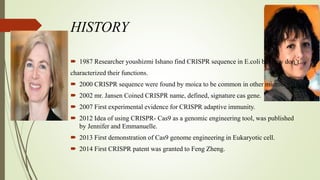
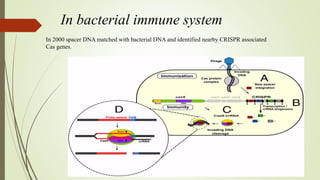
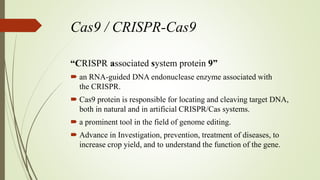
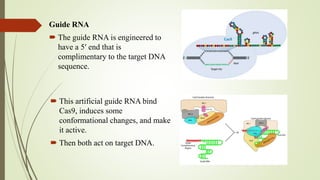
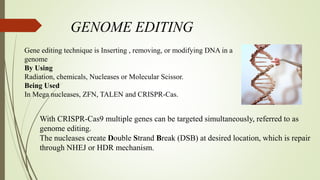
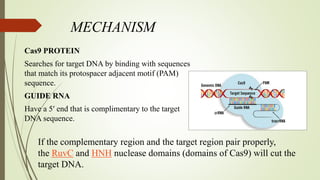
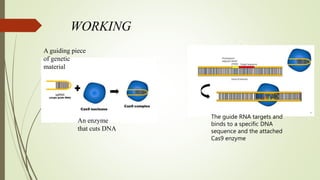
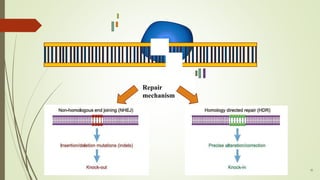
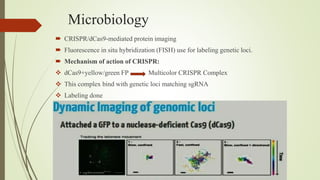
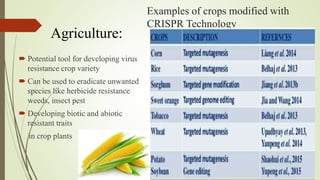
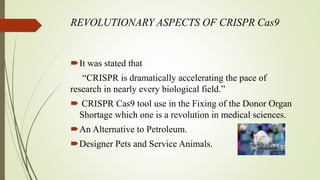
CRISPR-Cas9 is a gene editing technology that uses the bacterial immune system to cut DNA at specific locations. It allows researchers to understand, characterize, and control DNA. CRISPR-Cas9 uses an RNA-guided DNA endonuclease enzyme called Cas9 that is directed by guide RNA to cleave target DNA. It has numerous applications including modifying genes in plants and animals, developing disease resistant crops, and potentially curing genetic diseases in humans by precisely editing genes. While revolutionary, it also raises ethical concerns that must be considered and addressed.