EXTRA CHROMOSOMAL
INHERITANCE
Rupen Chakma 17/BBT/11
Amarjit Singh 17/BBT/29
CONTENTS
• Introduction
• Chloroplast inheritance
- Variegation in Four o’clock plant
- Chloroplast segregation in
Chlamydomonas
• Mitochondrial inheritance
- Pokyness in Neurospora
- Cytoplasmic male sterility
• Maternal effects
• Conclusion
• Reference
Introduction
 Extra nuclear inheritance is defined as non
mendelian inheritance, which occurs when
phenotype result from genetic influence
other than the biparental transmission of
genes located on chromosomes in the
nucleus
 The genes that have been called cytoplasmic
genes, extrachromosomal genes, or
extranuclear genes are located on a unique
kind of chromosome inside cytoplasmic
organelle
 Commonly defined as transmission through
the cytoplasm (or things in the cytoplasm,
including organelles) rather than the nucleus
 Generally only one parents contributes
organelle heredity
 Organelles that contain chromosomes-
Chloroplasts and mitochondria
 Infectious heredity
- Involves a symbiotic or parasitic
association with a microorganism
Maternal effect – When the expression of a
character is influenced by the genotype of
female parent
Variegation in Four O’clock
plant
 In 1909, Carl Correns used Mirabilis
jalapa as a model study for his study
on cytoplasmic inheritance.
 Variants of Mirabilis jalapa in which
some branches had white leave some
had green leaves and some had
variegated leaves
VARIEGATED LEAVES IN FOUR O’CLOCK PLANT
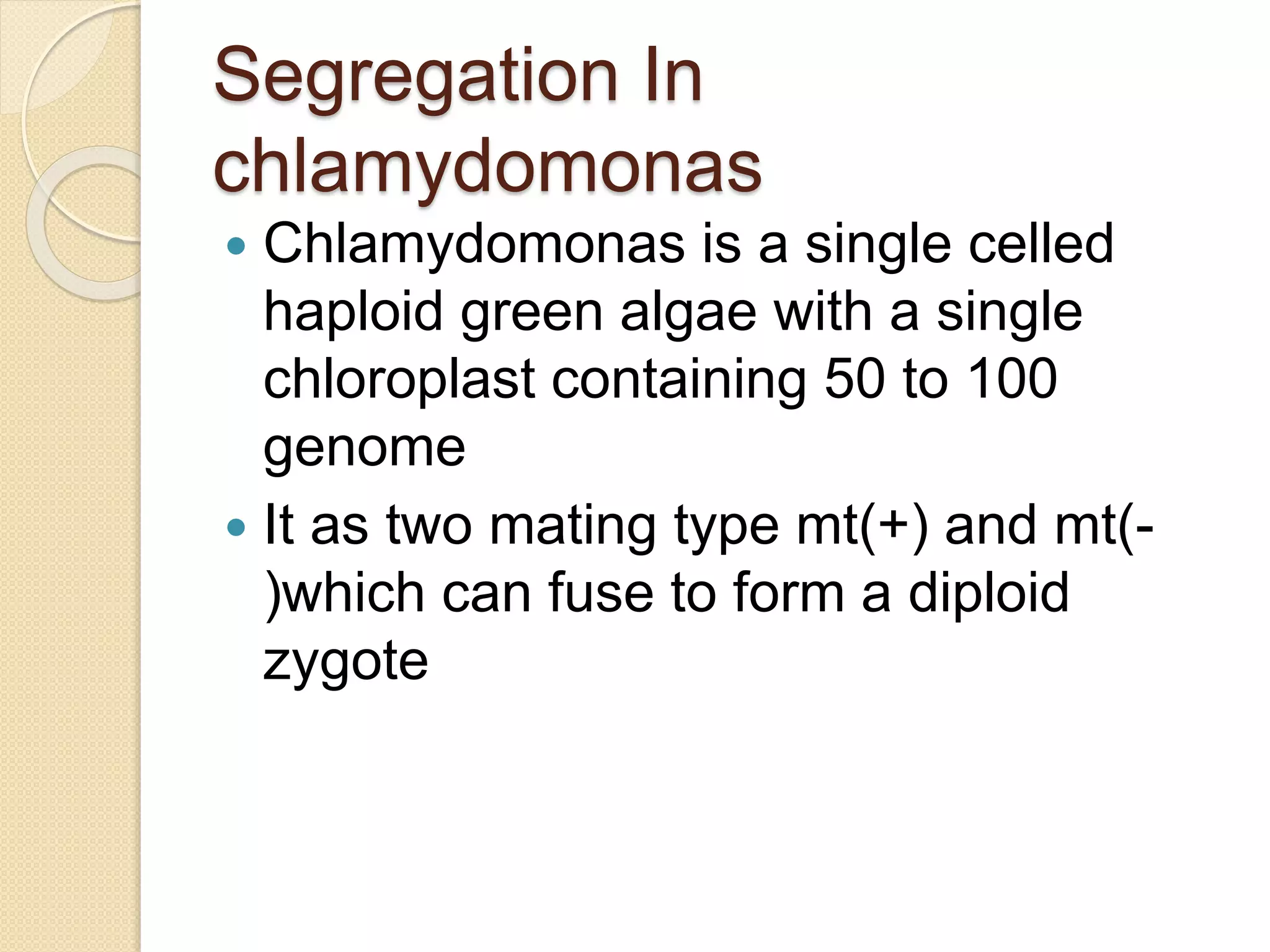
They maybe intercrossed in a variety of
different combinations by transferring pollen from
one flower to another
Segregation In
chlamydomonas
 Chlamydomonas is a single celled
haploid green algae with a single
chloroplast containing 50 to 100
genome
 It as two mating type mt(+) and mt(-
)which can fuse to form a diploid
zygote
1/2mt+ 1/2mt- 1/2mt+ 1/2mt-
All streptomycin resistance All streptomycin sensitiven
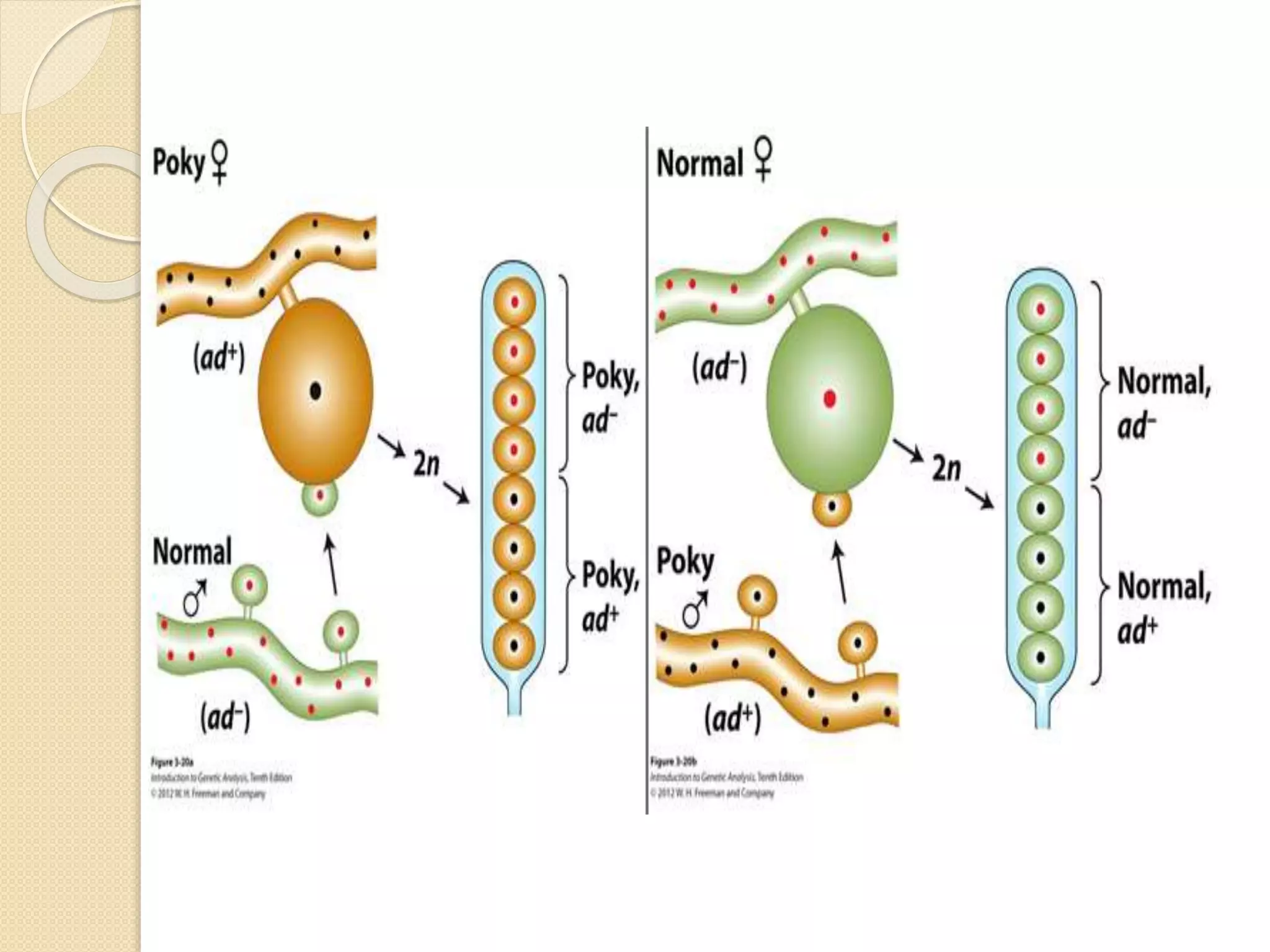
Pokyness in Neurospora
 In 1952, Mary Mitchell isolated a
mutant strain of Neurospora that she
called poky.
 Poky Neurospora is:
-Slow growing
-It shows maternal inheritance
-It has abnormal amount of
cytochromes
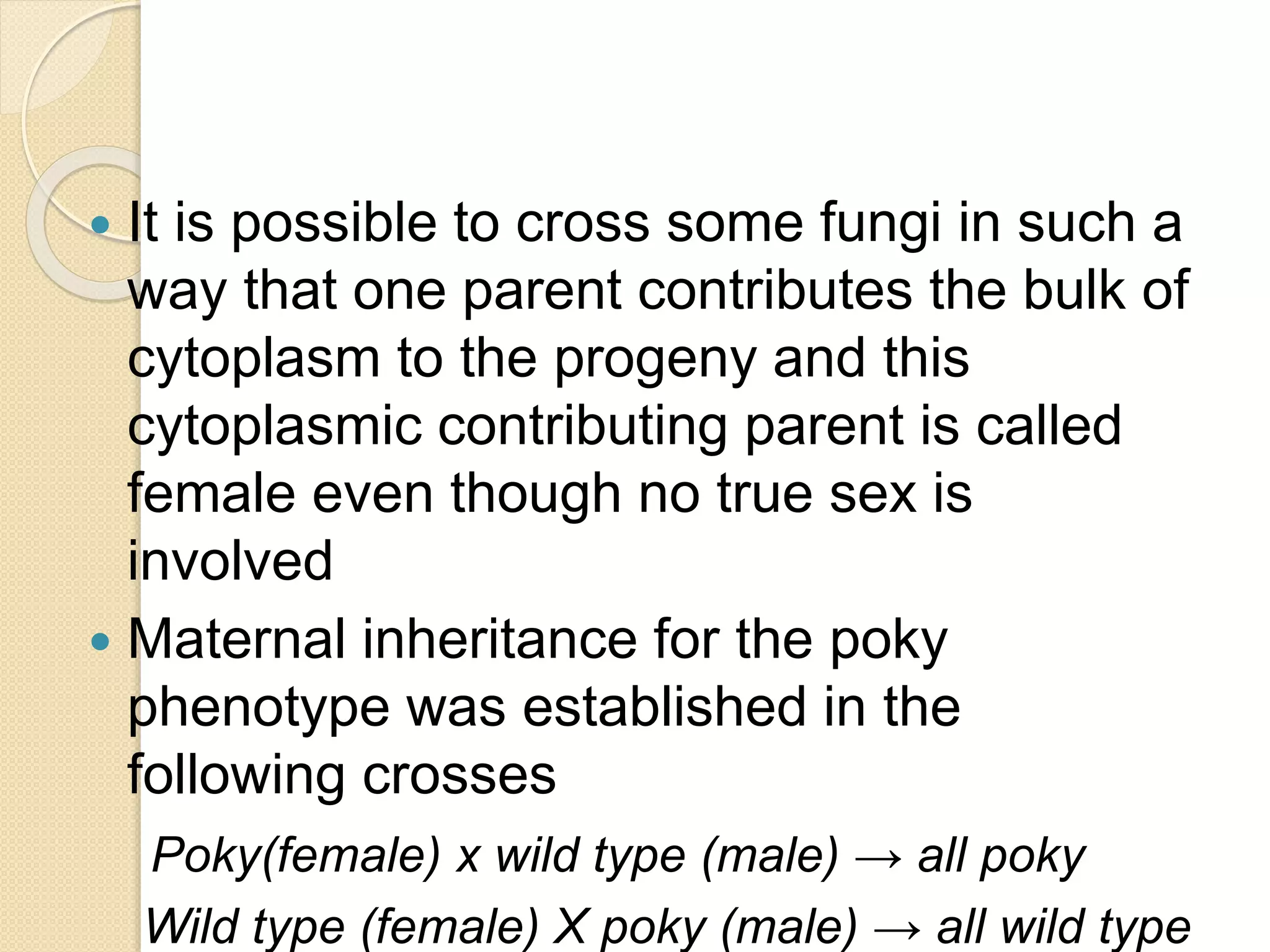
 It is possible to cross some fungi in such a
way that one parent contributes the bulk of
cytoplasm to the progeny and this
cytoplasmic contributing parent is called
female even though no true sex is
involved
 Maternal inheritance for the poky
phenotype was established in the
following crosses
Poky(female) x wild type (male) → all poky
Wild type (female) X poky (male) → all wild type
Cytoplasmic male sterility
-CMS is a condition in which a plant does
not
produce functional pollen, but the female
reproduction organs and fertility are
normal.
-Important in agriculture extensively used
to
produce hybrid corn seeds.
-In 1930s, Rhoades demonstrated that
male
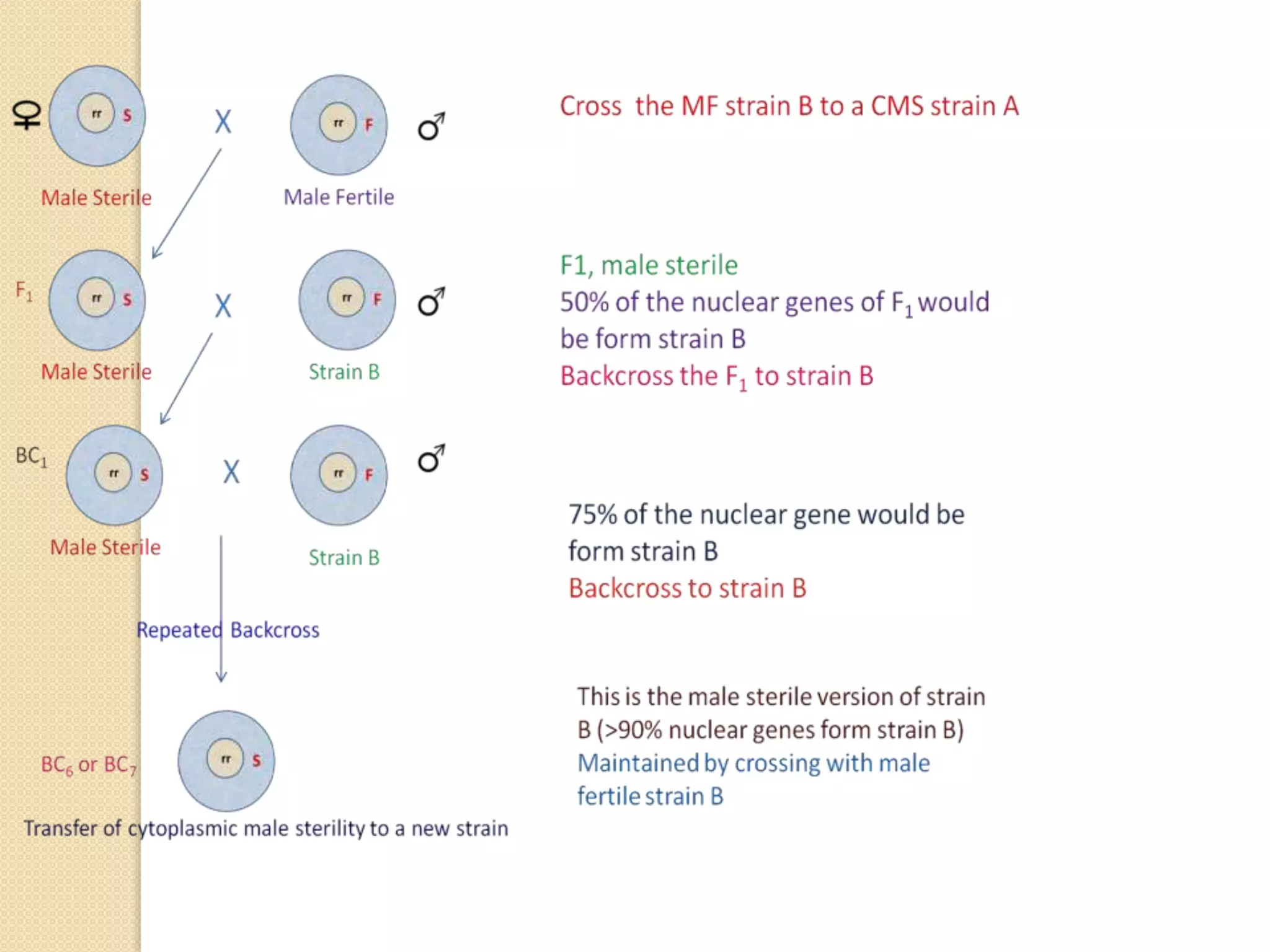
-Male sterility is transmitted through the egg
cytoplasm from generation to generation.
-Rhoades pollinated the ears of male sterile
strain with the pollen from a male fertile
strain.
-Repeated backcrossing of a male sterile
variety, does not restore male fertility.
Maternal effects
When the expression of a character is
influenced
by the genotype of female parent, it is
referred
to as maternal effects. Such characters
exhibit
clearcut differences in F1 for reciprocal
crosses.
Maternal effects are known in both plants
and
animals.
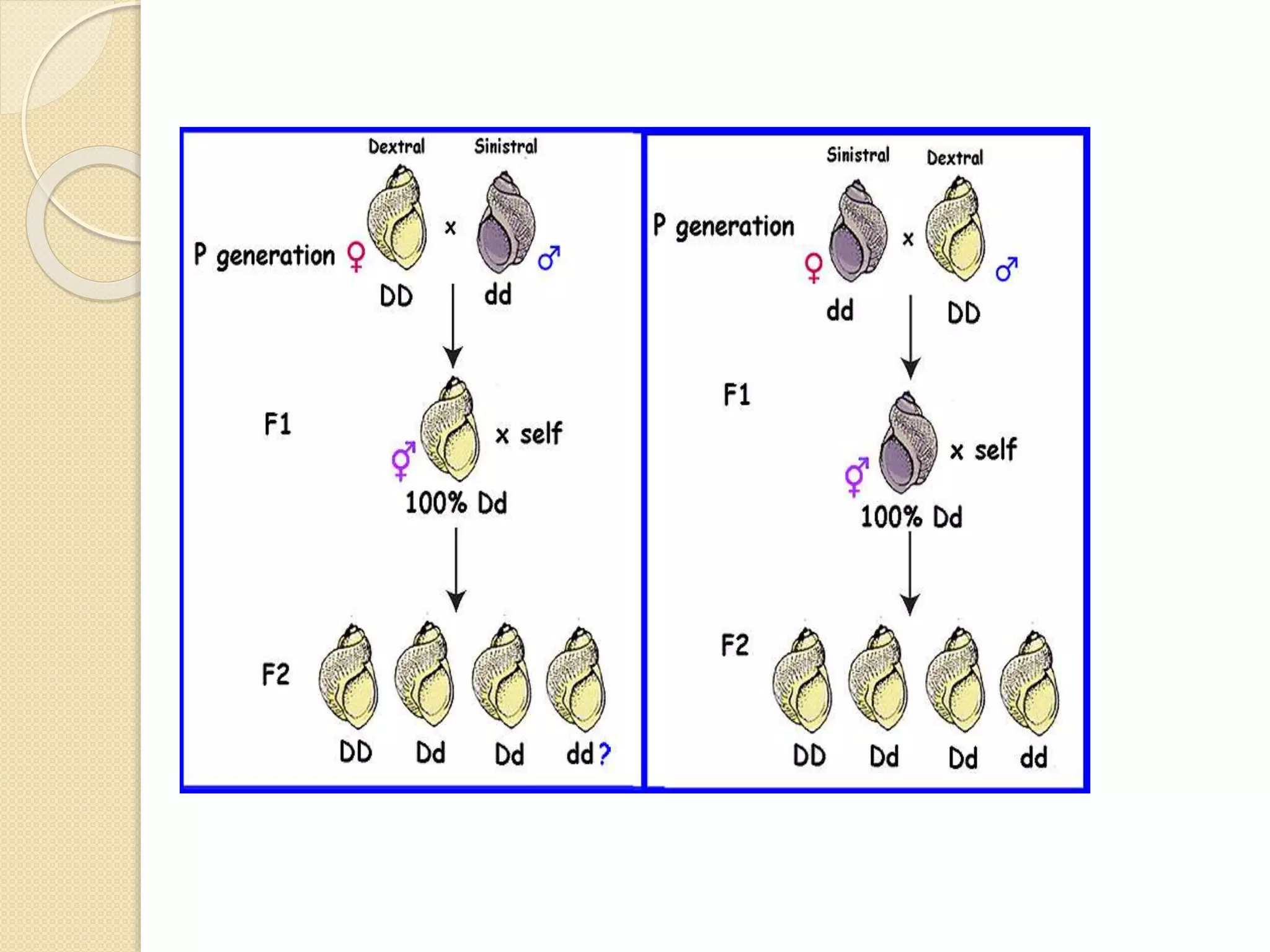
Coiling pattern of shell in snail
 The effect of maternal genotype on the
coiling behavior in snail was studied by
Sturtevant.
 The coiling behavior is controlled by a
single gene.
 In a cross between dextral female and
sinistral male, it produces dextral snails
in F1 as well as in F2.
 But in a cross between sinistral female
and dextral male, all the snails in F1 are
sinistral and in F2 all the snails are
dextral.
Conclusion
Thus we know that not only nuclear
inheritance is responsible for gene
expression in an individual but
cytoplasmic inheritance is also
responsible for various characters.
REFERENCE
• Principle of GENETICS by Eldon
John Gardner, Michael J. Simmons, D.
Peter Snustad
• Genetics by Phudan singh
THANK YOU

EXTRA CHROMOSOMAL INHERITANCE

  • 1.
    EXTRA CHROMOSOMAL INHERITANCE Rupen Chakma17/BBT/11 Amarjit Singh 17/BBT/29
  • 2.
    CONTENTS • Introduction • Chloroplastinheritance - Variegation in Four o’clock plant - Chloroplast segregation in Chlamydomonas • Mitochondrial inheritance - Pokyness in Neurospora - Cytoplasmic male sterility • Maternal effects • Conclusion • Reference
  • 3.
    Introduction  Extra nuclearinheritance is defined as non mendelian inheritance, which occurs when phenotype result from genetic influence other than the biparental transmission of genes located on chromosomes in the nucleus  The genes that have been called cytoplasmic genes, extrachromosomal genes, or extranuclear genes are located on a unique kind of chromosome inside cytoplasmic organelle  Commonly defined as transmission through the cytoplasm (or things in the cytoplasm, including organelles) rather than the nucleus
  • 4.
     Generally onlyone parents contributes organelle heredity  Organelles that contain chromosomes- Chloroplasts and mitochondria  Infectious heredity - Involves a symbiotic or parasitic association with a microorganism Maternal effect – When the expression of a character is influenced by the genotype of female parent
  • 5.
    Variegation in FourO’clock plant  In 1909, Carl Correns used Mirabilis jalapa as a model study for his study on cytoplasmic inheritance.  Variants of Mirabilis jalapa in which some branches had white leave some had green leaves and some had variegated leaves
  • 6.
    VARIEGATED LEAVES INFOUR O’CLOCK PLANT
  • 7.
    They maybe intercrossedin a variety of different combinations by transferring pollen from one flower to another
  • 8.
    Segregation In chlamydomonas  Chlamydomonasis a single celled haploid green algae with a single chloroplast containing 50 to 100 genome  It as two mating type mt(+) and mt(- )which can fuse to form a diploid zygote
  • 9.
    1/2mt+ 1/2mt- 1/2mt+1/2mt- All streptomycin resistance All streptomycin sensitiven
  • 10.
    Pokyness in Neurospora In 1952, Mary Mitchell isolated a mutant strain of Neurospora that she called poky.  Poky Neurospora is: -Slow growing -It shows maternal inheritance -It has abnormal amount of cytochromes
  • 11.
     It ispossible to cross some fungi in such a way that one parent contributes the bulk of cytoplasm to the progeny and this cytoplasmic contributing parent is called female even though no true sex is involved  Maternal inheritance for the poky phenotype was established in the following crosses Poky(female) x wild type (male) → all poky Wild type (female) X poky (male) → all wild type
  • 13.
    Cytoplasmic male sterility -CMSis a condition in which a plant does not produce functional pollen, but the female reproduction organs and fertility are normal. -Important in agriculture extensively used to produce hybrid corn seeds. -In 1930s, Rhoades demonstrated that male
  • 14.
    -Male sterility istransmitted through the egg cytoplasm from generation to generation. -Rhoades pollinated the ears of male sterile strain with the pollen from a male fertile strain. -Repeated backcrossing of a male sterile variety, does not restore male fertility.
  • 16.
    Maternal effects When theexpression of a character is influenced by the genotype of female parent, it is referred to as maternal effects. Such characters exhibit clearcut differences in F1 for reciprocal crosses. Maternal effects are known in both plants and animals.
  • 17.
    Coiling pattern ofshell in snail  The effect of maternal genotype on the coiling behavior in snail was studied by Sturtevant.  The coiling behavior is controlled by a single gene.  In a cross between dextral female and sinistral male, it produces dextral snails in F1 as well as in F2.  But in a cross between sinistral female and dextral male, all the snails in F1 are sinistral and in F2 all the snails are dextral.
  • 19.
    Conclusion Thus we knowthat not only nuclear inheritance is responsible for gene expression in an individual but cytoplasmic inheritance is also responsible for various characters.
  • 20.
    REFERENCE • Principle ofGENETICS by Eldon John Gardner, Michael J. Simmons, D. Peter Snustad • Genetics by Phudan singh
  • 21.