


Bone Marrow Transplantation
Submitted by:
Yougantar Das
Roll No. :- 17/BBT/62
Contents
1. Anatomy of Bone Marrow
2. Bone Marrow Transplant
3. Forms of bone marrow transplantation
4. Why Bone Marrow transplantation is carried out?
5. Pre-bone marrow transplant procedures
6. Bone marrow transplantation process
7. Adverse Effects
8. Conclusion
9. References
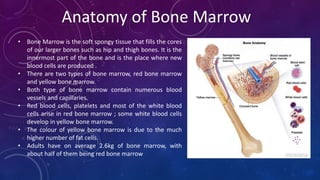
• Bone Marrow is the soft spongy tissue that fills the cores
of our larger bones such as hip and thigh bones. It is the
innermost part of the bone and is the place where new
blood cells are produced .
• There are two types of bone marrow, red bone marrow
and yellow bone marrow.
• Both type of bone marrow contain numerous blood
vessels and capillaries.
• Red blood cells, platelets and most of the white blood
cells arise in red bone marrow ; some white blood cells
develop in yellow bone marrow.
• The colour of yellow bone marrow is due to the much
higher number of fat cells.
• Adults have on average 2.6kg of bone marrow, with
about half of them being red bone marrow
Anatomy of Bone Marrow
Bone Marrow Transplant
• Bone marrow transplant is a medical procedure to treat patients with life-
threatening blood, immune or genetic disorders which includes leukaemia and
bone marrow cancers.
• A bone marrow transplant replaces the unhealthy blood-forming cells with
healthy ones.
• Healthy bone marrow stem cells are harvested from matching bone marrow
donors.
Forms of bone marrow transplantation
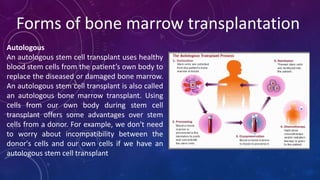
Autologous
An autologous stem cell transplant uses healthy
blood stem cells from the patient’s own body to
replace the diseased or damaged bone marrow.
An autologous stem cell transplant is also called
an autologous bone marrow transplant. Using
cells from our own body during stem cell
transplant offers some advantages over stem
cells from a donor. For example, we don't need
to worry about incompatibility between the
donor's cells and our own cells if we have an
autologous stem cell transplant
Syngeneic
A procedure in which a patient receives healthy stem cells (blood-forming cells) to
replace their own stem cells that have been destroyed by treatment with radiation or
high doses of chemotherapy. In a syngeneic bone marrow transplant, the healthy
stem cells come from the bone marrow of the patient’s healthy identical twin.
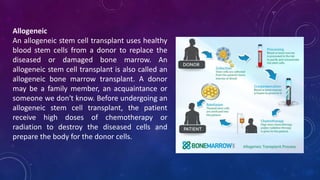
Allogeneic
An allogeneic stem cell transplant uses healthy
blood stem cells from a donor to replace the
diseased or damaged bone marrow. An
allogeneic stem cell transplant is also called an
allogeneic bone marrow transplant. A donor
may be a family member, an acquaintance or
someone we don't know. Before undergoing an
allogeneic stem cell transplant, the patient
receive high doses of chemotherapy or
radiation to destroy the diseased cells and
prepare the body for the donor cells.
Why Bone Marrow transplantation is carried out?
• Aplastic anemia, a disorder in which the marrow stops making new blood cells
• Cancers that affect the marrow, such as leukemia, lymphoma, and multiple myeloma
• If chemotherapy cannot kill all the white blood cells that don’t grow properly.
• Congenital neutropenia, which is an inherited disorder that causes recurring
infections
• Thalassemia, which is an inherited blood disorder where the body makes an abnormal
form of hemoglobin, an integral part of red blood cells
Pre-bone marrow transplant procedures
• Prior to transplant, patients undergo several tests to discover what type of bone
marrow cells they need.
• Patients may also need to undergo radiation or chemotherapy to kill off all cancer cells
or marrow cells before they get the new stem cells.
• During treatments, the body’s immune system will be compromised, affecting its ability
to fight infections. Therefore, a special section of the hospital is reserved for people
receiving bone marrow transplants. This reduces the risk of being exposed to anything
that could cause an infection.
Bone marrow transplantation process
Conditioning Phase
• The conditioning phase typically lasts 7-10 days
• During this phase the patient undergoes chemotherapy and/or radiation
 To eliminate malignancy
 To provide immune suppression to prevent rejection of new stem cells
 To create space for the new cells
Leukapheresis
• During leukapheresis, a donor is given five shots of filgrastim or plerixifor to help the stem cells
move from the bone marrow and into the bloodstream. Blood is then drawn through an
intravenous (IV) line, and a machine separates out the white blood cells that contain stem cells
• A needle called a central venous catheter, or a port, will be installed on the upper right portion of
the patient’s chest. This allows the fluid containing the new stem cells to flow directly into the
heart. The stem cells then disperse throughout the body. They flow through blood and into the
bone marrow. They’ll become established there and begin to grow.
• The port is left in place because the bone marrow transplant is done over several sessions for a few
days. Multiple sessions give the new stem cells the best chance to integrate themselves into the
body. That process is known as engraftment
Neutropeneic Phase
• During this period the body essentially has no effective immune system.
• Healing is poor and the patient is very susceptible to infection.
• Supportive care and therapy are required for the successful passage through this phase.
Engraftment Phase
• During this period (several weeks), the healing process begins with resolution of mucositis
• In addition, fever begins to subside, and other infections begins to clear.
• The greatest challenges at this time are management of GVHD and prevention of viral infections.
Adverse Effects
• Ulcers and dysfunction of Gastro Intestinal Tract may occur frequently.
• Rashes may develop
• Temporary hair loss may occur
• Pneumonia
• Inflammation of damaged blood vessels.
Conclusion
Thus from this presentation we come to know :
• Bone marrow are of two types; red bone marrow and yellow bone marrow
• Donation of bone marrow for transplant can be carried out in 3 ways
 Autologous
 Allogeneic
 Syngeneic
• Bone marrow transplant is carried out to treat patients with life-threatening blood, immune
or genetic disorders which includes leukaemia and bone marrow cancers.
• The different phases that the patients go through during transplant
 Conditioning phase
 Leukapheresis
 Neutropeneic phase
 Engraftment phase
• After transplant the patient are kept in special reserved rooms in hospitals under intense
care to avoid the risk of being exposed to infections.
References
• https://www.healthline.com/health/bone-
marrow-transplant
• https://www.hopkinsmedicine.org/kimmel_cance
r_center/centers/bone_marrow_transplant/types
_transplants.html
• https://www.mayoclinic.org/tests-
procedures/allogeneic-stem-cell-transplant/pyc-
20384863
THANK YOU

Bone marrow transplant

  • 1.
    Bone Marrow Transplantation Submittedby: Yougantar Das Roll No. :- 17/BBT/62
  • 2.
    Contents 1. Anatomy ofBone Marrow 2. Bone Marrow Transplant 3. Forms of bone marrow transplantation 4. Why Bone Marrow transplantation is carried out? 5. Pre-bone marrow transplant procedures 6. Bone marrow transplantation process 7. Adverse Effects 8. Conclusion 9. References
  • 3.
    • Bone Marrowis the soft spongy tissue that fills the cores of our larger bones such as hip and thigh bones. It is the innermost part of the bone and is the place where new blood cells are produced . • There are two types of bone marrow, red bone marrow and yellow bone marrow. • Both type of bone marrow contain numerous blood vessels and capillaries. • Red blood cells, platelets and most of the white blood cells arise in red bone marrow ; some white blood cells develop in yellow bone marrow. • The colour of yellow bone marrow is due to the much higher number of fat cells. • Adults have on average 2.6kg of bone marrow, with about half of them being red bone marrow Anatomy of Bone Marrow
  • 4.
    Bone Marrow Transplant •Bone marrow transplant is a medical procedure to treat patients with life- threatening blood, immune or genetic disorders which includes leukaemia and bone marrow cancers. • A bone marrow transplant replaces the unhealthy blood-forming cells with healthy ones. • Healthy bone marrow stem cells are harvested from matching bone marrow donors.
  • 5.
    Forms of bonemarrow transplantation Autologous An autologous stem cell transplant uses healthy blood stem cells from the patient’s own body to replace the diseased or damaged bone marrow. An autologous stem cell transplant is also called an autologous bone marrow transplant. Using cells from our own body during stem cell transplant offers some advantages over stem cells from a donor. For example, we don't need to worry about incompatibility between the donor's cells and our own cells if we have an autologous stem cell transplant
  • 6.
    Syngeneic A procedure inwhich a patient receives healthy stem cells (blood-forming cells) to replace their own stem cells that have been destroyed by treatment with radiation or high doses of chemotherapy. In a syngeneic bone marrow transplant, the healthy stem cells come from the bone marrow of the patient’s healthy identical twin.
  • 7.
    Allogeneic An allogeneic stemcell transplant uses healthy blood stem cells from a donor to replace the diseased or damaged bone marrow. An allogeneic stem cell transplant is also called an allogeneic bone marrow transplant. A donor may be a family member, an acquaintance or someone we don't know. Before undergoing an allogeneic stem cell transplant, the patient receive high doses of chemotherapy or radiation to destroy the diseased cells and prepare the body for the donor cells.
  • 8.
    Why Bone Marrowtransplantation is carried out? • Aplastic anemia, a disorder in which the marrow stops making new blood cells • Cancers that affect the marrow, such as leukemia, lymphoma, and multiple myeloma • If chemotherapy cannot kill all the white blood cells that don’t grow properly. • Congenital neutropenia, which is an inherited disorder that causes recurring infections • Thalassemia, which is an inherited blood disorder where the body makes an abnormal form of hemoglobin, an integral part of red blood cells
  • 9.
    Pre-bone marrow transplantprocedures • Prior to transplant, patients undergo several tests to discover what type of bone marrow cells they need. • Patients may also need to undergo radiation or chemotherapy to kill off all cancer cells or marrow cells before they get the new stem cells. • During treatments, the body’s immune system will be compromised, affecting its ability to fight infections. Therefore, a special section of the hospital is reserved for people receiving bone marrow transplants. This reduces the risk of being exposed to anything that could cause an infection.
  • 10.
    Bone marrow transplantationprocess Conditioning Phase • The conditioning phase typically lasts 7-10 days • During this phase the patient undergoes chemotherapy and/or radiation  To eliminate malignancy  To provide immune suppression to prevent rejection of new stem cells  To create space for the new cells Leukapheresis • During leukapheresis, a donor is given five shots of filgrastim or plerixifor to help the stem cells move from the bone marrow and into the bloodstream. Blood is then drawn through an intravenous (IV) line, and a machine separates out the white blood cells that contain stem cells • A needle called a central venous catheter, or a port, will be installed on the upper right portion of the patient’s chest. This allows the fluid containing the new stem cells to flow directly into the heart. The stem cells then disperse throughout the body. They flow through blood and into the bone marrow. They’ll become established there and begin to grow. • The port is left in place because the bone marrow transplant is done over several sessions for a few days. Multiple sessions give the new stem cells the best chance to integrate themselves into the body. That process is known as engraftment
  • 11.
    Neutropeneic Phase • Duringthis period the body essentially has no effective immune system. • Healing is poor and the patient is very susceptible to infection. • Supportive care and therapy are required for the successful passage through this phase. Engraftment Phase • During this period (several weeks), the healing process begins with resolution of mucositis • In addition, fever begins to subside, and other infections begins to clear. • The greatest challenges at this time are management of GVHD and prevention of viral infections.
  • 12.
    Adverse Effects • Ulcersand dysfunction of Gastro Intestinal Tract may occur frequently. • Rashes may develop • Temporary hair loss may occur • Pneumonia • Inflammation of damaged blood vessels.
  • 13.
    Conclusion Thus from thispresentation we come to know : • Bone marrow are of two types; red bone marrow and yellow bone marrow • Donation of bone marrow for transplant can be carried out in 3 ways  Autologous  Allogeneic  Syngeneic • Bone marrow transplant is carried out to treat patients with life-threatening blood, immune or genetic disorders which includes leukaemia and bone marrow cancers. • The different phases that the patients go through during transplant  Conditioning phase  Leukapheresis  Neutropeneic phase  Engraftment phase • After transplant the patient are kept in special reserved rooms in hospitals under intense care to avoid the risk of being exposed to infections.
  • 14.
  • 15.