Applications of CRISPR technologies
across the food supply chain
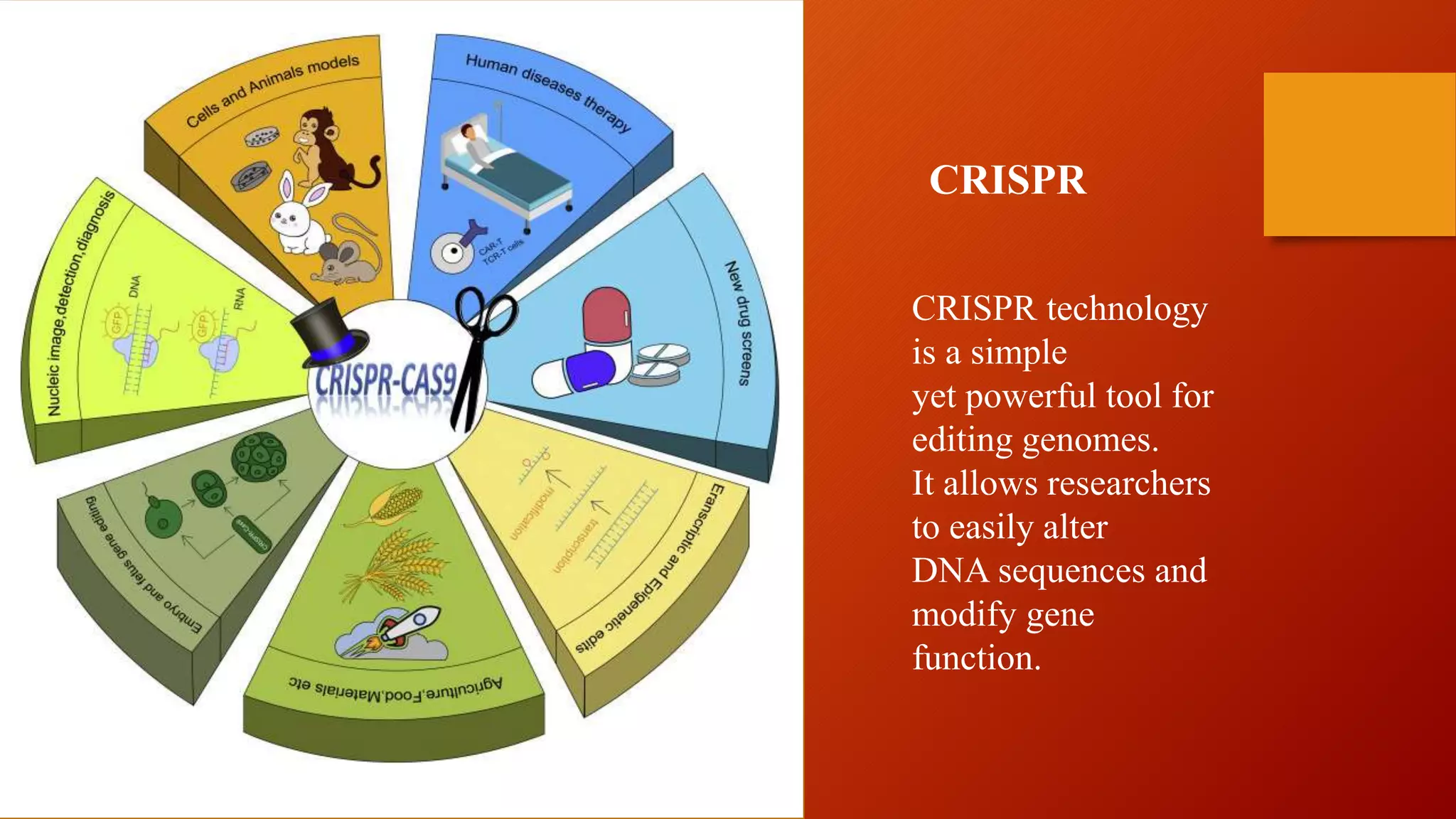
CRISPR technology
is a simple
yet powerful tool for
editing genomes.
It allows researchers
to easily alter
DNA sequences and
modify gene
function.
CRISPR
CRISPR Biology
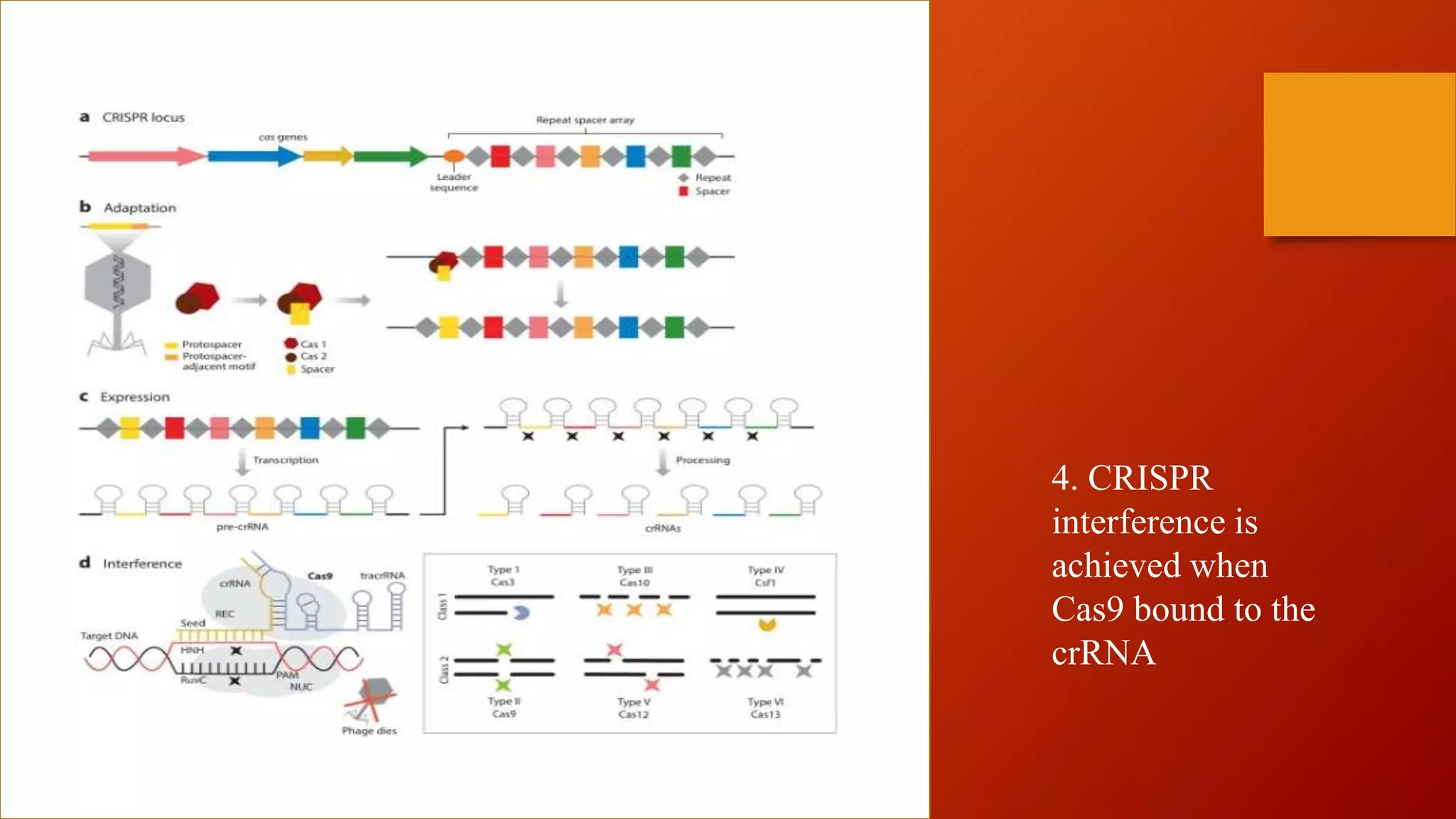
1. CRISPR locus containing cas genes, a leader sequence, and a
repeat–spacer array
2. CRISPR adaptation involves the excision of a protospacer from invading
DNA and its incorporation as a spacer into the host’s repeat–spacer array
3. CRISPR expression involves the transcription and processing of
crRNAs (CRISPR RNAs).
4. CRISPR
interference is
achieved when
Cas9 bound to the
crRNA
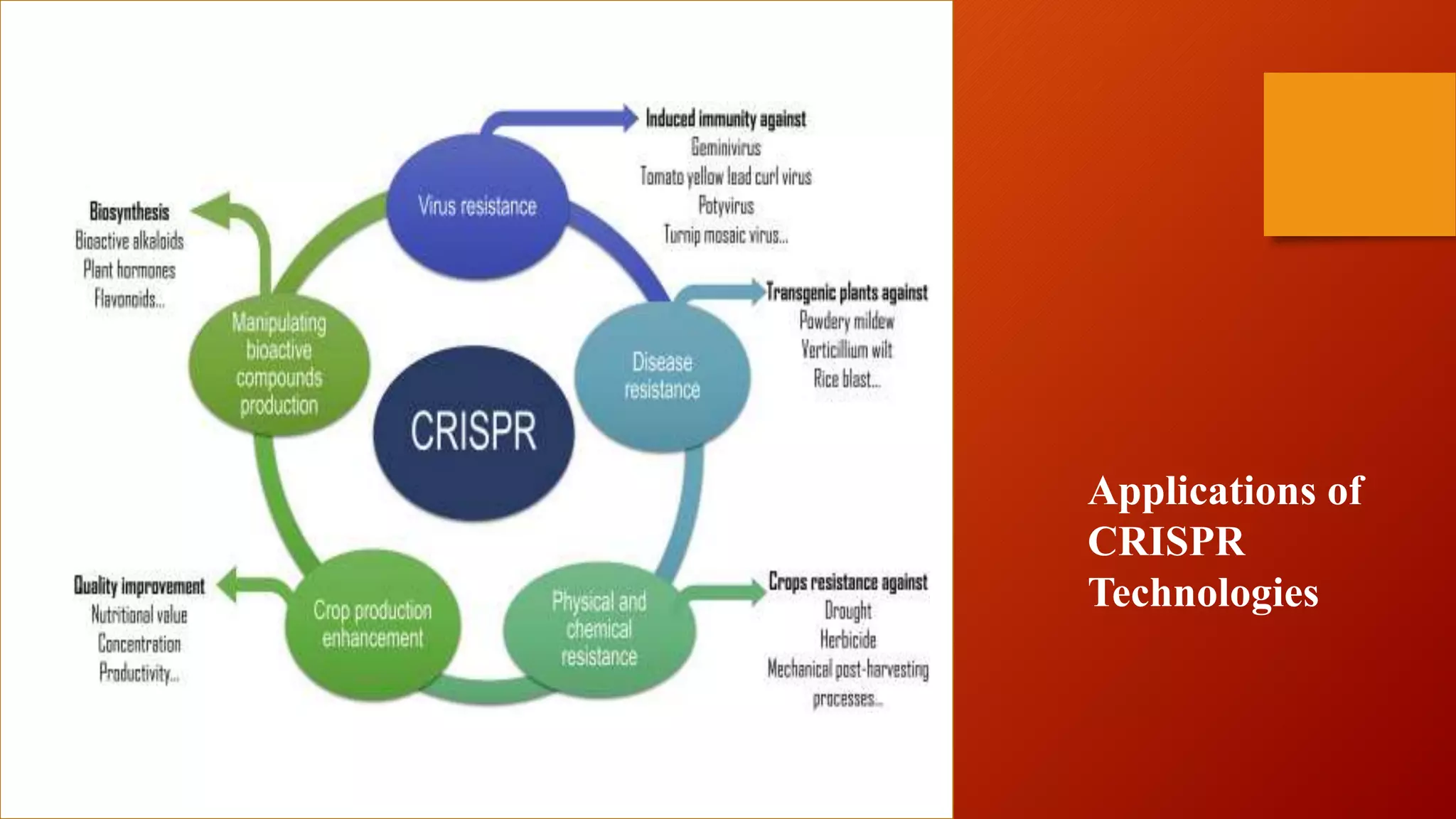
Applications of
CRISPR
Technologies
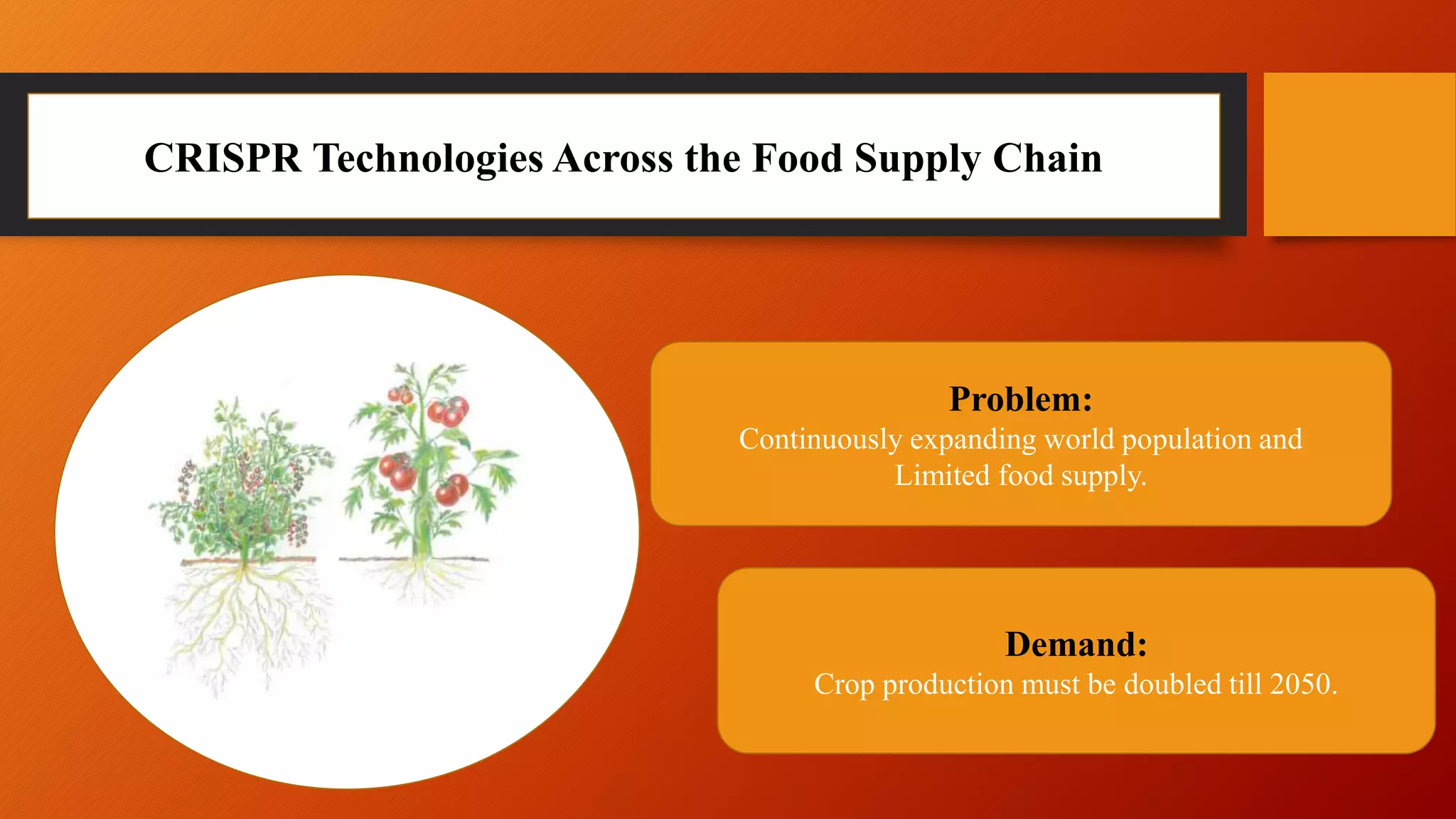
CRISPR Technologies Across the Food Supply Chain
Problem:
Continuously expanding world population and
Limited food supply.
Demand:
Crop production must be doubled till 2050.
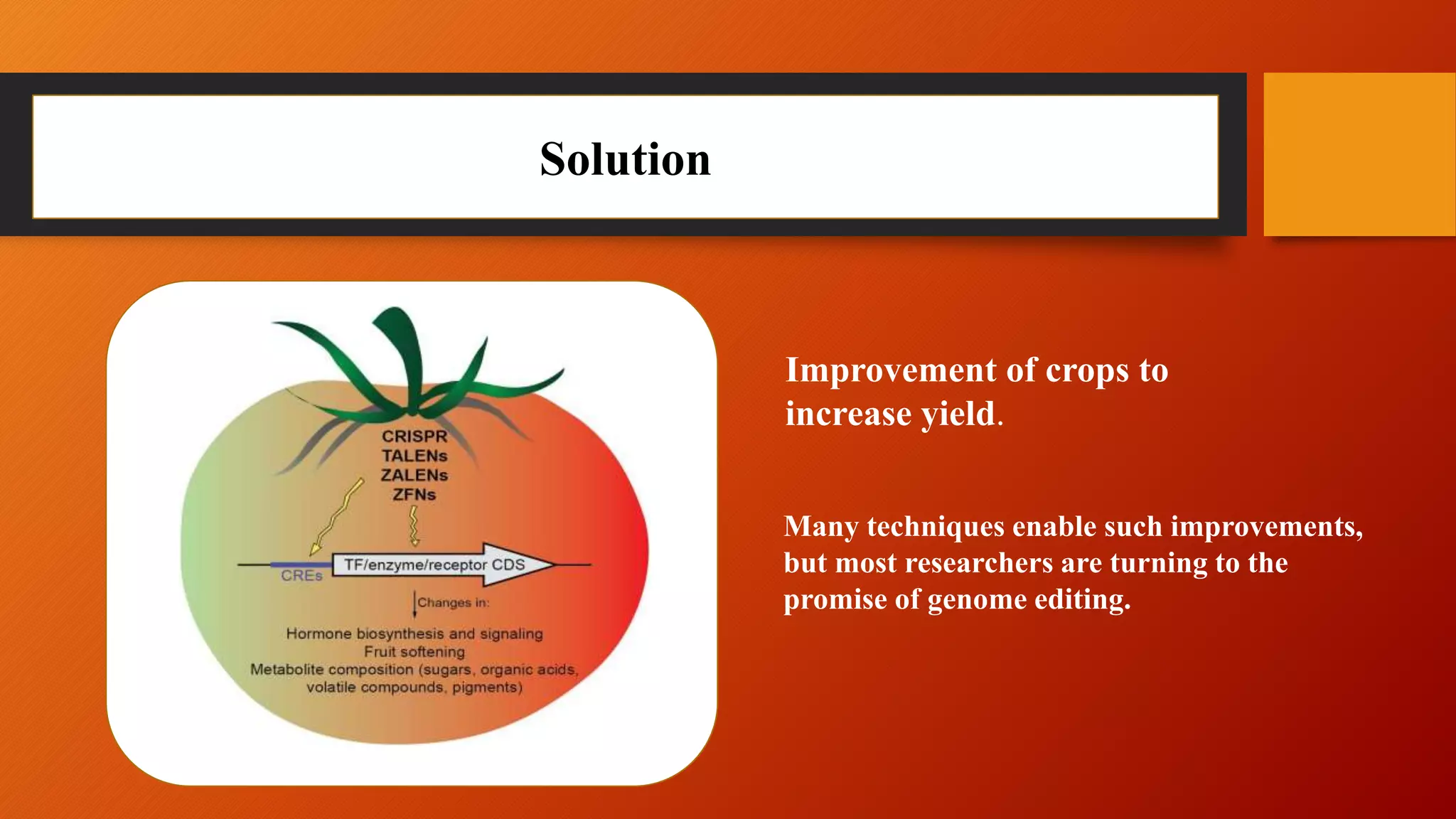
Solution
Improvement of crops to
increase yield.
Many techniques enable such improvements,
but most researchers are turning to the
promise of genome editing.
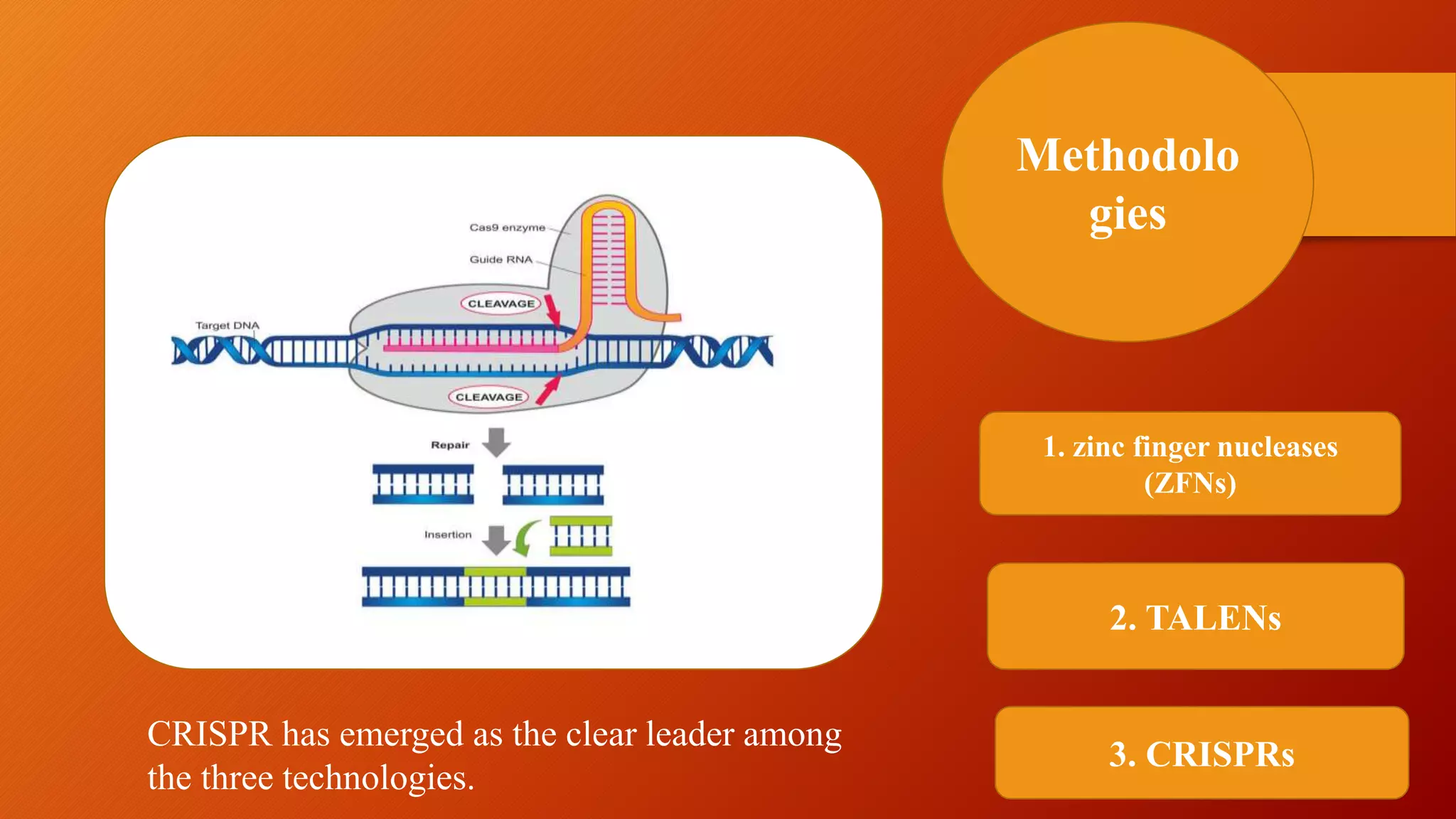
Methodolo
gies
1. zinc finger nucleases
(ZFNs)
2. TALENs
3. CRISPRs
CRISPR has emerged as the clear leader among
the three technologies.

CRISPER Cas & Food supply chain Application

  • 1.
    Applications of CRISPRtechnologies across the food supply chain
  • 2.
    CRISPR technology is asimple yet powerful tool for editing genomes. It allows researchers to easily alter DNA sequences and modify gene function. CRISPR
  • 3.
    CRISPR Biology 1. CRISPRlocus containing cas genes, a leader sequence, and a repeat–spacer array 2. CRISPR adaptation involves the excision of a protospacer from invading DNA and its incorporation as a spacer into the host’s repeat–spacer array 3. CRISPR expression involves the transcription and processing of crRNAs (CRISPR RNAs).
  • 4.
    4. CRISPR interference is achievedwhen Cas9 bound to the crRNA
  • 5.
  • 6.
    CRISPR Technologies Acrossthe Food Supply Chain Problem: Continuously expanding world population and Limited food supply. Demand: Crop production must be doubled till 2050.
  • 7.
    Solution Improvement of cropsto increase yield. Many techniques enable such improvements, but most researchers are turning to the promise of genome editing.
  • 8.
    Methodolo gies 1. zinc fingernucleases (ZFNs) 2. TALENs 3. CRISPRs CRISPR has emerged as the clear leader among the three technologies.