C3 AndC4
PLANTS
Contents:
1. Photosynthesis Cycle
2. Habitat
3.Example
4.Advantage
C3 AndC4
PLANTS
• C3 plants are plants in
which the initial product
of the assimilation of
Carbon dioxide through
photosynthesis is 3-
pohospgoglycerate,
which contain 3 carbon
atoms.
C3 PLANTS
• This carbon dioxide enters
through the stomata.
• Carbon dioxide binds with
a sugar molecule by the
help of enzyme
“RuBisCo”.
• This combination of sugar
and carbon consist of three
carbons that’s why called
“C3 plants”.
Photosynthesis of
C3 Plants Calvin
Cycle
This reaction takes place in
the stroma of Chloroplast.
These plants proceed dark
reaction.
They are less efficient of
photosynthesis.
C3 PLANTS
Calvin Cycle
• About 85% of plants are
C3 type on earth.
Examples:
Sugar beat , Barely,
Rice, Cotton are
common examples.
Habitat:
They are most efficient at
cool and wet climates.
Examples and
habitat
Plants that form 4
carbon sugar during the
Calvin Cycle knows as
C4 Plants.
C4 PLANTS
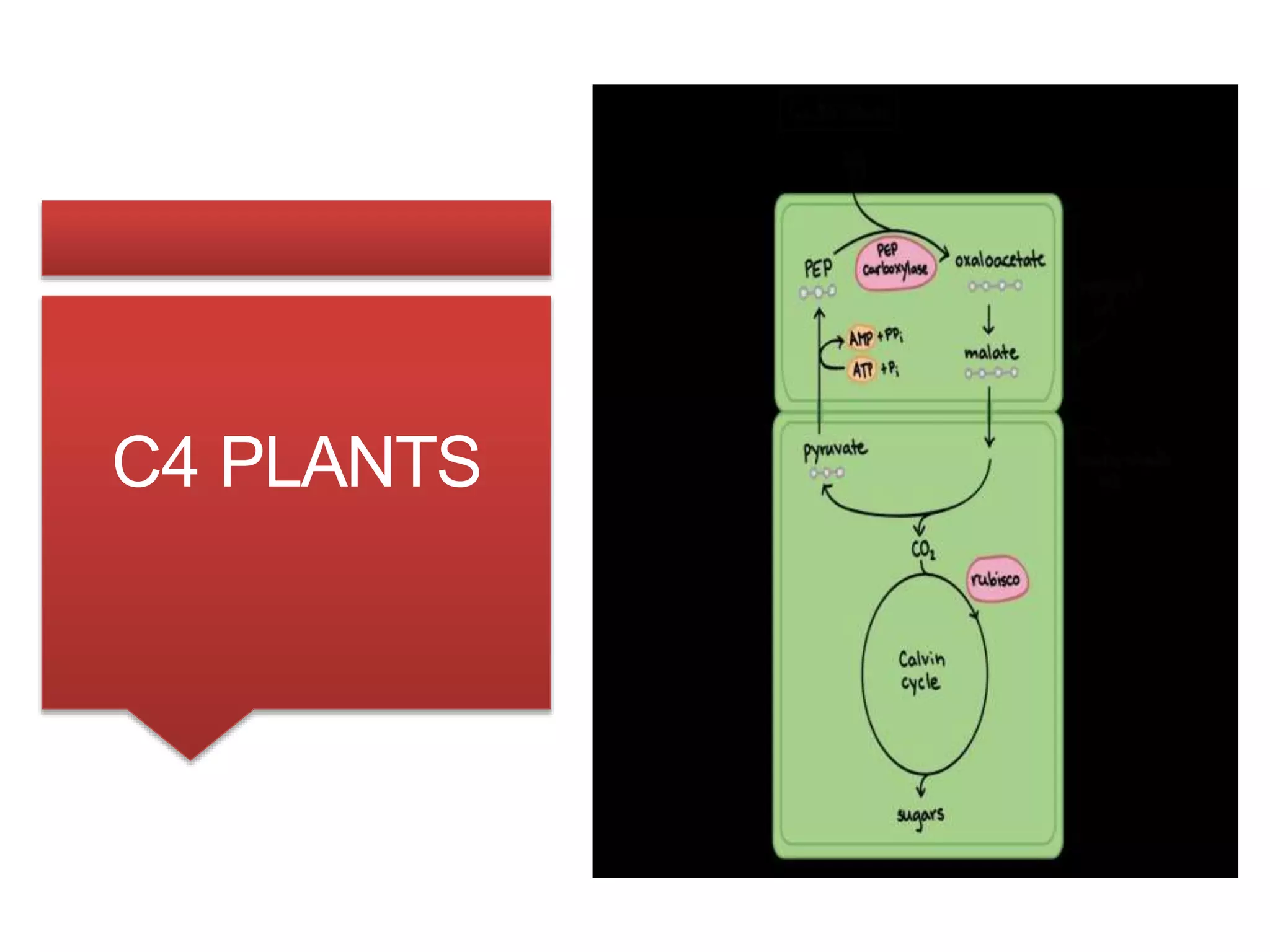
 Carbon dioxide enters in the
Mesophyll cells and form a
4- Carbon organic acid
(Oxaloacetate).
 This process is carried out by a
Non RuBisCo enzyme PEP
(Carboxylase). It has not the
tendency to bind with oxygen.
 Oxaloacetate then converted into
the Malate. Malate then
transpoted to the Bundle-Sheath
cells.
 Breakdown of Malate release
the carbon dioxide
molecule that is fixed by the
RuBisCo enzyme.
Photosynthesis
of C4 Plants
Cycle
C4 PLANTS
Examples and
Habitat
Examples:
Maize
Pigweed
Sugar cane
Habitat:
They are most efficient
at hot and dry places.
C4 plants are about
5%of earth .
C3 plants bundle sheath
do not contains
Chloroplast while C4
plants contain.
C4 plants carry Hatch
Slack cycle while C3
plants Carry Calvin
Cycle.
Difference
between C3 and
C4 plants
C3 and C4  plants Botany

C3 and C4 plants Botany

  • 1.
  • 2.
    Contents: 1. Photosynthesis Cycle 2.Habitat 3.Example 4.Advantage C3 AndC4 PLANTS
  • 3.
    • C3 plantsare plants in which the initial product of the assimilation of Carbon dioxide through photosynthesis is 3- pohospgoglycerate, which contain 3 carbon atoms. C3 PLANTS
  • 4.
    • This carbondioxide enters through the stomata. • Carbon dioxide binds with a sugar molecule by the help of enzyme “RuBisCo”. • This combination of sugar and carbon consist of three carbons that’s why called “C3 plants”. Photosynthesis of C3 Plants Calvin Cycle
  • 5.
    This reaction takesplace in the stroma of Chloroplast. These plants proceed dark reaction. They are less efficient of photosynthesis. C3 PLANTS Calvin Cycle
  • 6.
    • About 85%of plants are C3 type on earth. Examples: Sugar beat , Barely, Rice, Cotton are common examples. Habitat: They are most efficient at cool and wet climates. Examples and habitat
  • 7.
    Plants that form4 carbon sugar during the Calvin Cycle knows as C4 Plants. C4 PLANTS
  • 8.
     Carbon dioxideenters in the Mesophyll cells and form a 4- Carbon organic acid (Oxaloacetate).  This process is carried out by a Non RuBisCo enzyme PEP (Carboxylase). It has not the tendency to bind with oxygen.  Oxaloacetate then converted into the Malate. Malate then transpoted to the Bundle-Sheath cells.  Breakdown of Malate release the carbon dioxide molecule that is fixed by the RuBisCo enzyme. Photosynthesis of C4 Plants Cycle
  • 9.
  • 10.
    Examples and Habitat Examples: Maize Pigweed Sugar cane Habitat: Theyare most efficient at hot and dry places. C4 plants are about 5%of earth .
  • 11.
    C3 plants bundlesheath do not contains Chloroplast while C4 plants contain. C4 plants carry Hatch Slack cycle while C3 plants Carry Calvin Cycle. Difference between C3 and C4 plants