Presentation By: Jaisha K J
Table of Content
I. CONFLICT II. CONFLICT MANAGEMENT
• Introduction to Conflict
• Meaning and Definition of Conflict
• Views of Conflict
• Causes of Conflict
• Effects of Conflict
• Functional and Dysfunctional Conflict
• Levels of Conflict
• Measures for Conflict Management
• Conflict Management in Workplace
• Conflict Management
• Conflict Management Styles
Introduction to ConflictI
Inevitable unavoidable
Challenge for
managers
Conflict Management
Meaning and Definition of ConflictI
A disagreement between two or more individuals or groups, with each individual or
group trying to gain acceptance of its view or objectives over others.
Friction
Views
NeedsIdeasValues
Opinions
Goals
Views of ConflictI
Traditional View (1930’s and 1940’s) :
The belief that all conflicts are harmful and must be avoided
Human Relations View (late 1940’s to mid 1970’s) :
The belief that conflict is a natural and inevitable outcome in any
group
Integrationist View (current) :
The belief that conflict is not only a positive force in group but that
it is absolutely necessary for a group to perform effectively
Communication
aspect of conflict
Behavioral
aspect of conflict
Structural aspect
of conflict
Causes of ConflictI
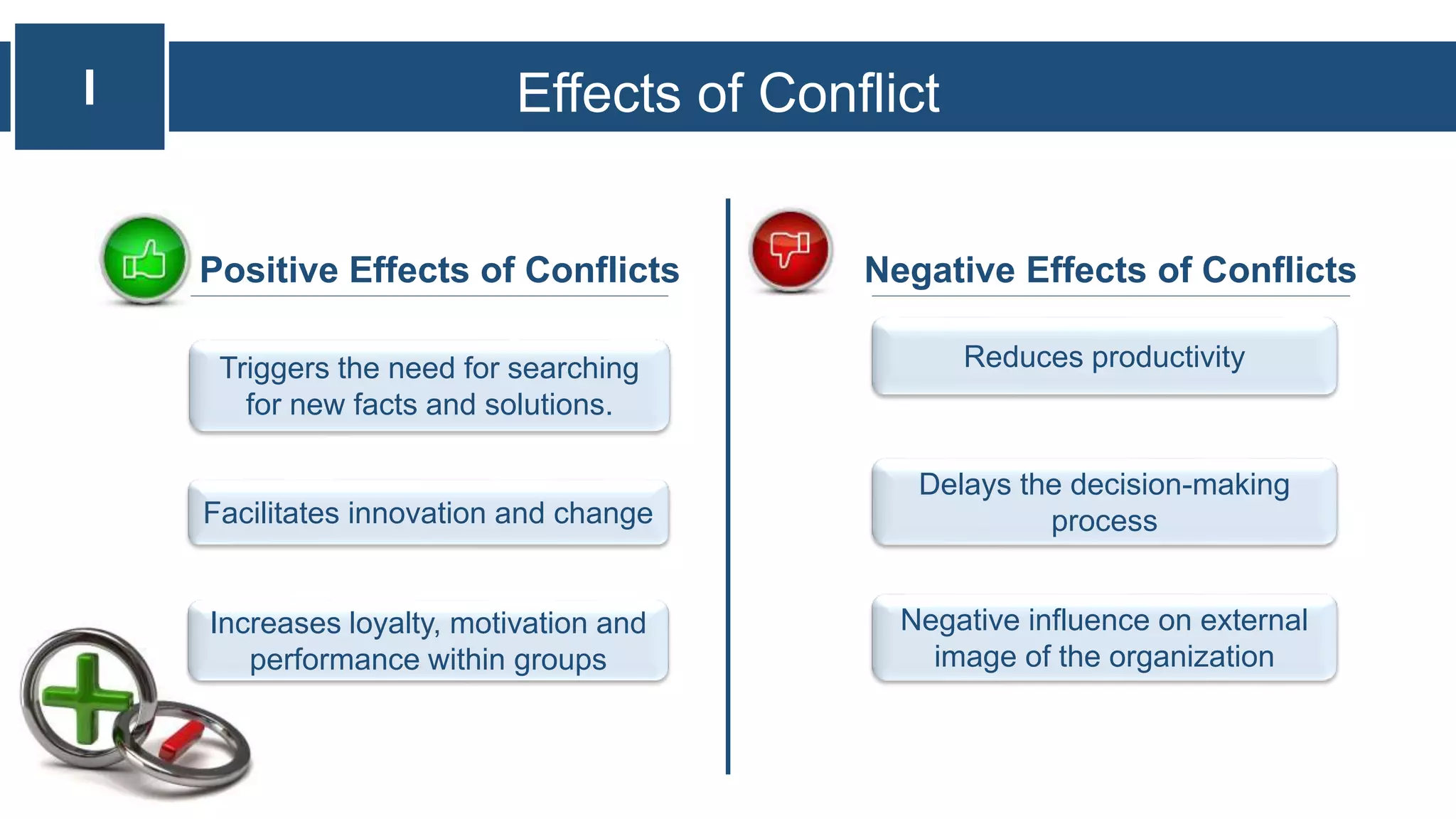
Positive Effects of Conflicts Negative Effects of Conflicts
Effects of ConflictI
Triggers the need for searching
for new facts and solutions.
Delays the decision-making
process
Reduces productivity
Facilitates innovation and change
Negative influence on external
image of the organization
Increases loyalty, motivation and
performance within groups
Functional and Dysfunctional ConflictI
Functional Conflict Dysfunctional
Conflict
Conflict that support the goals of the
group and improve its performance
Conflicts that hinders group performance
Example
• Employee of the month
competition in organizations
Example
• Relationship Conflict
(Separation of Ambani Brothers)
• Process Conflict
(Failure to deliver products by e-
commerce websites)
Conflict
Individual level Interpersonal Group level Organization level
Levels of ConflictI
a) Frustration
b) Goal conflict
c) Role conflict
a) Inter group conflict
b) Intra group conflict
Conflict ManagementII
Conflict Management is defined as
“ the opportunity to improve situations and strengthen relationships”
Process of
avoiding /
resolving conflict
Requires different levels of
interaction between people
Simple Evasion TacticsUse Of Positive Body Language
Basic
Communication
Conflict Management StylesII
Measures for Conflict ManagementII
Preventive Measures Curative Measures
• Establishing common goals
• Reduction in interdependence
• Reduction in shared resources
• Coordination
• Exchange of personnel
• Use of superior authority
• Avoidance
• Competing
• Collaboration
• Accommodating
• Compromise
Conflict Management in WorkplaceII
SREDAEL
Listen
Empathy
Act towards
the problem,
not person
Do not focus
on the
person, but
the facts/
problems
Equality
Respect
Solution
Thank You

Conflict management

  • 1.
  • 2.
    Table of Content I.CONFLICT II. CONFLICT MANAGEMENT • Introduction to Conflict • Meaning and Definition of Conflict • Views of Conflict • Causes of Conflict • Effects of Conflict • Functional and Dysfunctional Conflict • Levels of Conflict • Measures for Conflict Management • Conflict Management in Workplace • Conflict Management • Conflict Management Styles
  • 3.
    Introduction to ConflictI Inevitableunavoidable Challenge for managers Conflict Management
  • 4.
    Meaning and Definitionof ConflictI A disagreement between two or more individuals or groups, with each individual or group trying to gain acceptance of its view or objectives over others. Friction Views NeedsIdeasValues Opinions Goals
  • 5.
    Views of ConflictI TraditionalView (1930’s and 1940’s) : The belief that all conflicts are harmful and must be avoided Human Relations View (late 1940’s to mid 1970’s) : The belief that conflict is a natural and inevitable outcome in any group Integrationist View (current) : The belief that conflict is not only a positive force in group but that it is absolutely necessary for a group to perform effectively
  • 6.
    Communication aspect of conflict Behavioral aspectof conflict Structural aspect of conflict Causes of ConflictI
  • 7.
    Positive Effects ofConflicts Negative Effects of Conflicts Effects of ConflictI Triggers the need for searching for new facts and solutions. Delays the decision-making process Reduces productivity Facilitates innovation and change Negative influence on external image of the organization Increases loyalty, motivation and performance within groups
  • 8.
    Functional and DysfunctionalConflictI Functional Conflict Dysfunctional Conflict Conflict that support the goals of the group and improve its performance Conflicts that hinders group performance Example • Employee of the month competition in organizations Example • Relationship Conflict (Separation of Ambani Brothers) • Process Conflict (Failure to deliver products by e- commerce websites)
  • 9.
    Conflict Individual level InterpersonalGroup level Organization level Levels of ConflictI a) Frustration b) Goal conflict c) Role conflict a) Inter group conflict b) Intra group conflict
  • 10.
    Conflict ManagementII Conflict Managementis defined as “ the opportunity to improve situations and strengthen relationships” Process of avoiding / resolving conflict Requires different levels of interaction between people Simple Evasion TacticsUse Of Positive Body Language Basic Communication
  • 11.
  • 12.
    Measures for ConflictManagementII Preventive Measures Curative Measures • Establishing common goals • Reduction in interdependence • Reduction in shared resources • Coordination • Exchange of personnel • Use of superior authority • Avoidance • Competing • Collaboration • Accommodating • Compromise
  • 13.
    Conflict Management inWorkplaceII SREDAEL Listen Empathy Act towards the problem, not person Do not focus on the person, but the facts/ problems Equality Respect Solution
  • 14.