The document provides an overview of models of conflict, including definitions, causes, consequences, and solutions. It begins by defining conflict and distinguishing between different types. Key points include:
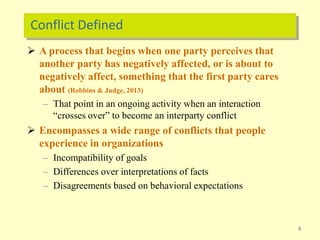
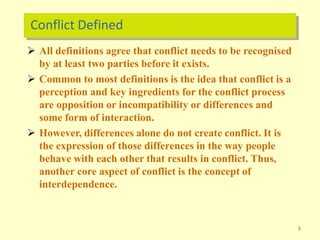
- Conflict is a perception of incompatibility between two interdependent parties. It exists when one party feels another has negatively affected something they care about.
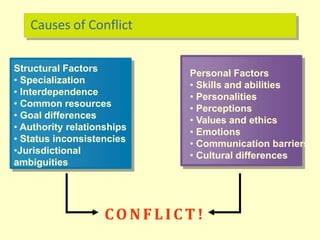
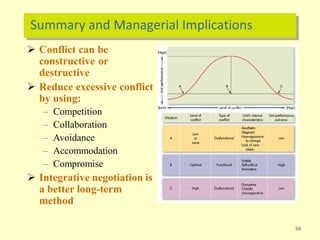
- There are various causes of conflict including personal, structural, and communication factors. Conflict has both functional and dysfunctional consequences depending on how it is managed.
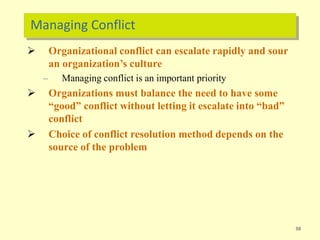
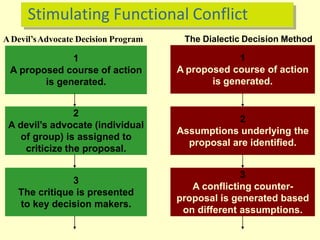
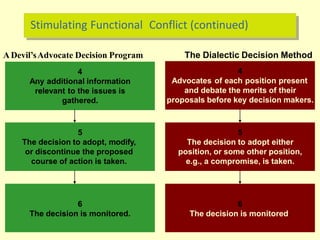
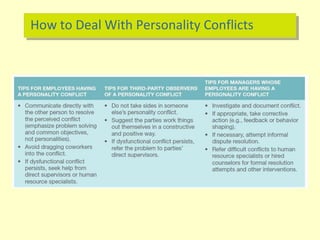
- Conflict management aims to minimize dysfunctional aspects and enhance constructive functions, while conflict resolution seeks to end conflict. Managing conflict appropriately is important for optimal organizational performance.