The Cell
Cells
All organisms are made of at least one cell.
Cells do not work alone:
Tissues: are groups of cells with similar
structure and functions
Organs: are groups of tissues that work
together for a common purpose
Organ systems: are groups of organs that
work together to help you stay alive
Cells
Cells are made of many different parts:
Organelles: specialized structures inside of
a cell that carry out specific functions.
One way to think about cells’ organization
is to think of them as living factories,
making all the things necessary for them
to live.These factories have the following
specialized areas.
Animal Cell vs. Plant Cell
Organelles
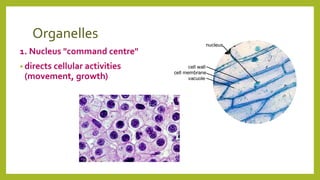
1. Nucleus "command centre"
• directs cellular activities
(movement, growth)
Organelles
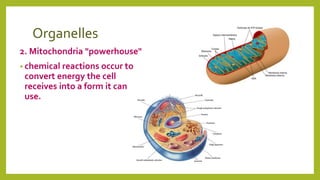
2. Mitochondria "powerhouse"
• chemical reactions occur to
convert energy the cell
receives into a form it can
use.
Organelles
3. Cell Membrane "controllable
gateway"
• lets needed material in and
waste materials out.
Organelles
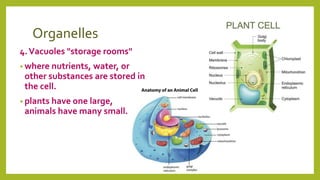
4.Vacuoles "storage rooms"
• where nutrients, water, or
other substances are stored in
the cell.
• plants have one large,
animals have many small.
Organelles
5. Cytoplasm "kitchen"
• contains nutrients required by
the cell for its life processes.
Organelles
6. Cell Wall "frame"
• found only in plant cells that
provides strength and
support to plants.
Organelles
7. Chloroplasts "solar panels"
• found in cells of the green
parts of plants.
• carry out photosynthesis,
converting the sun's energy
into food.
Organelles
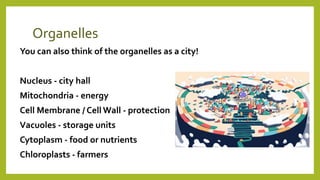
You can also think of the organelles as a city!
Nucleus - city hall
Mitochondria - energy
Cell Membrane / Cell Wall - protection
Vacuoles - storage units
Cytoplasm - food or nutrients
Chloroplasts - farmers

The cell

  • 1.
  • 2.
    Cells All organisms aremade of at least one cell. Cells do not work alone: Tissues: are groups of cells with similar structure and functions Organs: are groups of tissues that work together for a common purpose Organ systems: are groups of organs that work together to help you stay alive
  • 3.
    Cells Cells are madeof many different parts: Organelles: specialized structures inside of a cell that carry out specific functions. One way to think about cells’ organization is to think of them as living factories, making all the things necessary for them to live.These factories have the following specialized areas.
  • 4.
    Animal Cell vs.Plant Cell
  • 5.
    Organelles 1. Nucleus "commandcentre" • directs cellular activities (movement, growth)
  • 6.
    Organelles 2. Mitochondria "powerhouse" •chemical reactions occur to convert energy the cell receives into a form it can use.
  • 7.
    Organelles 3. Cell Membrane"controllable gateway" • lets needed material in and waste materials out.
  • 8.
    Organelles 4.Vacuoles "storage rooms" •where nutrients, water, or other substances are stored in the cell. • plants have one large, animals have many small.
  • 9.
    Organelles 5. Cytoplasm "kitchen" •contains nutrients required by the cell for its life processes.
  • 10.
    Organelles 6. Cell Wall"frame" • found only in plant cells that provides strength and support to plants.
  • 11.
    Organelles 7. Chloroplasts "solarpanels" • found in cells of the green parts of plants. • carry out photosynthesis, converting the sun's energy into food.
  • 12.
    Organelles You can alsothink of the organelles as a city! Nucleus - city hall Mitochondria - energy Cell Membrane / Cell Wall - protection Vacuoles - storage units Cytoplasm - food or nutrients Chloroplasts - farmers