Human Impacts on
the Environment
Human Impacts
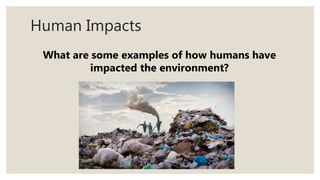
What are some examples of how humans have
impacted the environment?
Human Impacts
Many Human Activities lead to chemicals being added
or changed and then released into the environment.
•Agriculture
•Solid Waste and waste disposal
•Industrial Activities
Agriculture
Agricultural Activities
To feed the worlds growing population much of our land is covered in
farms. This leads to 2 main contaminants being added to the
environment.
Agriculture
Fertilizers
• all fertilizers have 3 numbers
attached to them i.e. (15-30-15)
• This shows the amount of
chemicals that it contains N-P-K
(nitrogen-phosphorous-
potassium).
• Nitrogen and phosphorus can
lead to algal blooms and animal
death in aquatic environments
(eutrophication)
Agriculture
Pesticides - Chemicals that kill
pests, preventing the eating/destroying of
our food crops. However many of these
chemicals can enter us and other living
things when we eat the food or if it is
washed off of crops by rain.
Do you remember how this chemical
affected the birds of prey?
And Biomagnification / bioaccumulation?
Solid Waste
Solid Waste:
The garbage we make and dispose of
can cause many different chemicals to
enter the environment. These include
heavy metals, cleaning chemicals,
paints, etc.
Solid Waste
Landfills - we put our solid waste in
landfills.
Leachate: Rain water dissolves some of
the solid waste to create a toxic mixture
of chemicals known as leachate.
These toxins would normally seep into
the soil and cause major problems.
Landfills are designed to prevent the
transport of leachate into the soil and
water.
This is achieved by adding thick layers
of clay and plastic to the bottom layers
of a landfill preventing the leachate
from moving into the ground.
Waste Water
The water we use in our daily lives also
becomes contaminated with chemicals.
Sewage: contaminated wastewater
Septic tank: where sewage is store so
bacteria can help decompose the
organic wastes.
Sewage Treatment Plant: help
remove contaminants from the waste
water. This is not 100% clean and may
release some chemicals like phosphates
and chlorine entering the environment.
Effluent: cleaned sewage
Waste Water
Burning of fossil fuels generates
gases that cause acid rain and air
pollution
Pollution: is the introduction of
contaminants/chemicals into the
natural environment that cause change
and cause damage

Human impacts

  • 1.
  • 2.
    Human Impacts What aresome examples of how humans have impacted the environment?
  • 3.
    Human Impacts Many HumanActivities lead to chemicals being added or changed and then released into the environment. •Agriculture •Solid Waste and waste disposal •Industrial Activities
  • 4.
    Agriculture Agricultural Activities To feedthe worlds growing population much of our land is covered in farms. This leads to 2 main contaminants being added to the environment.
  • 5.
    Agriculture Fertilizers • all fertilizershave 3 numbers attached to them i.e. (15-30-15) • This shows the amount of chemicals that it contains N-P-K (nitrogen-phosphorous- potassium). • Nitrogen and phosphorus can lead to algal blooms and animal death in aquatic environments (eutrophication)
  • 6.
    Agriculture Pesticides - Chemicalsthat kill pests, preventing the eating/destroying of our food crops. However many of these chemicals can enter us and other living things when we eat the food or if it is washed off of crops by rain. Do you remember how this chemical affected the birds of prey? And Biomagnification / bioaccumulation?
  • 7.
    Solid Waste Solid Waste: Thegarbage we make and dispose of can cause many different chemicals to enter the environment. These include heavy metals, cleaning chemicals, paints, etc.
  • 8.
    Solid Waste Landfills -we put our solid waste in landfills. Leachate: Rain water dissolves some of the solid waste to create a toxic mixture of chemicals known as leachate. These toxins would normally seep into the soil and cause major problems. Landfills are designed to prevent the transport of leachate into the soil and water. This is achieved by adding thick layers of clay and plastic to the bottom layers of a landfill preventing the leachate from moving into the ground.
  • 9.
    Waste Water The waterwe use in our daily lives also becomes contaminated with chemicals. Sewage: contaminated wastewater Septic tank: where sewage is store so bacteria can help decompose the organic wastes. Sewage Treatment Plant: help remove contaminants from the waste water. This is not 100% clean and may release some chemicals like phosphates and chlorine entering the environment. Effluent: cleaned sewage
  • 10.
    Waste Water Burning offossil fuels generates gases that cause acid rain and air pollution Pollution: is the introduction of contaminants/chemicals into the natural environment that cause change and cause damage