Department of Orthodontics
North Bengal Dental College & Hospital
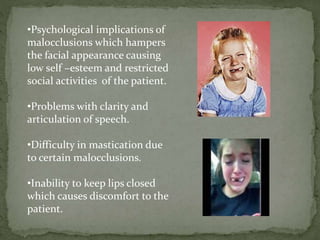
•Psychological implications of
malocclusions which hampers
the facial appearance causing
low self –esteem and restricted
social activities of the patient.
•Problems with clarity and
articulation of speech.
•Difficulty in mastication due
to certain malocclusions.
•Inability to keep lips closed
which causes discomfort to the
patient.
•Pain in the lower anterior teeth or
palate in severe deep bite.
•Hypersensitivity of teeth and
anterior teeth getting worn down.
•Pain in the TMJ.
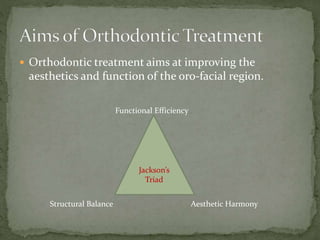
 Orthodontic treatment aims at improving the
aesthetics and function of the oro-facial region.
Jackson’s
Triad
Functional Efficiency
Structural Balance Aesthetic Harmony
 Most of these changes are brought about by using
devices that move teeth or modify the growth of jaws,
these devices are called Orthodontic Appliances.
 Orthodontic appliances are devices by means of which
mild pressure may be applied to a group of teeth and
their supporting structures so as to bring about
necessary changes within the bone, which will allow
tooth movement.
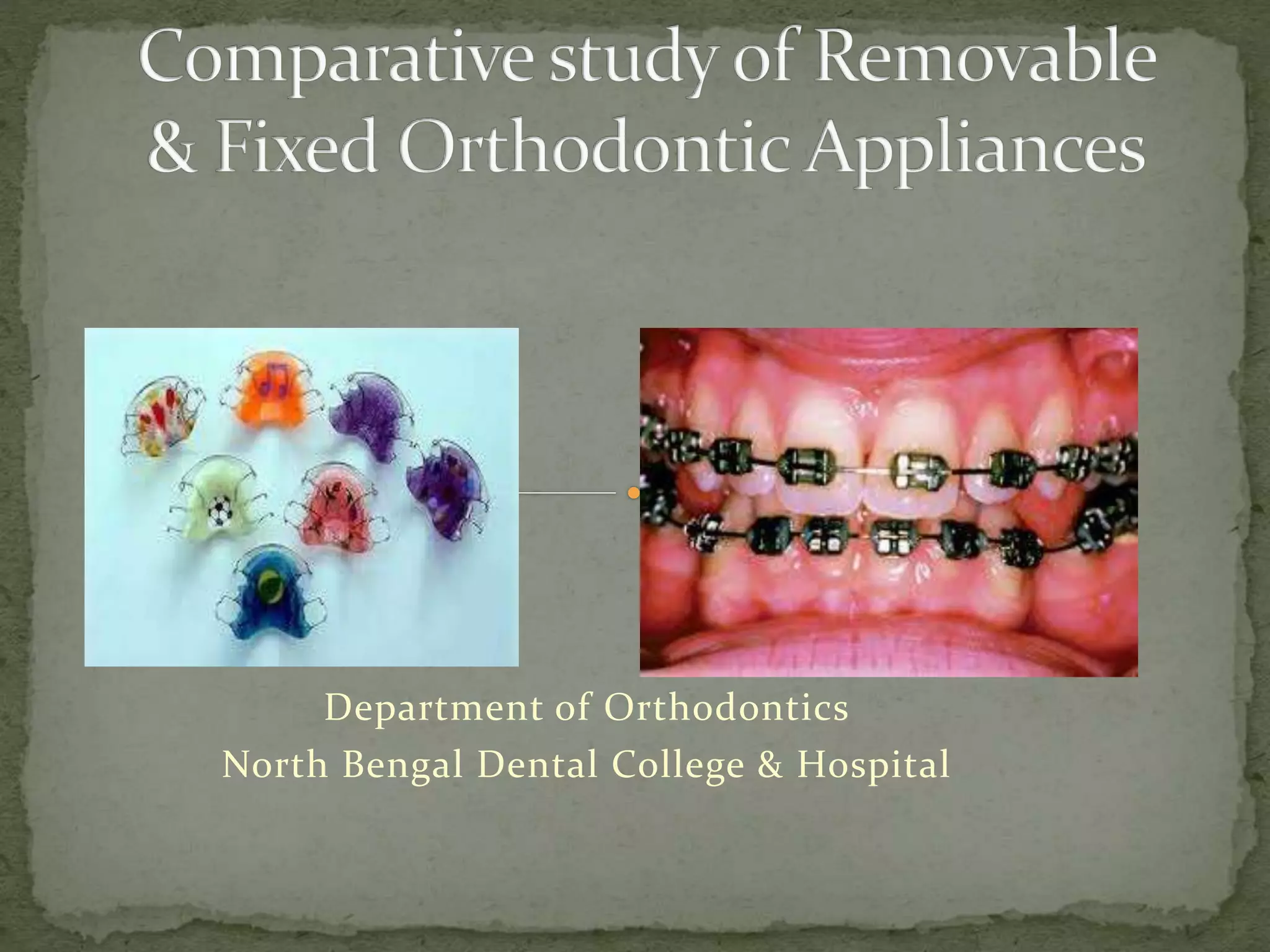
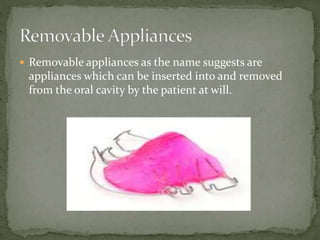
 Removable appliances as the name suggests are
appliances which can be inserted into and removed
from the oral cavity by the patient at will.
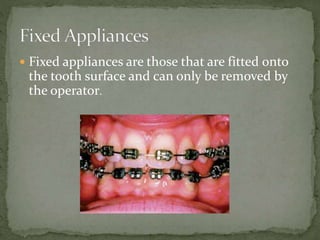
 Fixed appliances are those that are fitted onto
the tooth surface and can only be removed by
the operator.
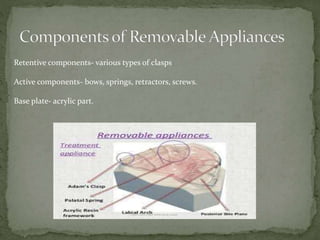
Retentive components- various types of clasps
Active components- bows, springs, retractors, screws.
Base plate- acrylic part.
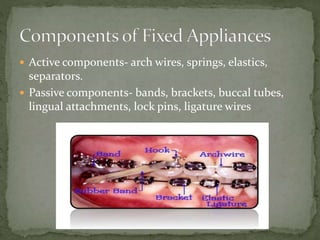
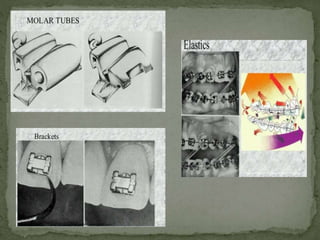
 Active components- arch wires, springs, elastics,
separators.
 Passive components- bands, brackets, buccal tubes,
lingual attachments, lock pins, ligature wires
 Easy to construct and manage, requires minimum
chair side time.
 Needs less inventory, relatively less expensive than
fixed appliances.
 The removable nature of appliance makes it possible
for the patient to maintain good oral hygiene,
minimum food debris accumulation.
 Patient can wear without fear, if trauma occurs the
patient has the freedom to remove it (damaged
appliances the apply undesirable forces can be
removed by the patient)
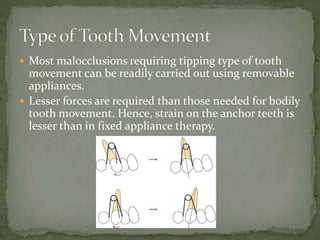
 Most malocclusions requiring tipping type of tooth
movement can be readily carried out using removable
appliances.
 Lesser forces are required than those needed for bodily
tooth movement. Hence, strain on the anchor teeth is
lesser than in fixed appliance therapy.
 Patient cooperation is dispensed, the orthodontist
does not have to depend on the patient for timely wear
and management of the appliance.
 Multiple tooth movements are possible
simultaneously. Therefore, treatment duration is
considerably reduced.
 More precise tooth movements and detailing of
occlusion is possible using fixed appliances.
 Fixed appliances offer better control over anchorage.
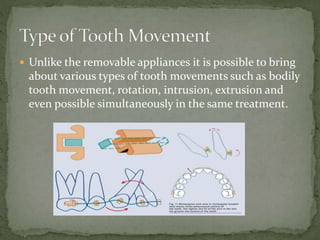
 Unlike the removable appliances it is possible to bring
about various types of tooth movements such as bodily
tooth movement, rotation, intrusion, extrusion and
even possible simultaneously in the same treatment.
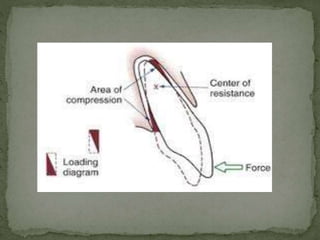
 Removable appliances work by applying a single force
onto the crown of the teeth. Thus, removable
appliance acts by tipping the tooth around its centre of
resistance.
 Tipping can be brought about in mesio-distal or
bucco-lingual direction.
 Removable appliances are generally ineffective in
bringing about bodily translation, derotation and
uprighting of teeth due to single point of contact of
the appliance.
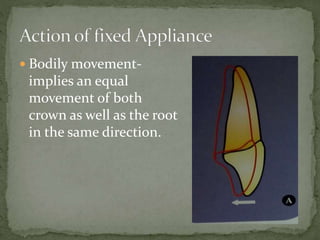
 Bodily movement-
implies an equal
movement of both
crown as well as the root
in the same direction.
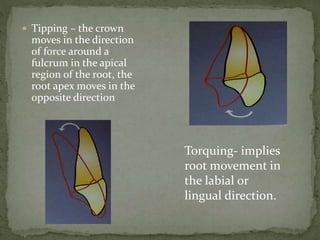
 Tipping – the crown
moves in the direction
of force around a
fulcrum in the apical
region of the root, the
root apex moves in the
opposite direction
Torquing- implies
root movement in
the labial or
lingual direction.
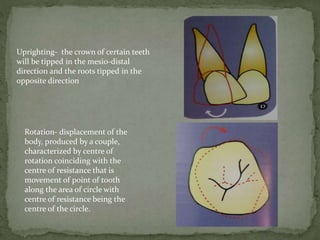
Uprighting- the crown of certain teeth
will be tipped in the mesio-distal
direction and the roots tipped in the
opposite direction
Rotation- displacement of the
body, produced by a couple,
characterized by centre of
rotation coinciding with the
centre of resistance that is
movement of point of tooth
along the area of circle with
centre of resistance being the
centre of the circle.
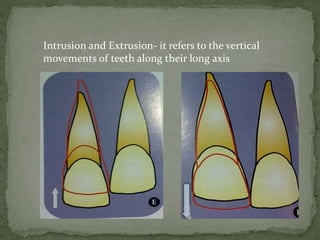
Intrusion and Extrusion- it refers to the vertical
movements of teeth along their long axis
 The major limitation of removable appliances is that
they are capable of only tipping tooth movement
(uncontrolled tipping).
 Patient cooperation is vitally important for the success
of the treatment. It can only be used when less than
4.5 mm of tooth movement is required.
 Multiple tooth movement correction should b e
carried out 1 at a time, therefore, treatment duration is
prolonged.
 In cases of extraction, residual space closure by
forward movement of posterior teeth is very difficult.
 The most important disadvantage is oral hygiene
maintenance becomes very difficult (Plaque and food
debris tend to accumulate around the attachments).
 Fixed appliances are time consuming, they take up more
chair side time unlike removable appliances.
 Unless modern tooth colored appliances are used, they are
unaesthetical.
 They require lot of special skill and training of the operator.
Otherwise there is a greater possibility of producing
adverse tooth movements.
 Fixed appliances are by far more expensive than removable.
 Correction of mild to moderate
crowding.
 Correction of anterior cross bite.
 Correction of posterior cross bite .
 Correction of deep bite.
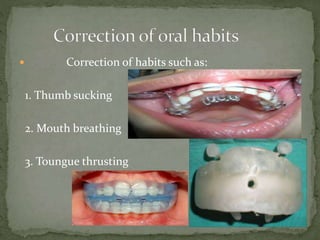
 Correction of habits such as:
1. Thumb sucking
2. Mouth breathing
3. Toungue thrusting
 Use of an anterior bite block which will allow the
passive erruption of the posterior teeth to an extent
causing the correction of deep bite
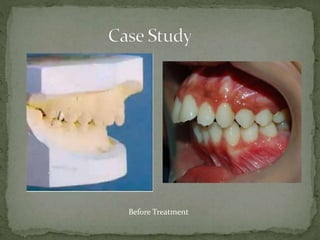
Before Treatment
Removable appliances may cause
inappropriate results if used alone.
The upper first premolars have
been extracted and the overjet
reduced by tipping the teeth. Since
tipping alone is not sufficient in
this case the result is poor.
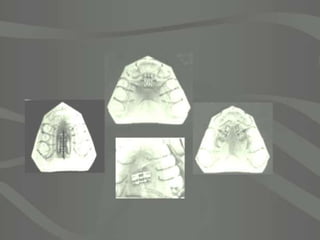
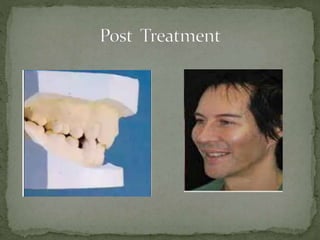
The upper model shows the compromised result
produced by use of a removable appliance alone
Inappropriate use of a removable appliance has simply
converted a Class II division 1 maloccusion in an
unaesthetic and unappealing result due to torque
limitation. In other words, even though removable
appliances have varied scope in orthodontics but it
may require an adjunctive use with fixed appliance for
a number of purposes.
In total Removable appliances can
be used for all comprehensive
orthodontic treatment but due to
its certain short comings or side
effects they are now rarely used in
expense of fixed appliances.
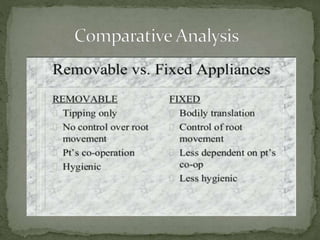
 The main difference between the removable
appliances and fixed appliances lies in their mode of
action.
 Removable appliances work by simple tipping
movements of the crowns of the teeth about a fulcrum
close to the middle of the tooth. They differ from fixed
appliances, which are capable of complex movements
of multiple teeth, including bodily movement, torque
and rotation.
Comparative study of removable & fixed orthodontic appliance

Comparative study of removable & fixed orthodontic appliance

  • 1.
    Department of Orthodontics NorthBengal Dental College & Hospital
  • 3.
    •Psychological implications of malocclusionswhich hampers the facial appearance causing low self –esteem and restricted social activities of the patient. •Problems with clarity and articulation of speech. •Difficulty in mastication due to certain malocclusions. •Inability to keep lips closed which causes discomfort to the patient.
  • 4.
    •Pain in thelower anterior teeth or palate in severe deep bite. •Hypersensitivity of teeth and anterior teeth getting worn down. •Pain in the TMJ.
  • 5.
     Orthodontic treatmentaims at improving the aesthetics and function of the oro-facial region. Jackson’s Triad Functional Efficiency Structural Balance Aesthetic Harmony
  • 6.
     Most ofthese changes are brought about by using devices that move teeth or modify the growth of jaws, these devices are called Orthodontic Appliances.  Orthodontic appliances are devices by means of which mild pressure may be applied to a group of teeth and their supporting structures so as to bring about necessary changes within the bone, which will allow tooth movement.
  • 10.
     Removable appliancesas the name suggests are appliances which can be inserted into and removed from the oral cavity by the patient at will.
  • 11.
     Fixed appliancesare those that are fitted onto the tooth surface and can only be removed by the operator.
  • 12.
    Retentive components- varioustypes of clasps Active components- bows, springs, retractors, screws. Base plate- acrylic part.
  • 13.
     Active components-arch wires, springs, elastics, separators.  Passive components- bands, brackets, buccal tubes, lingual attachments, lock pins, ligature wires
  • 15.
     Easy toconstruct and manage, requires minimum chair side time.  Needs less inventory, relatively less expensive than fixed appliances.  The removable nature of appliance makes it possible for the patient to maintain good oral hygiene, minimum food debris accumulation.  Patient can wear without fear, if trauma occurs the patient has the freedom to remove it (damaged appliances the apply undesirable forces can be removed by the patient)
  • 16.
     Most malocclusionsrequiring tipping type of tooth movement can be readily carried out using removable appliances.  Lesser forces are required than those needed for bodily tooth movement. Hence, strain on the anchor teeth is lesser than in fixed appliance therapy.
  • 17.
     Patient cooperationis dispensed, the orthodontist does not have to depend on the patient for timely wear and management of the appliance.  Multiple tooth movements are possible simultaneously. Therefore, treatment duration is considerably reduced.  More precise tooth movements and detailing of occlusion is possible using fixed appliances.  Fixed appliances offer better control over anchorage.
  • 18.
     Unlike theremovable appliances it is possible to bring about various types of tooth movements such as bodily tooth movement, rotation, intrusion, extrusion and even possible simultaneously in the same treatment.
  • 19.
     Removable applianceswork by applying a single force onto the crown of the teeth. Thus, removable appliance acts by tipping the tooth around its centre of resistance.  Tipping can be brought about in mesio-distal or bucco-lingual direction.  Removable appliances are generally ineffective in bringing about bodily translation, derotation and uprighting of teeth due to single point of contact of the appliance.
  • 21.
     Bodily movement- impliesan equal movement of both crown as well as the root in the same direction.
  • 22.
     Tipping –the crown moves in the direction of force around a fulcrum in the apical region of the root, the root apex moves in the opposite direction Torquing- implies root movement in the labial or lingual direction.
  • 23.
    Uprighting- the crownof certain teeth will be tipped in the mesio-distal direction and the roots tipped in the opposite direction Rotation- displacement of the body, produced by a couple, characterized by centre of rotation coinciding with the centre of resistance that is movement of point of tooth along the area of circle with centre of resistance being the centre of the circle.
  • 24.
    Intrusion and Extrusion-it refers to the vertical movements of teeth along their long axis
  • 25.
     The majorlimitation of removable appliances is that they are capable of only tipping tooth movement (uncontrolled tipping).  Patient cooperation is vitally important for the success of the treatment. It can only be used when less than 4.5 mm of tooth movement is required.  Multiple tooth movement correction should b e carried out 1 at a time, therefore, treatment duration is prolonged.  In cases of extraction, residual space closure by forward movement of posterior teeth is very difficult.
  • 26.
     The mostimportant disadvantage is oral hygiene maintenance becomes very difficult (Plaque and food debris tend to accumulate around the attachments).  Fixed appliances are time consuming, they take up more chair side time unlike removable appliances.  Unless modern tooth colored appliances are used, they are unaesthetical.  They require lot of special skill and training of the operator. Otherwise there is a greater possibility of producing adverse tooth movements.  Fixed appliances are by far more expensive than removable.
  • 28.
     Correction ofmild to moderate crowding.  Correction of anterior cross bite.  Correction of posterior cross bite .  Correction of deep bite.
  • 37.
     Correction ofhabits such as: 1. Thumb sucking 2. Mouth breathing 3. Toungue thrusting
  • 38.
     Use ofan anterior bite block which will allow the passive erruption of the posterior teeth to an extent causing the correction of deep bite
  • 39.
  • 40.
    Removable appliances maycause inappropriate results if used alone. The upper first premolars have been extracted and the overjet reduced by tipping the teeth. Since tipping alone is not sufficient in this case the result is poor.
  • 41.
    The upper modelshows the compromised result produced by use of a removable appliance alone Inappropriate use of a removable appliance has simply converted a Class II division 1 maloccusion in an unaesthetic and unappealing result due to torque limitation. In other words, even though removable appliances have varied scope in orthodontics but it may require an adjunctive use with fixed appliance for a number of purposes.
  • 43.
    In total Removableappliances can be used for all comprehensive orthodontic treatment but due to its certain short comings or side effects they are now rarely used in expense of fixed appliances.
  • 44.
     The maindifference between the removable appliances and fixed appliances lies in their mode of action.  Removable appliances work by simple tipping movements of the crowns of the teeth about a fulcrum close to the middle of the tooth. They differ from fixed appliances, which are capable of complex movements of multiple teeth, including bodily movement, torque and rotation.