DEVELOPMENT OF
OCCLUSION(III self
correcting anomalies)
SUBMITTED BY
Vikrant singh
“Anomalies, which arise in child’s developing dentition during the
period of transition from predentate period to permanent dentition
period and get corrected on their own without any dental
treatment”`
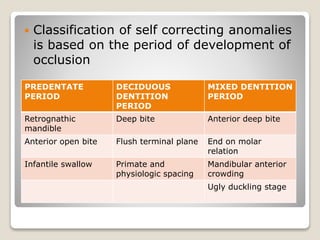
 Classification of self correcting anomalies
is based on the period of development of
occlusion
PREDENTATE
PERIOD
DECIDUOUS
DENTITION
PERIOD
MIXED DENTITION
PERIOD
Retrognathic
mandible
Deep bite Anterior deep bite
Anterior open bite Flush terminal plane End on molar
relation
Infantile swallow Primate and
physiologic spacing
Mandibular anterior
crowding
Ugly duckling stage
Pre dentate period
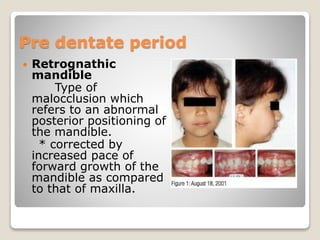
 Retrognathic
mandible
Type of
malocclusion which
refers to an abnormal
posterior positioning of
the mandible.
* corrected by
increased pace of
forward growth of the
mandible as compared
to that of maxilla.
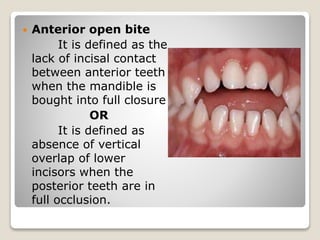
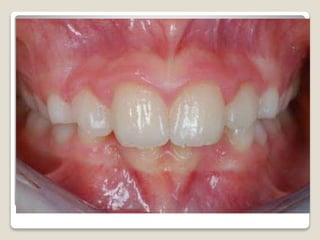
 Anterior open bite
It is defined as the
lack of incisal contact
between anterior teeth
when the mandible is
bought into full closure
OR
It is defined as
absence of vertical
overlap of lower
incisors when the
posterior teeth are in
full occlusion.
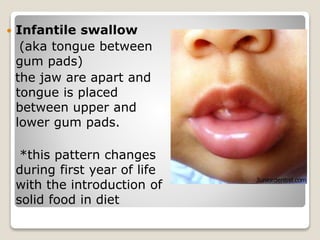
 Infantile swallow
(aka tongue between
gum pads)
the jaw are apart and
tongue is placed
between upper and
lower gum pads.
*this pattern changes
during first year of life
with the introduction of
solid food in diet
Deciduous dentition period
 Deep bite
-occur in initial stages of development
- Deep bite is accentuated by the fact that the deciduous
incisors are more upright than their succesors the
permanent incisors. The lower incisal edges comes in
contact with the cingulum area of maxillary incisors.
- Deep bite is later reduced due to
*Eruption of deciduous molar
*Attrition of incisors
*Forward movement of mandible due to
growth
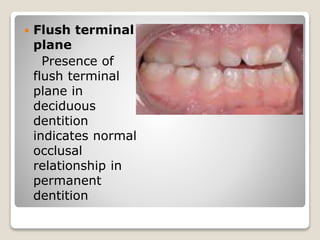
 Flush terminal
plane
Presence of
flush terminal
plane in
deciduous
dentition
indicates normal
occlusal
relationship in
permanent
dentition
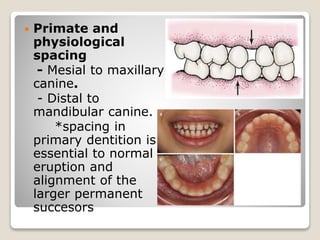
 Primate and
physiological
spacing
- Mesial to maxillary
canine.
- Distal to
mandibular canine.
*spacing in
primary dentition is
essential to normal
eruption and
alignment of the
larger permanent
succesors
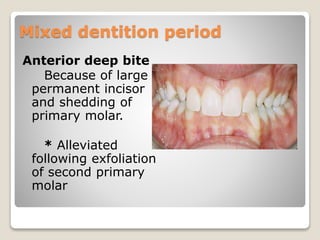
Mixed dentition period
Anterior deep bite
Because of large
permanent incisor
and shedding of
primary molar.
* Alleviated
following exfoliation
of second primary
molar
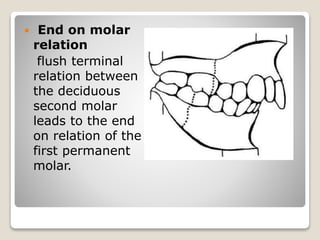
 End on molar
relation
flush terminal
relation between
the deciduous
second molar
leads to the end
on relation of the
first permanent
molar.
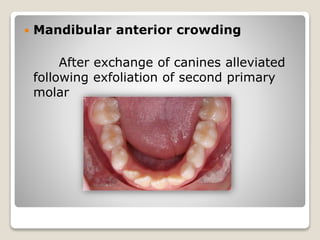
 Mandibular anterior crowding
After exchange of canines alleviated
following exfoliation of second primary
molar
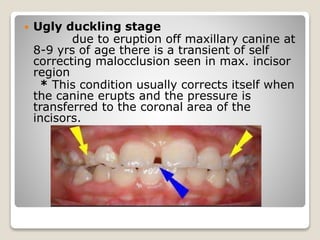
 Ugly duckling stage
due to eruption off maxillary canine at
8-9 yrs of age there is a transient of self
correcting malocclusion seen in max. incisor
region
* This condition usually corrects itself when
the canine erupts and the pressure is
transferred to the coronal area of the
incisors.
THANK YOU

Self correcting anomalies

  • 1.
    DEVELOPMENT OF OCCLUSION(III self correctinganomalies) SUBMITTED BY Vikrant singh
  • 2.
    “Anomalies, which arisein child’s developing dentition during the period of transition from predentate period to permanent dentition period and get corrected on their own without any dental treatment”`
  • 3.
     Classification ofself correcting anomalies is based on the period of development of occlusion PREDENTATE PERIOD DECIDUOUS DENTITION PERIOD MIXED DENTITION PERIOD Retrognathic mandible Deep bite Anterior deep bite Anterior open bite Flush terminal plane End on molar relation Infantile swallow Primate and physiologic spacing Mandibular anterior crowding Ugly duckling stage
  • 4.
    Pre dentate period Retrognathic mandible Type of malocclusion which refers to an abnormal posterior positioning of the mandible. * corrected by increased pace of forward growth of the mandible as compared to that of maxilla.
  • 5.
     Anterior openbite It is defined as the lack of incisal contact between anterior teeth when the mandible is bought into full closure OR It is defined as absence of vertical overlap of lower incisors when the posterior teeth are in full occlusion.
  • 6.
     Infantile swallow (akatongue between gum pads) the jaw are apart and tongue is placed between upper and lower gum pads. *this pattern changes during first year of life with the introduction of solid food in diet
  • 7.
    Deciduous dentition period Deep bite -occur in initial stages of development - Deep bite is accentuated by the fact that the deciduous incisors are more upright than their succesors the permanent incisors. The lower incisal edges comes in contact with the cingulum area of maxillary incisors. - Deep bite is later reduced due to *Eruption of deciduous molar *Attrition of incisors *Forward movement of mandible due to growth
  • 9.
     Flush terminal plane Presenceof flush terminal plane in deciduous dentition indicates normal occlusal relationship in permanent dentition
  • 10.
     Primate and physiological spacing -Mesial to maxillary canine. - Distal to mandibular canine. *spacing in primary dentition is essential to normal eruption and alignment of the larger permanent succesors
  • 11.
    Mixed dentition period Anteriordeep bite Because of large permanent incisor and shedding of primary molar. * Alleviated following exfoliation of second primary molar
  • 12.
     End onmolar relation flush terminal relation between the deciduous second molar leads to the end on relation of the first permanent molar.
  • 13.
     Mandibular anteriorcrowding After exchange of canines alleviated following exfoliation of second primary molar
  • 14.
     Ugly ducklingstage due to eruption off maxillary canine at 8-9 yrs of age there is a transient of self correcting malocclusion seen in max. incisor region * This condition usually corrects itself when the canine erupts and the pressure is transferred to the coronal area of the incisors.
  • 15.