COMMUNICATIVE LANGUAGE
TEACHING
Group members
 Carmen Susana Arias
       Lilian Jansson
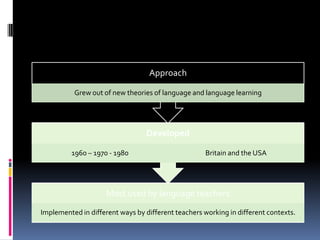
Approach

          Grew out of new theories of language and language learning


                                  Developed

         1960 – 1970 - 1980                          Britain and the USA


                     Most used by language teachers
Implemented in different ways by different teachers working in different contexts.
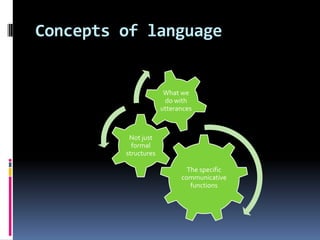
Concepts of language


                       What we
                       do with
                      utterances


          Not just
           formal
         structures

                              The specific
                            communicative
                               functions
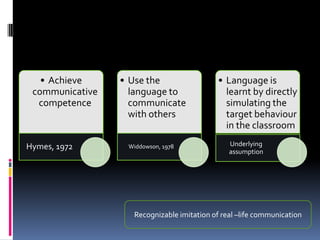
• Achieve     • Use the                  • Language is
 communicative     language to                learnt by directly
  competence       communicate                simulating the
                   with others                target behaviour
                                              in the classroom

Hymes, 1972       Widdowson, 1978              Underlying
                                               assumption


                   Recognizable imitation of real –life communication
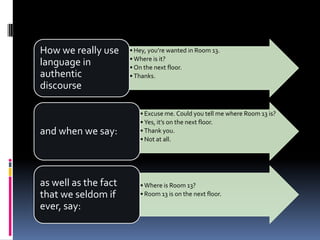
How we really use     • Hey, you’re wanted in Room 13.
                      • Where is it?
language in           • On the next floor.
authentic             • Thanks.
discourse

                         • Excuse me. Could you tell me where Room 13 is?
                         • Yes, it’s on the next floor.
and when we say:         • Thank you.
                         • Not at all.


as well as the fact      • Where is Room 13?
that we seldom if        • Room 13 is on the next floor.
ever, say:
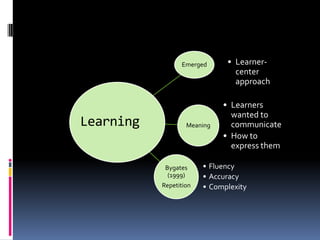
Emerged      • Learner-
                                center
                                approach

                             • Learners
                               wanted to
Learning           Meaning     communicate
                             • How to
                               express them

            Bygates     • Fluency
             (1999)     • Accuracy
           Repetition   • Complexity
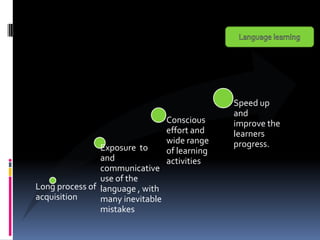
Speed up
                                                and
                                  Conscious     improve the
                                  effort and    learners
                                  wide range    progress.
                Exposure to       of learning
                and               activities
                communicative
                use of the
Long process of language , with
acquisition     many inevitable
                mistakes
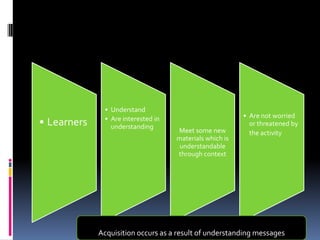
• Understand
              • Are interested in                        • Are not worried
• Learners      understanding                              or threatened by
                                    Meet some new          the activity
                                    materials which is
                                     understandable
                                    through context


             Acquisition occurs as a result of understanding messages
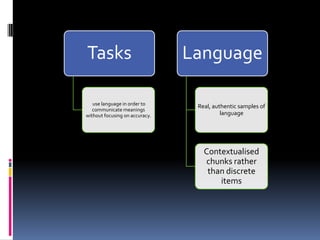
Tasks                           Language

   use language in order to
                                 Real, authentic samples of
   communicate meanings
without focusing on accuracy.             language


                                   Contextualised
                                   chunks rather
                                    than discrete
                                       items
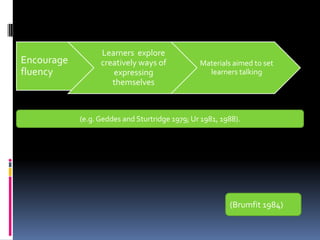
Learners explore
Encourage         creatively ways of            Materials aimed to set
fluency              expressing                   learners talking
                     themselves


            (e.g. Geddes and Sturtridge 1979; Ur 1981, 1988).


                                                         (Brumfit 1984)
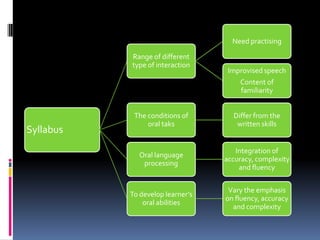
Need practising

           Range of different
           type of interaction
                                   Improvised speech
                                      Content of
                                      familiarity


            The conditions of       Differ from the
                oral taks            written skills
Syllabus
                                     Integration of
             Oral language
                                  accuracy, complexity
              processing
                                      and fluency


                                   Vary the emphasis
           To develop learner’s
                                  on fluency, accuracy
               oral abilities
                                    and complexity
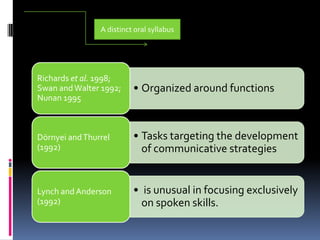
A distinct oral syllabus


Richards et al. 1998;
Swan and Walter 1992;     • Organized around functions
Nunan 1995


Dörnyei and Thurrel       • Tasks targeting the development
(1992)                      of communicative strategies


Lynch and Anderson        • is unusual in focusing exclusively
(1992)                      on spoken skills.
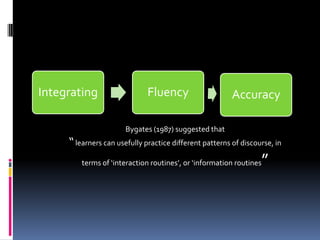
Integrating                   Fluency                    Accuracy

                       Bygates (1987) suggested that
     “ learners can usefully practice different patterns of discourse, in
         terms of ‘interaction routines’, or ‘information routines   ”
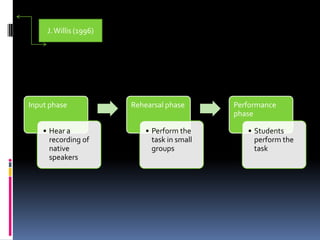
J. Willis (1996)


Input phase             Rehearsal phase       Performance
                                              phase

    • Hear a                • Perform the        • Students
      recording of            task in small        perform the
      native                  groups               task
      speakers
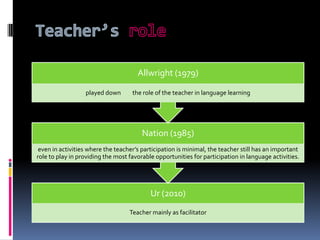
Allwright (1979)

                  played down       the role of the teacher in language learning


                                        Nation (1985)
 even in activities where the teacher’s participation is minimal, the teacher still has an important
role to play in providing the most favorable opportunities for participation in language activities.


                                           Ur (2010)
                                   Teacher mainly as facilitator
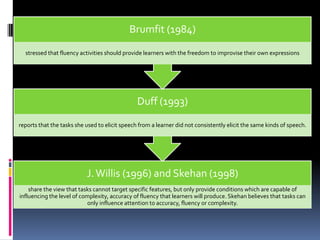
Brumfit (1984)

  stressed that fluency activities should provide learners with the freedom to improvise their own expressions


                                                Duff (1993)

reports that the tasks she used to elicit speech from a learner did not consistently elicit the same kinds of speech.


                           J. Willis (1996) and Skehan (1998)
    share the view that tasks cannot target specific features, but only provide conditions which are capable of
influencing the level of complexity, accuracy of fluency that learners will produce. Skehan believes that tasks can
                            only influence attention to accuracy, fluency or complexity.
Activity

 A word from our sponsor.
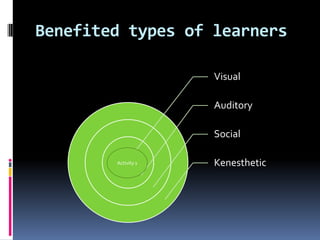
Benefited types of learners

                     Visual

                     Auditory

                     Social

        Activity 1   Kenesthetic
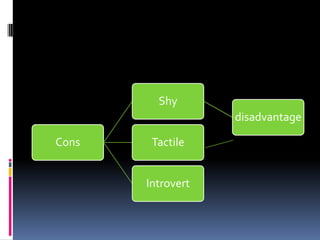
Shy
                   disadvantage

Cons    Tactile


       Introvert
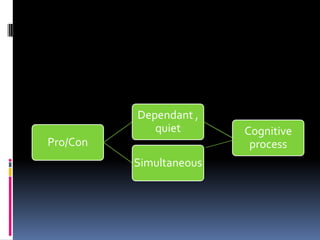
Dependant ,
             quiet       Cognitive
Pro/Con                   process
          Simultaneous
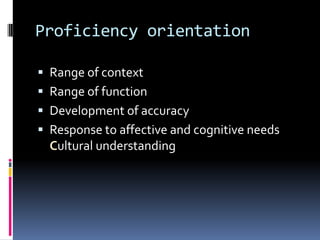
Proficiency orientation

 Range of context
 Range of function
 Development of accuracy
 Response to affective and cognitive needs
  Cultural understanding
References
   Davies, P., Pearse, E. (2008). Success in English Teaching. Oxford University
    Press. China.
   Harmer, J. (2001). How to teach English. Longman. England.
   Nation. P. (1985). Taken from
    http://www.victoria.ac.nz/lals/about/staff/publications/paul-nation/1985-
    Opportunities.pdf [May 22nd, 2012]
   Ur. P. (2010) Taken from
   http://www.cambridge.com.mx/pennyur/Penny-TCAR.pdf [May 22nd, 2012]

Communicative language teaching

  • 1.
  • 2.
    Group members  CarmenSusana Arias  Lilian Jansson
  • 3.
    Approach Grew out of new theories of language and language learning Developed 1960 – 1970 - 1980 Britain and the USA Most used by language teachers Implemented in different ways by different teachers working in different contexts.
  • 4.
    Concepts of language What we do with utterances Not just formal structures The specific communicative functions
  • 5.
    • Achieve • Use the • Language is communicative language to learnt by directly competence communicate simulating the with others target behaviour in the classroom Hymes, 1972 Widdowson, 1978 Underlying assumption Recognizable imitation of real –life communication
  • 6.
    How we reallyuse • Hey, you’re wanted in Room 13. • Where is it? language in • On the next floor. authentic • Thanks. discourse • Excuse me. Could you tell me where Room 13 is? • Yes, it’s on the next floor. and when we say: • Thank you. • Not at all. as well as the fact • Where is Room 13? that we seldom if • Room 13 is on the next floor. ever, say:
  • 7.
    Emerged • Learner- center approach • Learners wanted to Learning Meaning communicate • How to express them Bygates • Fluency (1999) • Accuracy Repetition • Complexity
  • 8.
    Speed up and Conscious improve the effort and learners wide range progress. Exposure to of learning and activities communicative use of the Long process of language , with acquisition many inevitable mistakes
  • 9.
    • Understand • Are interested in • Are not worried • Learners understanding or threatened by Meet some new the activity materials which is understandable through context Acquisition occurs as a result of understanding messages
  • 10.
    Tasks Language use language in order to Real, authentic samples of communicate meanings without focusing on accuracy. language Contextualised chunks rather than discrete items
  • 11.
    Learners explore Encourage creatively ways of Materials aimed to set fluency expressing learners talking themselves (e.g. Geddes and Sturtridge 1979; Ur 1981, 1988). (Brumfit 1984)
  • 12.
    Need practising Range of different type of interaction Improvised speech Content of familiarity The conditions of Differ from the oral taks written skills Syllabus Integration of Oral language accuracy, complexity processing and fluency Vary the emphasis To develop learner’s on fluency, accuracy oral abilities and complexity
  • 13.
    A distinct oralsyllabus Richards et al. 1998; Swan and Walter 1992; • Organized around functions Nunan 1995 Dörnyei and Thurrel • Tasks targeting the development (1992) of communicative strategies Lynch and Anderson • is unusual in focusing exclusively (1992) on spoken skills.
  • 14.
    Integrating Fluency Accuracy Bygates (1987) suggested that “ learners can usefully practice different patterns of discourse, in terms of ‘interaction routines’, or ‘information routines ”
  • 15.
    J. Willis (1996) Inputphase Rehearsal phase Performance phase • Hear a • Perform the • Students recording of task in small perform the native groups task speakers
  • 16.
    Allwright (1979) played down the role of the teacher in language learning Nation (1985) even in activities where the teacher’s participation is minimal, the teacher still has an important role to play in providing the most favorable opportunities for participation in language activities. Ur (2010) Teacher mainly as facilitator
  • 18.
    Brumfit (1984) stressed that fluency activities should provide learners with the freedom to improvise their own expressions Duff (1993) reports that the tasks she used to elicit speech from a learner did not consistently elicit the same kinds of speech. J. Willis (1996) and Skehan (1998) share the view that tasks cannot target specific features, but only provide conditions which are capable of influencing the level of complexity, accuracy of fluency that learners will produce. Skehan believes that tasks can only influence attention to accuracy, fluency or complexity.
  • 19.
    Activity  A wordfrom our sponsor.
  • 20.
    Benefited types oflearners Visual Auditory Social Activity 1 Kenesthetic
  • 21.
    Shy disadvantage Cons Tactile Introvert
  • 22.
    Dependant , quiet Cognitive Pro/Con process Simultaneous
  • 23.
    Proficiency orientation  Rangeof context  Range of function  Development of accuracy  Response to affective and cognitive needs Cultural understanding
  • 24.
    References  Davies, P., Pearse, E. (2008). Success in English Teaching. Oxford University Press. China.  Harmer, J. (2001). How to teach English. Longman. England.  Nation. P. (1985). Taken from http://www.victoria.ac.nz/lals/about/staff/publications/paul-nation/1985- Opportunities.pdf [May 22nd, 2012]  Ur. P. (2010) Taken from  http://www.cambridge.com.mx/pennyur/Penny-TCAR.pdf [May 22nd, 2012]