
COMMUNICATIVE LANGUAGE 
TEACHING (CLT) 
ENGLISH TEACHING 
METHODOLOGY
COMMUNICATIVE LANGUAGE TEACHING
HISTORY 
• The origins of CLT are found in the 
changes in the British language teaching 
tradition, which considered grammar 
competence as the foundation of the 
language proficiency, dating from the late 
1960s.
HISTORY 
• CLT started its rise to prominence during 
the 1970s and 80s for these reasons:
HISTORY 
• Increase in demand for language learning in Europe 
when the European Common Market opened 
• More secondary and high schools started teaching 
foreign languages 
• In the UK, the appearance of comprehensive schools 
gave all high school students the chance of studying a 
foreign language.
COMMUNICATIVE LANGUAGE TEACHING
BACKGROUND 
• The CLT method based on the purpose of 
communicative competence of language learning. 
• Four aspects of communicative competence: 
grammatical competence, socio-linguistic 
competence, discourse competence, strategic 
competence
COMMUNICATIVE LANGUAGE TEACHING
GOALS 
• CLT aims at providing students with authentic 
communication lessons which try to imitate the 
natural progression of language learning 
• The authentic communication that imitate real life 
situations is supposedly more fun and more 
helpful for the students.
COMMUNICATION LANGUAGE TEACHING
FEATURES 
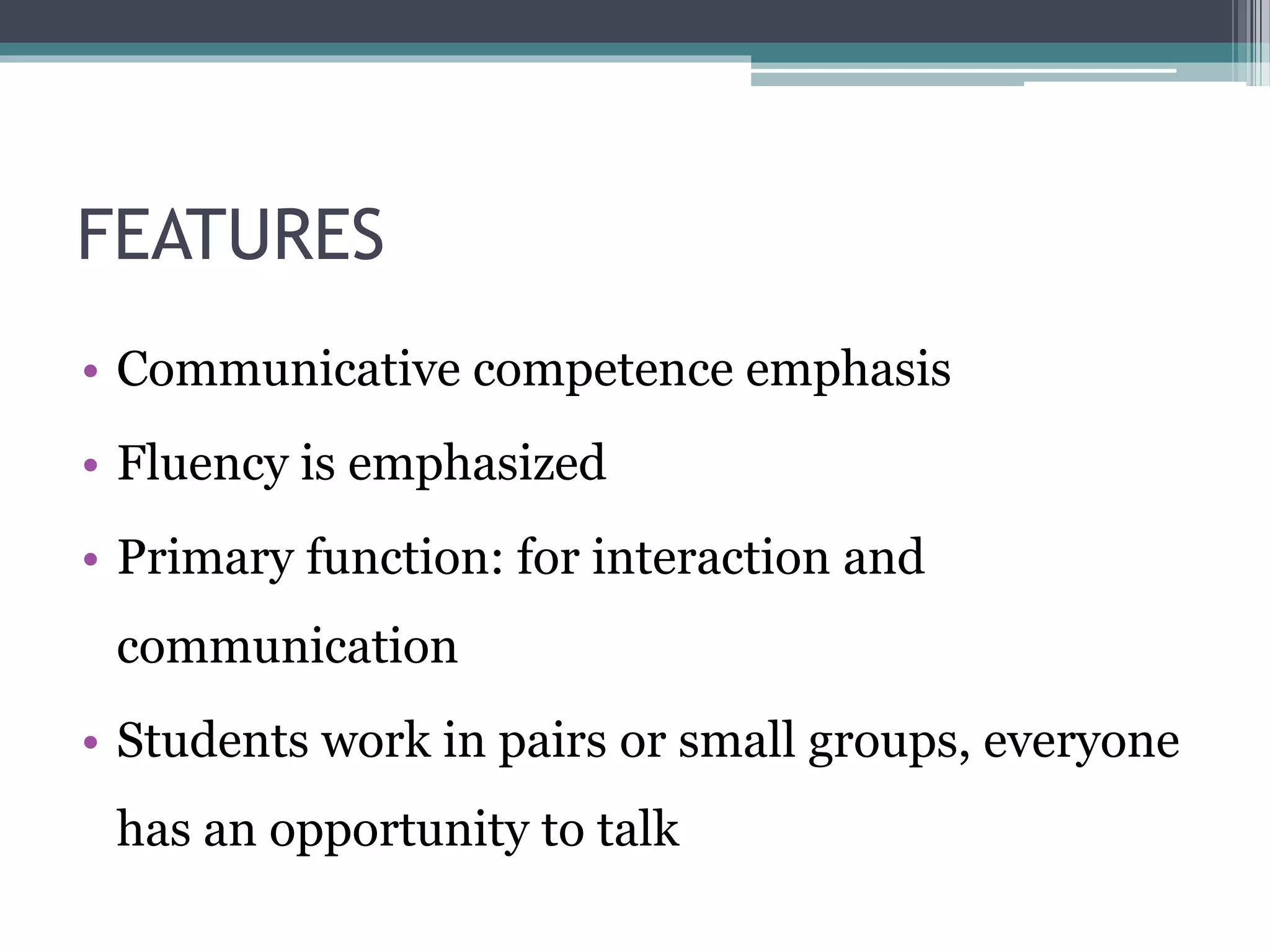
• Communicative competence emphasis 
• Fluency is emphasized 
• Primary function: for interaction and 
communication 
• Students work in pairs or small groups, everyone 
has an opportunity to talk
FEATURES 
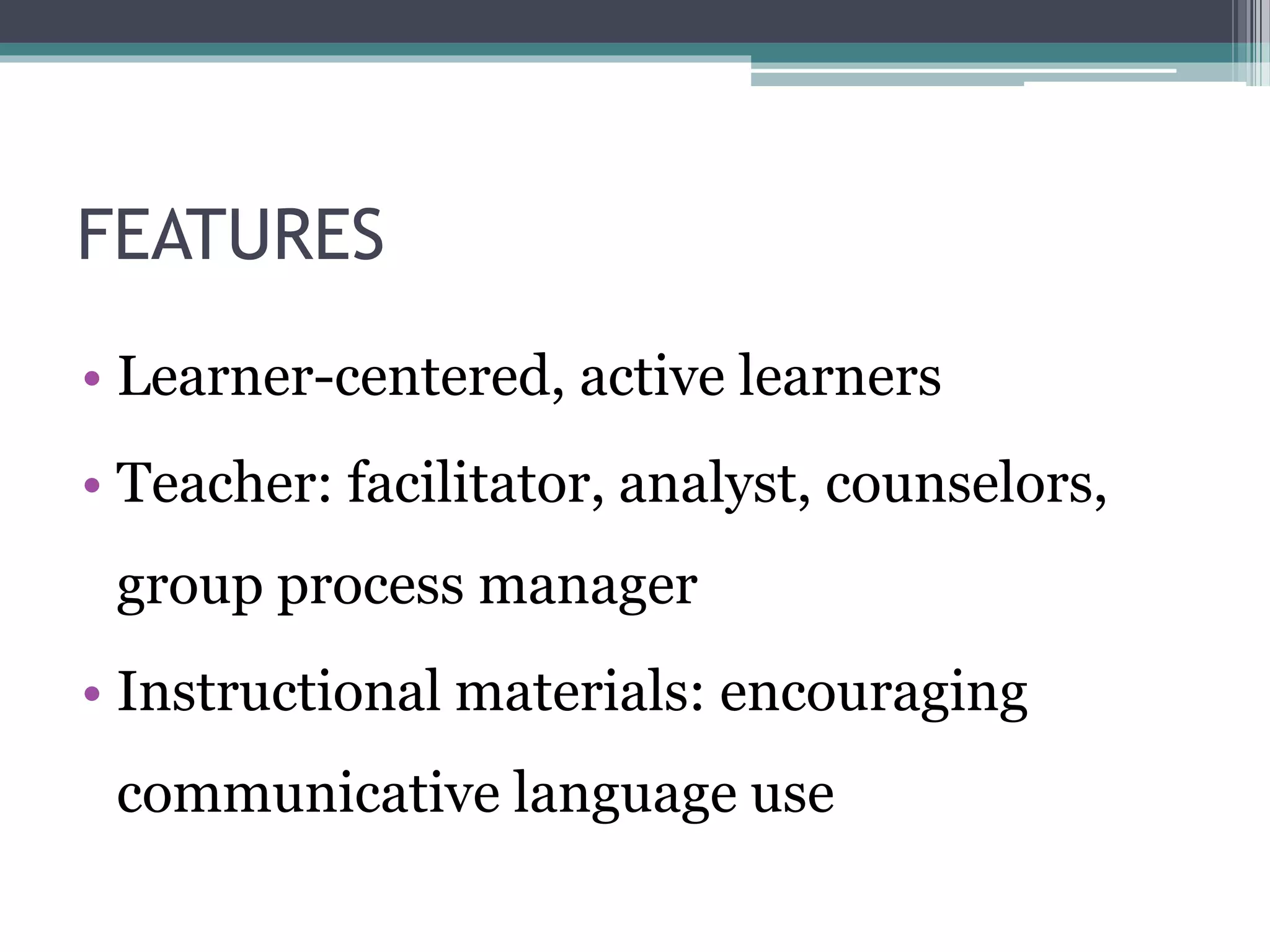
• Learner-centered, active learners 
• Teacher: facilitator, analyst, counselors, 
group process manager 
• Instructional materials: encouraging 
communicative language use
FEATURES 
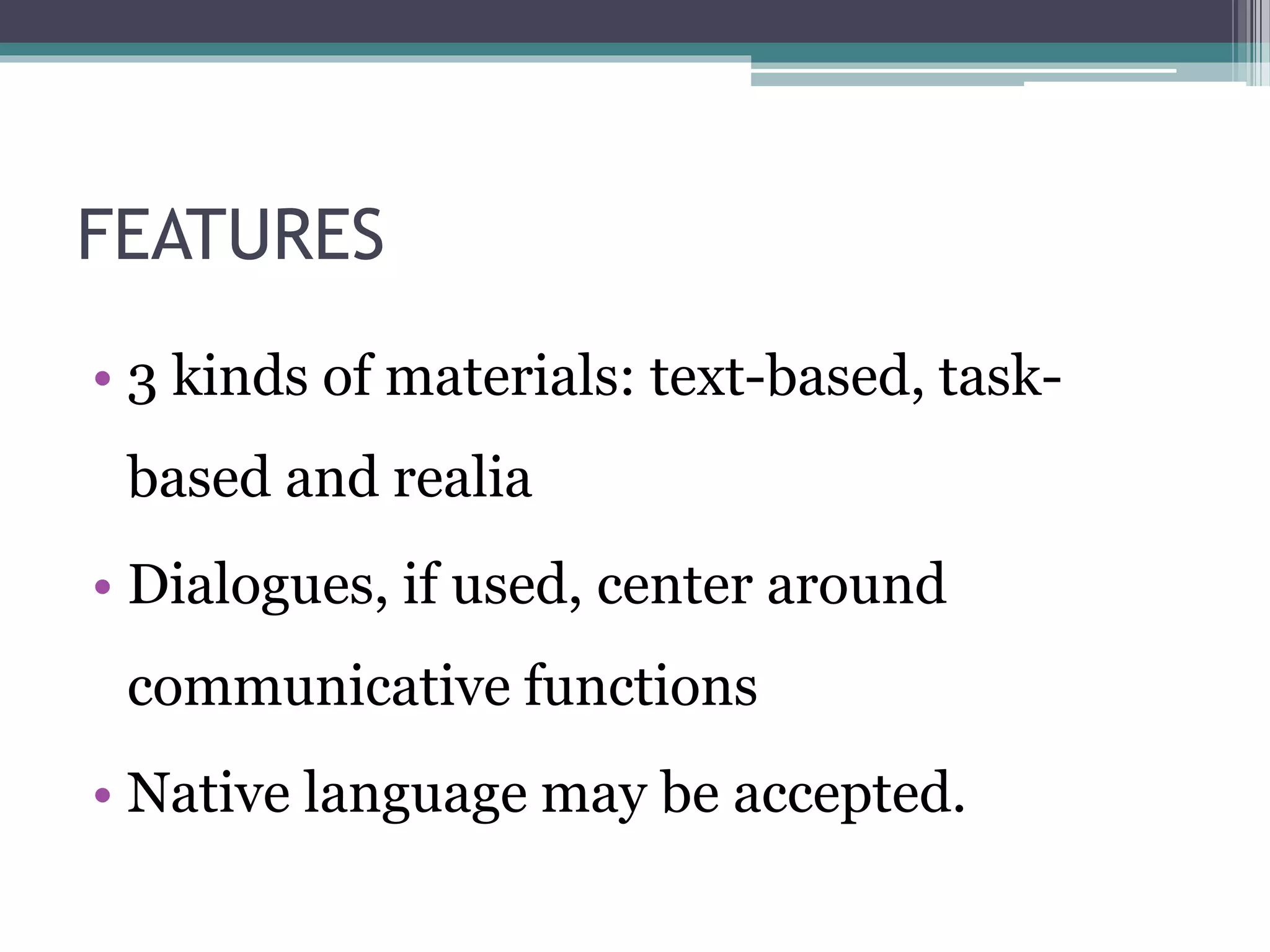
• 3 kinds of materials: text-based, task-based 
and realia 
• Dialogues, if used, center around 
communicative functions 
• Native language may be accepted.
COMMUNICATIVE LANGUAGE TEACHING
STRONG POINTS 
• Teacher – student relationship improved: 
interactive, harmonious, not the type of 
master-servant relationship
STRONG POINTS 
• Emphasis on learner’s cognitive and 
operational abilities: let the students 
themselves think about and express their 
views, developed in real life the capability 
of using language to communicate.
STRONG POINTS 
• Student’s interests enhanced: students get 
close to life, act as the main character and 
naturally become interested in the 
language, learn the language for recreation
COMMUNICATIVE LANGUAGE TEACHING
WEAK POINT 
• Not sufficient concentration on the 
accuracy or the correctness of grammar 
errors 
• Hard to create a real-life environment in 
class, difficult to reproduce authentic 
language use
WEAK POINT 
• Difficult to use in a large class: problems 
in monitoring and guiding students 
• Causes troubles for students at low levels 
of proficiency, resistance to involving in 
class activities
COMMUNICATIVE LANGUAGE TEACHING
PRINCIPLES 
• Create a range of different activities that mimic 
the use of the English language outside of the 
classroom, including: pair work, group work, 
role plays, interviews, games, surveys or learning 
by teaching,...
PRINCIPLES 
• Ensure that students have enough vocabulary 
and understanding of the situation in which they 
are learning before carrying out activities

Communicative language teaching

  • 1.
    COMMUNICATIVE LANGUAGE TEACHING(CLT) ENGLISH TEACHING METHODOLOGY
  • 2.
  • 3.
    HISTORY • Theorigins of CLT are found in the changes in the British language teaching tradition, which considered grammar competence as the foundation of the language proficiency, dating from the late 1960s.
  • 4.
    HISTORY • CLTstarted its rise to prominence during the 1970s and 80s for these reasons:
  • 5.
    HISTORY • Increasein demand for language learning in Europe when the European Common Market opened • More secondary and high schools started teaching foreign languages • In the UK, the appearance of comprehensive schools gave all high school students the chance of studying a foreign language.
  • 6.
  • 7.
    BACKGROUND • TheCLT method based on the purpose of communicative competence of language learning. • Four aspects of communicative competence: grammatical competence, socio-linguistic competence, discourse competence, strategic competence
  • 8.
  • 9.
    GOALS • CLTaims at providing students with authentic communication lessons which try to imitate the natural progression of language learning • The authentic communication that imitate real life situations is supposedly more fun and more helpful for the students.
  • 10.
  • 11.
    FEATURES • Communicativecompetence emphasis • Fluency is emphasized • Primary function: for interaction and communication • Students work in pairs or small groups, everyone has an opportunity to talk
  • 12.
    FEATURES • Learner-centered,active learners • Teacher: facilitator, analyst, counselors, group process manager • Instructional materials: encouraging communicative language use
  • 13.
    FEATURES • 3kinds of materials: text-based, task-based and realia • Dialogues, if used, center around communicative functions • Native language may be accepted.
  • 14.
  • 15.
    STRONG POINTS •Teacher – student relationship improved: interactive, harmonious, not the type of master-servant relationship
  • 16.
    STRONG POINTS •Emphasis on learner’s cognitive and operational abilities: let the students themselves think about and express their views, developed in real life the capability of using language to communicate.
  • 17.
    STRONG POINTS •Student’s interests enhanced: students get close to life, act as the main character and naturally become interested in the language, learn the language for recreation
  • 18.
  • 19.
    WEAK POINT •Not sufficient concentration on the accuracy or the correctness of grammar errors • Hard to create a real-life environment in class, difficult to reproduce authentic language use
  • 20.
    WEAK POINT •Difficult to use in a large class: problems in monitoring and guiding students • Causes troubles for students at low levels of proficiency, resistance to involving in class activities
  • 21.
  • 22.
    PRINCIPLES • Createa range of different activities that mimic the use of the English language outside of the classroom, including: pair work, group work, role plays, interviews, games, surveys or learning by teaching,...
  • 23.
    PRINCIPLES • Ensurethat students have enough vocabulary and understanding of the situation in which they are learning before carrying out activities