 SURVEY for a 5th grade class
 This activity represents the CLT method
  because the speaking skill is applied
  althogh there are also involved specific
  grammar tasks and vocabulary but the
  CLT principles are the most important in
  the classroom procedure.
 Let´see!
   The teacher first presents the grammar and
    vocabulary ;the objective of this class is
    how to distingish the questions above and
    be able to answer them correctly by
    presenting severel mini-dialogs preceded
    by a motivation relating the dialog situation

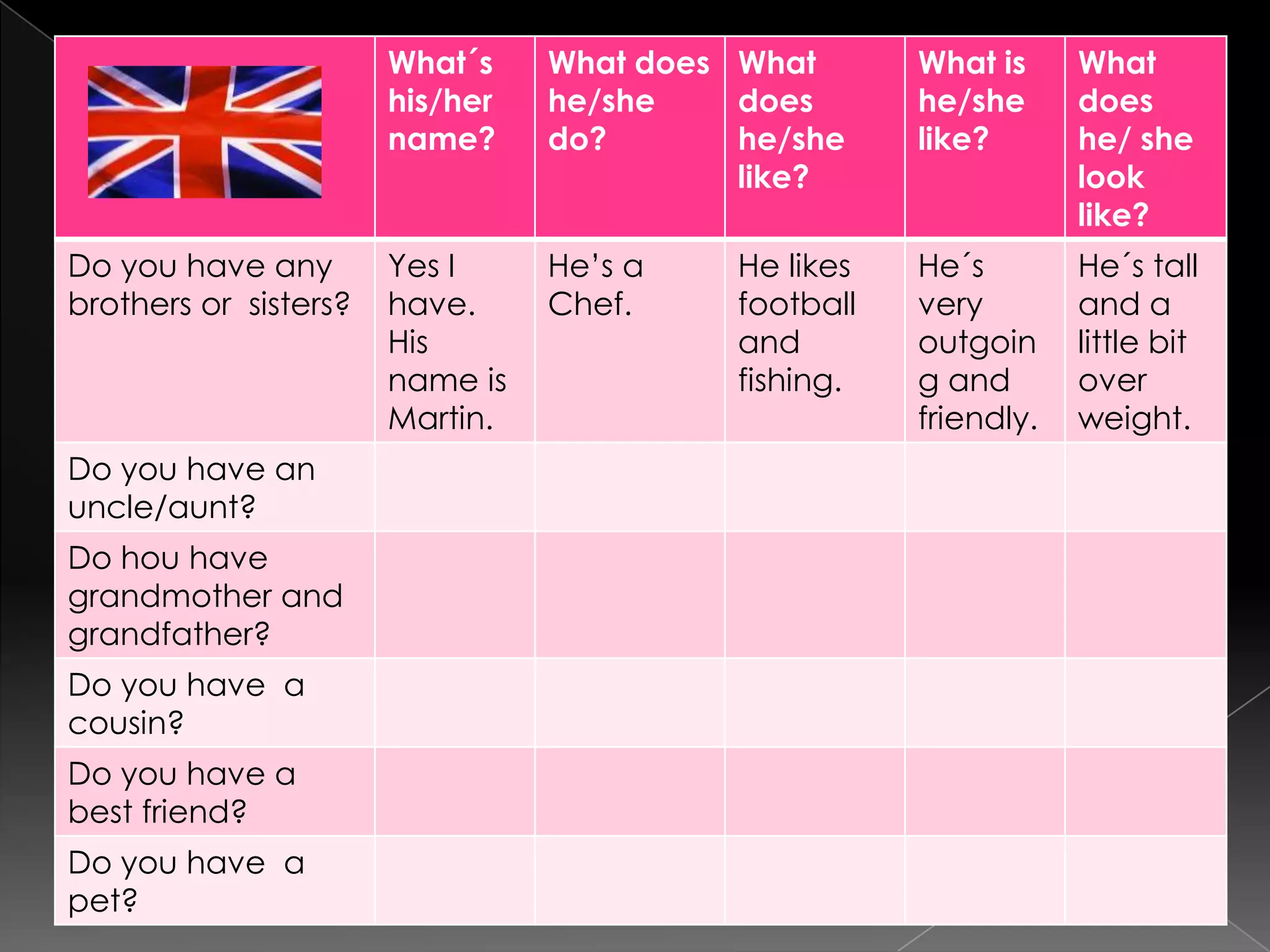
 What does he/she do?(profession)
 What does he/she like?(hobbies)
 What is he/she like?(character)
 What does he/she look like?(phisicial
  appearance)
 Therefore   the teacher
 prepeared a survey sheet
 where the students have to
 fill in the gaps with the
 needed information by
 asking their classmates
What´s    What does What       What is     What
                       his/her   he/she    does       he/she      does
                       name?     do?       he/she     like?       he/ she
                                           like?                  look
                                                                  like?
Do you have any        Yes I     He’s a    He likes   He´s        He´s tall
brothers or sisters?   have.     Chef.     football   very        and a
                       His                 and        outgoin     little bit
                       name is             fishing.   g and       over
                       Martin.                        friendly.   weight.
Do you have an
uncle/aunt?
Do hou have
grandmother and
grandfather?
Do you have a
cousin?
Do you have a
best friend?
Do you have a
pet?
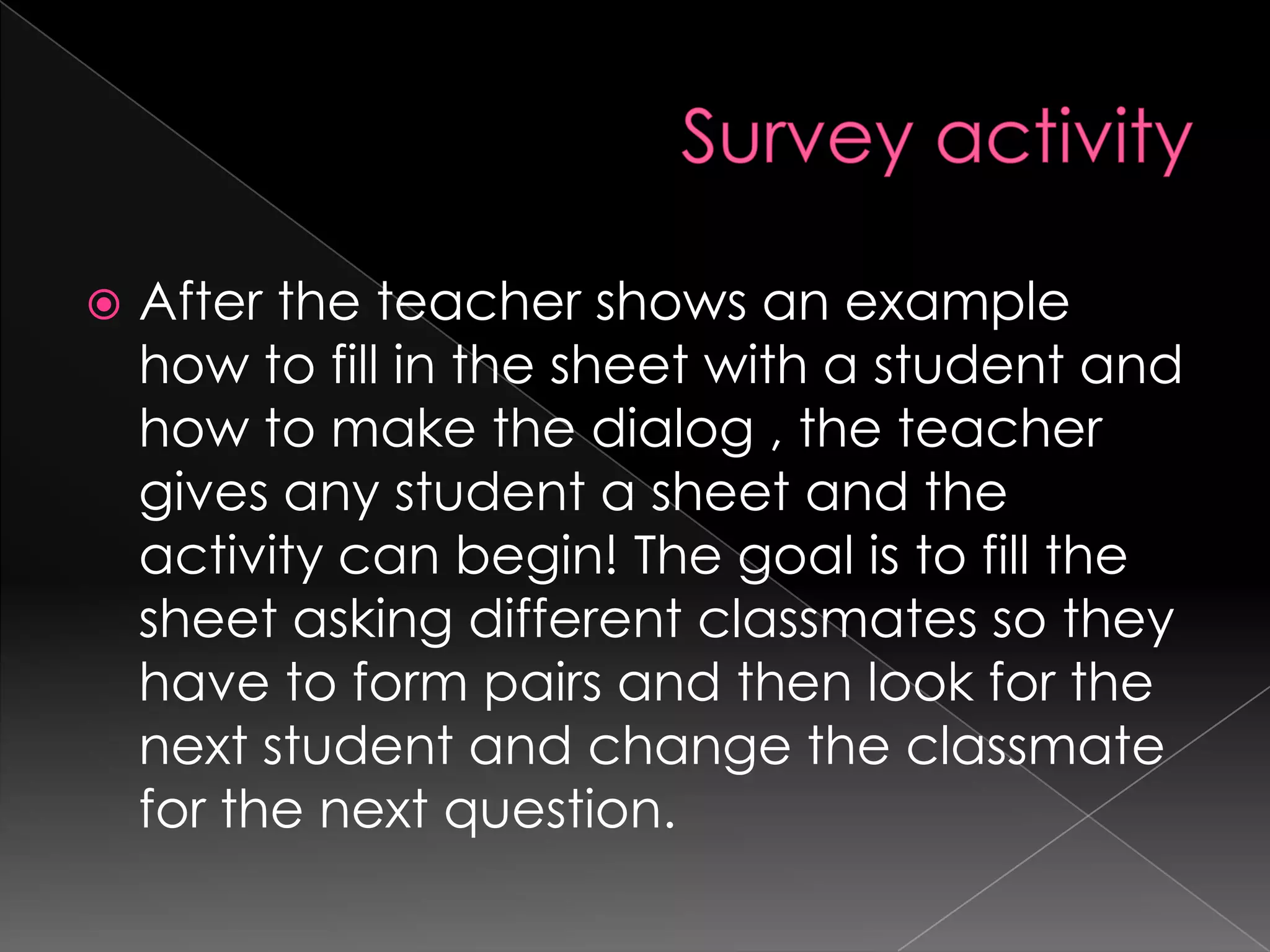
   After the teacher shows an example
    how to fill in the sheet with a student and
    how to make the dialog , the teacher
    gives any student a sheet and the
    activity can begin! The goal is to fill the
    sheet asking different classmates so they
    have to form pairs and then look for the
    next student and change the classmate
    for the next question.
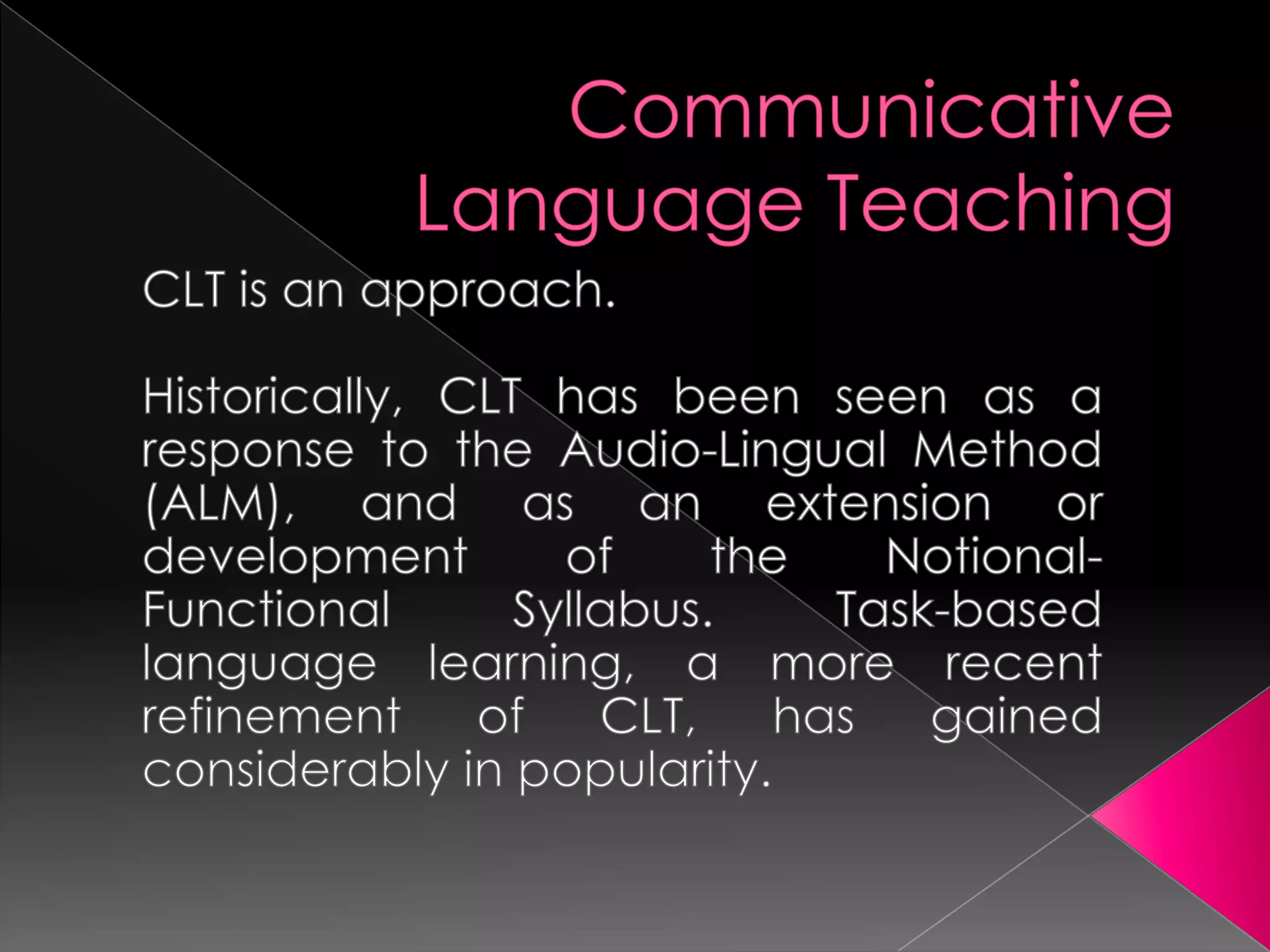
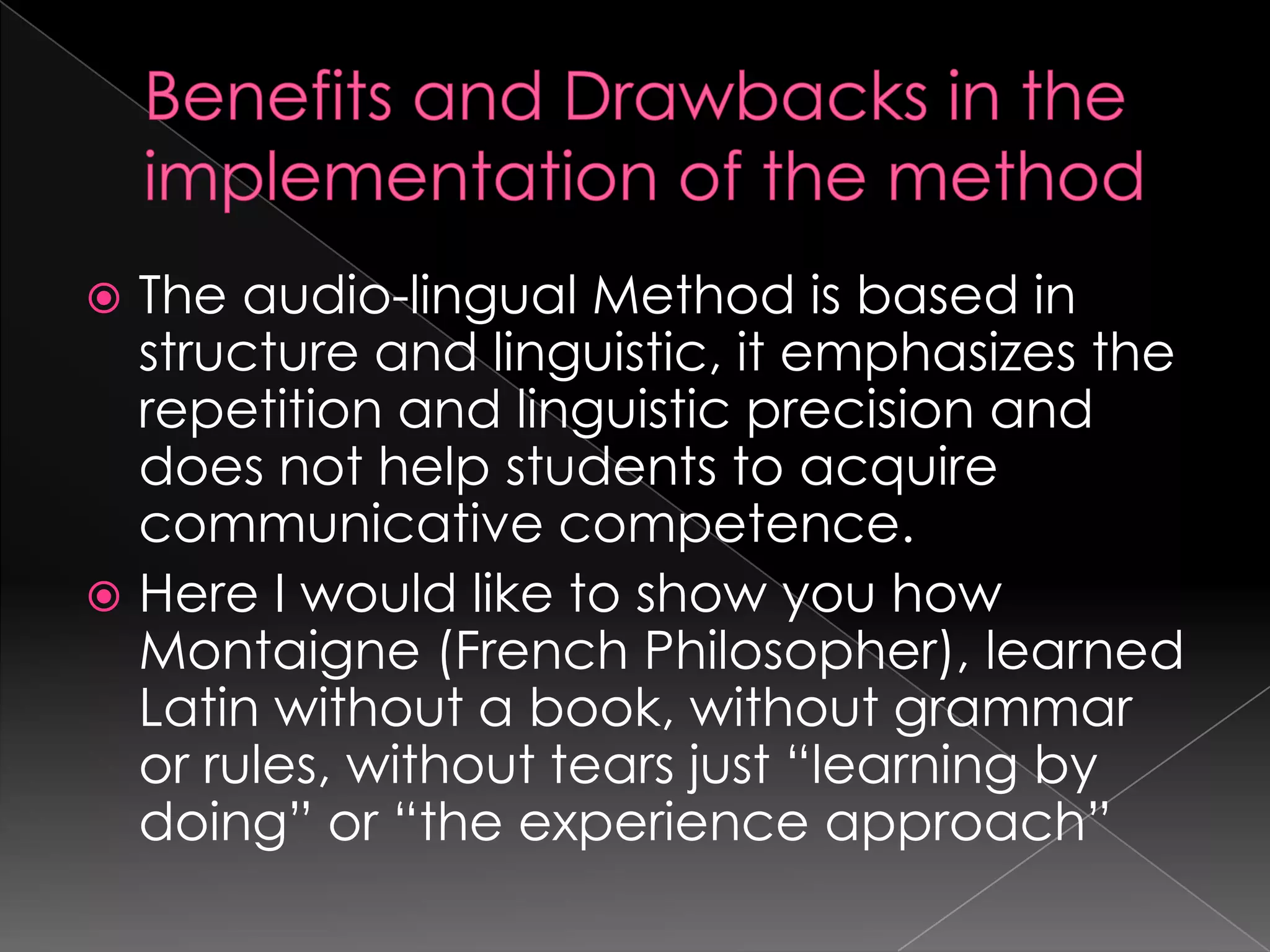
 The audio-lingual Method is based in
  structure and linguistic, it emphasizes the
  repetition and linguistic precision and
  does not help students to acquire
  communicative competence.
 Here I would like to show you how
  Montaigne (French Philosopher), learned
  Latin without a book, without grammar
  or rules, without tears just “learning by
  doing” or “the experience approach”
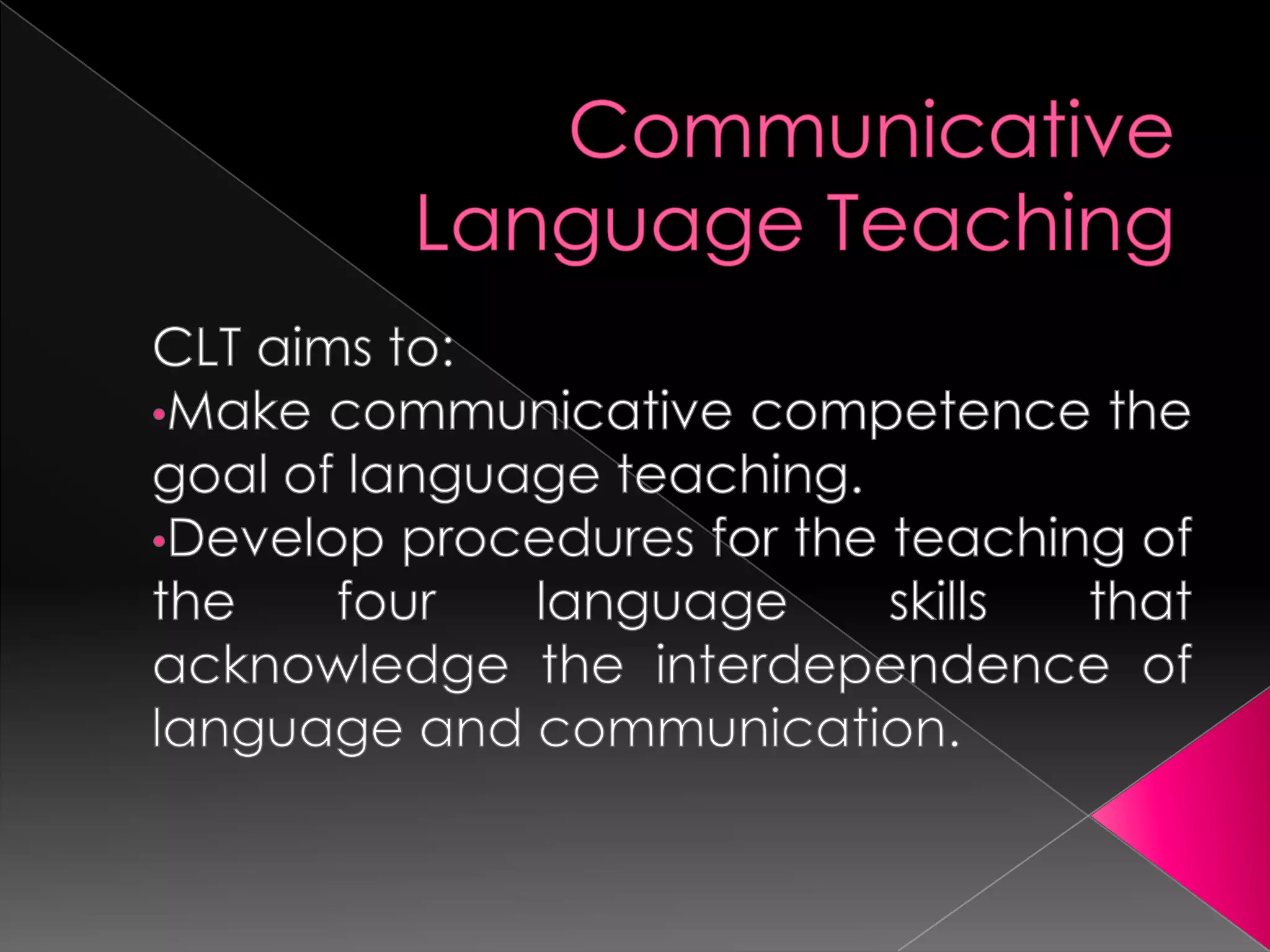
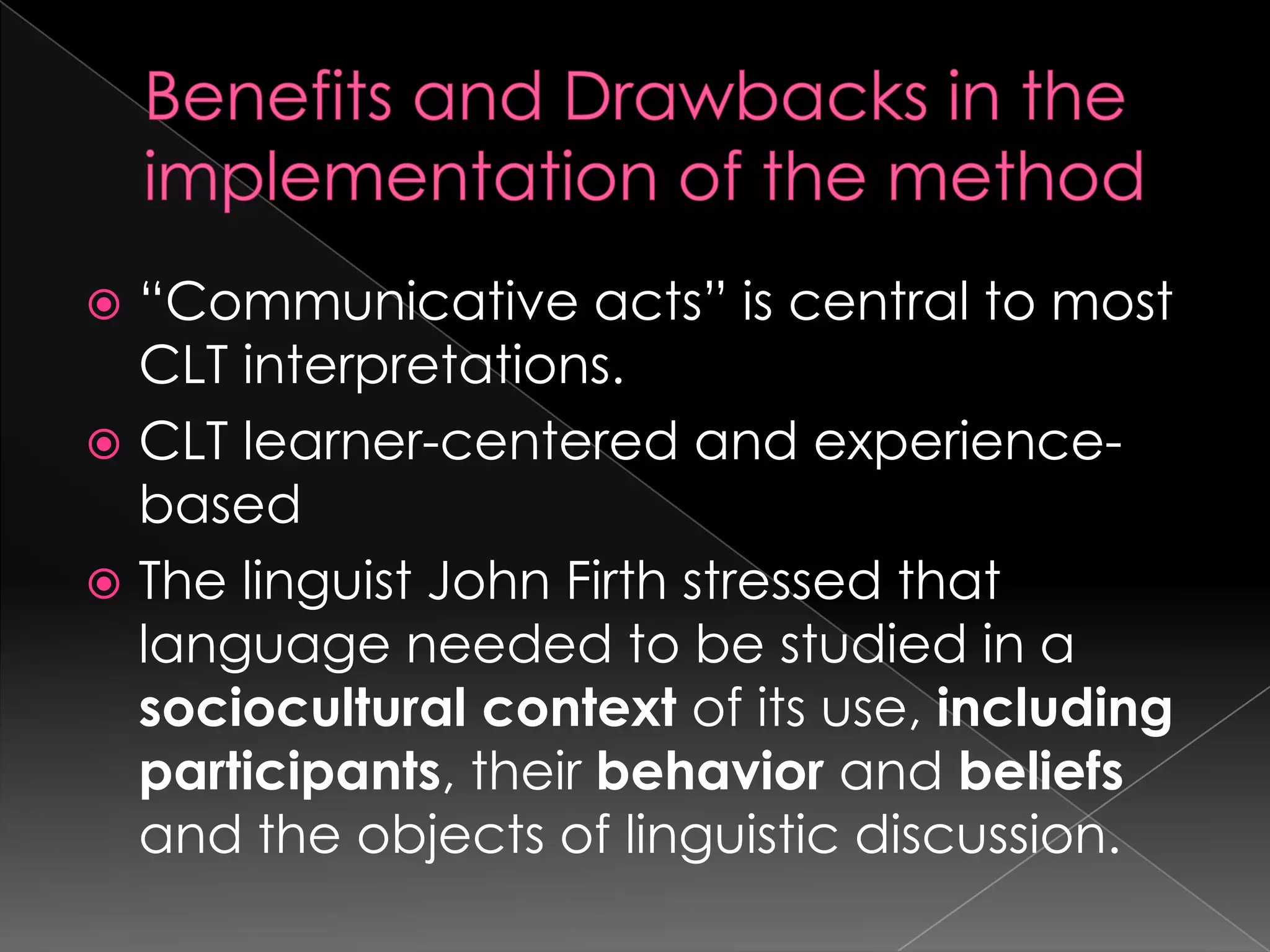
 “Communicative acts” is central to most
  CLT interpretations.
 CLT learner-centered and experience-
  based
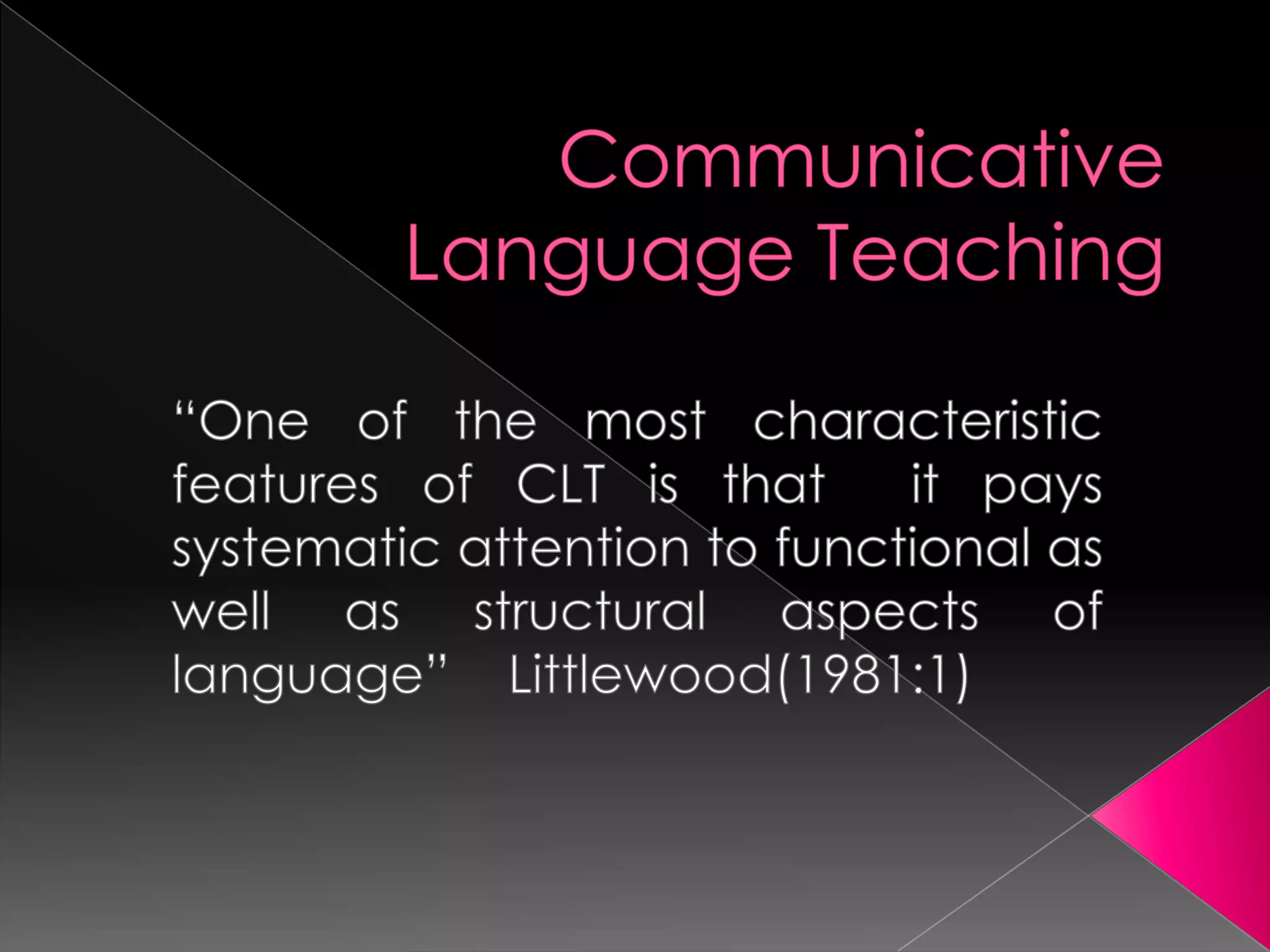
 The linguist John Firth stressed that
  language needed to be studied in a
  sociocultural context of its use, including
  participants, their behavior and beliefs
  and the objects of linguistic discussion.
   The best curriculum consist of “WELL-
    SELECTED EXPERIENCES” (it was proposed
    by an American National curriculum
    commission in the 1930`s)
 We can find several theories that refer to
  CLT, but I would like to talk about
  Krashen. He says that the grammatical
  knowledge is the result of an instruction,
  but the student cannot get the
  acquisition.
 ACQUISITION is to learn the language in
  a real communication; it is the
  spontaneous language use. An
  unconscious development.
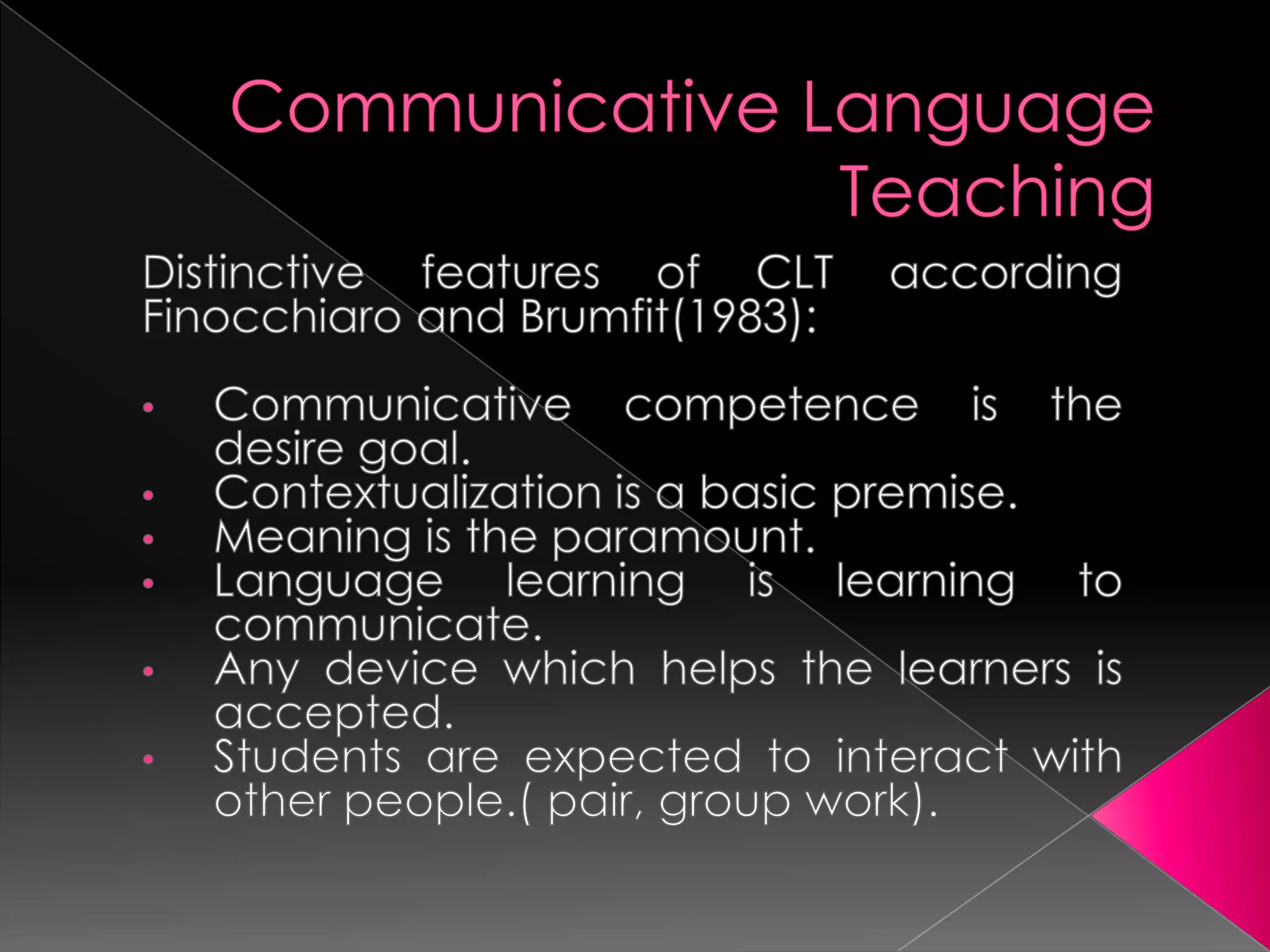
   CLT is in favor to the PRACTICE which
    develops communication skills.
   Examples:
   -Dialogs, not normally memorized.
   -Contextualization.
   -Communication is the desired goal.
   -Language is created by the individual
    often through trial and error.
   -Interest in what is being communicated by
    the language.
   -Introduces real texts in real time.
   -Focused on the learning approach but not
    only in the language.
   - Learner-centered and experience-based.
   This method can lead to learner confusion and
    resentment; there are no text and grammar rules.

 -The classroom arrangement is nonstandard.
(CLT recommended that learners learn to see that failed
communication is a joint responsibility.)

 -CLT raises important issues for teacher training,
  materials development and testing and evaluation,
  how suitable it is for non-native teachers? (They may
  feel uncomfortable without special training)
 (They required a special training to apply this method)

   -How can it be adopted when the students must
    continue to take grammar-based tests?
(If we want to use CLT method, then the evaluation should
consider this method).

Communicative language teaching

  • 6.
     SURVEY fora 5th grade class  This activity represents the CLT method because the speaking skill is applied althogh there are also involved specific grammar tasks and vocabulary but the CLT principles are the most important in the classroom procedure.  Let´see!
  • 7.
    The teacher first presents the grammar and vocabulary ;the objective of this class is how to distingish the questions above and be able to answer them correctly by presenting severel mini-dialogs preceded by a motivation relating the dialog situation  What does he/she do?(profession)  What does he/she like?(hobbies)  What is he/she like?(character)  What does he/she look like?(phisicial appearance)
  • 8.
     Therefore the teacher prepeared a survey sheet where the students have to fill in the gaps with the needed information by asking their classmates
  • 9.
    What´s What does What What is What his/her he/she does he/she does name? do? he/she like? he/ she like? look like? Do you have any Yes I He’s a He likes He´s He´s tall brothers or sisters? have. Chef. football very and a His and outgoin little bit name is fishing. g and over Martin. friendly. weight. Do you have an uncle/aunt? Do hou have grandmother and grandfather? Do you have a cousin? Do you have a best friend? Do you have a pet?
  • 10.
    After the teacher shows an example how to fill in the sheet with a student and how to make the dialog , the teacher gives any student a sheet and the activity can begin! The goal is to fill the sheet asking different classmates so they have to form pairs and then look for the next student and change the classmate for the next question.
  • 11.
     The audio-lingualMethod is based in structure and linguistic, it emphasizes the repetition and linguistic precision and does not help students to acquire communicative competence.  Here I would like to show you how Montaigne (French Philosopher), learned Latin without a book, without grammar or rules, without tears just “learning by doing” or “the experience approach”
  • 12.
     “Communicative acts”is central to most CLT interpretations.  CLT learner-centered and experience- based  The linguist John Firth stressed that language needed to be studied in a sociocultural context of its use, including participants, their behavior and beliefs and the objects of linguistic discussion.
  • 13.
    The best curriculum consist of “WELL- SELECTED EXPERIENCES” (it was proposed by an American National curriculum commission in the 1930`s)
  • 14.
     We canfind several theories that refer to CLT, but I would like to talk about Krashen. He says that the grammatical knowledge is the result of an instruction, but the student cannot get the acquisition.  ACQUISITION is to learn the language in a real communication; it is the spontaneous language use. An unconscious development.
  • 15.
    CLT is in favor to the PRACTICE which develops communication skills.  Examples:  -Dialogs, not normally memorized.  -Contextualization.  -Communication is the desired goal.  -Language is created by the individual often through trial and error.  -Interest in what is being communicated by the language.  -Introduces real texts in real time.  -Focused on the learning approach but not only in the language.  - Learner-centered and experience-based.
  • 16.
    This method can lead to learner confusion and resentment; there are no text and grammar rules.  -The classroom arrangement is nonstandard. (CLT recommended that learners learn to see that failed communication is a joint responsibility.)  -CLT raises important issues for teacher training, materials development and testing and evaluation, how suitable it is for non-native teachers? (They may feel uncomfortable without special training)  (They required a special training to apply this method)  -How can it be adopted when the students must continue to take grammar-based tests? (If we want to use CLT method, then the evaluation should consider this method).