CLT/CLL
Arianny Rodríguez
Universidad Pedagógica Experimental Libertador
Instituto Pedagógico de Caracas
Departamento de Idiomas Modernos
Programa Inglés
Cátedra de Lingüística
Didáctica del Inglés como Lengua Extranjera
Caracas Marzo 2014
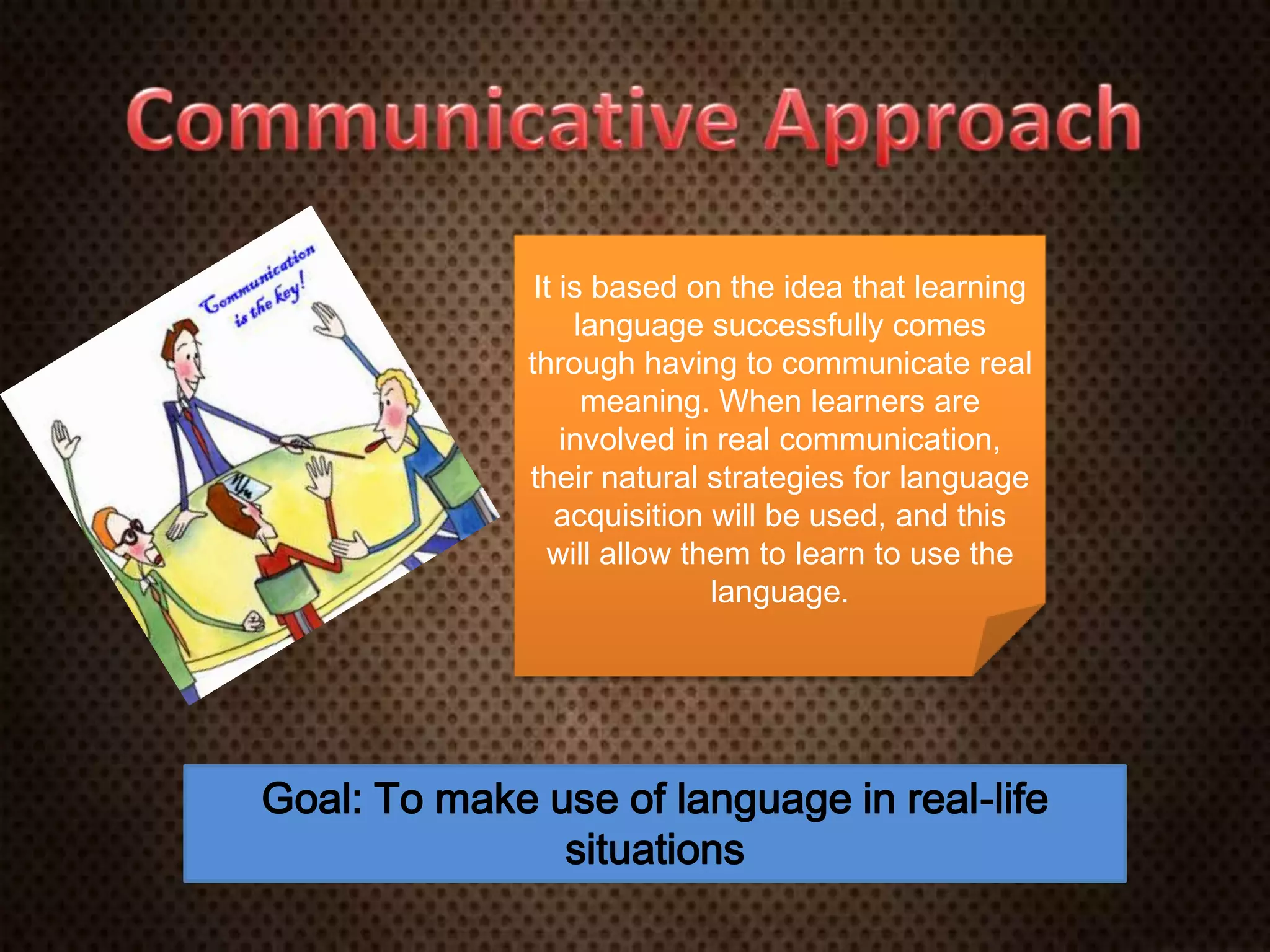
It is based on the idea that learning
language successfully comes
through having to communicate real
meaning. When learners are
involved in real communication,
their natural strategies for language
acquisition will be used, and this
will allow them to learn to use the
language.
Goal: To make use of language in real-life
situations
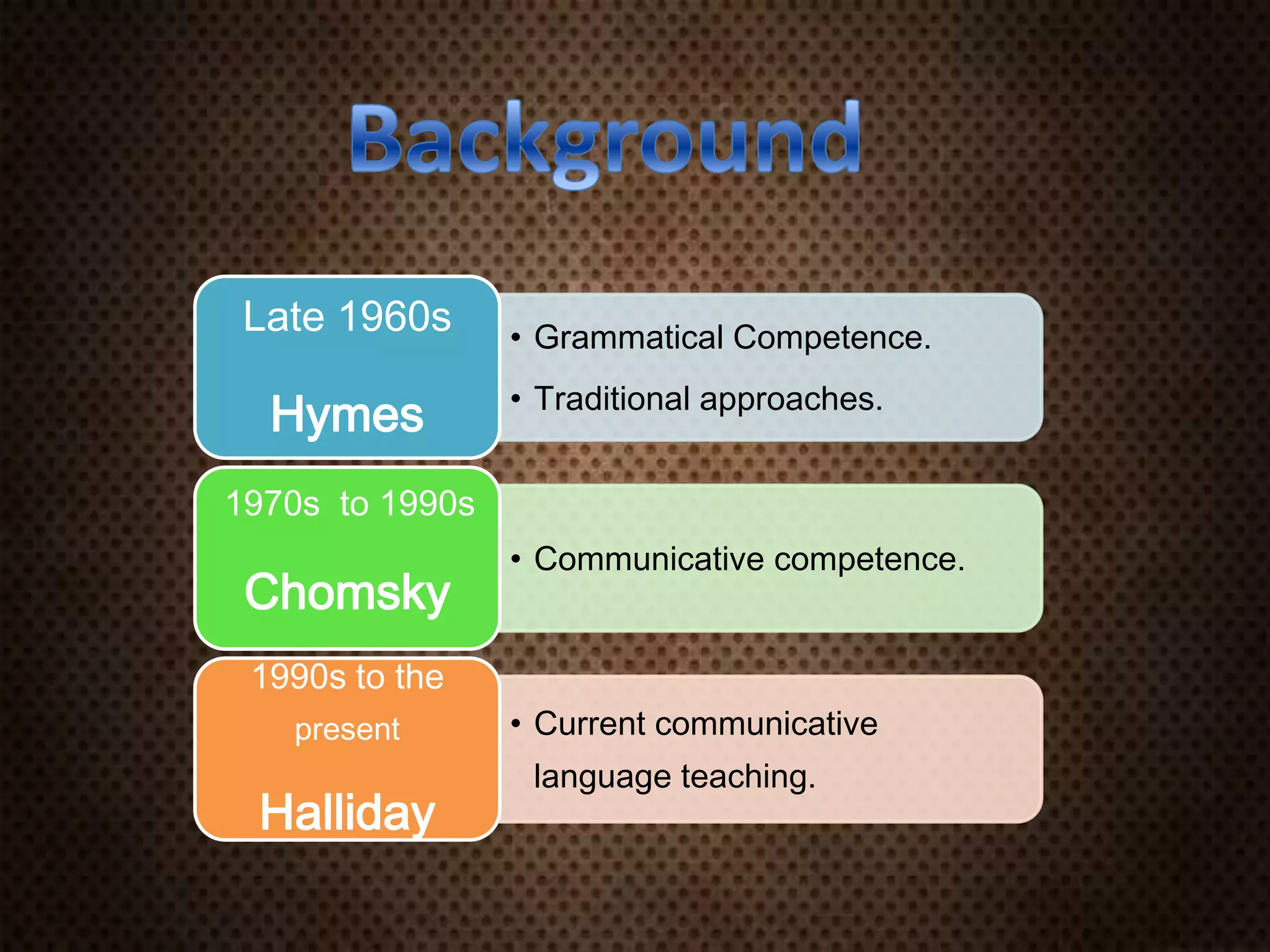
• Grammatical Competence.
• Traditional approaches.
Late 1960s
Hymes
• Communicative competence.
1970s to 1990s
Chomsky
• Current communicative
language teaching.
1990s to the
present
Halliday
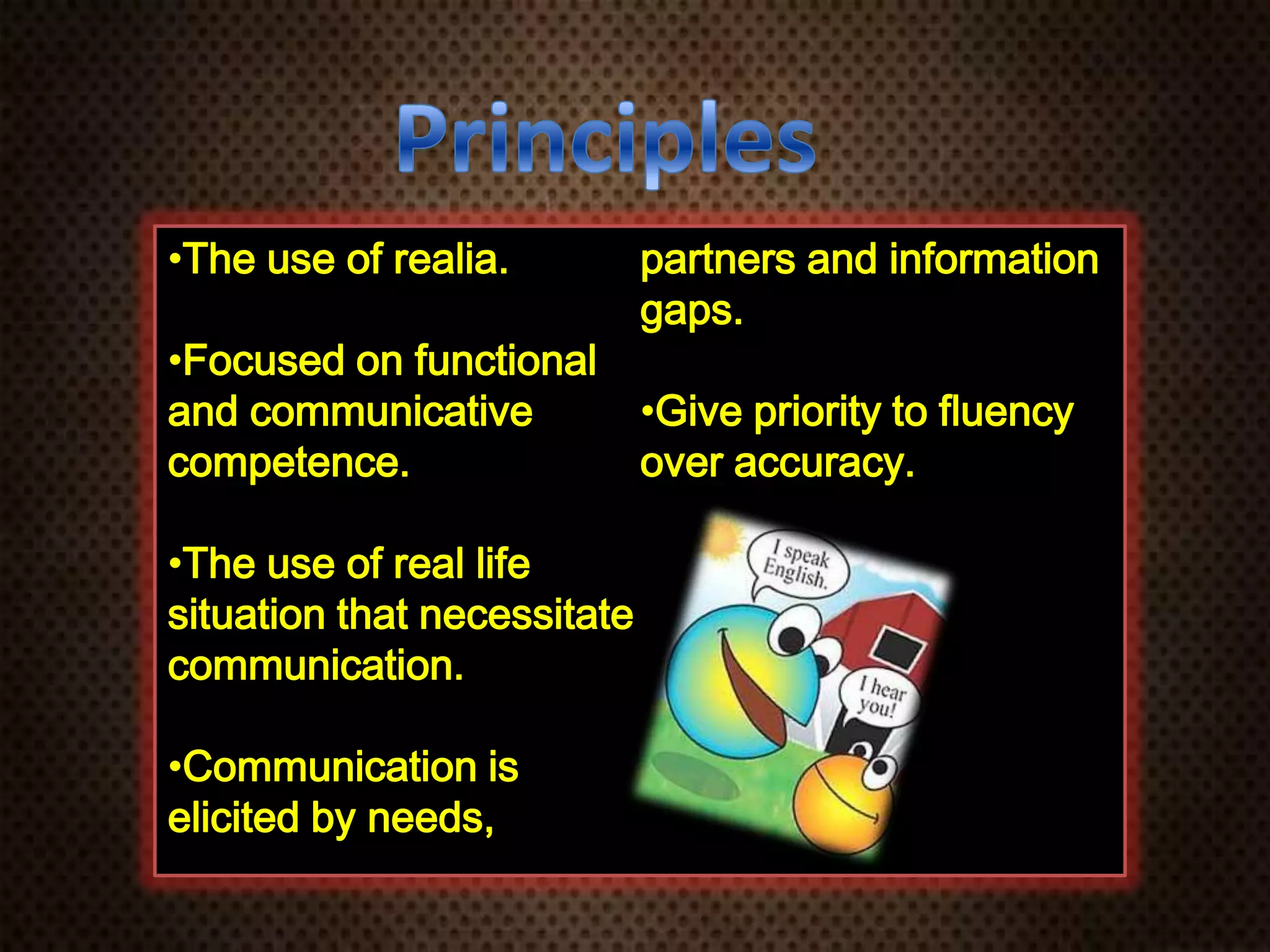
•The use of realia.
•Focused on functional
and communicative
competence.
•The use of real life
situation that necessitate
communication.
•Communication is
elicited by needs,
partners and information
gaps.
•Give priority to fluency
over accuracy.
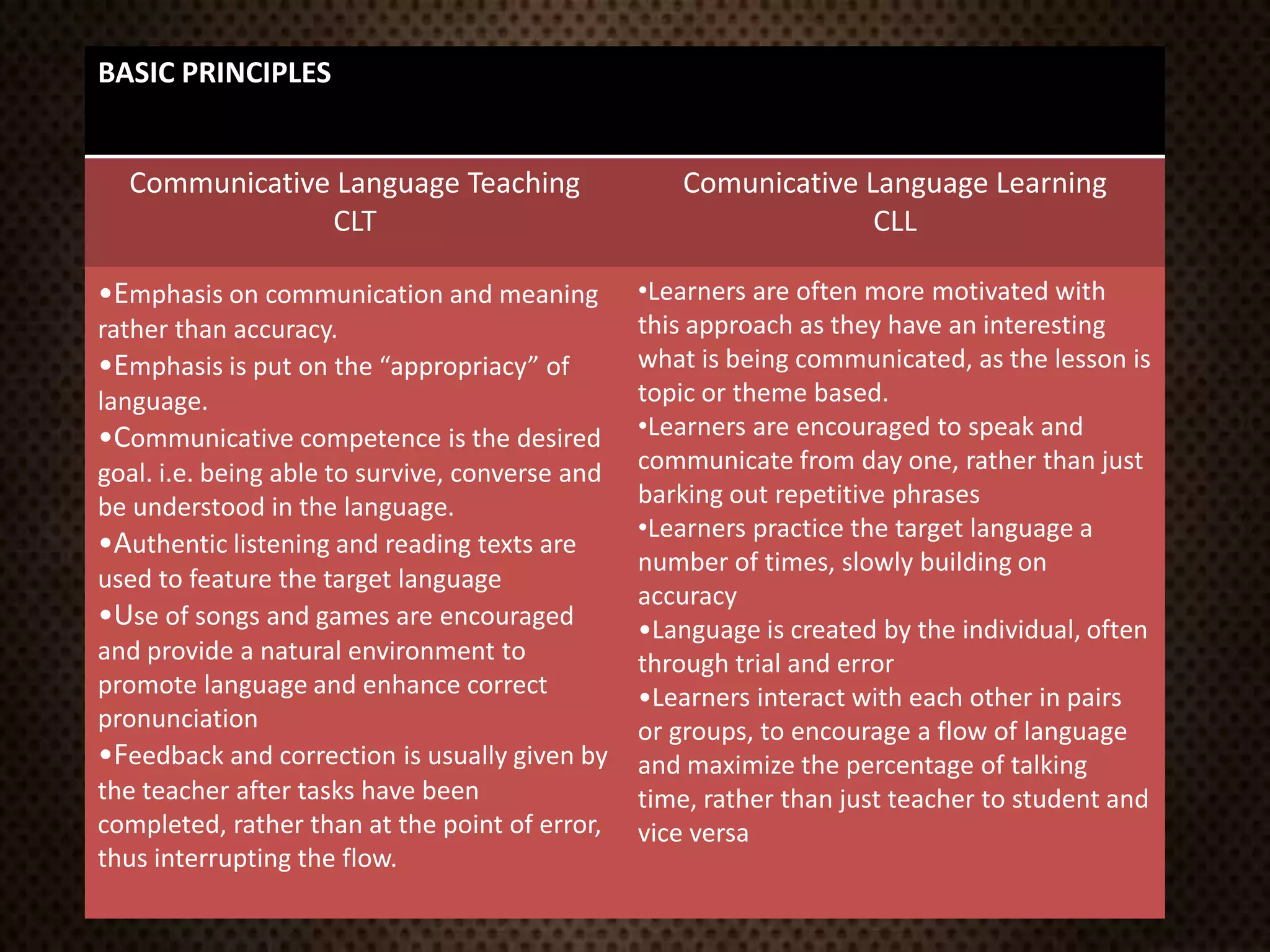
BASIC PRINCIPLES
Communicative Language Teaching
CLT
Comunicative Language Learning
CLL
•Emphasis on communication and meaning
rather than accuracy.
•Emphasis is put on the “appropriacy” of
language.
•Communicative competence is the desired
goal. i.e. being able to survive, converse and
be understood in the language.
•Authentic listening and reading texts are
used to feature the target language
•Use of songs and games are encouraged
and provide a natural environment to
promote language and enhance correct
pronunciation
•Feedback and correction is usually given by
the teacher after tasks have been
completed, rather than at the point of error,
thus interrupting the flow.
•Learners are often more motivated with
this approach as they have an interesting
what is being communicated, as the lesson is
topic or theme based.
•Learners are encouraged to speak and
communicate from day one, rather than just
barking out repetitive phrases
•Learners practice the target language a
number of times, slowly building on
accuracy
•Language is created by the individual, often
through trial and error
•Learners interact with each other in pairs
or groups, to encourage a flow of language
and maximize the percentage of talking
time, rather than just teacher to student and
vice versa
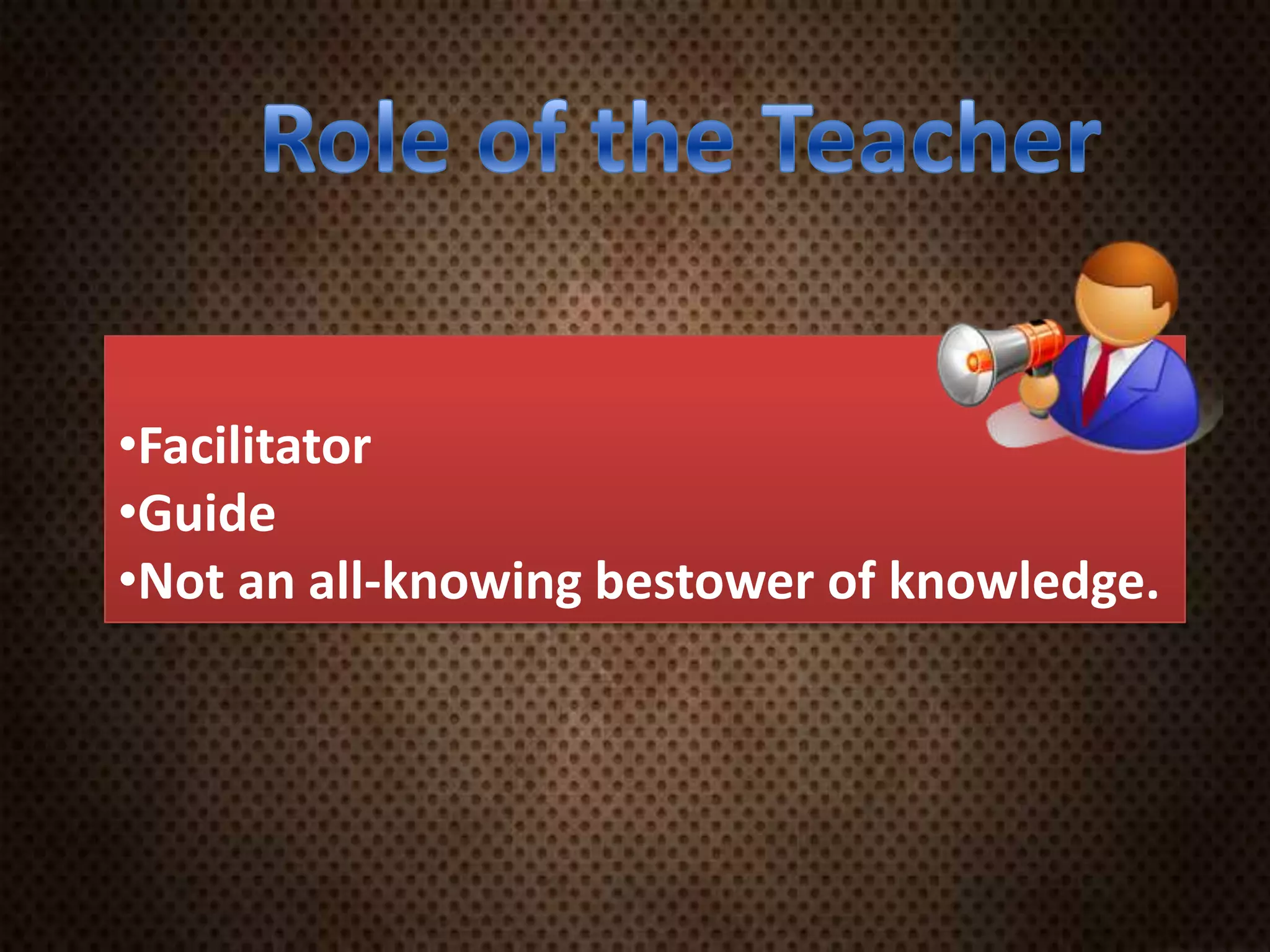
•Facilitator
•Guide
•Not an all-knowing bestower of knowledge.
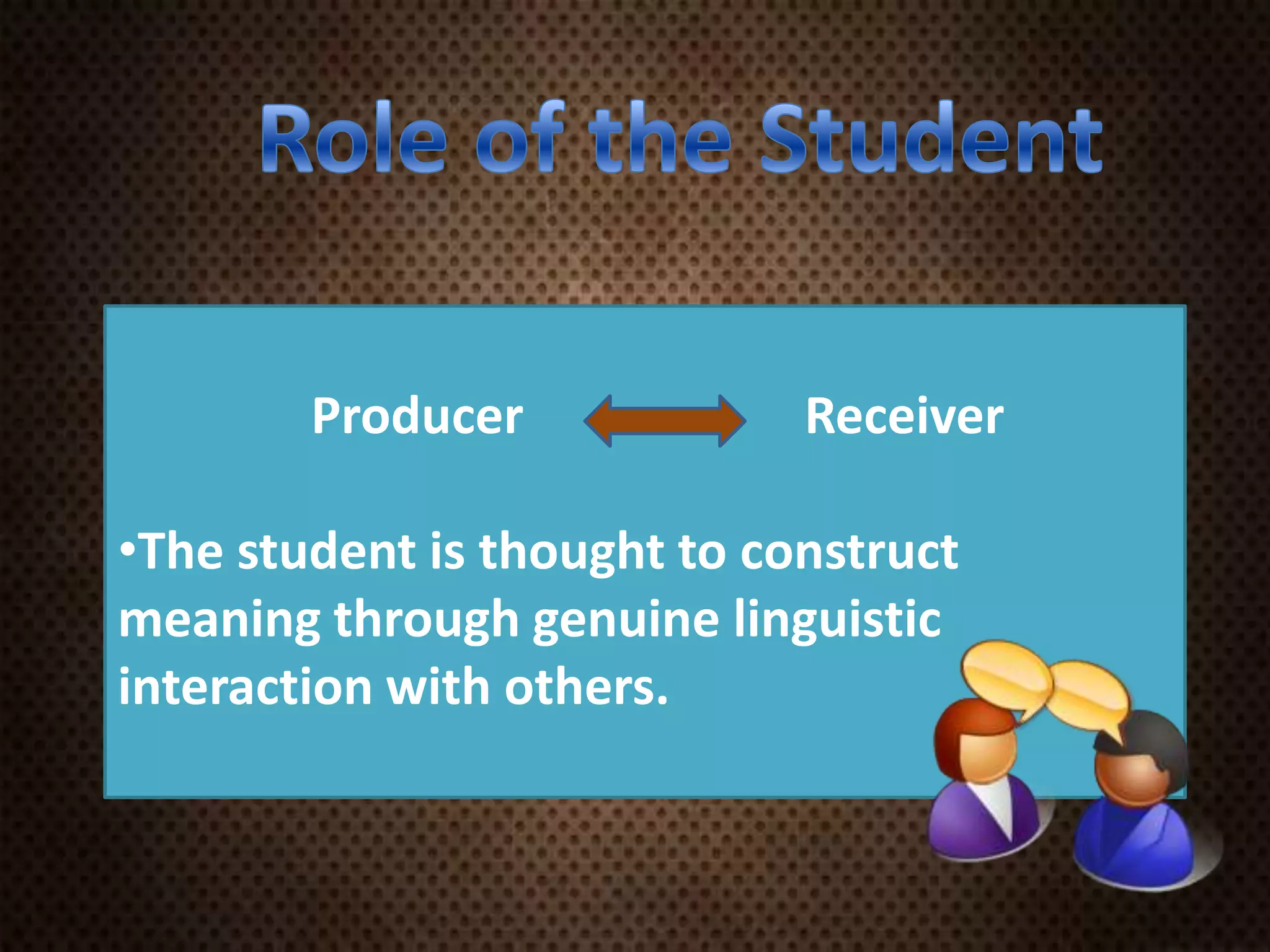
Producer Receiver
•The student is thought to construct
meaning through genuine linguistic
interaction with others.
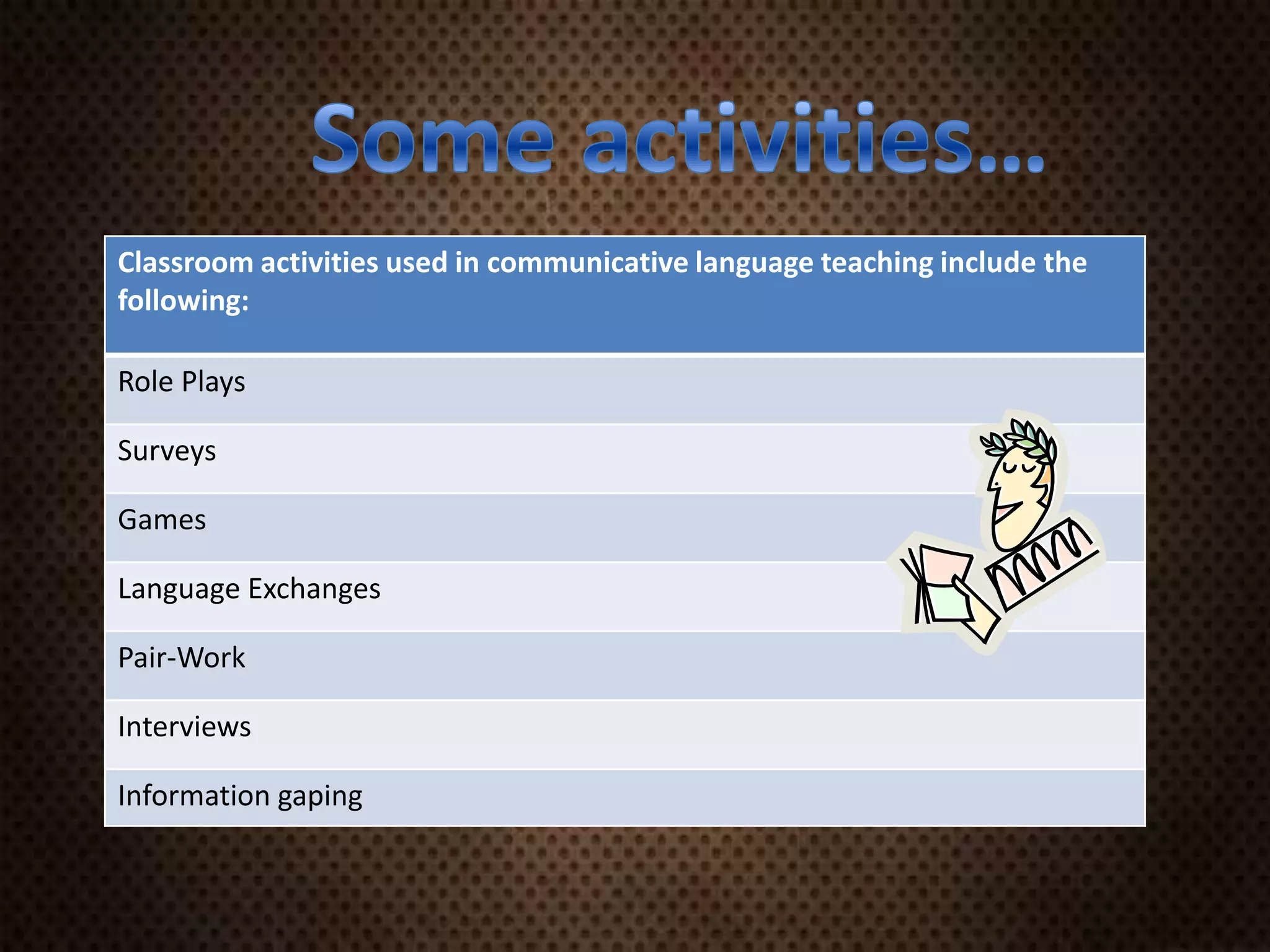
Classroom activities used in communicative language teaching include the following:Classroom activities used in communicative language teaching include the
following:
Role Plays
Surveys
Games
Language Exchanges
Pair-Work
Interviews
Information gaping
Thanks!
Richards, Jack and Rodgers, Theodore (2001)
Approaches & Methods In Language Teaching. Cambridge
University Press.
Braun, Estela (2009) online resource:
http://www.slideshare.net/lilianamonserrat/the-natural-approach

Communicative Language Teaching

  • 1.
    CLT/CLL Arianny Rodríguez Universidad PedagógicaExperimental Libertador Instituto Pedagógico de Caracas Departamento de Idiomas Modernos Programa Inglés Cátedra de Lingüística Didáctica del Inglés como Lengua Extranjera Caracas Marzo 2014
  • 2.
    It is basedon the idea that learning language successfully comes through having to communicate real meaning. When learners are involved in real communication, their natural strategies for language acquisition will be used, and this will allow them to learn to use the language. Goal: To make use of language in real-life situations
  • 3.
    • Grammatical Competence. •Traditional approaches. Late 1960s Hymes • Communicative competence. 1970s to 1990s Chomsky • Current communicative language teaching. 1990s to the present Halliday
  • 4.
    •The use ofrealia. •Focused on functional and communicative competence. •The use of real life situation that necessitate communication. •Communication is elicited by needs, partners and information gaps. •Give priority to fluency over accuracy.
  • 5.
    BASIC PRINCIPLES Communicative LanguageTeaching CLT Comunicative Language Learning CLL •Emphasis on communication and meaning rather than accuracy. •Emphasis is put on the “appropriacy” of language. •Communicative competence is the desired goal. i.e. being able to survive, converse and be understood in the language. •Authentic listening and reading texts are used to feature the target language •Use of songs and games are encouraged and provide a natural environment to promote language and enhance correct pronunciation •Feedback and correction is usually given by the teacher after tasks have been completed, rather than at the point of error, thus interrupting the flow. •Learners are often more motivated with this approach as they have an interesting what is being communicated, as the lesson is topic or theme based. •Learners are encouraged to speak and communicate from day one, rather than just barking out repetitive phrases •Learners practice the target language a number of times, slowly building on accuracy •Language is created by the individual, often through trial and error •Learners interact with each other in pairs or groups, to encourage a flow of language and maximize the percentage of talking time, rather than just teacher to student and vice versa
  • 6.
  • 7.
    Producer Receiver •The studentis thought to construct meaning through genuine linguistic interaction with others.
  • 8.
    Classroom activities usedin communicative language teaching include the following:Classroom activities used in communicative language teaching include the following: Role Plays Surveys Games Language Exchanges Pair-Work Interviews Information gaping
  • 9.
  • 10.
    Richards, Jack andRodgers, Theodore (2001) Approaches & Methods In Language Teaching. Cambridge University Press. Braun, Estela (2009) online resource: http://www.slideshare.net/lilianamonserrat/the-natural-approach