Communication Skills
Ever feel like this???
 https://www.youtube.com/watch?v=K0
Jg7pvVzKk
Perception
Ways We Communicate
 Talking
 Non-verbal
 Listening
 Electronically
◦ Texting
◦ Social Media (Snapchat, Twitter, etc.)
Communication Survey
1. Your mom just told you that you have to baby-
sit your little sister instead of going to the
football game. You say…
a) “I feel upset because you didn’t ask me until
now, and I already have plans to go to the
game.”
a) Nothing. Your sad face is enough to let mom
know that you are really upset about this.
a) “You always make me baby-sit! Especially
when I already have plans!”
2. When you are in a conversation with
somebody else you…
A) Pay attention to everything the person
has to say and occasionally add bits
and pieces to the conversation.
A) Listen very well, but usually remain
quiet.
A) Listen well most times, but occasionally
you interrupt the person with whom you
are talking.
3. Your best friend just told you she tried
marijuana for the first time. “It just makes me feel
so good,” she says. Her parents just got divorced
and you know that she is really struggling. It
would be best to respond by:
A) Telling your friend that even though she is experiencing
some trials, using marijuana will only cause more
problems.
A) Realize that even though you feel that using marijuana
is wrong, your friend really has had it tough. What’s
best for some isn’t always best for everybody.
A) Say, “Are you stupid or something? I can’t believe you
would be so dumb to even consider using drugs!”
4. You have been asked to work with a very
smart student on an assignment in class.
Although you try hard, the material is too
difficult and the other student ends up doing
most of the work. Your response:
A) “Thanks so much for helping me with the
assignment, I really appreciate you helping
me to understand better.”
A) “I’m sorry that I am so dumb! I wish I could
have helped you more. Hopefully I won’t
have to bother you again.”
A) Nothing. People who are really smart are
just nerds who study all the time.
5. When you are in an argument, you
usually:
A) Speak clearly and confidently.
A) Mumble, become nervous and can’t
look the other person in the eye.
A) Yell or refuse to speak.
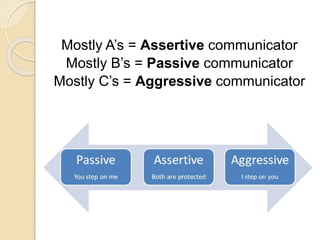
Mostly A’s = Assertive communicator
Mostly B’s = Passive communicator
Mostly C’s = Aggressive communicator
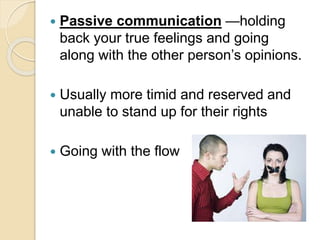
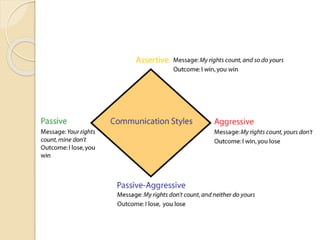
 Passive communication —holding
back your true feelings and going
along with the other person’s opinions.
 Usually more timid and reserved and
unable to stand up for their rights
 Going with the flow
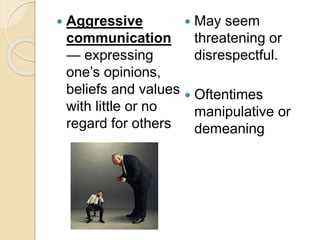
 Aggressive
communication
— expressing
one’s opinions,
beliefs and values
with little or no
regard for others
 May seem
threatening or
disrespectful.
 Oftentimes
manipulative or
demeaning
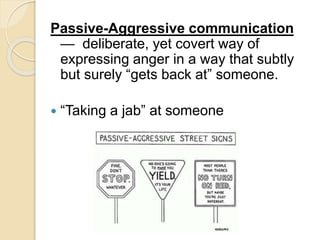
Passive-Aggressive communication
— deliberate, yet covert way of
expressing anger in a way that subtly
but surely “gets back at” someone.
 “Taking a jab” at someone
 Assertive
communication —
expressing true
feelings in a way
that does not
threaten the other
person or make
them feel anxious.
 Speaking your mind
and inviting others to
do likewise
 The best form of
communication
◦ Utilizes “I-messages”
and reflective
listening
 KEY COMPONENT
OF BEING ABLE TO
SAY NO!!!
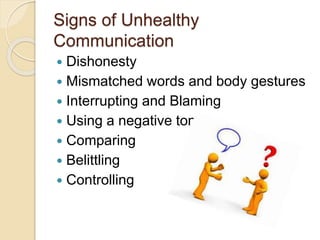
Signs of Unhealthy
Communication
 Dishonesty
 Mismatched words and body gestures
 Interrupting and Blaming
 Using a negative tone
 Comparing
 Belittling
 Controlling
Being an Assertive
Communicator
 “I-Messages”
 Taking responsibility for our feelings
◦ NOT conveying blame on others for our
feelings
 Encourages open communication by
describing true feelings
◦ Examples
 “This is how I feel when…”
 “This is how I see it…”
 “This is what I think…”
Active Listening
 Giving complete attention and
conveying understanding by using either
verbal or nonverbal means
 Don’t think about the experiences and
insights that you want to add
 Focus on what the other person is saying
and convey sympathy, respect,
acceptance, and encouragement
 You might prompt the speaker to
continue
Reflective Listening
 Consists of paraphrasing and
verbalizing unexpressed feelings to
seek more information
 Verbalizing unexpressed
feelings
◦ Examples:
 “Are you saying that…?”
 “Did it make you feel…?”
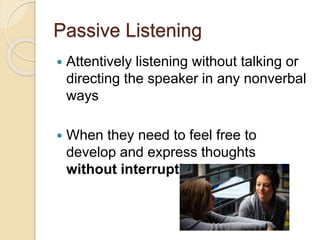
Passive Listening
 Attentively listening without talking or
directing the speaker in any nonverbal
ways
 When they need to feel free to
develop and express thoughts
without interruption
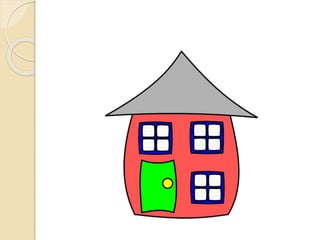
Let’s Practice our Communication Skills!
 1 person explaining, 1 drawing
 Can only use basic shapes (line, circle,
square, etc. to explain)
 Trying to get as close to the original
picture as possible
 Person drawing should be facing AWAY
from the projector
Non-verbal Communication
*93% of a message’s credibility
is communicated nonverbally.
55% = body language
38% = tone, pitch, and voice
inflection
7% = words
**It’s not WHAT you say, but
HOW you say it**
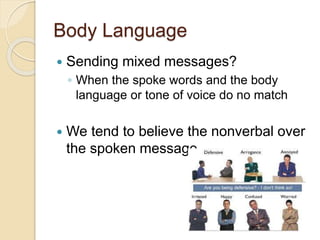
Body Language
 Sending mixed messages?
◦ When the spoke words and the body
language or tone of voice do no match
 We tend to believe the nonverbal over
the spoken message
Understanding Body
Language
 Running Charades
Electronic Communication
 Lack of body language or voice
inflection can lead to
misinterpretations
 Hiding behind a screen
◦ Saying things you wouldn’t usually say to
people’s face (cyber bullying)
 Learn how to carry on a conversation
with a person face-to-face!

Communication skills revamped

  • 1.
  • 2.
    Ever feel likethis???  https://www.youtube.com/watch?v=K0 Jg7pvVzKk
  • 3.
  • 7.
    Ways We Communicate Talking  Non-verbal  Listening  Electronically ◦ Texting ◦ Social Media (Snapchat, Twitter, etc.)
  • 8.
    Communication Survey 1. Yourmom just told you that you have to baby- sit your little sister instead of going to the football game. You say… a) “I feel upset because you didn’t ask me until now, and I already have plans to go to the game.” a) Nothing. Your sad face is enough to let mom know that you are really upset about this. a) “You always make me baby-sit! Especially when I already have plans!”
  • 9.
    2. When youare in a conversation with somebody else you… A) Pay attention to everything the person has to say and occasionally add bits and pieces to the conversation. A) Listen very well, but usually remain quiet. A) Listen well most times, but occasionally you interrupt the person with whom you are talking.
  • 10.
    3. Your bestfriend just told you she tried marijuana for the first time. “It just makes me feel so good,” she says. Her parents just got divorced and you know that she is really struggling. It would be best to respond by: A) Telling your friend that even though she is experiencing some trials, using marijuana will only cause more problems. A) Realize that even though you feel that using marijuana is wrong, your friend really has had it tough. What’s best for some isn’t always best for everybody. A) Say, “Are you stupid or something? I can’t believe you would be so dumb to even consider using drugs!”
  • 11.
    4. You havebeen asked to work with a very smart student on an assignment in class. Although you try hard, the material is too difficult and the other student ends up doing most of the work. Your response: A) “Thanks so much for helping me with the assignment, I really appreciate you helping me to understand better.” A) “I’m sorry that I am so dumb! I wish I could have helped you more. Hopefully I won’t have to bother you again.” A) Nothing. People who are really smart are just nerds who study all the time.
  • 12.
    5. When youare in an argument, you usually: A) Speak clearly and confidently. A) Mumble, become nervous and can’t look the other person in the eye. A) Yell or refuse to speak.
  • 13.
    Mostly A’s =Assertive communicator Mostly B’s = Passive communicator Mostly C’s = Aggressive communicator
  • 14.
     Passive communication—holding back your true feelings and going along with the other person’s opinions.  Usually more timid and reserved and unable to stand up for their rights  Going with the flow
  • 15.
     Aggressive communication — expressing one’sopinions, beliefs and values with little or no regard for others  May seem threatening or disrespectful.  Oftentimes manipulative or demeaning
  • 16.
    Passive-Aggressive communication — deliberate,yet covert way of expressing anger in a way that subtly but surely “gets back at” someone.  “Taking a jab” at someone
  • 17.
     Assertive communication — expressingtrue feelings in a way that does not threaten the other person or make them feel anxious.  Speaking your mind and inviting others to do likewise  The best form of communication ◦ Utilizes “I-messages” and reflective listening  KEY COMPONENT OF BEING ABLE TO SAY NO!!!
  • 19.
    Signs of Unhealthy Communication Dishonesty  Mismatched words and body gestures  Interrupting and Blaming  Using a negative tone  Comparing  Belittling  Controlling
  • 20.
    Being an Assertive Communicator “I-Messages”  Taking responsibility for our feelings ◦ NOT conveying blame on others for our feelings  Encourages open communication by describing true feelings ◦ Examples  “This is how I feel when…”  “This is how I see it…”  “This is what I think…”
  • 21.
    Active Listening  Givingcomplete attention and conveying understanding by using either verbal or nonverbal means  Don’t think about the experiences and insights that you want to add  Focus on what the other person is saying and convey sympathy, respect, acceptance, and encouragement  You might prompt the speaker to continue
  • 22.
    Reflective Listening  Consistsof paraphrasing and verbalizing unexpressed feelings to seek more information  Verbalizing unexpressed feelings ◦ Examples:  “Are you saying that…?”  “Did it make you feel…?”
  • 23.
    Passive Listening  Attentivelylistening without talking or directing the speaker in any nonverbal ways  When they need to feel free to develop and express thoughts without interruption
  • 24.
    Let’s Practice ourCommunication Skills!  1 person explaining, 1 drawing  Can only use basic shapes (line, circle, square, etc. to explain)  Trying to get as close to the original picture as possible  Person drawing should be facing AWAY from the projector
  • 27.
    Non-verbal Communication *93% ofa message’s credibility is communicated nonverbally. 55% = body language 38% = tone, pitch, and voice inflection 7% = words **It’s not WHAT you say, but HOW you say it**
  • 28.
    Body Language  Sendingmixed messages? ◦ When the spoke words and the body language or tone of voice do no match  We tend to believe the nonverbal over the spoken message
  • 29.
  • 30.
    Electronic Communication  Lackof body language or voice inflection can lead to misinterpretations  Hiding behind a screen ◦ Saying things you wouldn’t usually say to people’s face (cyber bullying)  Learn how to carry on a conversation with a person face-to-face!