The RESPIRATORY System
Unit 3
Transportation Systems
The Respiratory System
Functions of the
Respiratory System
• Warm, moisten, and filter incoming air.
– Nasal cavity warms, and moistens the air
as it enters the body.
• Resonating chambers for speech and
sound production.
– Larynx generates the sound, nose provides
the resonating chamber.
• Carbon dioxide gas exchange.
– Alveoli serve as the site for gas exchange.
Structures of the
Respiratory System
Nose
• Bony framework, cartilage, skin, and mucous
membrane lining.
• Nostrils provide openings.
• Septum separates into right and left sides.
• Warms, moistens, and filters incoming air,
smell, and provides resonating chambers for
speech and sound production.
Nasal Cavity
• Large, air-filled space above and
behind the nose in the middle of the
face.
• Air is warmed, filtered, and humidified.
• Holds nerve endings that provide the
sense of smell.
Pharynx
• Funnel-shaped tube located behind the mouth
and nasal cavity, above the larynx.
• Walls composed of skeletal muscle and lined
with mucous membranes.
• Three sections: nasopharynx, oropharynx, and
laryngopharynx.
• Passageway for air and food.
• Resonating chamber for speech sounds and
assists in the formation of words.
Epiglottis
• Located below the pharynx, attached to
the entrance of the larynx.
• Large, leaf-shaped piece of cartilage that
covers the larynx during swallowing to
prevent food from entering the larynx
and trachea.
•Opening through
the larynx for the
passage of air.
Larynx (voice box)
• Located below the pharynx.
• Contains vocal cords.
• Short passageway connecting the
pharynx and the trachea.
• Contains the epiglottis.
Trachea (windpipe)
• Passageway for air.
• Located anterior to the esophagus.
• Extends from the larynx to the center
of the chest where the bronchi branch
off.
• Supported by cartilage rings to
prevent collapse.
Bronchi
• Two large sets of branches that come off
the trachea and enter the lungs.
• The right primary bronchus is more
vertical, wider, and shorter than the left.
• Inhaled objects are more likely to lodge in
the right bronchus.
• Passageway for air.
Bronchioles
• Bronchi continue to divide to form
smaller tubes called bronchioles.
• Passageway for air.
Alveoli
• Located at the end of the bronchioles.
• Small air sacs which are one-cell thick
and surrounded by many blood
capillaries.
• Site of gas exchange between air and
blood.
Lungs
• Organs where atmospheric oxygen and
waste carbon dioxide take place.
Diseases and Disorders
• Common Cold (Coryza)
• Pneumonia
• Lung Cancer
• Asthma
• Bronchitis
• Tuberculosis
• Influenza
• Emphysema
Coryza (Common Cold)
• Caused by one of many viruses.
• Signs and symptoms include fatigue,
sneezing, coughing, congestion, body
aches and pains, and nasal secretions.
•Can be treated by
medication to
reduce discomfort
of signs and
symptoms.
Pneumonia
• Inflammatory illness of the lung.
• Lung inflammation and abnormal
alveolar filling.
• Caused by bacteria, viruses, fungi,
parasites, and chemical or physical
injury to the lungs.
• Symptoms include cough,
chest pain, fever, and
difficulty breathing.
• Usually treated by
antibiotics.
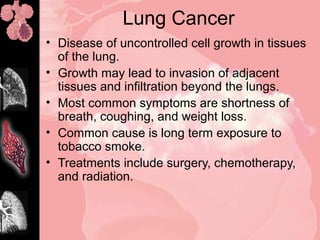
Lung Cancer
Lung Cancer
• Disease of uncontrolled cell growth in tissues
of the lung.
• Growth may lead to invasion of adjacent
tissues and infiltration beyond the lungs.
• Most common symptoms are shortness of
breath, coughing, and weight loss.
• Common cause is long term exposure to
tobacco smoke.
• Treatments include surgery, chemotherapy,
and radiation.
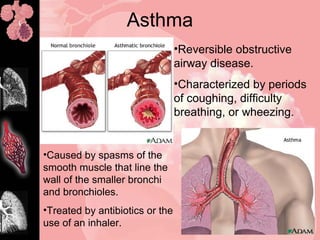
Asthma
•Reversible obstructive
airway disease.
•Characterized by periods
of coughing, difficulty
breathing, or wheezing.
•Caused by spasms of the
smooth muscle that line the
wall of the smaller bronchi
and bronchioles.
•Treated by antibiotics or the
use of an inhaler.
Bronchitis
• Inflammation of the bronchi.
• Caused by genetics, air pollution,
carbon monoxide, respiratory infection,
and deficient antibody levels.
• Treated by antibiotics.
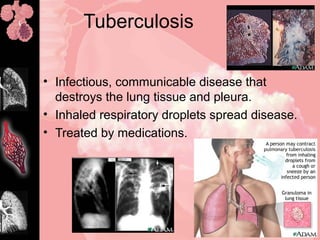
Tuberculosis
• Infectious, communicable disease that
destroys the lung tissue and pleura.
• Inhaled respiratory droplets spread disease.
• Treated by medications.
Influenza
• Contagious respiratory illness caused
by flu viruses.
• Usually comes on suddenly and may
include fever, headache, extreme
tiredness, dry cough, sore throat, runny
or stuffy nose, muscle aches, nausea,
vomiting, and diarrhea.
Emphysema
• Alveoli become stretched out and cannot
push carbon dioxide and other pollutants
out of the lungs.
• Caused by smoking, frequent untreated
respiratory infections, asthma, and
abnormal stress on the lungs.
• Symptoms are anxiety, shortness of breath,
difficulty breathing, cough, cyanosis,
unequal chest expansion, elevated body
temperature.
• Treatment options are medications, oxygen,
and the possibility of a lung transplant.
Emphysema

Respiratory

  • 1.
    The RESPIRATORY System Unit3 Transportation Systems
  • 2.
  • 3.
    Functions of the RespiratorySystem • Warm, moisten, and filter incoming air. – Nasal cavity warms, and moistens the air as it enters the body. • Resonating chambers for speech and sound production. – Larynx generates the sound, nose provides the resonating chamber. • Carbon dioxide gas exchange. – Alveoli serve as the site for gas exchange.
  • 4.
  • 5.
    Nose • Bony framework,cartilage, skin, and mucous membrane lining. • Nostrils provide openings. • Septum separates into right and left sides. • Warms, moistens, and filters incoming air, smell, and provides resonating chambers for speech and sound production.
  • 6.
    Nasal Cavity • Large,air-filled space above and behind the nose in the middle of the face. • Air is warmed, filtered, and humidified. • Holds nerve endings that provide the sense of smell.
  • 7.
    Pharynx • Funnel-shaped tubelocated behind the mouth and nasal cavity, above the larynx. • Walls composed of skeletal muscle and lined with mucous membranes. • Three sections: nasopharynx, oropharynx, and laryngopharynx. • Passageway for air and food. • Resonating chamber for speech sounds and assists in the formation of words.
  • 8.
    Epiglottis • Located belowthe pharynx, attached to the entrance of the larynx. • Large, leaf-shaped piece of cartilage that covers the larynx during swallowing to prevent food from entering the larynx and trachea. •Opening through the larynx for the passage of air.
  • 9.
    Larynx (voice box) •Located below the pharynx. • Contains vocal cords. • Short passageway connecting the pharynx and the trachea. • Contains the epiglottis.
  • 10.
    Trachea (windpipe) • Passagewayfor air. • Located anterior to the esophagus. • Extends from the larynx to the center of the chest where the bronchi branch off. • Supported by cartilage rings to prevent collapse.
  • 11.
    Bronchi • Two largesets of branches that come off the trachea and enter the lungs. • The right primary bronchus is more vertical, wider, and shorter than the left. • Inhaled objects are more likely to lodge in the right bronchus. • Passageway for air.
  • 12.
    Bronchioles • Bronchi continueto divide to form smaller tubes called bronchioles. • Passageway for air.
  • 13.
    Alveoli • Located atthe end of the bronchioles. • Small air sacs which are one-cell thick and surrounded by many blood capillaries. • Site of gas exchange between air and blood.
  • 14.
    Lungs • Organs whereatmospheric oxygen and waste carbon dioxide take place.
  • 15.
    Diseases and Disorders •Common Cold (Coryza) • Pneumonia • Lung Cancer • Asthma • Bronchitis • Tuberculosis • Influenza • Emphysema
  • 16.
    Coryza (Common Cold) •Caused by one of many viruses. • Signs and symptoms include fatigue, sneezing, coughing, congestion, body aches and pains, and nasal secretions. •Can be treated by medication to reduce discomfort of signs and symptoms.
  • 17.
    Pneumonia • Inflammatory illnessof the lung. • Lung inflammation and abnormal alveolar filling. • Caused by bacteria, viruses, fungi, parasites, and chemical or physical injury to the lungs. • Symptoms include cough, chest pain, fever, and difficulty breathing. • Usually treated by antibiotics.
  • 18.
  • 19.
    Lung Cancer • Diseaseof uncontrolled cell growth in tissues of the lung. • Growth may lead to invasion of adjacent tissues and infiltration beyond the lungs. • Most common symptoms are shortness of breath, coughing, and weight loss. • Common cause is long term exposure to tobacco smoke. • Treatments include surgery, chemotherapy, and radiation.
  • 20.
    Asthma •Reversible obstructive airway disease. •Characterizedby periods of coughing, difficulty breathing, or wheezing. •Caused by spasms of the smooth muscle that line the wall of the smaller bronchi and bronchioles. •Treated by antibiotics or the use of an inhaler.
  • 21.
    Bronchitis • Inflammation ofthe bronchi. • Caused by genetics, air pollution, carbon monoxide, respiratory infection, and deficient antibody levels. • Treated by antibiotics.
  • 22.
    Tuberculosis • Infectious, communicabledisease that destroys the lung tissue and pleura. • Inhaled respiratory droplets spread disease. • Treated by medications.
  • 23.
    Influenza • Contagious respiratoryillness caused by flu viruses. • Usually comes on suddenly and may include fever, headache, extreme tiredness, dry cough, sore throat, runny or stuffy nose, muscle aches, nausea, vomiting, and diarrhea.
  • 24.
    Emphysema • Alveoli becomestretched out and cannot push carbon dioxide and other pollutants out of the lungs. • Caused by smoking, frequent untreated respiratory infections, asthma, and abnormal stress on the lungs. • Symptoms are anxiety, shortness of breath, difficulty breathing, cough, cyanosis, unequal chest expansion, elevated body temperature. • Treatment options are medications, oxygen, and the possibility of a lung transplant.
  • 25.