 Non-communicable diseases (NCDs), also known as
chronic diseases, are not passed from person to
person.
 They are of long duration and generally slow
progression.
 Chronic = long term
 Non-communicable diseases (NCDs) kill more than 36
million people each year.
 Nearly 80% of NCD deaths - 29 million - occur in low-
and middle-income countries.
 They share four risk factors: tobacco use, physical
inactivity, the harmful use of alcohol and unhealthy
diets.
 The four main types of non-communicable diseases
are:
 Cardiovascular diseases (like heart attacks and stroke)
 Cancers
 Chronic respiratory diseases (such as chronic obstructed
pulmonary disease and asthma)
 Diabetes (Type I, II, Gestational)
 Heart conditions that include diseased vessels, structural
problems, and blood clots.
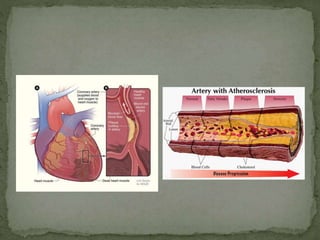
 Atherosclerosis
 Arteries filled with cholesterol
 Coronary artery disease
 Damage or disease in the heart’s major blood vessels.
 Stroke
 Damage to the brain from interruption of its blood supply
 High blood pressure
 A condition in which the force of the blood against the artery walls
is too high.
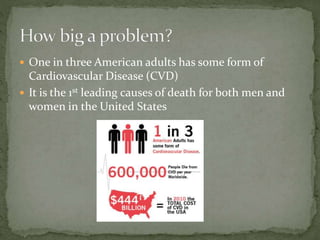
 One in three American adults has some form of
Cardiovascular Disease (CVD)
 It is the 1st leading causes of death for both men and
women in the United States
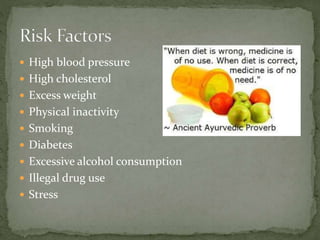
 High blood pressure
 High cholesterol
 Excess weight
 Physical inactivity
 Smoking
 Diabetes
 Excessive alcohol consumption
 Illegal drug use
 Stress
 People who live lifestyles in line with those on the
previous slide
 A history of CVD in your family
 Elderly
 Certain Races
 Hispanic
 African American
 American Indian
 Polynesian
 Healthy diet
 Exercise
 DO NOT SMOKE!!
 No drug or alcohol use
 Cancer is the general name for a group of more than
100 diseases. Although there are many kinds of cancer,
all cancers start because abnormal cells grow out
of control. Untreated cancers can cause serious illness
and death.
 More than one million people in the United States get
cancer each year.
 Cancer is a leading cause of death worldwide,
accounting for 7.6 million deaths (around 13% of all
deaths) in 2008 (1).
 Lung, stomach, liver, colon and breast cancer cause the
most cancer deaths each year.
 The most frequent types of cancer differ between men
(prostate) and women (breast cancer).
 Lung cancer is the #1 killer in both men and women
with regards to cancer deaths.
 About 30% of cancer deaths are due to the five leading
behavioral and dietary risks:
 High body mass index
 Low fruit and vegetable intake
 Lack of physical activity
 Tobacco use
 Alcohol use.
 Cancer cells often travel to other parts of the body
where they begin to grow and form new tumors.
 Over time, the tumors replace normal tissue.
 The process of cancer spreading is called metastasis.
 Half of all men and one-third of all women in the US
will develop cancer during their lifetimes.
 Healthy lifestyle
 GET TESTED!!!
 Early detection is key
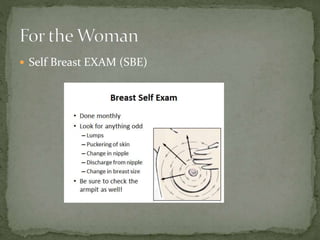
 Self Breast EXAM (SBE)
 Testicular Cancer Self Exam
 Diseases of the airways and other structures of the
lung.
 Some of the most common are:
 Asthma
 Chronic obstructive pulmonary disease
 Pulmonary hypertension.
 The more familiar terms 'chronic bronchitis' and
‘emphysema' are no longer used, but are now included
within the COPD diagnosis.
 The most common symptoms of COPD are
breathlessness, or a 'need for air', excessive sputum
production, and a chronic cough
 Tobacco smoking
 Indoor air pollution (such as biomass fuel used for
cooking and heating)
 Outdoor air pollution
 Occupational dusts and chemicals (vapors, irritants,
and fumes)
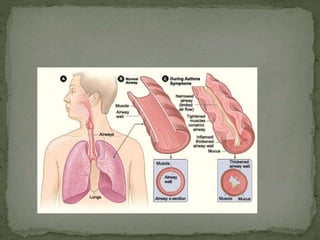
 Asthma is a chronic (long-term) lung disease that
inflames and narrows the airways.
 Asthma affects people of all ages, but it most often
starts during childhood.
 Asthma has no cure. Even when you feel fine, you still
have the disease and it can flare up at any time.
 Coughing
 Wheezing
 Chest tightness
 Shortness of breath
 If you have asthma, you’ll need long-term care.
Successful asthma treatment requires that you take an
active role in your care and follow your asthma action
plan.
 Diabetes is a group of diseases characterized by high
blood glucose levels that result from defects in the
body's ability to produce and/or use insulin.
 Type I – body DOES NOT produce insulin
 Injections
 Type II – Most common form. Hyperglycemia.
 Get it from lifestyle choices
 Gestational Diabetes - During pregnancy – usually
around the 24th week – many women develop
gestational diabetes.
 This does not mean you have it or that your child will
have it. BUT YOU MUST LISTEN TO YOUR DOCTOR!
 About 1 in 5
 Urinating often
 Feeling very thirsty
 Feeling hungry, even after you have eaten
 Fatigue
 You can prevent or delay the onset of type 2 diabetes
through a healthy lifestyle
 Change your diet, increase your level of physical
activity, maintain a healthy weight...with these positive
steps, you can stay healthier longer and reduce your
risk of diabetes.

Non communicable disease

  • 2.
     Non-communicable diseases(NCDs), also known as chronic diseases, are not passed from person to person.  They are of long duration and generally slow progression.  Chronic = long term
  • 3.
     Non-communicable diseases(NCDs) kill more than 36 million people each year.  Nearly 80% of NCD deaths - 29 million - occur in low- and middle-income countries.  They share four risk factors: tobacco use, physical inactivity, the harmful use of alcohol and unhealthy diets.
  • 4.
     The fourmain types of non-communicable diseases are:  Cardiovascular diseases (like heart attacks and stroke)  Cancers  Chronic respiratory diseases (such as chronic obstructed pulmonary disease and asthma)  Diabetes (Type I, II, Gestational)
  • 5.
     Heart conditionsthat include diseased vessels, structural problems, and blood clots.  Atherosclerosis  Arteries filled with cholesterol  Coronary artery disease  Damage or disease in the heart’s major blood vessels.  Stroke  Damage to the brain from interruption of its blood supply  High blood pressure  A condition in which the force of the blood against the artery walls is too high.
  • 7.
     One inthree American adults has some form of Cardiovascular Disease (CVD)  It is the 1st leading causes of death for both men and women in the United States
  • 8.
     High bloodpressure  High cholesterol  Excess weight  Physical inactivity  Smoking  Diabetes  Excessive alcohol consumption  Illegal drug use  Stress
  • 9.
     People wholive lifestyles in line with those on the previous slide  A history of CVD in your family  Elderly  Certain Races  Hispanic  African American  American Indian  Polynesian
  • 10.
     Healthy diet Exercise  DO NOT SMOKE!!  No drug or alcohol use
  • 11.
     Cancer isthe general name for a group of more than 100 diseases. Although there are many kinds of cancer, all cancers start because abnormal cells grow out of control. Untreated cancers can cause serious illness and death.  More than one million people in the United States get cancer each year.
  • 12.
     Cancer isa leading cause of death worldwide, accounting for 7.6 million deaths (around 13% of all deaths) in 2008 (1).  Lung, stomach, liver, colon and breast cancer cause the most cancer deaths each year.  The most frequent types of cancer differ between men (prostate) and women (breast cancer).  Lung cancer is the #1 killer in both men and women with regards to cancer deaths.
  • 13.
     About 30%of cancer deaths are due to the five leading behavioral and dietary risks:  High body mass index  Low fruit and vegetable intake  Lack of physical activity  Tobacco use  Alcohol use.
  • 14.
     Cancer cellsoften travel to other parts of the body where they begin to grow and form new tumors.  Over time, the tumors replace normal tissue.  The process of cancer spreading is called metastasis.
  • 15.
     Half ofall men and one-third of all women in the US will develop cancer during their lifetimes.
  • 16.
     Healthy lifestyle GET TESTED!!!  Early detection is key
  • 17.
     Self BreastEXAM (SBE)
  • 18.
  • 19.
     Diseases ofthe airways and other structures of the lung.  Some of the most common are:  Asthma  Chronic obstructive pulmonary disease  Pulmonary hypertension.
  • 20.
     The morefamiliar terms 'chronic bronchitis' and ‘emphysema' are no longer used, but are now included within the COPD diagnosis.  The most common symptoms of COPD are breathlessness, or a 'need for air', excessive sputum production, and a chronic cough
  • 21.
     Tobacco smoking Indoor air pollution (such as biomass fuel used for cooking and heating)  Outdoor air pollution  Occupational dusts and chemicals (vapors, irritants, and fumes)
  • 22.
     Asthma isa chronic (long-term) lung disease that inflames and narrows the airways.  Asthma affects people of all ages, but it most often starts during childhood.
  • 24.
     Asthma hasno cure. Even when you feel fine, you still have the disease and it can flare up at any time.
  • 25.
     Coughing  Wheezing Chest tightness  Shortness of breath
  • 26.
     If youhave asthma, you’ll need long-term care. Successful asthma treatment requires that you take an active role in your care and follow your asthma action plan.
  • 27.
     Diabetes isa group of diseases characterized by high blood glucose levels that result from defects in the body's ability to produce and/or use insulin.
  • 28.
     Type I– body DOES NOT produce insulin  Injections  Type II – Most common form. Hyperglycemia.  Get it from lifestyle choices  Gestational Diabetes - During pregnancy – usually around the 24th week – many women develop gestational diabetes.  This does not mean you have it or that your child will have it. BUT YOU MUST LISTEN TO YOUR DOCTOR!  About 1 in 5
  • 29.
     Urinating often Feeling very thirsty  Feeling hungry, even after you have eaten  Fatigue
  • 30.
     You canprevent or delay the onset of type 2 diabetes through a healthy lifestyle  Change your diet, increase your level of physical activity, maintain a healthy weight...with these positive steps, you can stay healthier longer and reduce your risk of diabetes.