Why do we need to
Communicate ?
Needs Of Communication:
 Physical Needs
 Identity Needs
 Social Needs
 Practical Goals
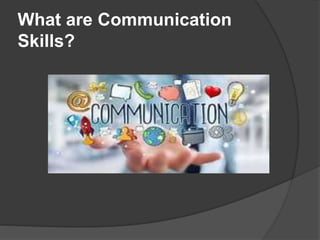
What are Communication
Skills?
Communication Skills:
Communication skills are the abilities, you use
when giving and receiving different kinds of
information in an effective and efficient
manner.
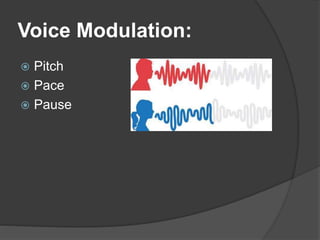
Voice Modulation:
 Pitch
 Pace
 Pause
Types of Communication
Skills
There are two types of Communication:
 Verbal
 Non-Verbal
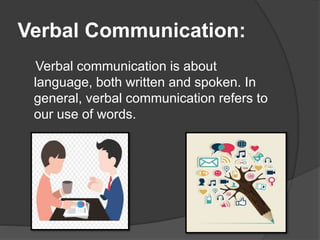
Verbal Communication:
Verbal communication is about
language, both written and spoken. In
general, verbal communication refers to
our use of words.
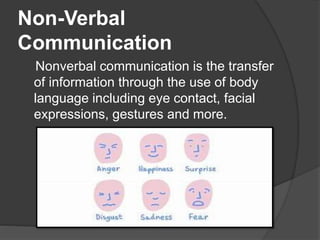
Non-Verbal
Communication
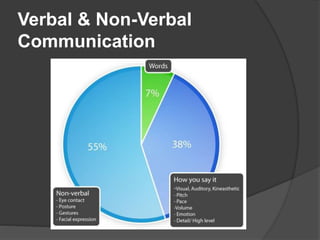
Nonverbal communication is the transfer
of information through the use of body
language including eye contact, facial
expressions, gestures and more.
Activity :
Draw & Guess
Verbal & Non-Verbal
Communication
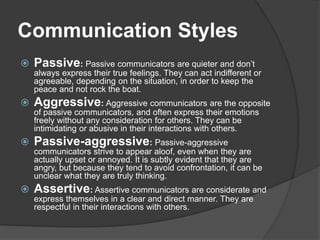
Communication Styles
 Passive: Passive communicators are quieter and don’t
always express their true feelings. They can act indifferent or
agreeable, depending on the situation, in order to keep the
peace and not rock the boat.
 Aggressive: Aggressive communicators are the opposite
of passive communicators, and often express their emotions
freely without any consideration for others. They can be
intimidating or abusive in their interactions with others.
 Passive-aggressive: Passive-aggressive
communicators strive to appear aloof, even when they are
actually upset or annoyed. It is subtly evident that they are
angry, but because they tend to avoid confrontation, it can be
unclear what they are truly thinking.
 Assertive: Assertive communicators are considerate and
express themselves in a clear and direct manner. They are
respectful in their interactions with others.
Active Listening
is designed to encourage
respect and understanding. You are
gaining information and perspective. You
add nothing by attacking the speaker or
otherwise putting her down. Be candid,
open and honest in your response.
Assert your opinions respectfully. Treat
the other person in a way that you think
they would want to be treated.
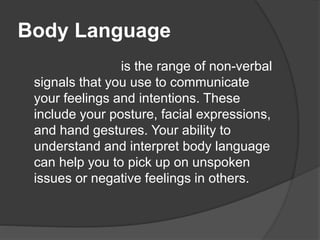
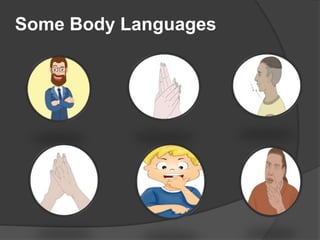
Body Language
is the range of non-verbal
signals that you use to communicate
your feelings and intentions. These
include your posture, facial expressions,
and hand gestures. Your ability to
understand and interpret body language
can help you to pick up on unspoken
issues or negative feelings in others.
Some Body Languages
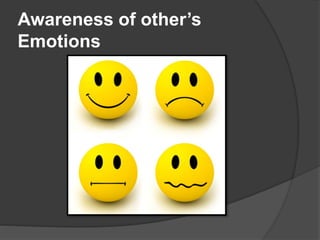
Awareness of other’s
Emotions
Encouraging Talk
Silence is a good approach to
use to encourage a person to talk more
when your verbal attempts are not
working. When you are skillful, silence
can convey concern and interest on your
part. It can encourage the person you're
talking with to talk, to go beyond yes or
no answers, and it can also keep you
from having to take sides in a conflict.
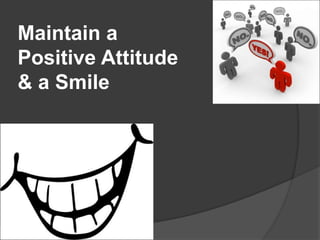
Maintain a
Positive Attitude
& a Smile
Points to be considered
during Communication
 Empathize
 Respect
 Limitations
Communication Skills:
 Active Listening
 Body Language
 Awareness of Communication Styles
 Awareness of other’s Emotions
 Encouraging Talk
 Maintain Positive Attitude & a Smile
 Confidential Talk
 Empathize/Respect/Limitations
Do’s & Don’t s
 Be Specific
 Modulate your voice levels
 Don’t Interrupt
 Listen to others
 Make Eye Contact
 Be Courteous
 Give time to speak
 Talk Appropriate
 Don’t go mad over Criticism
Communication skills PowerPoint presentation

Communication skills PowerPoint presentation

  • 2.
    Why do weneed to Communicate ?
  • 3.
    Needs Of Communication: Physical Needs  Identity Needs  Social Needs  Practical Goals
  • 4.
  • 5.
    Communication Skills: Communication skillsare the abilities, you use when giving and receiving different kinds of information in an effective and efficient manner.
  • 6.
  • 7.
    Types of Communication Skills Thereare two types of Communication:  Verbal  Non-Verbal
  • 8.
    Verbal Communication: Verbal communicationis about language, both written and spoken. In general, verbal communication refers to our use of words.
  • 9.
    Non-Verbal Communication Nonverbal communication isthe transfer of information through the use of body language including eye contact, facial expressions, gestures and more.
  • 10.
  • 11.
  • 12.
    Communication Styles  Passive:Passive communicators are quieter and don’t always express their true feelings. They can act indifferent or agreeable, depending on the situation, in order to keep the peace and not rock the boat.  Aggressive: Aggressive communicators are the opposite of passive communicators, and often express their emotions freely without any consideration for others. They can be intimidating or abusive in their interactions with others.  Passive-aggressive: Passive-aggressive communicators strive to appear aloof, even when they are actually upset or annoyed. It is subtly evident that they are angry, but because they tend to avoid confrontation, it can be unclear what they are truly thinking.  Assertive: Assertive communicators are considerate and express themselves in a clear and direct manner. They are respectful in their interactions with others.
  • 14.
    Active Listening is designedto encourage respect and understanding. You are gaining information and perspective. You add nothing by attacking the speaker or otherwise putting her down. Be candid, open and honest in your response. Assert your opinions respectfully. Treat the other person in a way that you think they would want to be treated.
  • 15.
    Body Language is therange of non-verbal signals that you use to communicate your feelings and intentions. These include your posture, facial expressions, and hand gestures. Your ability to understand and interpret body language can help you to pick up on unspoken issues or negative feelings in others.
  • 16.
  • 17.
  • 18.
    Encouraging Talk Silence isa good approach to use to encourage a person to talk more when your verbal attempts are not working. When you are skillful, silence can convey concern and interest on your part. It can encourage the person you're talking with to talk, to go beyond yes or no answers, and it can also keep you from having to take sides in a conflict.
  • 19.
  • 21.
    Points to beconsidered during Communication  Empathize  Respect  Limitations
  • 22.
    Communication Skills:  ActiveListening  Body Language  Awareness of Communication Styles  Awareness of other’s Emotions  Encouraging Talk  Maintain Positive Attitude & a Smile  Confidential Talk  Empathize/Respect/Limitations
  • 23.
    Do’s & Don’ts  Be Specific  Modulate your voice levels  Don’t Interrupt  Listen to others  Make Eye Contact  Be Courteous  Give time to speak  Talk Appropriate  Don’t go mad over Criticism