This document discusses self-esteem and its importance. It defines self-esteem as having a good opinion of oneself based on understanding personal strengths. Self-esteem is important because it gives one confidence, makes one happier, and helps one achieve more by dealing with setbacks positively. True self-esteem differs from conceit because it involves a balanced view of one's worth rather than an exaggerated opinion. The document provides tips for developing self-esteem such as thinking positively, being realistic, coping with criticism, taking risks appropriately, and disagreeing when others try to pressure or put one down.
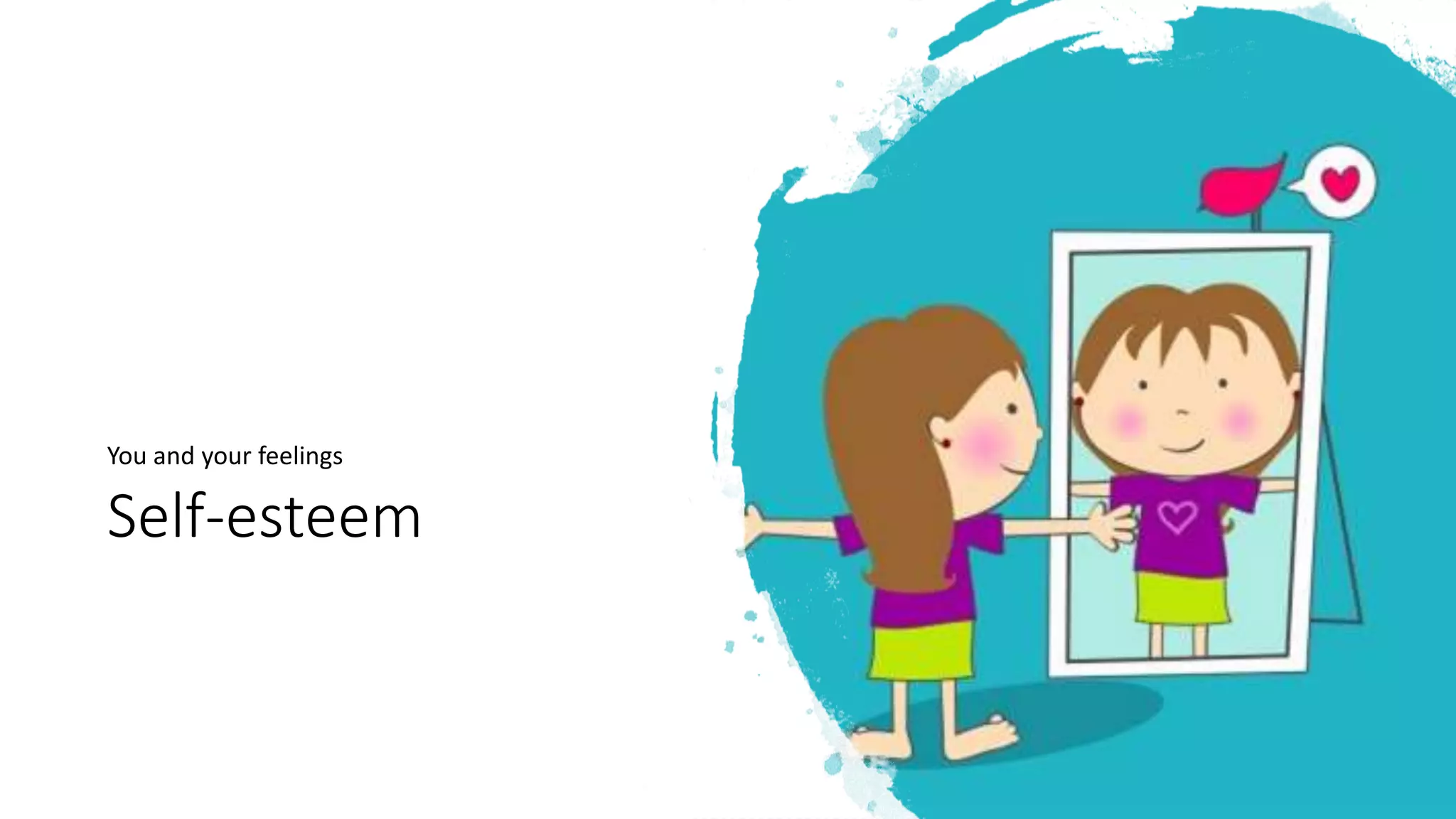
What is self-esteem?
Itmeans having a good
opinion of yourself.
It is based on understanding
what your strengths are.
It is valuing yourself as a
person.
3.
Why is self-esteem
important?
•It enables you to have the confidence to be
yourself.
• You will say and do what you think is right rather
than say or do things to try to impress other
people.
• It will make you happier.
• You won’t let any people make you feel badly
about yourself.
• Because you believe in yourself, you’ll respect
yourself and other people will respect you too.
4.
Why is self-esteemimportant?
• You won’t fall into the trap of blaming
yourself for everything that goes wrong in
your life.
• It will give you the confidence to try new
things or experiences.
• It will also help you to achieve more,
because you will have a positive attitude
that makes it easier to deal with setbacks.
Is having self-esteemthe same as being
conceited?
No. A conceited person has an
exaggerated opinion of themselves.
A person with self-esteem has a
balanced view of their own worth,
valuing their good point, but
understanding that, like everyone
else, they are not perfect.
8.
Know yourself
Make alist of what your strong points are. You can feel proud of what you’re good at.
GOOD POINTS NOT-SO-GOOD POINTS
Making friends Tidying room
9.
Feeling Confident
• Somepeople seemed to be
born confident.
• They can enter a crowded
room, immediately feel at
home and settle down and
talk to anybody.
• Confidence comes from
believing in yourself and
feeling happy.
• Once you're confident about
what you want out of life,
you can go for it.
10.
Feeling Confident
When you'reconfident about yourself –
how you look and how you feel – many
other problems disappear.
Perhaps you have to read some of your
work out in front of the whole class . If
you feel confident in yourself , you'll be
less preoccupied with things that don't
matter – like how you look and where
you're sitting – and more concerned with
making the reading interesting for the rest
of the class.
Think
positively
• look atthings in a positive rather
than a negative way.
• For example, if you do badly in a
test, don't think: “I'm hopeless.
I'm never going to get a good
mark. “ Instead, think about what
you can do to make sure you get
a good mark next time, such as
asking for extra help with the
things you don't understand.
13.
Stand up foryourself
Make up your own mind about what you believe and
stick to it.
It's harder to say no then to say yes, but don't let
anyone pressurize you into doing things you don't
believe are right.
Don't feel guilty or that you're letting them down.
You'll respect yourself far more for sticking up for your
beliefs than if you give in and do something just to
please others, and other people will respect you more,
too.
14.
Be realistic
• Berealistic about what you
can achieve.
• Don't set yourself on
achievable targets.
• If you're really determined to
do something, then go for it.
• Adopt a step-by-step
approach, setting yourself a
series of short-term goals
and dates by which to
achieve each one.
15.
Cope with criticismคำวิจำรณ์
• If you're criticized, it can damage your self esteem.
• Consider carefully whether the criticism is fair.
• For example, if you let the rest of the cast down by not
turning up for an important play rehearsal, then accept
that it was your fault.
• Apologize and reassure everyone that you won't let it
happen again.
• But if you are being unfairly criticized , recognize what
is going on and either ignore it or take steps to ensure
that it doesn't continue.
16.
Take risks
• Ifyou're not prepared to take risks, then you
cut down on the chances of having new
experiences and finding out what you're
capable of doing and achieving.
• Of course, that doesn't mean doing things
that are dangerous and reckless.
• But avoiding taking any risks because you're
afraid of making a fool of yourself won't do
anything for your self-confidence.
• It's usually best to have a go.
• If it doesn't work out, you can always tell
yourself that at least you tried.
17.
Agree or Disagree
Whatother people think of you and your behavior is more important than what you
think yourself.
18.
Agree or Disagree
It'snot being conceited to feel proud of yourself and your achievements.
19.
Agree or Disagree
It'snot what you look like that matters, it's what kind of person you are and how you
feel about yourself.
20.
Agree or Disagree
Ifyou're not confident about doing something, it's better to avoid doing it rather than
risk making a fool of yourself.
21.
Agree or Disagree
Peoplewho keep putting you down only do so to try to make themselves feel better.
22.
Agree or Disagree
Imitatingpeople by doing whatever is regarded as cool and trendy is the best way to
boost your confidence.
23.
Self Profile
What youlove about yourself?
Things that only you can do but others
don’t.