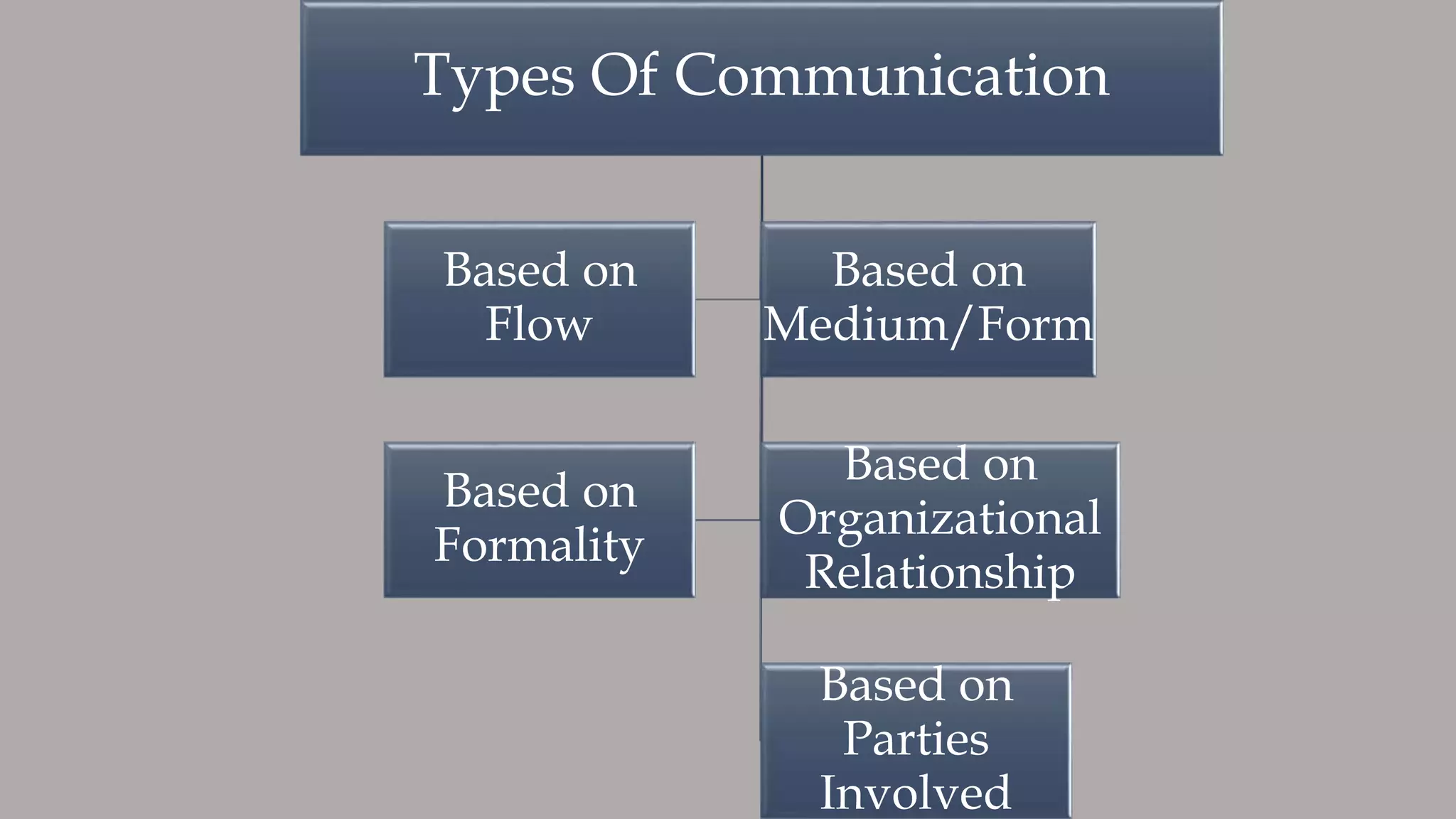

Types Of Communication
Based on
Medium/Form
Based on
Flow
Based on
Organizational
Relationship
Based on
Formality
Based on
Parties
Involved
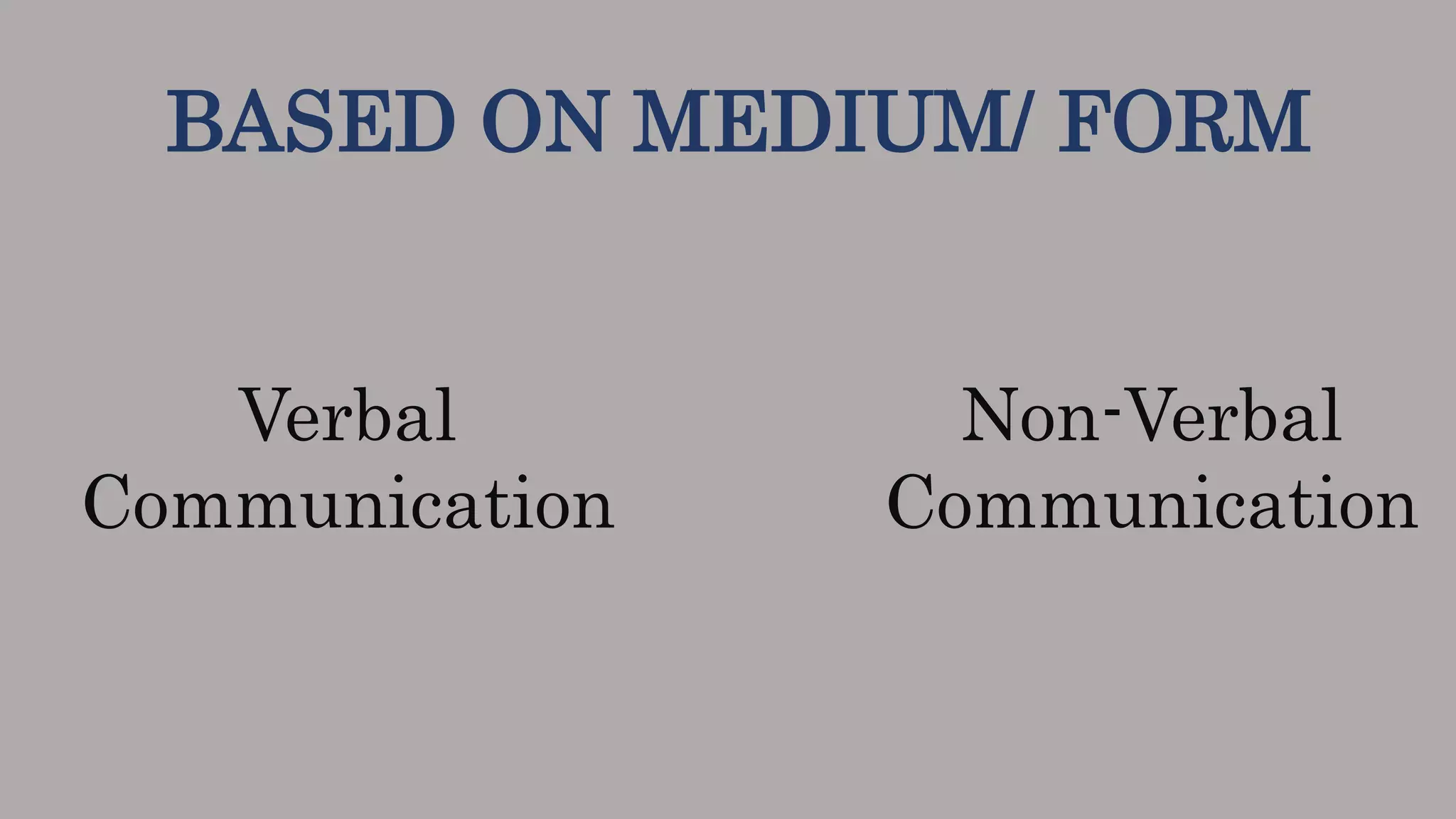
BASED ON MEDIUM/ FORM
Verbal
Communication
Non-Verbal
Communication
VERBAL COMMUNICATION
It means communicating with words written or
spoken. The sender gives words to his feelings,
thoughts, ideas and opinions and expresses them
in the form of speeches, discussions,
presentations, and conversations.
TYPES OF VERBAL COMMUNICATION
Oral
Communication
Written
Communication
Oral
Communication
A face-to-face or indirect
interaction between the sender
and the receiver is called
as oral communication. It’s
mainly communication which
makes use of words and
involves speaking and listening
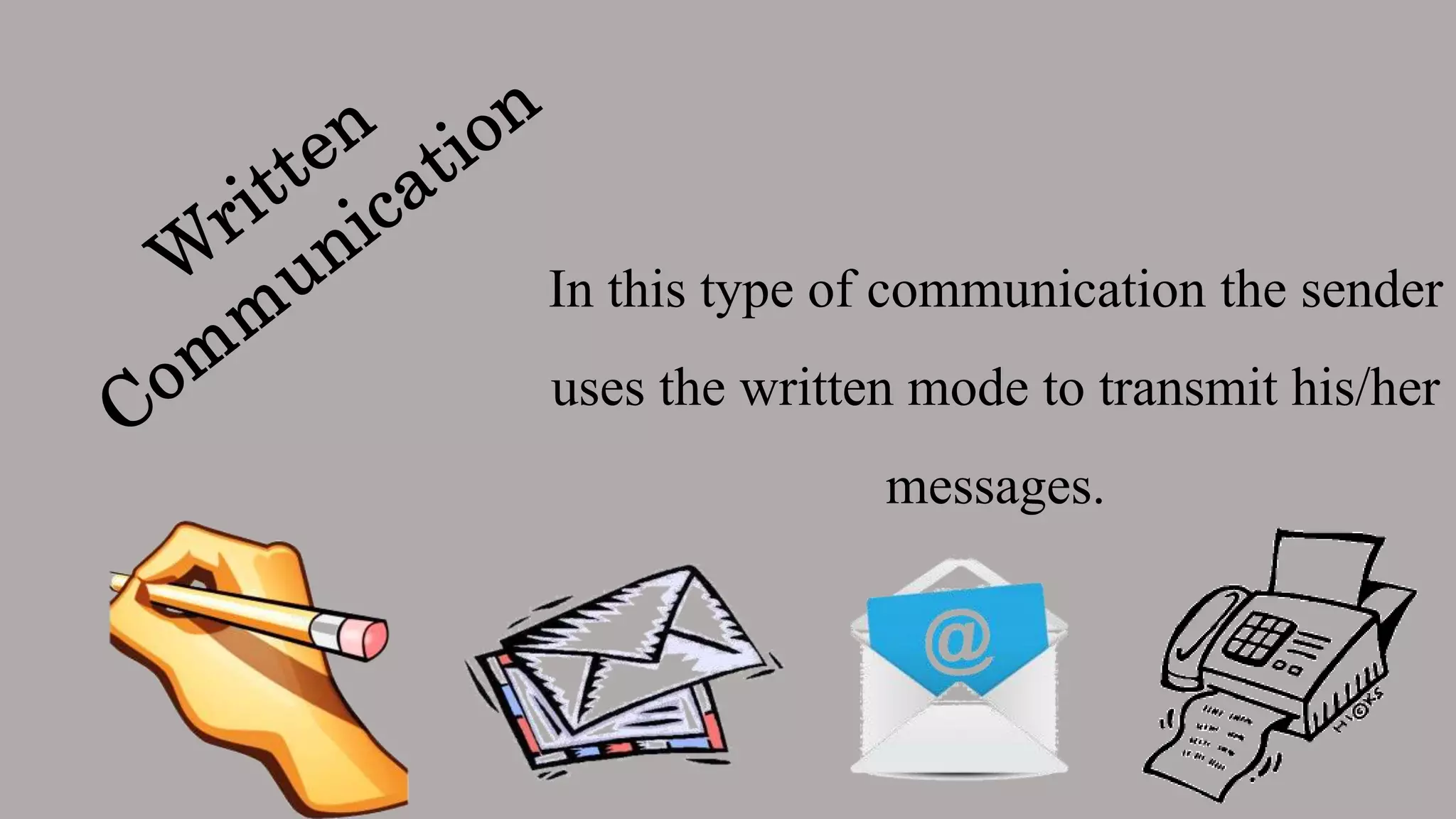
In this type of communication the sender
uses the written mode to transmit his/her
messages.
NON-VERBAL COMMUNICATION
Non-Verbal communication happens when a
sender send a message without using any words.
In this type of communication no particular form
of words are used. Here the process requires non-
verbal cues to be transmitted and received
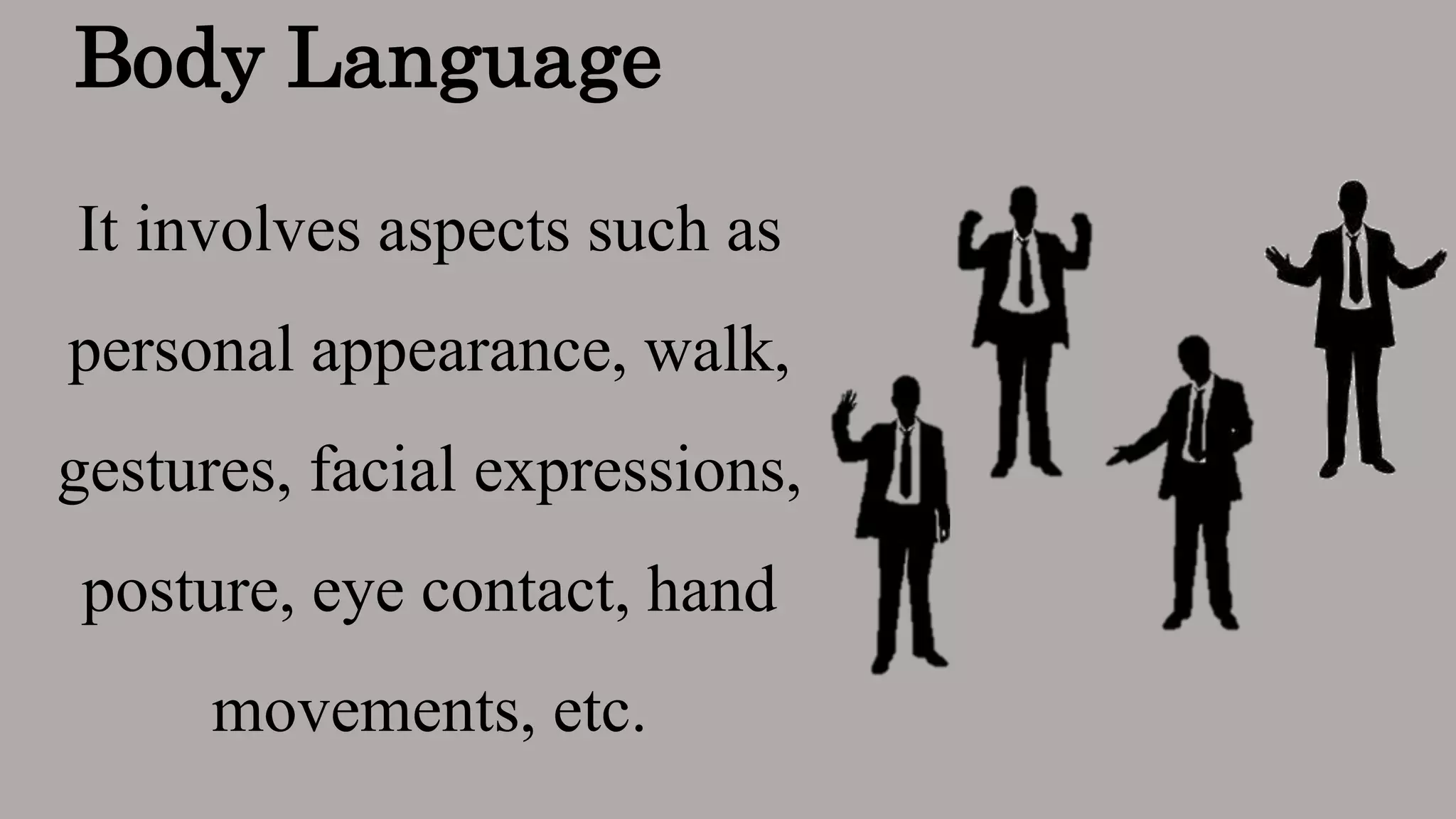
Body Language
It involves aspects such as
personal appearance, walk,
gestures, facial expressions,
posture, eye contact, hand
movements, etc.
Paralinguistic Features
These are the vocal effects we can employ when
we speak. It include person’s voice, volume, pitch,
rate, pauses, articulation, voice modulation, etc.
BASED ON FLOW
Vertical
Communication
Horizontal
Communication
Vertical
Communication
The information flows
either from superior to
subordinates or from
subordinates to supervisor
within an organization
structure.
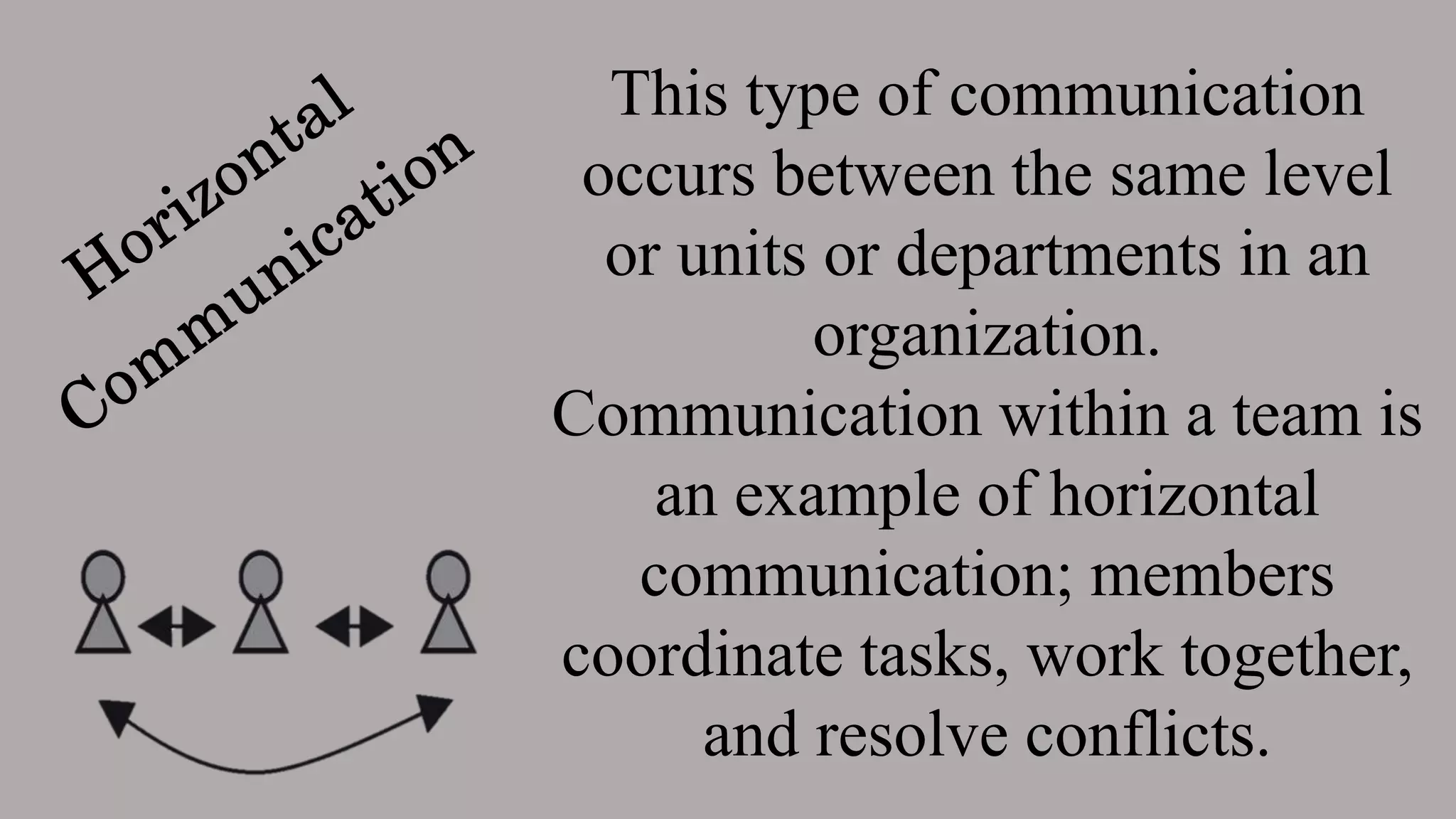
This type of communication
occurs between the same level
or units or departments in an
organization.
Communication within a team is
an example of horizontal
communication; members
coordinate tasks, work together,
and resolve conflicts.
BASED ON FORMALITY
Formal
Communication
Informal
Communication
Formal
Communication
Communication take place
through official channels in
an organization designed by
the management.
Communication occurs
through officially
recognized positions to
ensure a smooth, orderly,
accurate and timely flow of
information.
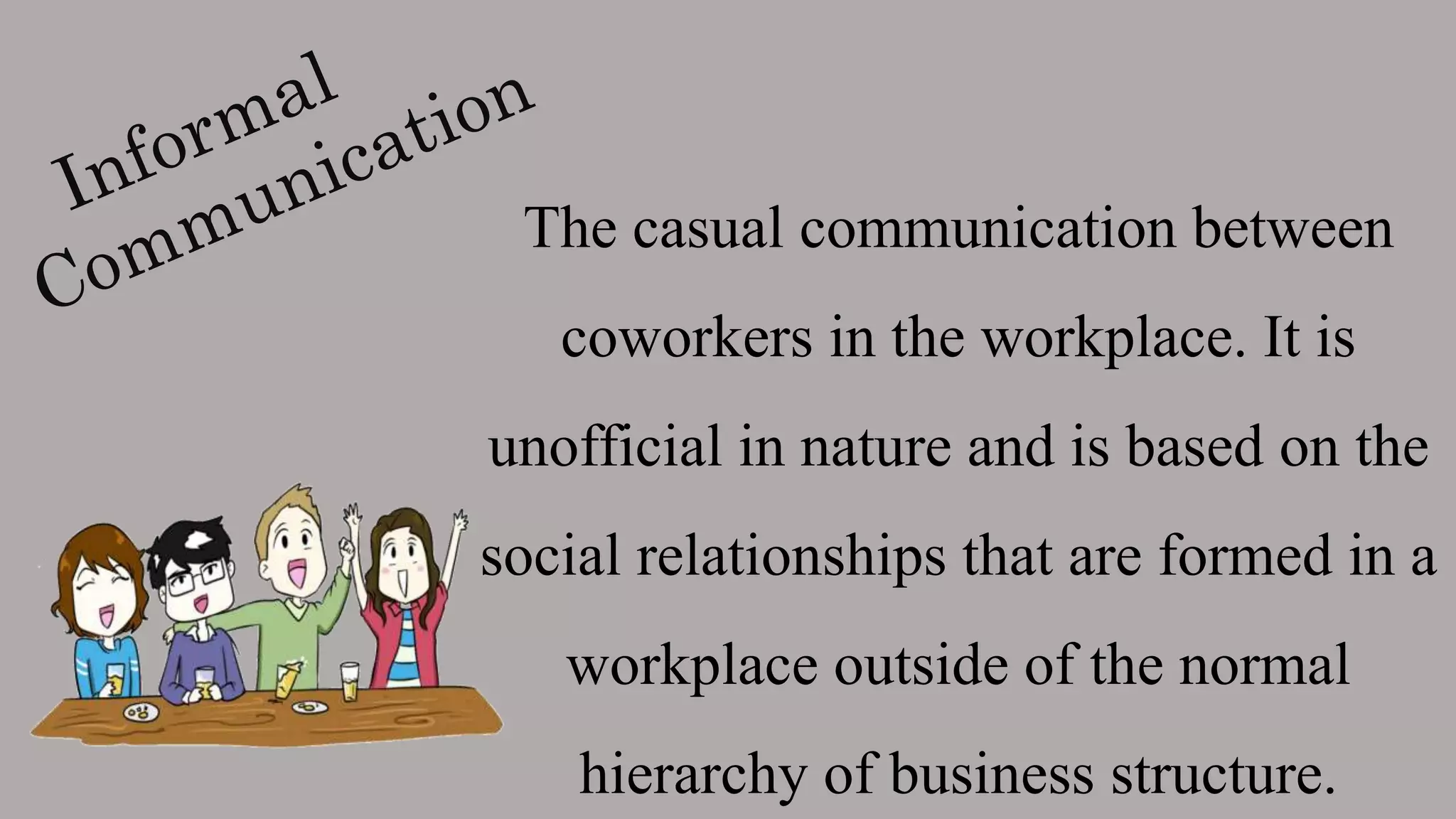
The casual communication between
coworkers in the workplace. It is
unofficial in nature and is based on the
social relationships that are formed in a
workplace outside of the normal
hierarchy of business structure.
BASED ON ORGANISATIONAL
RELATIONSHIP
Internal
Communication
External
Communication
Internal
Communication
It is the communication
process that occurs within an
organisation. The
participants in this type of
communication is the
employees and other staffs
within the organisation.
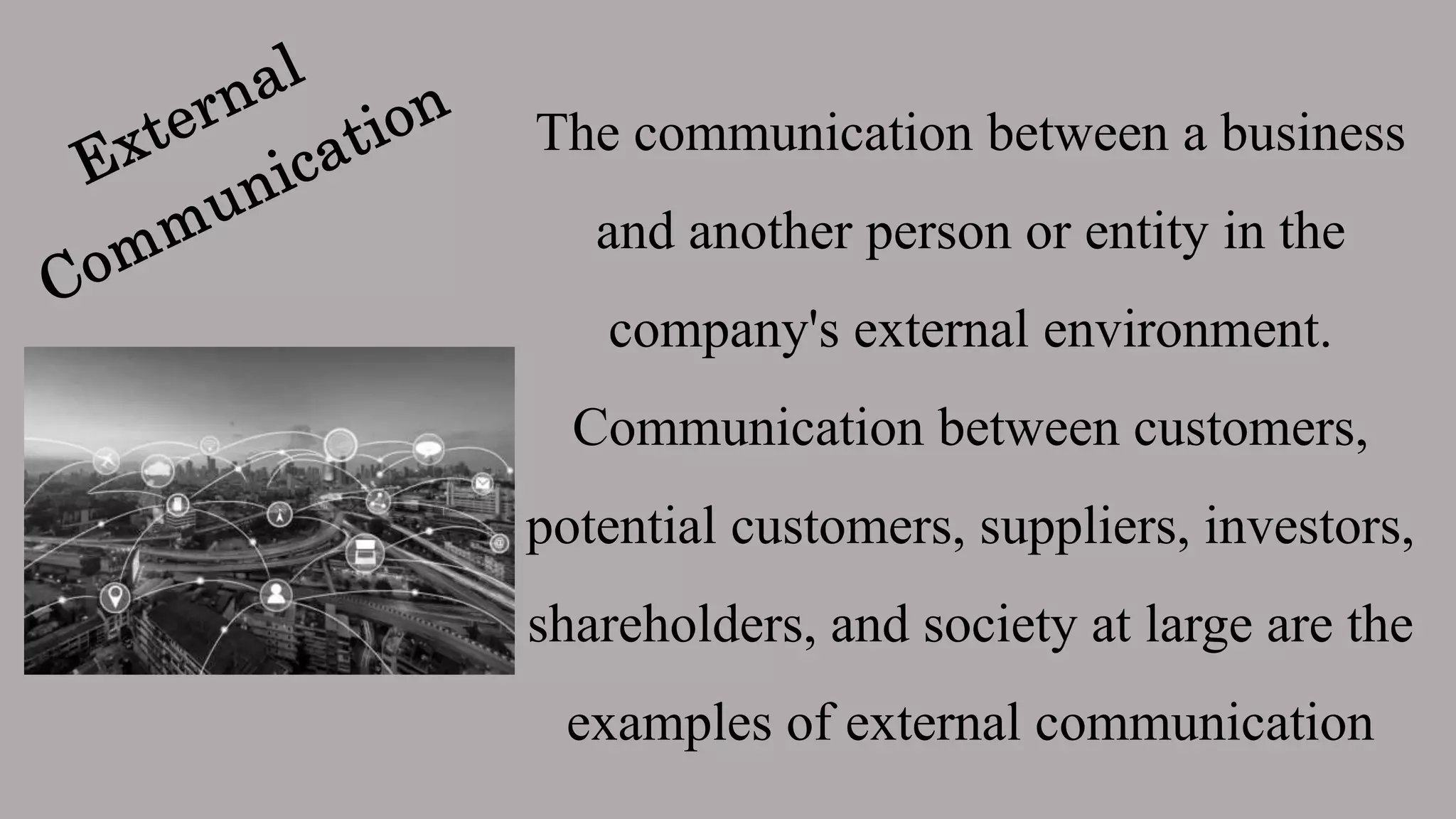
The communication between a business
and another person or entity in the
company's external environment.
Communication between customers,
potential customers, suppliers, investors,
shareholders, and society at large are the
examples of external communication
BASED ON PARTIES INVOLVED
Intrapersonal
Communication
Interpersonal
Communication
Extra personal
Communication
Mass
Communication
Media
Communication
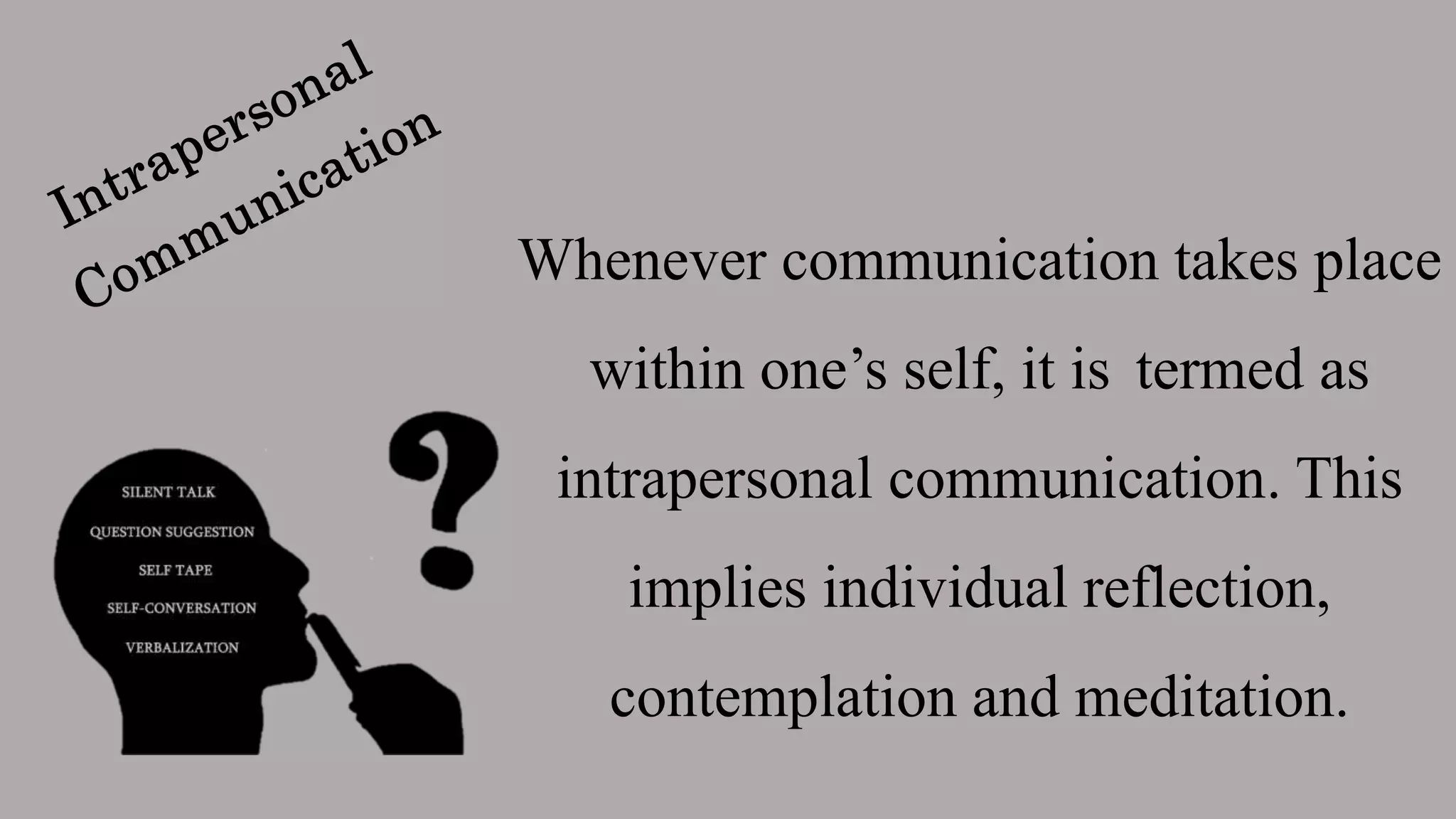
Whenever communication takes place
within one’s self, it is termed as
intrapersonal communication. This
implies individual reflection,
contemplation and meditation.
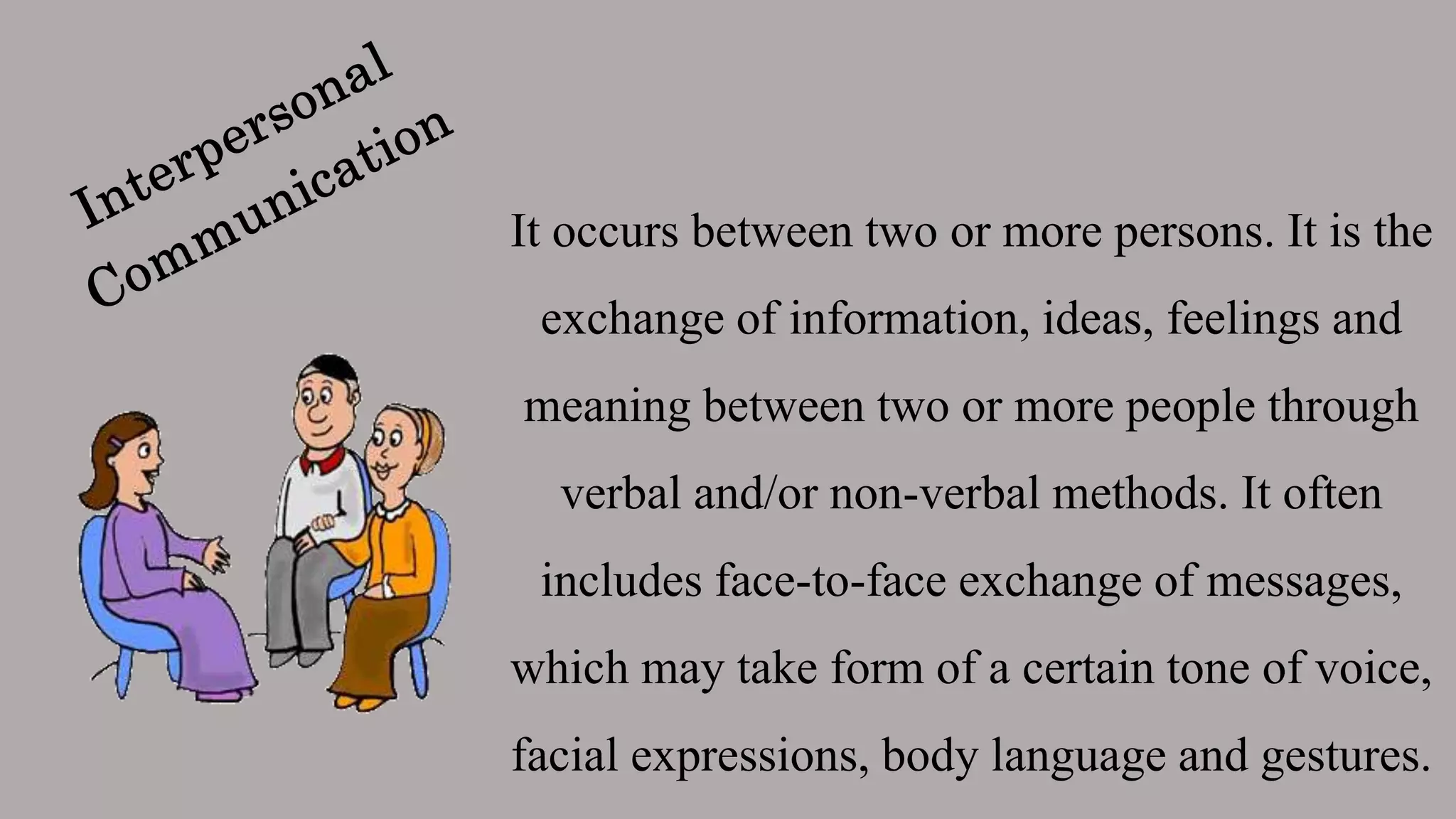
It occurs between two or more persons. It is the
exchange of information, ideas, feelings and
meaning between two or more people through
verbal and/or non-verbal methods. It often
includes face-to-face exchange of messages,
which may take form of a certain tone of voice,
facial expressions, body language and gestures.
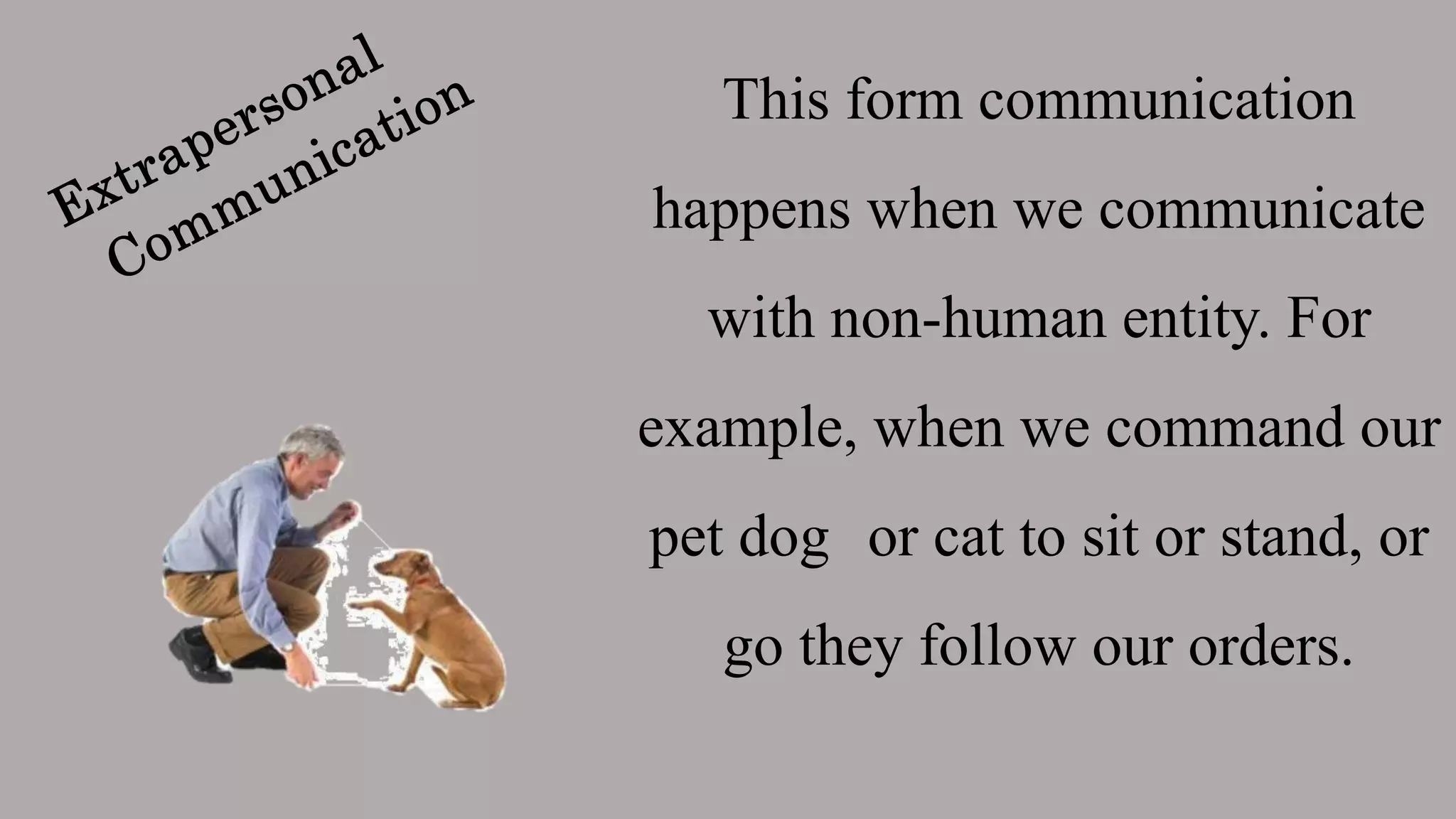
This form communication
happens when we communicate
with non-human entity. For
example, when we command our
pet dog or cat to sit or stand, or
go they follow our orders.
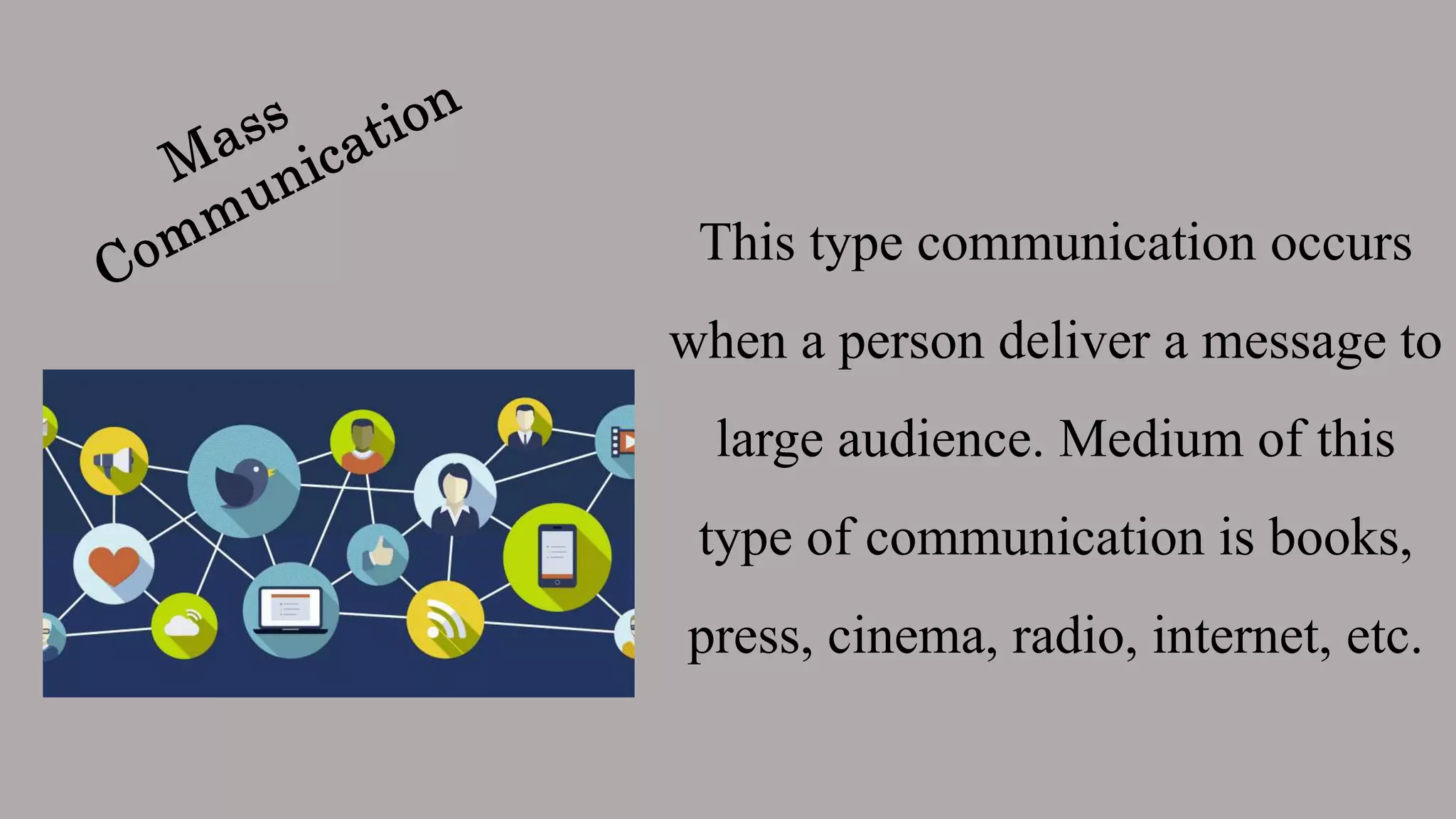
This type communication occurs
when a person deliver a message to
large audience. Medium of this
type of communication is books,
press, cinema, radio, internet, etc.
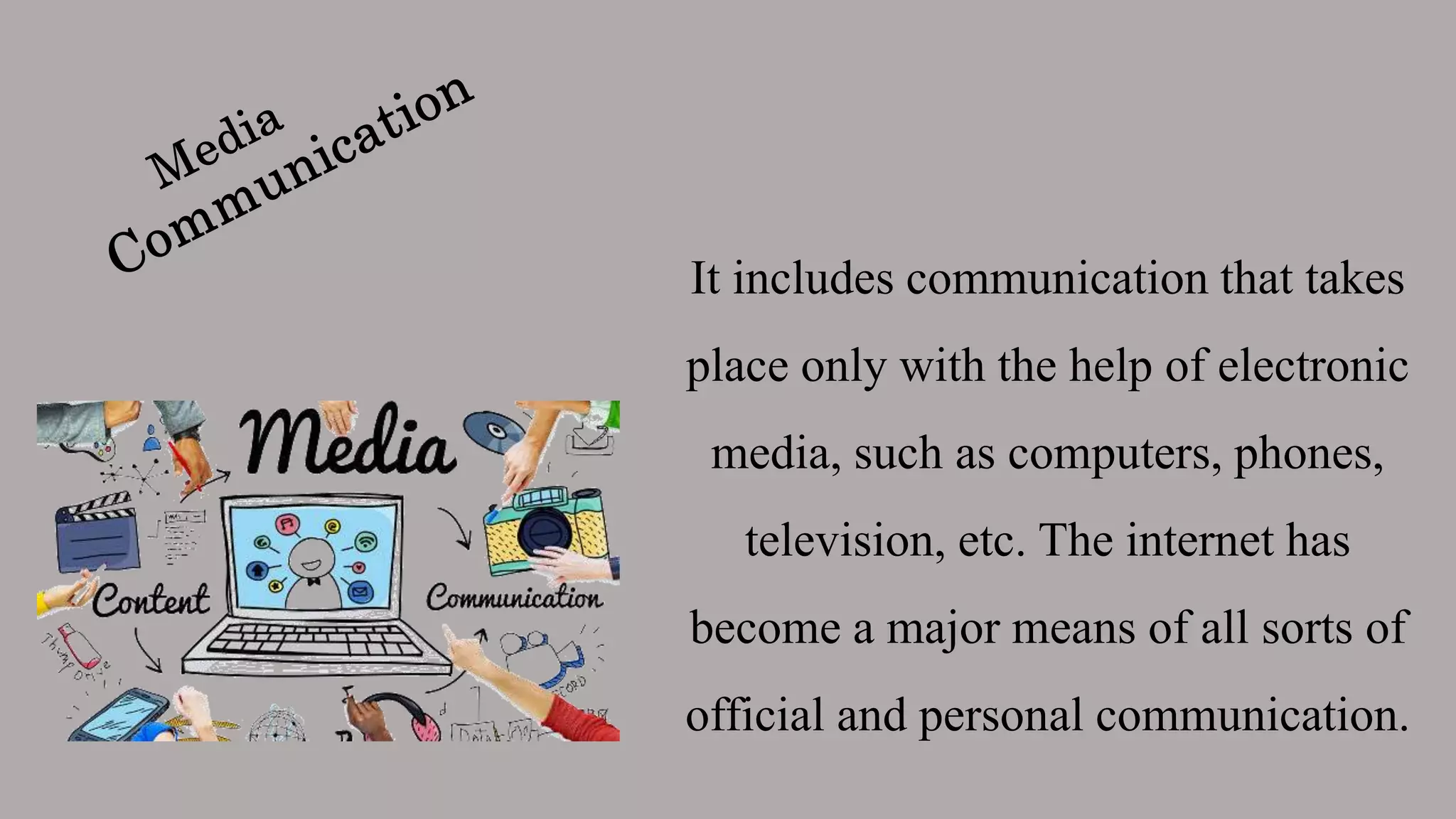
It includes communication that takes
place only with the help of electronic
media, such as computers, phones,
television, etc. The internet has
become a major means of all sorts of
official and personal communication.
BARRIERS OF COMMUNICATION
Verbal
Barriers
Non-verbal
Barriers
Listening
Barriers
Miscellaneous
Barriers
Verbal
Barriers
• Lack of proper planning
• Variation in language
• Selection of a wrong variety of
language
• Different perception of a message
• Badly encoded and wrongly decoded
messages
Non-verbal
Barriers
When verbal and non-verbal
messages clash, receiver’s tend to
trust the non-verbal messages.
Some of the main non-verbal barriers
are no enthusiasm, lack of focus,
emotions, expressions on face, rolling
eyes, avoiding eye contact, etc.
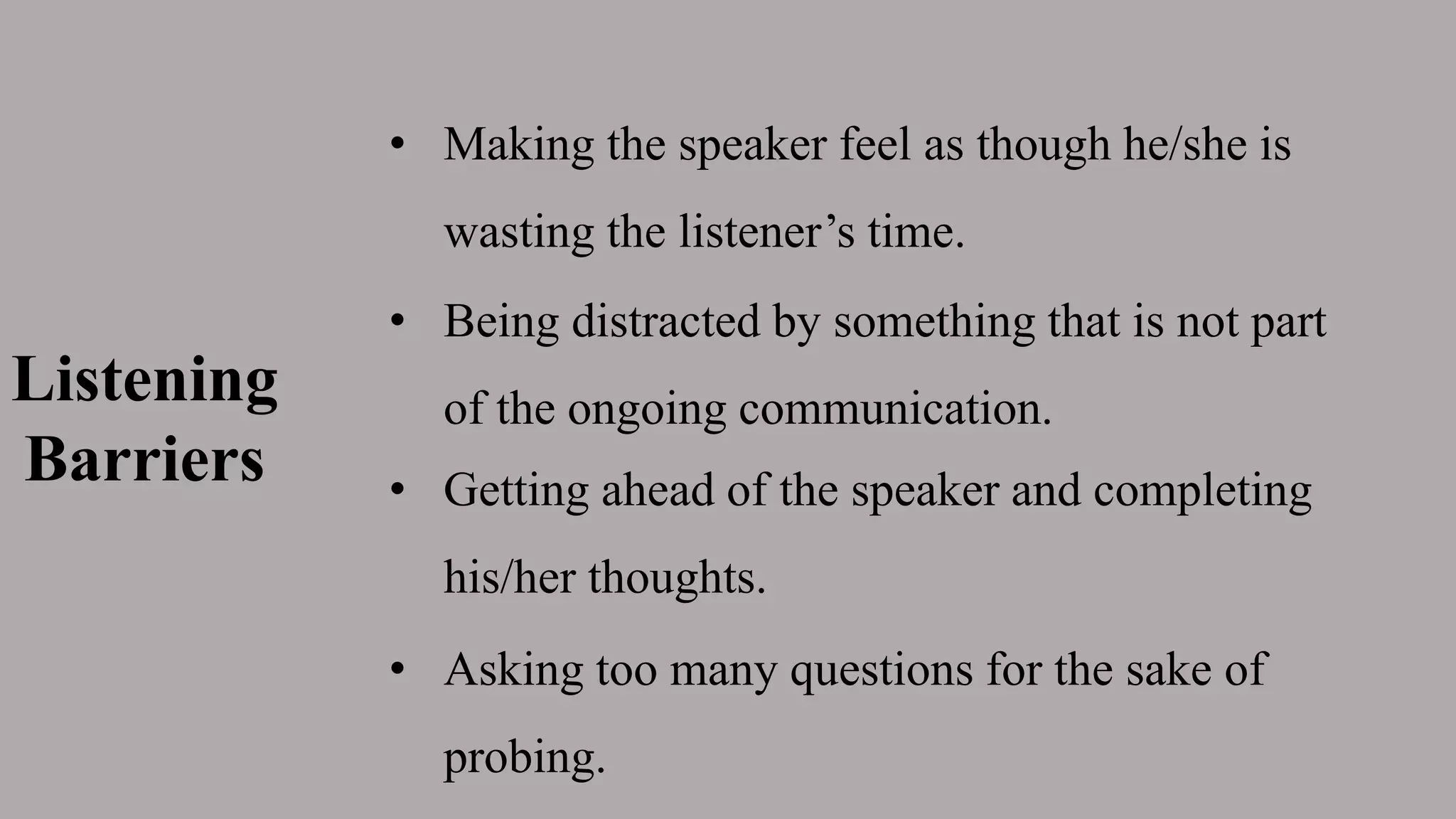
Listening
Barriers
• Making the speaker feel as though he/she is
wasting the listener’s time.
• Being distracted by something that is not part
of the ongoing communication.
• Getting ahead of the speaker and completing
his/her thoughts.
• Asking too many questions for the sake of
probing.
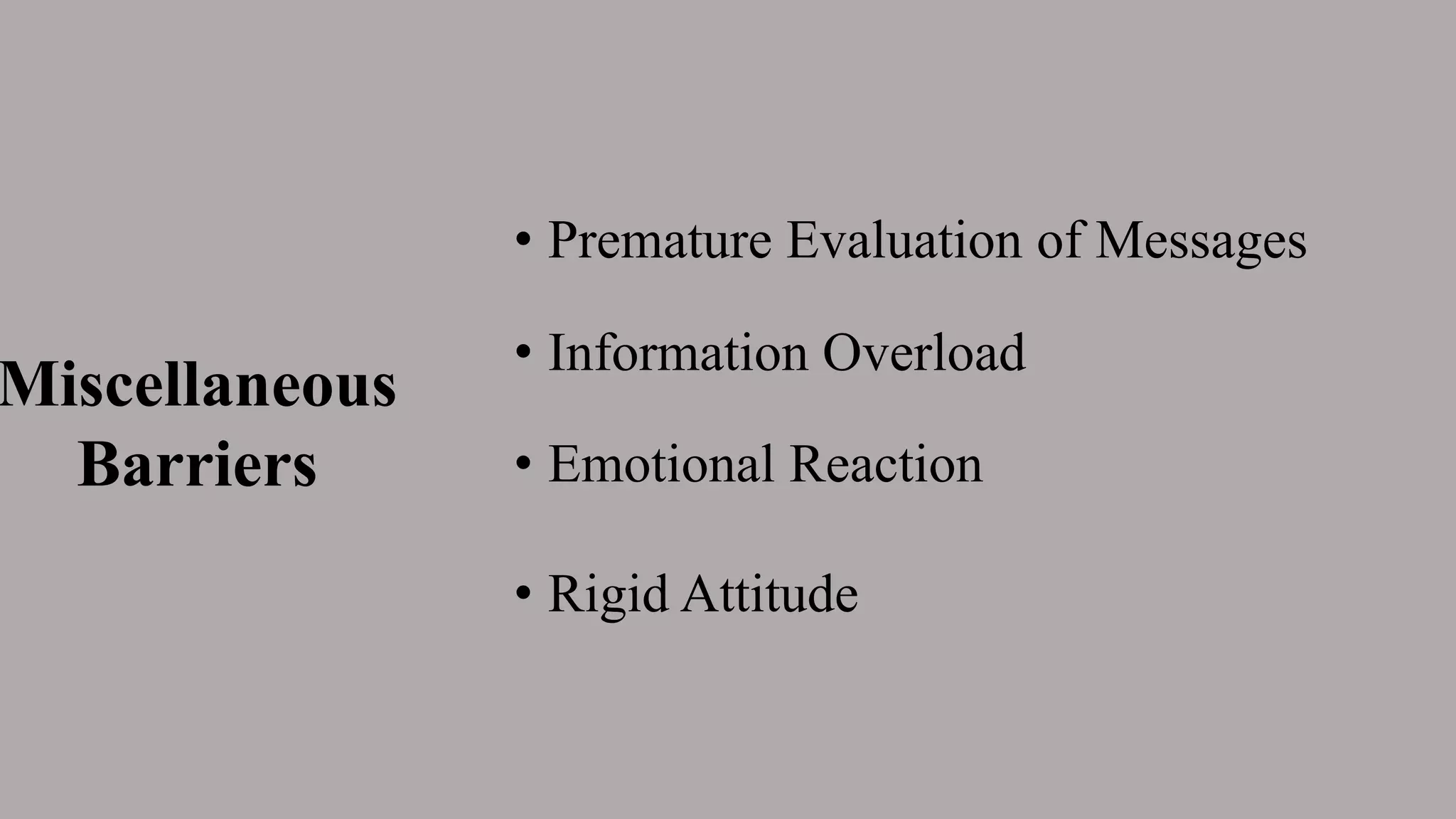
Miscellaneous
Barriers
• Premature Evaluation of Messages
• Information Overload
• Emotional Reaction
• Rigid Attitude
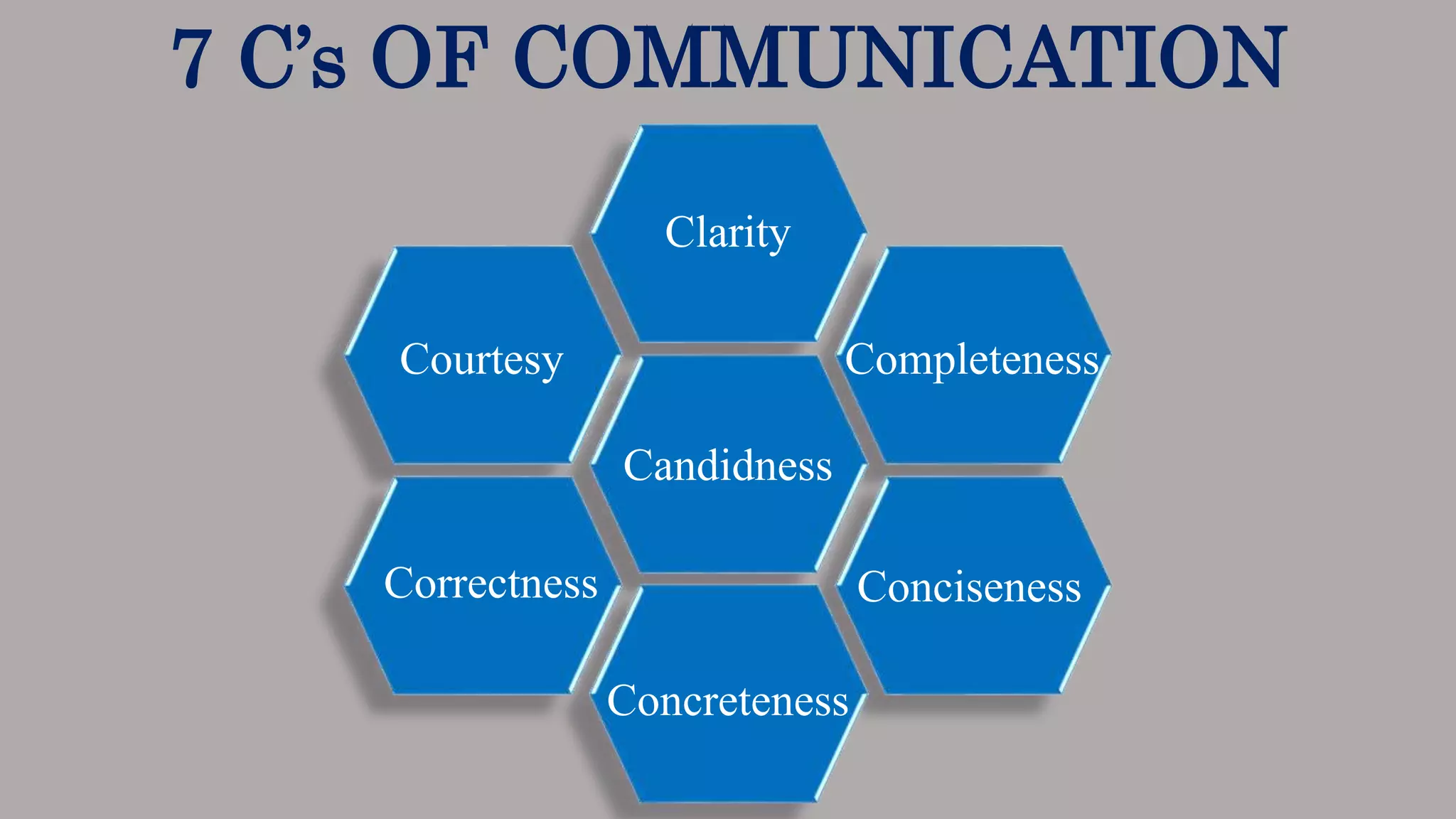
7 C’s OF COMMUNICATION
Courtesy
Clarity
Candidness
Concreteness
Conciseness
Completeness
Correctness
THANK YOU

Communication Part 2 (Types, Barriers and 7 C's of communication)

  • 2.
    Types Of Communication Basedon Medium/Form Based on Flow Based on Organizational Relationship Based on Formality Based on Parties Involved
  • 3.
    BASED ON MEDIUM/FORM Verbal Communication Non-Verbal Communication
  • 4.
    VERBAL COMMUNICATION It meanscommunicating with words written or spoken. The sender gives words to his feelings, thoughts, ideas and opinions and expresses them in the form of speeches, discussions, presentations, and conversations.
  • 5.
    TYPES OF VERBALCOMMUNICATION Oral Communication Written Communication
  • 6.
    Oral Communication A face-to-face orindirect interaction between the sender and the receiver is called as oral communication. It’s mainly communication which makes use of words and involves speaking and listening
  • 7.
    In this typeof communication the sender uses the written mode to transmit his/her messages.
  • 8.
    NON-VERBAL COMMUNICATION Non-Verbal communicationhappens when a sender send a message without using any words. In this type of communication no particular form of words are used. Here the process requires non- verbal cues to be transmitted and received
  • 9.
    Body Language It involvesaspects such as personal appearance, walk, gestures, facial expressions, posture, eye contact, hand movements, etc.
  • 10.
    Paralinguistic Features These arethe vocal effects we can employ when we speak. It include person’s voice, volume, pitch, rate, pauses, articulation, voice modulation, etc.
  • 11.
  • 12.
    Vertical Communication The information flows eitherfrom superior to subordinates or from subordinates to supervisor within an organization structure.
  • 13.
    This type ofcommunication occurs between the same level or units or departments in an organization. Communication within a team is an example of horizontal communication; members coordinate tasks, work together, and resolve conflicts.
  • 14.
  • 15.
    Formal Communication Communication take place throughofficial channels in an organization designed by the management. Communication occurs through officially recognized positions to ensure a smooth, orderly, accurate and timely flow of information.
  • 16.
    The casual communicationbetween coworkers in the workplace. It is unofficial in nature and is based on the social relationships that are formed in a workplace outside of the normal hierarchy of business structure.
  • 17.
  • 18.
    Internal Communication It is thecommunication process that occurs within an organisation. The participants in this type of communication is the employees and other staffs within the organisation.
  • 19.
    The communication betweena business and another person or entity in the company's external environment. Communication between customers, potential customers, suppliers, investors, shareholders, and society at large are the examples of external communication
  • 20.
    BASED ON PARTIESINVOLVED Intrapersonal Communication Interpersonal Communication Extra personal Communication Mass Communication Media Communication
  • 21.
    Whenever communication takesplace within one’s self, it is termed as intrapersonal communication. This implies individual reflection, contemplation and meditation.
  • 22.
    It occurs betweentwo or more persons. It is the exchange of information, ideas, feelings and meaning between two or more people through verbal and/or non-verbal methods. It often includes face-to-face exchange of messages, which may take form of a certain tone of voice, facial expressions, body language and gestures.
  • 23.
    This form communication happenswhen we communicate with non-human entity. For example, when we command our pet dog or cat to sit or stand, or go they follow our orders.
  • 24.
    This type communicationoccurs when a person deliver a message to large audience. Medium of this type of communication is books, press, cinema, radio, internet, etc.
  • 25.
    It includes communicationthat takes place only with the help of electronic media, such as computers, phones, television, etc. The internet has become a major means of all sorts of official and personal communication.
  • 26.
  • 27.
    Verbal Barriers • Lack ofproper planning • Variation in language • Selection of a wrong variety of language • Different perception of a message • Badly encoded and wrongly decoded messages
  • 28.
    Non-verbal Barriers When verbal andnon-verbal messages clash, receiver’s tend to trust the non-verbal messages. Some of the main non-verbal barriers are no enthusiasm, lack of focus, emotions, expressions on face, rolling eyes, avoiding eye contact, etc.
  • 29.
    Listening Barriers • Making thespeaker feel as though he/she is wasting the listener’s time. • Being distracted by something that is not part of the ongoing communication. • Getting ahead of the speaker and completing his/her thoughts. • Asking too many questions for the sake of probing.
  • 30.
    Miscellaneous Barriers • Premature Evaluationof Messages • Information Overload • Emotional Reaction • Rigid Attitude
  • 31.
    7 C’s OFCOMMUNICATION Courtesy Clarity Candidness Concreteness Conciseness Completeness Correctness
  • 32.