Communication Network
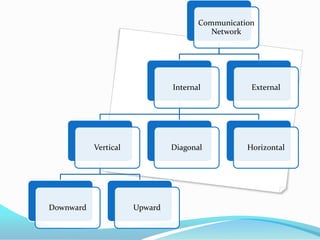
Communication
Network

Internal

Diagonal

Vertical

Downward

Upward

External

Horizontal
External Communication
 Outside the organization Communication.
 Links the organization with outside world.
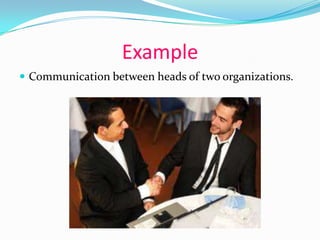
Example
 Communication between heads of two organizations.
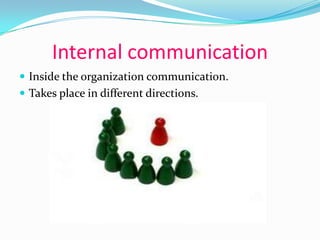
Internal communication
 Inside the organization communication.
 Takes place in different directions.
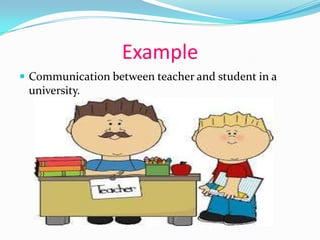
Example
 Communication between teacher and student in a

university.
Vertical Communication
• Upward communication
• Downward Communication
Vertical Communication

 Vertical communication is communication that flows

both up and down the organization.
 It is the communication that takes place between

managers and their superiors and subordinates.

 Vertical communication may involve only two

persons, or it may flow through several different
organizational levels.
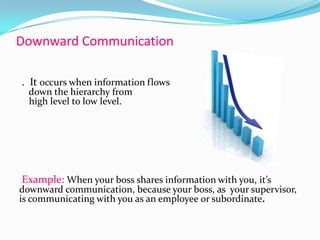
Downward Communication
. It occurs when information flows
down the hierarchy from
high level to low level.

Example: When your boss shares information with you, it’s

downward communication, because your boss, as your supervisor,
is communicating with you as an employee or subordinate.
Main objectives:
 To give specific directions to subordinates about the

job entrusted.

 To explain organizational policies and procedures.
 To apprise the subordinates of their performance.
Advantages of Downward Communication
 Useful for management

The management finds it useful to communicate necessary
official information to subordinates.
 Useful for employees
Downward communication is useful for subordinates as
they are well informed about their work from time to time.
 A Sense of belonging
In downward communication, the subordinates carry a
strong feeling of participation in the management of the
organization. They regard themselves as important
subordinates.
Disadvantages of Downward Communication
 Distortion

Downward communication has to pass through many
levels of authority, so there is a delay as well as distortion
of the message.
 Authoritarian approach
In downward communication, there is too much
concentration of authority at the higher level. As people
in the lower levels are merely receivers of decisions. So
they unconsciously receive such message and
miscommunication results.
 Over and under Communication

Downward communication suffers from over
communication or under-communication. In overcommunication supervisors talk too much and merely
waste the time of his subordinates.
In under-communication, the supervisor does not
talk enough and leaves his subordinates to his guessing
about what he wants them to do
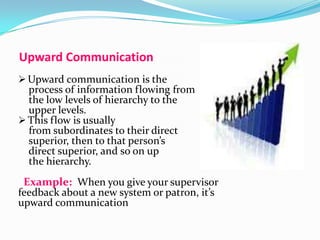
Upward Communication
 Upward communication is the

process of information flowing from
the low levels of hierarchy to the
upper levels.
 This flow is usually
from subordinates to their direct
superior, then to that person’s
direct superior, and so on up
the hierarchy.

Example: When you give your supervisor
feedback about a new system or patron, it’s
upward communication
Methods of Upward Communication
 Open-door policy: Employees are given a feeling that

their views, suggestions are always welcome by superiors.
 Complaints and suggestion Boxes: Are installed in the
company. Employees are encouraged to drop in these
boxes.
 Direct Correspondence: Write directly to superiors or
managers.
 Counseling: Employees are encouraged to talk to their
superiors of their problems.
Advantages of Upnward Communication
 Fosters Friendly Relations

Upward communication helps to bring about cooperation, goodwill and understanding among superiors
and subordinates. This stimulates friendly relations.
 Provides Valuable Feedback
Upward communication provides a valuable feedback.
The superiors come to know how their plans and
policies; orders and instructions are being received and
executed.
 Making Suggestions

The subordinates are encouraged to make suggestions
in the interest of the organization. Some of these
suggestions prove useful, and the subordinates are
suitably rewarded
Disadvantages of Upward Communication

 Resistance From Subordinates

Subordinates rarely initiate upward communication as
they are afraid of being ignored.so they hesitate to
initiate it again.
 Fear of Incompetence
The subordinates communicating with the superiors
fear that their colleagues or work may be regarded by
their superior as a reflection on their own competence.
 Indecisive Superiors

If the superiors do not take any decision in the light
of upward communication, the subordinates loss
confidence in their superiors.
Diagonal Communication
 Diagonal Communication takes place at different

levels in the hierarchy.
 It occurs both ways, that is, from the upper level to low
level and vice versa.
 The path is mixture of vertical and horizontal
movement.
 In large communications various departments need

communication support from each other.
 Diagonal communication aims at discussing such

matters as pertain to the execution of the plans and
policies of an organization to meet its business
objectives.
Advantages and Disadvantages of Diagonal
Communication
The path is mixture of vertical and horizontal
movement. So diagonal communication has all the
advantages and disadvantages of both, horizontal and
vertical communication.
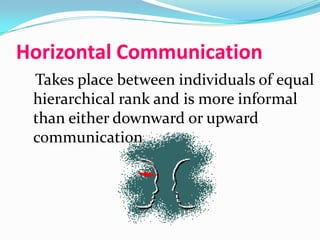
Horizontal Communication
Takes place between individuals of equal
hierarchical rank and is more informal
than either downward or upward
communication
Functions of Horizontal
Communication
It helps employees fulfill their socialization
needs.
It helps employees and departments coordinate
their activities with one another.
It helps others better understand individual and
departmental responsibilities.
It helps individuals solve their own problems before
others have to become involved.
Advantages of horizontal
communication:-

Co-ordination
Faster communication

25
Disadvantages of horizontal
communication:-

Lack of motivation
Presence of physical barriers

26
Examples of Horizontal
Communication
The marketing manager can
communicate with production
manager at the same level without
any difficulty.
 By horizontal communication army and rangers
employees co-ordinate with each other.
Manager can better understand his responsibility
inside his perimeter.
It enhances the self actualization among the
people in society.
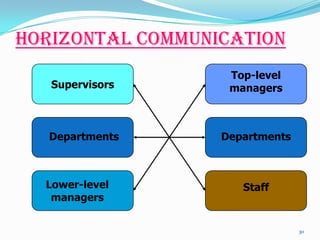
Horizontal Communication
Supervisors

Top-level
managers

Departments

Departments

Lower-level
managers

Staff

30
Communication network  .ppt

Communication network .ppt

  • 1.
  • 2.
  • 3.
    External Communication  Outsidethe organization Communication.  Links the organization with outside world.
  • 4.
    Example  Communication betweenheads of two organizations.
  • 5.
    Internal communication  Insidethe organization communication.  Takes place in different directions.
  • 6.
    Example  Communication betweenteacher and student in a university.
  • 7.
    Vertical Communication • Upwardcommunication • Downward Communication
  • 8.
    Vertical Communication  Verticalcommunication is communication that flows both up and down the organization.  It is the communication that takes place between managers and their superiors and subordinates.  Vertical communication may involve only two persons, or it may flow through several different organizational levels.
  • 9.
    Downward Communication . Itoccurs when information flows down the hierarchy from high level to low level. Example: When your boss shares information with you, it’s downward communication, because your boss, as your supervisor, is communicating with you as an employee or subordinate.
  • 10.
    Main objectives:  Togive specific directions to subordinates about the job entrusted.  To explain organizational policies and procedures.  To apprise the subordinates of their performance.
  • 11.
    Advantages of DownwardCommunication  Useful for management The management finds it useful to communicate necessary official information to subordinates.  Useful for employees Downward communication is useful for subordinates as they are well informed about their work from time to time.  A Sense of belonging In downward communication, the subordinates carry a strong feeling of participation in the management of the organization. They regard themselves as important subordinates.
  • 12.
    Disadvantages of DownwardCommunication  Distortion Downward communication has to pass through many levels of authority, so there is a delay as well as distortion of the message.  Authoritarian approach In downward communication, there is too much concentration of authority at the higher level. As people in the lower levels are merely receivers of decisions. So they unconsciously receive such message and miscommunication results.
  • 13.
     Over andunder Communication Downward communication suffers from over communication or under-communication. In overcommunication supervisors talk too much and merely waste the time of his subordinates. In under-communication, the supervisor does not talk enough and leaves his subordinates to his guessing about what he wants them to do
  • 14.
    Upward Communication  Upwardcommunication is the process of information flowing from the low levels of hierarchy to the upper levels.  This flow is usually from subordinates to their direct superior, then to that person’s direct superior, and so on up the hierarchy. Example: When you give your supervisor feedback about a new system or patron, it’s upward communication
  • 15.
    Methods of UpwardCommunication  Open-door policy: Employees are given a feeling that their views, suggestions are always welcome by superiors.  Complaints and suggestion Boxes: Are installed in the company. Employees are encouraged to drop in these boxes.  Direct Correspondence: Write directly to superiors or managers.  Counseling: Employees are encouraged to talk to their superiors of their problems.
  • 16.
    Advantages of UpnwardCommunication  Fosters Friendly Relations Upward communication helps to bring about cooperation, goodwill and understanding among superiors and subordinates. This stimulates friendly relations.  Provides Valuable Feedback Upward communication provides a valuable feedback. The superiors come to know how their plans and policies; orders and instructions are being received and executed.
  • 17.
     Making Suggestions Thesubordinates are encouraged to make suggestions in the interest of the organization. Some of these suggestions prove useful, and the subordinates are suitably rewarded

  • 18.
    Disadvantages of UpwardCommunication  Resistance From Subordinates Subordinates rarely initiate upward communication as they are afraid of being ignored.so they hesitate to initiate it again.  Fear of Incompetence The subordinates communicating with the superiors fear that their colleagues or work may be regarded by their superior as a reflection on their own competence.
  • 19.
     Indecisive Superiors Ifthe superiors do not take any decision in the light of upward communication, the subordinates loss confidence in their superiors.
  • 20.
    Diagonal Communication  DiagonalCommunication takes place at different levels in the hierarchy.  It occurs both ways, that is, from the upper level to low level and vice versa.  The path is mixture of vertical and horizontal movement.
  • 21.
     In largecommunications various departments need communication support from each other.  Diagonal communication aims at discussing such matters as pertain to the execution of the plans and policies of an organization to meet its business objectives.
  • 22.
    Advantages and Disadvantagesof Diagonal Communication The path is mixture of vertical and horizontal movement. So diagonal communication has all the advantages and disadvantages of both, horizontal and vertical communication.
  • 23.
    Horizontal Communication Takes placebetween individuals of equal hierarchical rank and is more informal than either downward or upward communication
  • 24.
    Functions of Horizontal Communication Ithelps employees fulfill their socialization needs. It helps employees and departments coordinate their activities with one another. It helps others better understand individual and departmental responsibilities. It helps individuals solve their own problems before others have to become involved.
  • 25.
  • 26.
    Disadvantages of horizontal communication:- Lackof motivation Presence of physical barriers 26
  • 27.
  • 28.
    The marketing managercan communicate with production manager at the same level without any difficulty.
  • 29.
     By horizontalcommunication army and rangers employees co-ordinate with each other. Manager can better understand his responsibility inside his perimeter. It enhances the self actualization among the people in society.
  • 30.