FORMAL
COMMUNICATION IN AN
ORGANIZATION

 BY
 DEERAJ CHAUBEY,
 MOHIT ,
 MRIGANKSHI AGARWAL,
 VENKATA SWAROOP,
COMMUNICATION
 Communication is transfer of information from one
  person to another, whether or not it elicits confidence.
  But the information transferred must be understandable
  to the receiver – G.G. Brown.
 Communication is the intercourse by words, letters or
  messages- Fred G. Meyer.
TYPES OF COMMUNICATION
          FORMAL                            INFORMAL
       COMMUNICATION                      COMMUNICATION


   Formal communication it deals      Informal communication it is
    with the sharing of official        sharing of information with
    information with others who         friends, peers which has no
    need it.                            skeleton like formal
                                        communication.
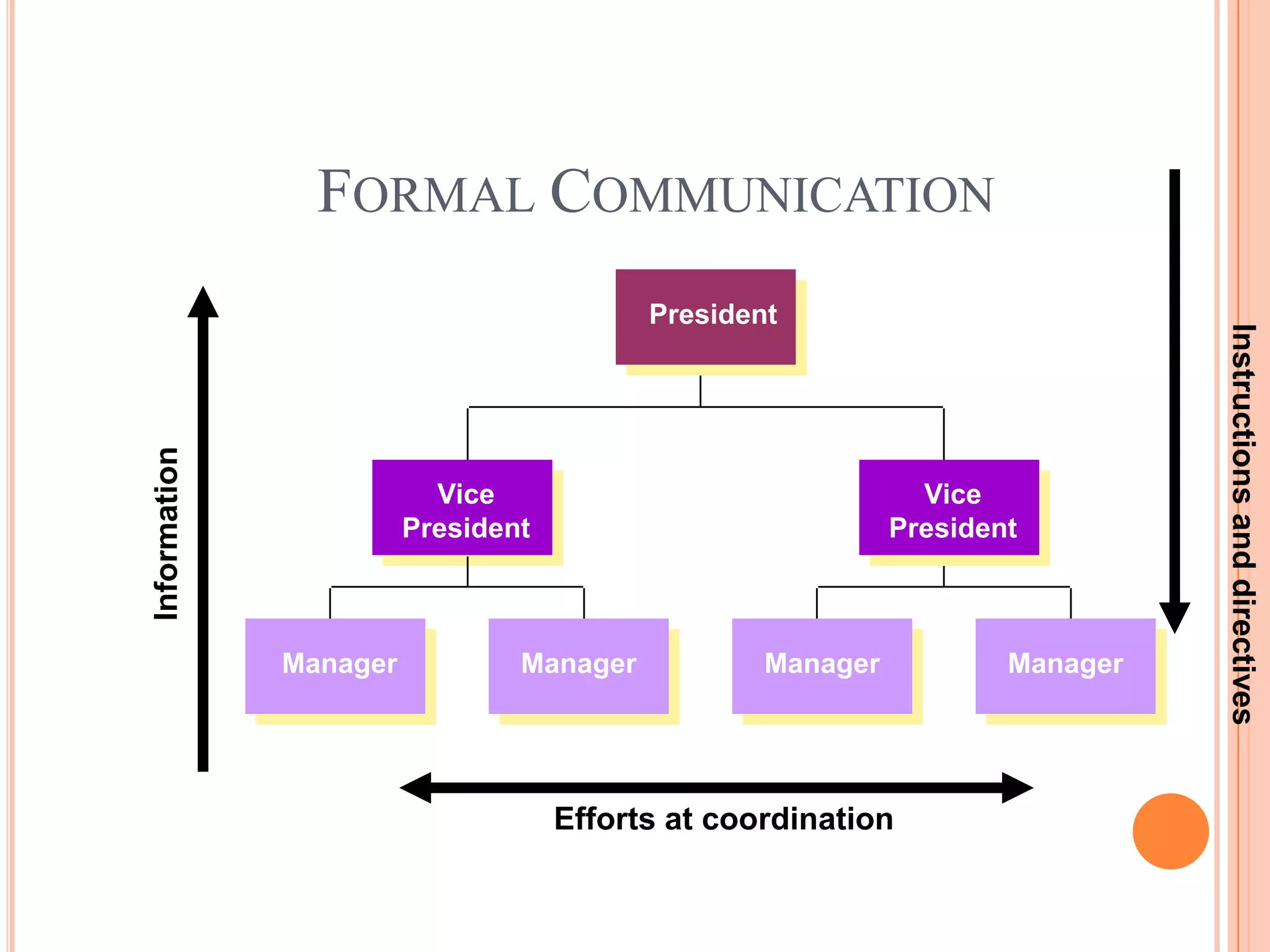
FORMAL COMMUNICATION
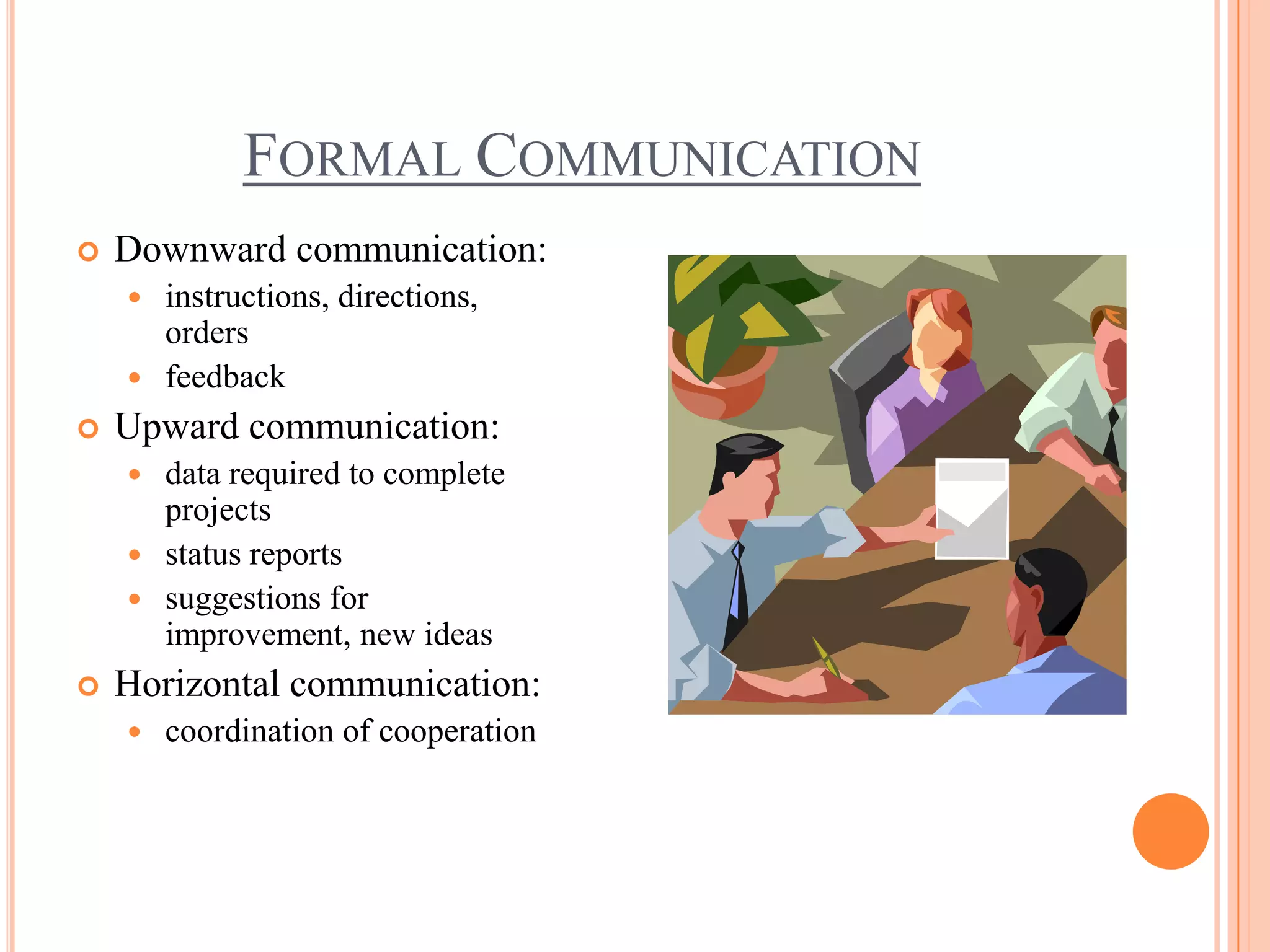
   Downward communication:
     instructions, directions,
      orders
     feedback
   Upward communication:
     data required to complete
      projects
     status reports
     suggestions for
      improvement, new ideas
   Horizontal communication:
       coordination of cooperation
FORMAL COMMUNICATION
                                          President


                                                                              Instructions and directives
Information


                          Vice                                Vice
                        President                           President


              Manager           Manager           Manager           Manager


                                    Efforts at coordination
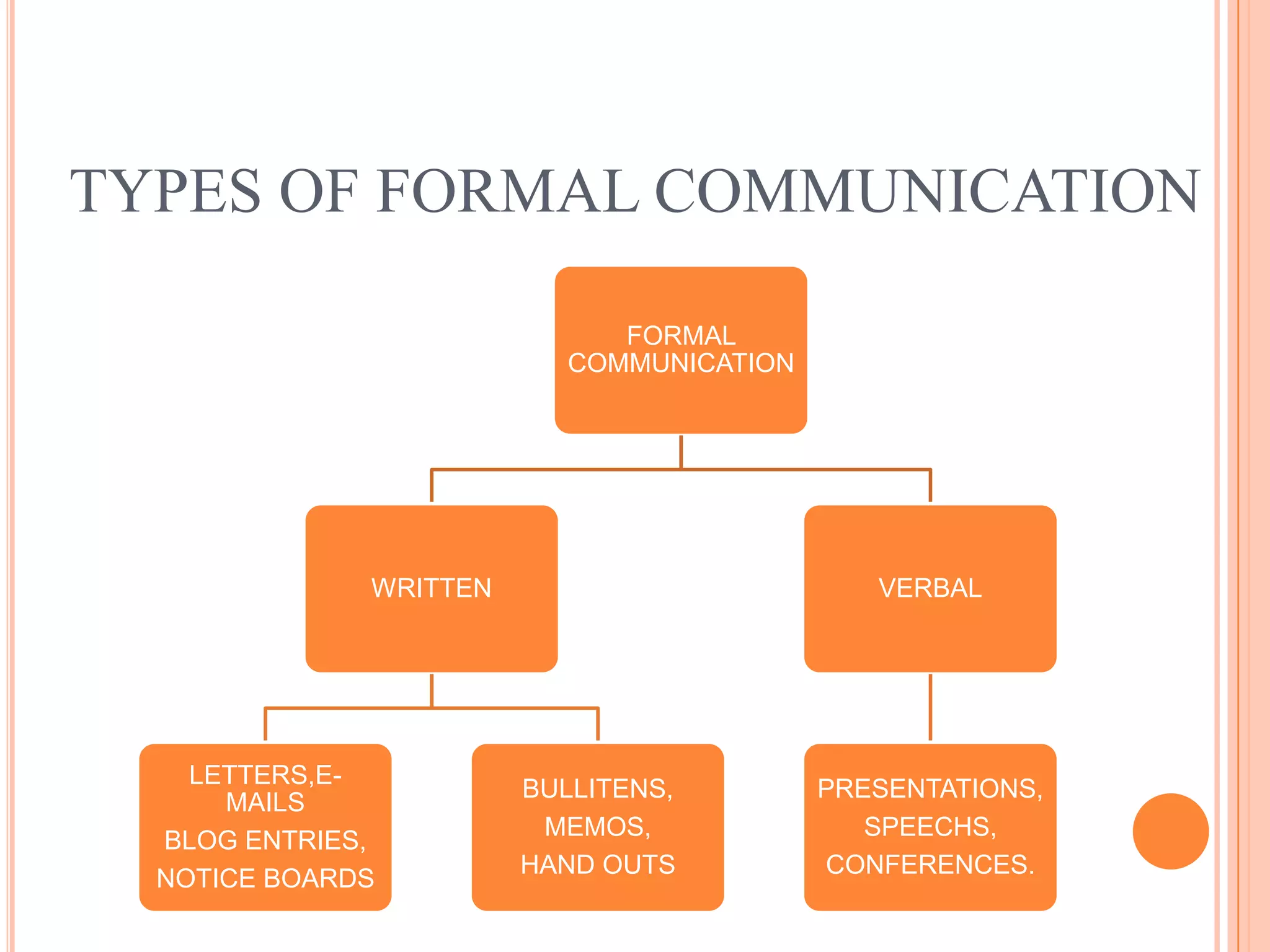
TYPES OF FORMAL COMMUNICATION

                              FORMAL
                           COMMUNICATION


              WRITTEN                         VERBAL


    LETTERS,E-
                        BULLITENS,         PRESENTATIONS,
      MAILS
                         MEMOS,               SPEECHS,
  BLOG ENTRIES,
                        HAND OUTS          CONFERENCES.
  NOTICE BOARDS
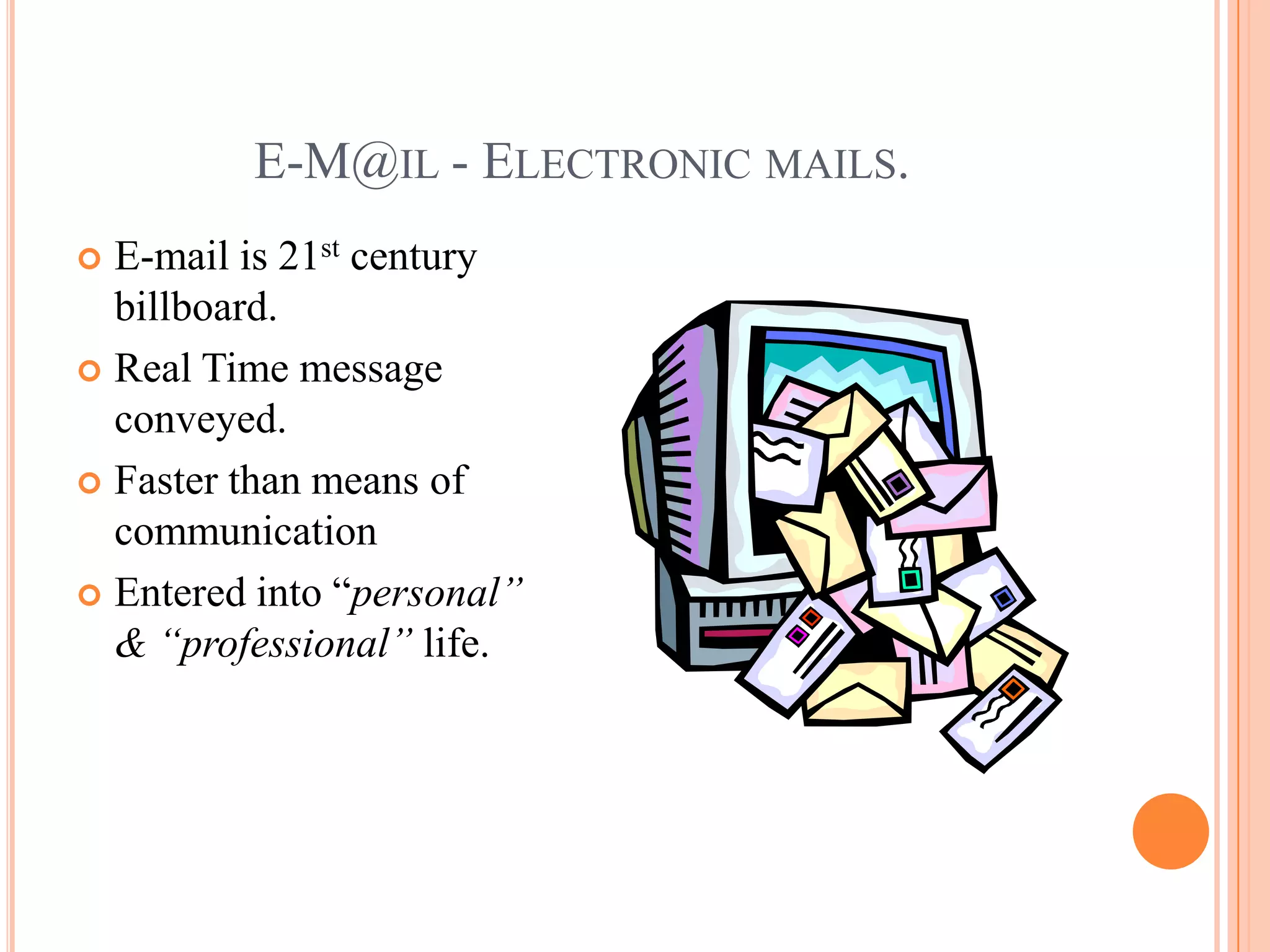
E-M@IL - ELECTRONIC MAILS.
 E-mail is 21st century
  billboard.
 Real Time message
  conveyed.
 Faster than means of
  communication
 Entered into “personal”
  & “professional” life.
E-MAIL IN BUSINESS
   ‘E-revolution’ in business
    communication.
   Accepted by the business
    community as the first
    broad electronic
    communication medium.
   E-Mail occupies major
    portion of the internal
    communication and then
    news letters and notice
    boards takes place.
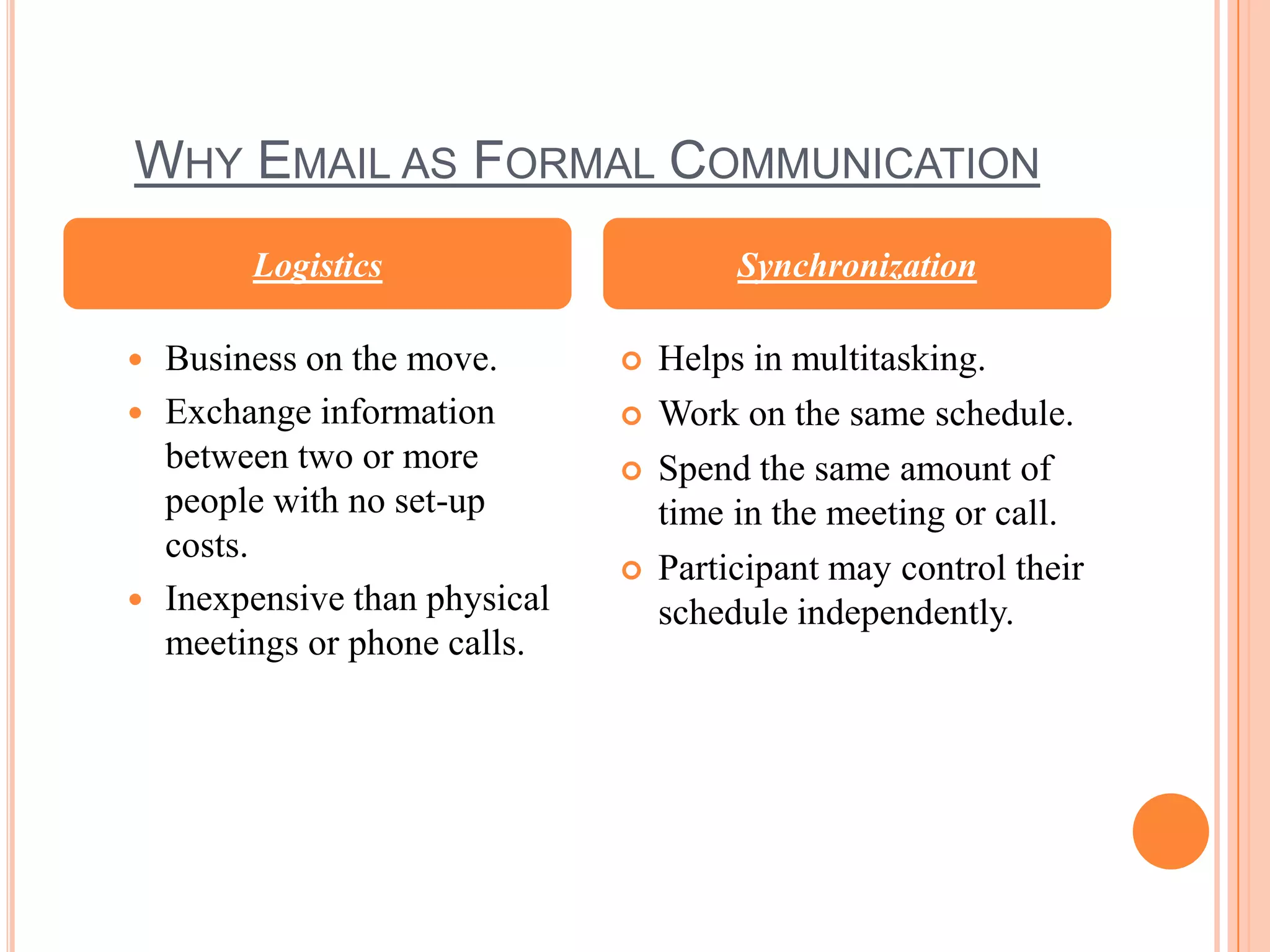
WHY EMAIL AS FORMAL COMMUNICATION
        Logistics                      Synchronization

 Business on the move.          Helps in multitasking.
 Exchange information           Work on the same schedule.
  between two or more            Spend the same amount of
  people with no set-up           time in the meeting or call.
  costs.
                                 Participant may control their
 Inexpensive than physical       schedule independently.
  meetings or phone calls.
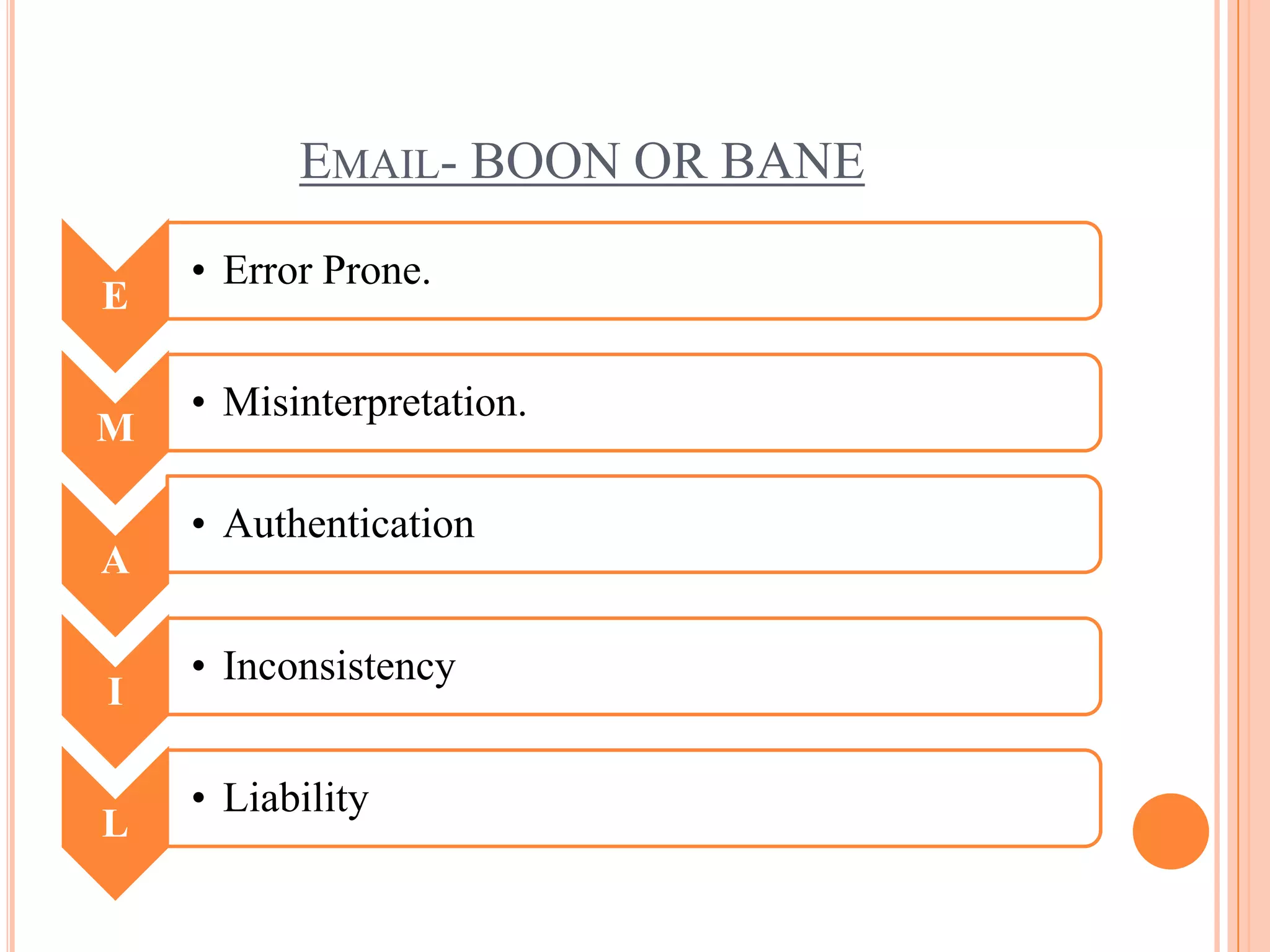
EMAIL- BOON OR BANE
    • Error Prone.
E

    • Misinterpretation.
M

    • Authentication
A

    • Inconsistency
I

    • Liability
L
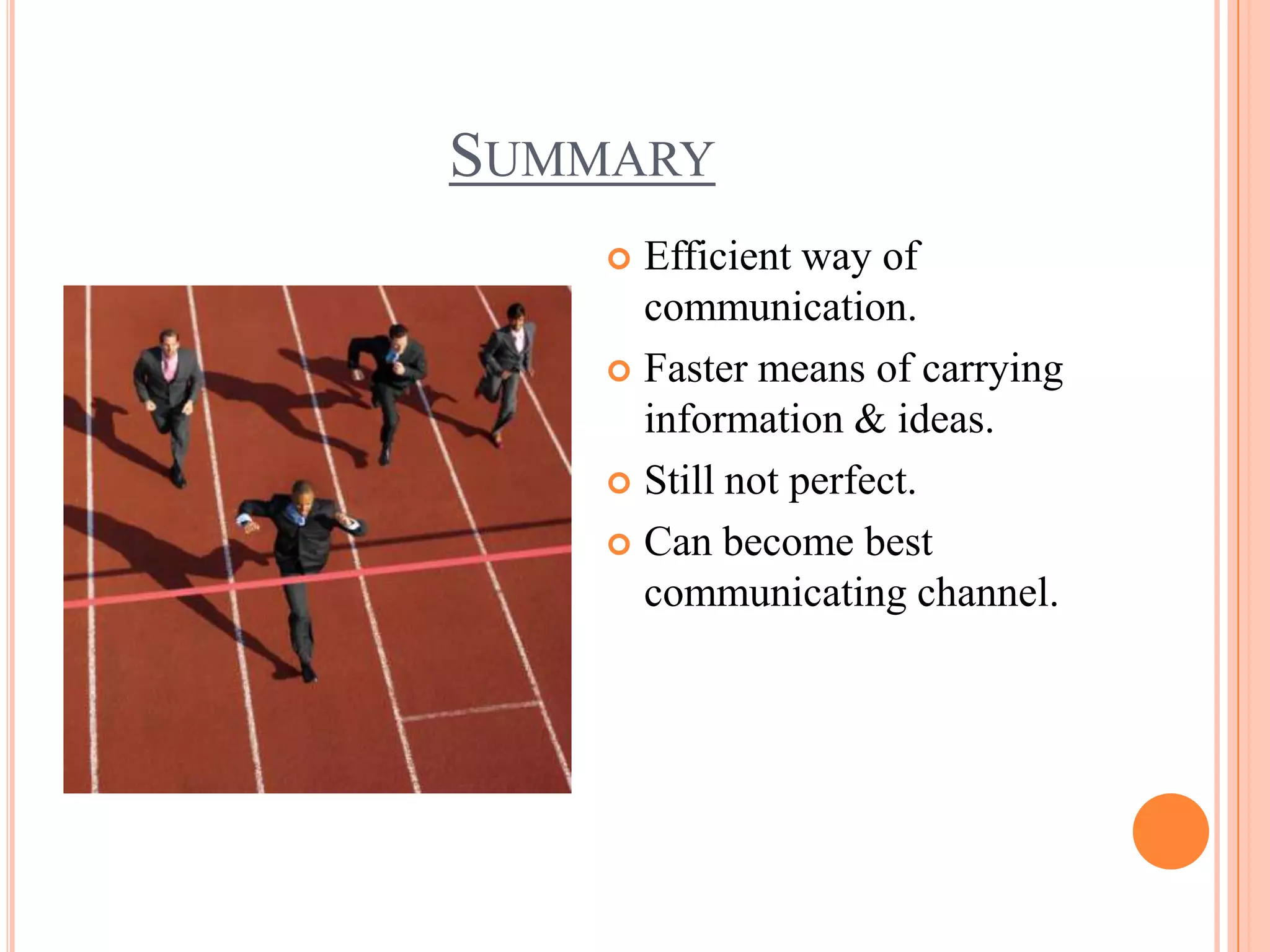
SUMMARY
     Efficient way of
      communication.
     Faster means of carrying
      information & ideas.
     Still not perfect.

     Can become best
      communicating channel.
Formal communication in an organization

Formal communication in an organization

  • 1.
    FORMAL COMMUNICATION IN AN ORGANIZATION BY DEERAJ CHAUBEY, MOHIT , MRIGANKSHI AGARWAL, VENKATA SWAROOP,
  • 2.
    COMMUNICATION  Communication istransfer of information from one person to another, whether or not it elicits confidence. But the information transferred must be understandable to the receiver – G.G. Brown.  Communication is the intercourse by words, letters or messages- Fred G. Meyer.
  • 3.
    TYPES OF COMMUNICATION FORMAL INFORMAL COMMUNICATION COMMUNICATION  Formal communication it deals  Informal communication it is with the sharing of official sharing of information with information with others who friends, peers which has no need it. skeleton like formal communication.
  • 4.
    FORMAL COMMUNICATION  Downward communication:  instructions, directions, orders  feedback  Upward communication:  data required to complete projects  status reports  suggestions for improvement, new ideas  Horizontal communication:  coordination of cooperation
  • 5.
    FORMAL COMMUNICATION President Instructions and directives Information Vice Vice President President Manager Manager Manager Manager Efforts at coordination
  • 6.
    TYPES OF FORMALCOMMUNICATION FORMAL COMMUNICATION WRITTEN VERBAL LETTERS,E- BULLITENS, PRESENTATIONS, MAILS MEMOS, SPEECHS, BLOG ENTRIES, HAND OUTS CONFERENCES. NOTICE BOARDS
  • 7.
    E-M@IL - ELECTRONICMAILS.  E-mail is 21st century billboard.  Real Time message conveyed.  Faster than means of communication  Entered into “personal” & “professional” life.
  • 8.
    E-MAIL IN BUSINESS  ‘E-revolution’ in business communication.  Accepted by the business community as the first broad electronic communication medium.  E-Mail occupies major portion of the internal communication and then news letters and notice boards takes place.
  • 9.
    WHY EMAIL ASFORMAL COMMUNICATION Logistics Synchronization  Business on the move.  Helps in multitasking.  Exchange information  Work on the same schedule. between two or more  Spend the same amount of people with no set-up time in the meeting or call. costs.  Participant may control their  Inexpensive than physical schedule independently. meetings or phone calls.
  • 10.
    EMAIL- BOON ORBANE • Error Prone. E • Misinterpretation. M • Authentication A • Inconsistency I • Liability L
  • 11.
    SUMMARY  Efficient way of communication.  Faster means of carrying information & ideas.  Still not perfect.  Can become best communicating channel.