Downloaded 764 times
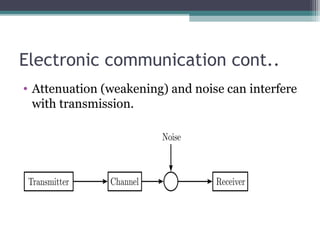




This document discusses electronic communication and its advantages. It defines electronic communication as consisting of a transmitter, communication channel, and receiver that converts messages to electrical signals sent over cables or wireless networks. Some key advantages discussed are speed, wide coverage enabling global communication instantly, and lower costs compared to traditional methods. Electronic communication allows for instant feedback exchange and helps managers control global operations remotely. Examples of electronic communication types covered are email, podcasting, discussion boards, blogs, text messaging, and chatting.


