ORGANIZATIONAL COMMUNICATION
I.Formal Communication in Organizations
      Formal communication flows along prescribed channels which
all
      members desirous of communicating with one another are
      obliged to follow.

  A. Vertical Communication
   1. Upward Communication
   2.Downward Communication
  B. Horizontal Communication
  C. Cross Channel Communication
II. Communication Networks
III. Informal Communication In Organizations
It is the transmission of information through nonofficial channels
within the organization.
 The Grapevine
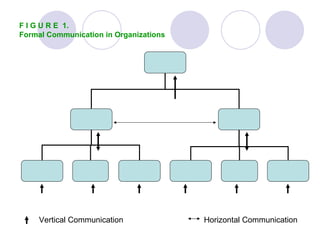
F I G U R E 1.
Formal Communication in Organizations


     Vertical Communication             Horizontal Communication
I. Formal Communication


A. Vertical Communication
  Vertical communication is communication that flows
  both up and down the organization, usually along
  formal reporting lines-that is, it is the
  communication that takes place between managers
  and their superiors and subordinates. Vertical
  communication may involve only two persons, or it
  may flow through several different organizational
  levels.
1. Downward Communication

 Downward Communication occurs when information flows down the hierarchy from
 superiors to subordinates.

 Examples : Orders, circulars, individual instructions, policy statements, Inter-
 Office Memos, e-mail, notices

 It is best suited for organizations where the line of authority runs distinctly downwards.

 Main objectives:

 To give specific directions to subordinates about the job entrusted.

 To explain organizational policies and procedures.

 To apprise the subordinates of their performance.

 To give subordinates the rationale of the job so that they understand the
  significance of the job in relation to organizational goals.
Limitations of Downward Communication


1.Under-communication
  - Superior may talk little about the job.
  - Withholding of information

5.Over-communication
  - superior may talk too much
  - Leaking of information

 3. Delay
  - Line of communication being long.

 4. Loss of Information
 -Unless written, it will not be transmitted fully.
 -Sometimes written communication may not be fully understood.

 5. Distortion
 -Long lines of communication- exaggerating or under-statement
2. Upward Communication
Upward communication consists of messages from subordinates to superiors. This flow is
usually from subordinates to their direct superior, then to that person’s direct superior,
and so on up the hierarchy. Occasionally, a message might by-pass a particular superior.

Examples : The typical content of upward communication is requests, information that
the lower-level manager thinks is important to the higher-level manager, responses to
requests from the higher-level manager, suggestions, complaints, and financial
information.


Importance :
lProviding feedback: Whether directions issued are understood by lower staff.

lOutlet for pent-up emotions : Grievances and problems addressed, solutions are
developed and employees feel better after having talked about them.

lConstructive suggestions: These can be secured for improvement of the organization.
Methods of Upward Communication


l    Open-door policy: Employees are given a feeling that their views,
     suggestions are always welcome by superiors.


l    Complaints and suggestion Boxes : Are installed in the company.
     Employees are encouraged to drop in these boxes.


l    Direct Correspondence: Write directly to superiors or managers.


4.   Counseling : Employees are encouraged to talk to their superiors of their
     problems.
Limitations of Upward Communication

 Employees are reluctant to initiate upward communication as they
  - feel it may reflect their efficiency.
  - fear of disapproval from superiors.


 Upward documentation is prone to distortion. Unpleasant information is
  distorted more.


 Workers/juniors may ignore immediate superiors and approach higher
  management. Immediate superiors may feel:
  - bypassed.
  - become suspicious of intentions.
B. Horizontal Communication

 Whereas vertical communication involves a superior and a subordinate, horizontal
  communication involves colleagues and peers at the same level of the
  organization.

 For example : an operations manager might communicate to a marketing manager
  that inventory levels are running low and that projected delivery dates should be
  extended by two weeks. Horizontal communication probably occurs more among
  managers than among non managers.

 Horizontal communication serves a number of purposes.

 It facilitates coordination among interdependent units. For example, a manager
  at Motorola was recently researching the strategies of Japanese semiconductor firms
  in Europe. He found a great deal of information that was relevant to his assignment.
  He also uncovered some additional information that was potentially important to
  another department, so he passed it along to a colleague in that department, who
  used it to improve his own operations.

 Horizontal communication can also be used for joint problem solving, as when
  tow plant managers at Westinghouse got together to work out a new method to
  improve productivity.

 Finally, horizontal communication plays a major role in work teams with
  members drawn from several departments.
Limitations of Horizontal Communication

 Subordinates making commitments / passing information beyond their
  authority.

 Harmful if subordinates do not inform superiors of interdepartmental
  activities.
C. Cross Channel Communication
 Cross channel communication is the exchange of information among
  employees in different work units who are neither subordinate nor superior
  to one another.

 Example: An accounts clerk sends out a request to all company employees
  for updated information about the number of exemptions they claim on their
  tax forms.

 Staff specialists use cross-channel communication frequently because their
  responsibilities typically involve many departments within the organization.
  Because they lack line authority to direct those with whom they
  communicate, they must often rely on their persuasive skills, as, for
  instance, when the human resources department encourages employees to
  complete a job-satisfaction questionnaire.
II. INFORMAL COMMUNICATION IN ORGANIZATIONS

Communication
that takes place
in an
organization
that transcends
formal channels
and instead
follows any of
several
methods. Fig. 3
illustrates
numerous
examples of
informal
communication.

                   F I G U R E 3. Informal Communication in Organizations

Organizational communication

  • 1.
  • 2.
    I.Formal Communication inOrganizations Formal communication flows along prescribed channels which all members desirous of communicating with one another are obliged to follow. A. Vertical Communication 1. Upward Communication 2.Downward Communication B. Horizontal Communication C. Cross Channel Communication II. Communication Networks III. Informal Communication In Organizations It is the transmission of information through nonofficial channels within the organization. The Grapevine
  • 3.
    F I GU R E 1. Formal Communication in Organizations Vertical Communication Horizontal Communication
  • 4.
    I. Formal Communication A.Vertical Communication Vertical communication is communication that flows both up and down the organization, usually along formal reporting lines-that is, it is the communication that takes place between managers and their superiors and subordinates. Vertical communication may involve only two persons, or it may flow through several different organizational levels.
  • 5.
    1. Downward Communication Downward Communication occurs when information flows down the hierarchy from superiors to subordinates.  Examples : Orders, circulars, individual instructions, policy statements, Inter- Office Memos, e-mail, notices  It is best suited for organizations where the line of authority runs distinctly downwards.  Main objectives:  To give specific directions to subordinates about the job entrusted.  To explain organizational policies and procedures.  To apprise the subordinates of their performance.  To give subordinates the rationale of the job so that they understand the significance of the job in relation to organizational goals.
  • 6.
    Limitations of DownwardCommunication 1.Under-communication - Superior may talk little about the job. - Withholding of information 5.Over-communication - superior may talk too much - Leaking of information 3. Delay - Line of communication being long. 4. Loss of Information -Unless written, it will not be transmitted fully. -Sometimes written communication may not be fully understood. 5. Distortion -Long lines of communication- exaggerating or under-statement
  • 7.
    2. Upward Communication Upwardcommunication consists of messages from subordinates to superiors. This flow is usually from subordinates to their direct superior, then to that person’s direct superior, and so on up the hierarchy. Occasionally, a message might by-pass a particular superior. Examples : The typical content of upward communication is requests, information that the lower-level manager thinks is important to the higher-level manager, responses to requests from the higher-level manager, suggestions, complaints, and financial information. Importance : lProviding feedback: Whether directions issued are understood by lower staff. lOutlet for pent-up emotions : Grievances and problems addressed, solutions are developed and employees feel better after having talked about them. lConstructive suggestions: These can be secured for improvement of the organization.
  • 8.
    Methods of UpwardCommunication l Open-door policy: Employees are given a feeling that their views, suggestions are always welcome by superiors. l Complaints and suggestion Boxes : Are installed in the company. Employees are encouraged to drop in these boxes. l Direct Correspondence: Write directly to superiors or managers. 4. Counseling : Employees are encouraged to talk to their superiors of their problems.
  • 9.
    Limitations of UpwardCommunication  Employees are reluctant to initiate upward communication as they - feel it may reflect their efficiency. - fear of disapproval from superiors.  Upward documentation is prone to distortion. Unpleasant information is distorted more.  Workers/juniors may ignore immediate superiors and approach higher management. Immediate superiors may feel: - bypassed. - become suspicious of intentions.
  • 10.
    B. Horizontal Communication Whereas vertical communication involves a superior and a subordinate, horizontal communication involves colleagues and peers at the same level of the organization.  For example : an operations manager might communicate to a marketing manager that inventory levels are running low and that projected delivery dates should be extended by two weeks. Horizontal communication probably occurs more among managers than among non managers.  Horizontal communication serves a number of purposes.  It facilitates coordination among interdependent units. For example, a manager at Motorola was recently researching the strategies of Japanese semiconductor firms in Europe. He found a great deal of information that was relevant to his assignment. He also uncovered some additional information that was potentially important to another department, so he passed it along to a colleague in that department, who used it to improve his own operations.  Horizontal communication can also be used for joint problem solving, as when tow plant managers at Westinghouse got together to work out a new method to improve productivity.  Finally, horizontal communication plays a major role in work teams with members drawn from several departments.
  • 11.
    Limitations of HorizontalCommunication  Subordinates making commitments / passing information beyond their authority.  Harmful if subordinates do not inform superiors of interdepartmental activities.
  • 12.
    C. Cross ChannelCommunication  Cross channel communication is the exchange of information among employees in different work units who are neither subordinate nor superior to one another.  Example: An accounts clerk sends out a request to all company employees for updated information about the number of exemptions they claim on their tax forms.  Staff specialists use cross-channel communication frequently because their responsibilities typically involve many departments within the organization. Because they lack line authority to direct those with whom they communicate, they must often rely on their persuasive skills, as, for instance, when the human resources department encourages employees to complete a job-satisfaction questionnaire.
  • 13.
    II. INFORMAL COMMUNICATIONIN ORGANIZATIONS Communication that takes place in an organization that transcends formal channels and instead follows any of several methods. Fig. 3 illustrates numerous examples of informal communication. F I G U R E 3. Informal Communication in Organizations