   PREPARED AND PRESENTED BY:


     SHAHID NAZEER
ELECTRICAL ENGINEERING
        UCE&T,
 BZU MULTAN ,PAKISTAN
TOPIC
Communication Technology
&
AIDA Model
PRESENTED TO

MISS SADIA KHURSHID
COMMUNICATION…….?
   The word „Communication‟ originated from
    Latin word „Communis‟ meaning „Common‟.

   “Communication is imparting, conveying
    or exchanging of ideas and knowledge
    whether by speech, writing or signs” –
    Oxford English Dictionary.


   “Communication is the transfer of thoughts
    and message as contrasted with transportation
    of goods and persons” – Columbia
    Encyclopedia of Communication.
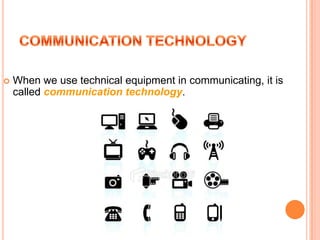
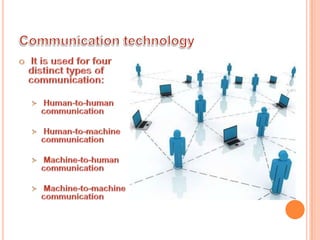
   When we use technical equipment in communicating, it is
    called communication technology.
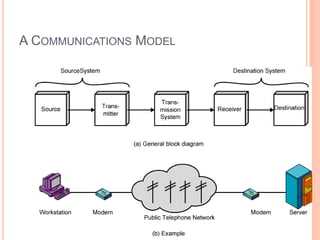
A COMMUNICATIONS MODEL
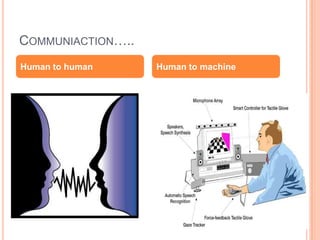
COMMUNIACTION…..
Human to human     Human to machine
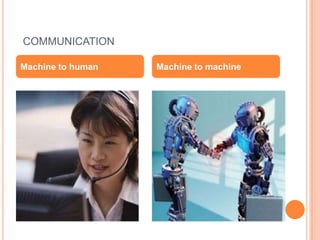
COMMUNICATION

Machine to human   Machine to machine
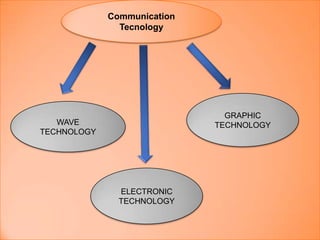
Communication
               Tecnology


                               GRAPHIC
   WAVE                      TECHNOLOGY
TECHNOLOGY


               ELECTRONIC
               TECHNOLOGY
COMMUNICATION TECHNOLOGY
   It uses equipment and systems to send and receive
    information.

   This technology communicates information using
    graphic and wave systems.

       Graphic comes from a word meaning “to draw or
        write, as on paper.”

       Wave refers to radio waves, a kind of energy.
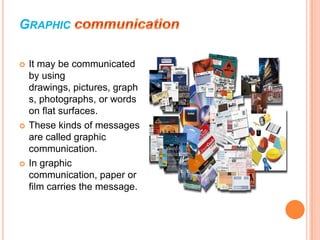
GRAPHIC

   It may be communicated
    by using
    drawings, pictures, graph
    s, photographs, or words
    on flat surfaces.
   These kinds of messages
    are called graphic
    communication.
   In graphic
    communication, paper or
    film carries the message.
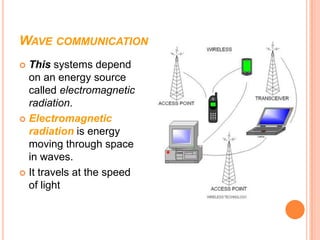
WAVE COMMUNICATION
 This systems depend
  on an energy source
  called electromagnetic
  radiation.
 Electromagnetic
  radiation is energy
  moving through space
  in waves.
 It travels at the speed
  of light
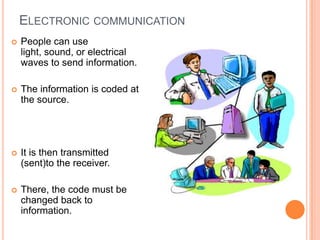
ELECTRONIC COMMUNICATION
   People can use
    light, sound, or electrical
    waves to send information.

   The information is coded at
    the source.


   It is then transmitted
    (sent)to the receiver.

   There, the code must be
    changed back to
    information.
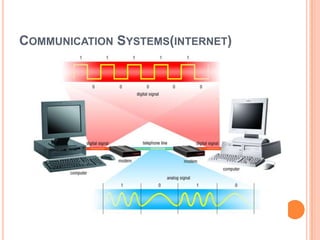
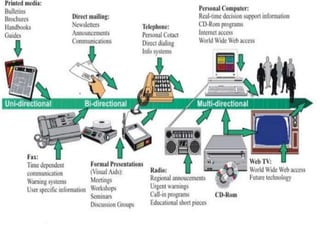
COMMUNICATION SYSTEMS(INTERNET)
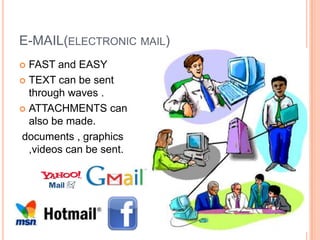
E-MAIL(ELECTRONIC MAIL)
 FAST and EASY
 TEXT can be sent
  through waves .
 ATTACHMENTS can
  also be made.
documents , graphics
  ,videos can be sent.
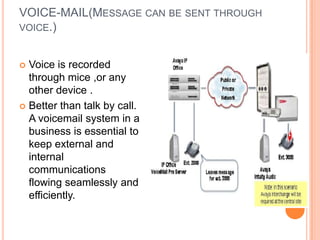
VOICE-MAIL(MESSAGE CAN BE SENT THROUGH
VOICE.)


 Voice is recorded
  through mice ,or any
  other device .
 Better than talk by call.
  A voicemail system in a
  business is essential to
  keep external and
  internal
  communications
  flowing seamlessly and
  efficiently.
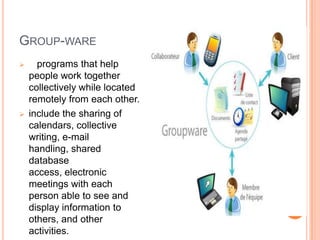
GROUP-WARE
     programs that help
    people work together
    collectively while located
    remotely from each other.
   include the sharing of
    calendars, collective
    writing, e-mail
    handling, shared
    database
    access, electronic
    meetings with each
    person able to see and
    display information to
    others, and other
    activities.
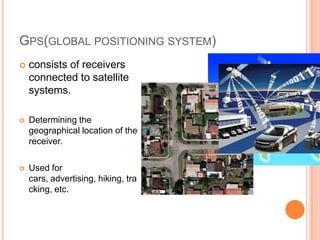
GPS(GLOBAL POSITIONING SYSTEM)
   consists of receivers
    connected to satellite
    systems.

   Determining the
    geographical location of the
    receiver.

   Used for
    cars, advertising, hiking, tra
    cking, etc.
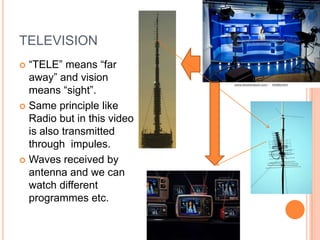
TELEVISION
 “TELE” means “far
  away” and vision
  means “sight”.
 Same principle like
  Radio but in this video
  is also transmitted
  through impules.
 Waves received by
  antenna and we can
  watch different
  programmes etc.
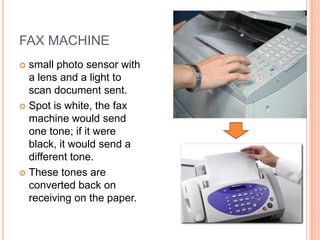
FAX MACHINE
 small photo sensor with
  a lens and a light to
  scan document sent.
 Spot is white, the fax
  machine would send
  one tone; if it were
  black, it would send a
  different tone.
 These tones are
  converted back on
  receiving on the paper.
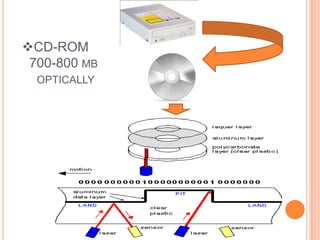
CD-ROM
 700-800 MB
  OPTICALLY
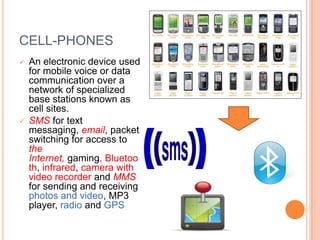
CELL-PHONES
   An electronic device used
    for mobile voice or data
    communication over a
    network of specialized
    base stations known as
    cell sites.
   SMS for text
    messaging, email, packet
    switching for access to
    the
    Internet, gaming, Bluetoo
    th, infrared, camera with
    video recorder and MMS
    for sending and receiving
    photos and video, MP3
    player, radio and GPS
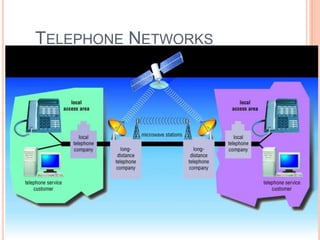
TELEPHONE NETWORKS
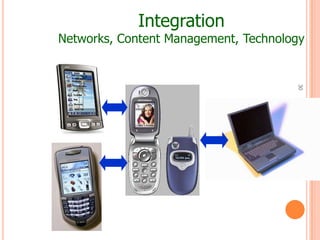
Integration
Networks, Content Management, Technology


                                      30
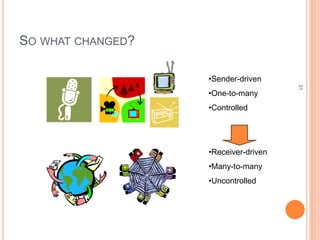
SO WHAT CHANGED?

                   •Sender-driven


                                      31
                   •One-to-many
                   •Controlled


                   •Receiver-driven
                   •Many-to-many
                   •Uncontrolled
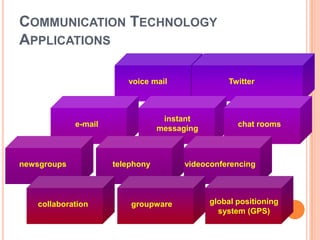
COMMUNICATION TECHNOLOGY
APPLICATIONS

                         voice mail                Twitter


                                   instant
             e-mail                                  chat rooms
                                  messaging


newsgroups            telephony         videoconferencing


   collaboration          groupware           global positioning
                                                system (GPS)
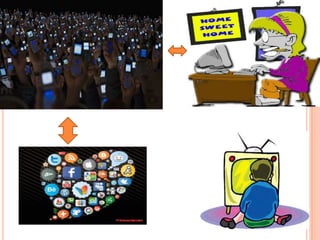
BAD EFFETCS OF COMMUNICATION
TECHNOLOGY
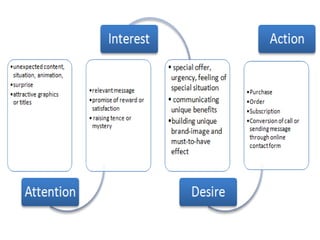
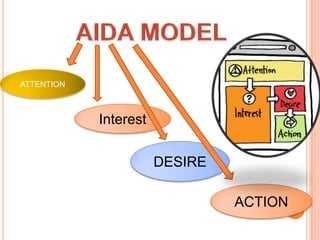
ATTENTION


            Interest

                       DESIRE

                                ACTION
ATTENTION
ATTENTION(OR ATTRACT)

    quick and direct to grab people's attention.

powerful words,

picture that will catch the reader's eye .

latest tools and technologies to show your website.
BY POWERFULL WORDS
“special discount for you”
  “best quality and 100% pure”
  “Modern and have best features”
           "Free gift inside!"
   "How effective is YOUR feedback?"
 "Dear Jim, You have been specially selected."
            "Calling all Parents."
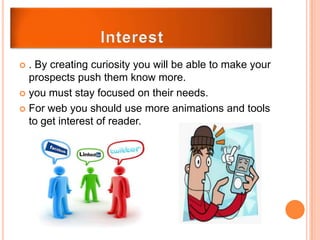
 . By creating curiosity you will be able to make your
  prospects push them know more.
 you must stay focused on their needs.

 For web you should use more animations and tools
  to get interest of reader.
DESIRE
 you also need to help them understand how
what you're offering can help them in a real way.
 Provide accurate and complete description (esp.
  price) of your products with photos or video sales
  presentation.
 Publish complete information about your business
  and staff with their photos (if possible) on your
  website.
 Clearly specify your terms and conditions of sales
  and legal disclaimer.
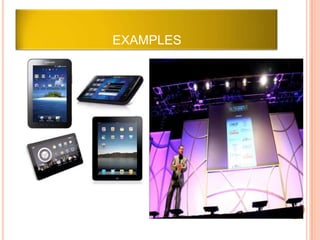
EXAMPLES
ACTION
 Encourage your visitors to buy your product/service
  NOW.
 free gifts, discounts, special offers etc is
  common, then you should also provide the same.
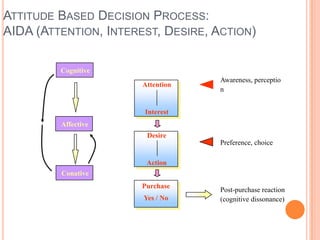
ATTITUDE BASED DECISION PROCESS:
AIDA (ATTENTION, INTEREST, DESIRE, ACTION)

         Cognitive
                                    Awareness, perceptio
                       Attention
                                    n


                       Interest
         Affective
                        Desire
                                    Preference, choice

                        Action
         Conative
                       Purchase
                                    Post-purchase reaction
                       Yes / No     (cognitive dissonance)
Communication technology

Communication technology

  • 2.
    PREPARED AND PRESENTED BY: SHAHID NAZEER ELECTRICAL ENGINEERING UCE&T, BZU MULTAN ,PAKISTAN
  • 3.
  • 4.
  • 5.
    COMMUNICATION…….?  The word „Communication‟ originated from Latin word „Communis‟ meaning „Common‟.  “Communication is imparting, conveying or exchanging of ideas and knowledge whether by speech, writing or signs” – Oxford English Dictionary.  “Communication is the transfer of thoughts and message as contrasted with transportation of goods and persons” – Columbia Encyclopedia of Communication.
  • 6.
    When we use technical equipment in communicating, it is called communication technology.
  • 7.
  • 9.
  • 10.
    COMMUNICATION Machine to human Machine to machine
  • 11.
    Communication Tecnology GRAPHIC WAVE TECHNOLOGY TECHNOLOGY ELECTRONIC TECHNOLOGY
  • 12.
    COMMUNICATION TECHNOLOGY  It uses equipment and systems to send and receive information.  This technology communicates information using graphic and wave systems.  Graphic comes from a word meaning “to draw or write, as on paper.”  Wave refers to radio waves, a kind of energy.
  • 13.
    GRAPHIC  It may be communicated by using drawings, pictures, graph s, photographs, or words on flat surfaces.  These kinds of messages are called graphic communication.  In graphic communication, paper or film carries the message.
  • 14.
    WAVE COMMUNICATION  Thissystems depend on an energy source called electromagnetic radiation.  Electromagnetic radiation is energy moving through space in waves.  It travels at the speed of light
  • 15.
    ELECTRONIC COMMUNICATION  People can use light, sound, or electrical waves to send information.  The information is coded at the source.  It is then transmitted (sent)to the receiver.  There, the code must be changed back to information.
  • 17.
  • 18.
    E-MAIL(ELECTRONIC MAIL)  FASTand EASY  TEXT can be sent through waves .  ATTACHMENTS can also be made. documents , graphics ,videos can be sent.
  • 19.
    VOICE-MAIL(MESSAGE CAN BESENT THROUGH VOICE.)  Voice is recorded through mice ,or any other device .  Better than talk by call. A voicemail system in a business is essential to keep external and internal communications flowing seamlessly and efficiently.
  • 20.
    GROUP-WARE  programs that help people work together collectively while located remotely from each other.  include the sharing of calendars, collective writing, e-mail handling, shared database access, electronic meetings with each person able to see and display information to others, and other activities.
  • 21.
    GPS(GLOBAL POSITIONING SYSTEM)  consists of receivers connected to satellite systems.  Determining the geographical location of the receiver.  Used for cars, advertising, hiking, tra cking, etc.
  • 24.
    TELEVISION  “TELE” means“far away” and vision means “sight”.  Same principle like Radio but in this video is also transmitted through impules.  Waves received by antenna and we can watch different programmes etc.
  • 25.
    FAX MACHINE  smallphoto sensor with a lens and a light to scan document sent.  Spot is white, the fax machine would send one tone; if it were black, it would send a different tone.  These tones are converted back on receiving on the paper.
  • 26.
  • 28.
    CELL-PHONES  An electronic device used for mobile voice or data communication over a network of specialized base stations known as cell sites.  SMS for text messaging, email, packet switching for access to the Internet, gaming, Bluetoo th, infrared, camera with video recorder and MMS for sending and receiving photos and video, MP3 player, radio and GPS
  • 29.
  • 30.
  • 31.
    SO WHAT CHANGED? •Sender-driven 31 •One-to-many •Controlled •Receiver-driven •Many-to-many •Uncontrolled
  • 33.
    COMMUNICATION TECHNOLOGY APPLICATIONS voice mail Twitter instant e-mail chat rooms messaging newsgroups telephony videoconferencing collaboration groupware global positioning system (GPS)
  • 34.
    BAD EFFETCS OFCOMMUNICATION TECHNOLOGY
  • 37.
    ATTENTION Interest DESIRE ACTION
  • 38.
  • 39.
    ATTENTION(OR ATTRACT) quick and direct to grab people's attention. powerful words, picture that will catch the reader's eye . latest tools and technologies to show your website.
  • 40.
    BY POWERFULL WORDS “specialdiscount for you” “best quality and 100% pure” “Modern and have best features” "Free gift inside!" "How effective is YOUR feedback?" "Dear Jim, You have been specially selected." "Calling all Parents."
  • 42.
     . Bycreating curiosity you will be able to make your prospects push them know more.  you must stay focused on their needs.  For web you should use more animations and tools to get interest of reader.
  • 43.
    DESIRE  you alsoneed to help them understand how what you're offering can help them in a real way.  Provide accurate and complete description (esp. price) of your products with photos or video sales presentation.  Publish complete information about your business and staff with their photos (if possible) on your website.  Clearly specify your terms and conditions of sales and legal disclaimer.
  • 44.
  • 45.
    ACTION  Encourage yourvisitors to buy your product/service NOW.  free gifts, discounts, special offers etc is common, then you should also provide the same.
  • 46.
    ATTITUDE BASED DECISIONPROCESS: AIDA (ATTENTION, INTEREST, DESIRE, ACTION) Cognitive Awareness, perceptio Attention n Interest Affective Desire Preference, choice Action Conative Purchase Post-purchase reaction Yes / No (cognitive dissonance)