Neelam Thapa
Roll no. 30
THERAPY
CONTENT
 Introduction
 Definition
 Fundamental assumption
 Duration of cognitive therapy
 Indications
 Techniques of cognitive behaviour
therapy
 Therapy Process
INTRODUCTION
 Cognitive therapy is a relatively new mode of
short-term psychotherapy.
 It is developed for treatment of depression and
anxiety is now widely applied to a broad range of
mental disorders.
 It is based on the premise that our moods and
feelings are influenced by our thoughts.
 To improve patient’s abilities to function in the
world
 By correcting the distorted ways of thinking the
cognitive therapist restructures patients views of
themselves, the world, and future.
 More realistic thoughts are substituted to reduce
painful feelings such as anxiety, guilt, and
hopelessness.
DEFIFNITION
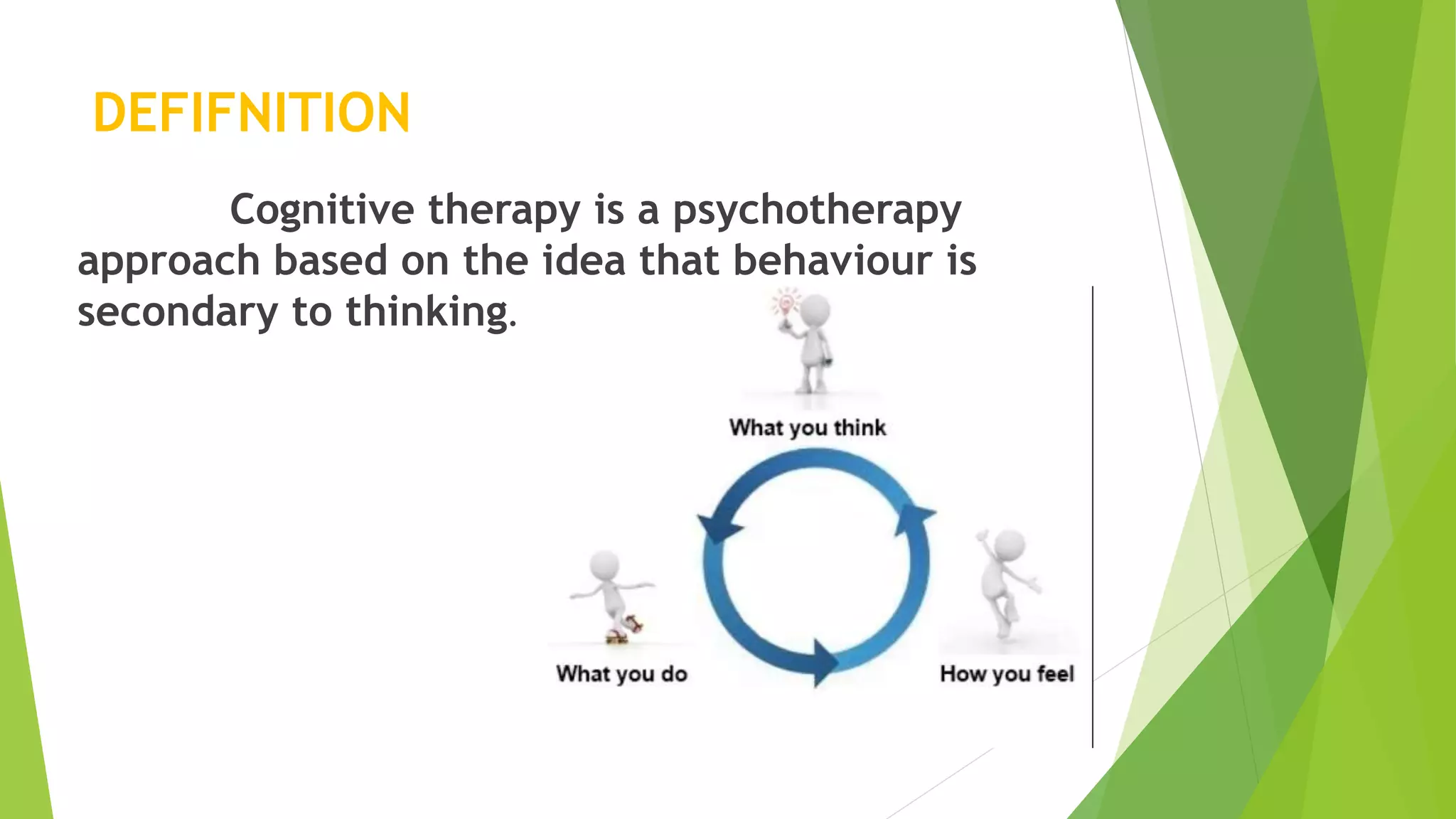
Cognitive therapy is a psychotherapy
approach based on the idea that behaviour is
secondary to thinking.
Fundamental Assumptions
 It is based on the premise that the way a person perceives
an event rather than the event itself, determines its
relevance and the response to it.
 It is time limited, attempting to cause change rapidly and
often within an established tine frame.
 Therapeutic change can be effected through an alteration
of idiopathic, dysfunctional modes of thinking, leading to
cognitive change.
 .
 These therapies are based on the belief that
patient’s are the architects of their own
misfortune and have control over their thoughts
and actions.
 They also help the patient learn something about
the process of therapy and develop therapeutic
skills applicable to other problems.
 It aims at altering the cognitions for effecting a
change in behaviour.
 It implies that all psychiatric disorders have some
amount of cognition and an improvement in this
enhances the patient’s recovery
Duration of cognitive therapy
Atypical cognitive therapy schedule consist of
about 15 visits over a three month period.
Indications
 Depression
 Anxiety disorder
 Panic disorder
 Phobias
 Anticipatory anxiety
 For teaching problem solving methods
some centres also use cognitive
behaviour therapy (CBT) for management of
psychotic symptoms such as delusions and
hallucination.
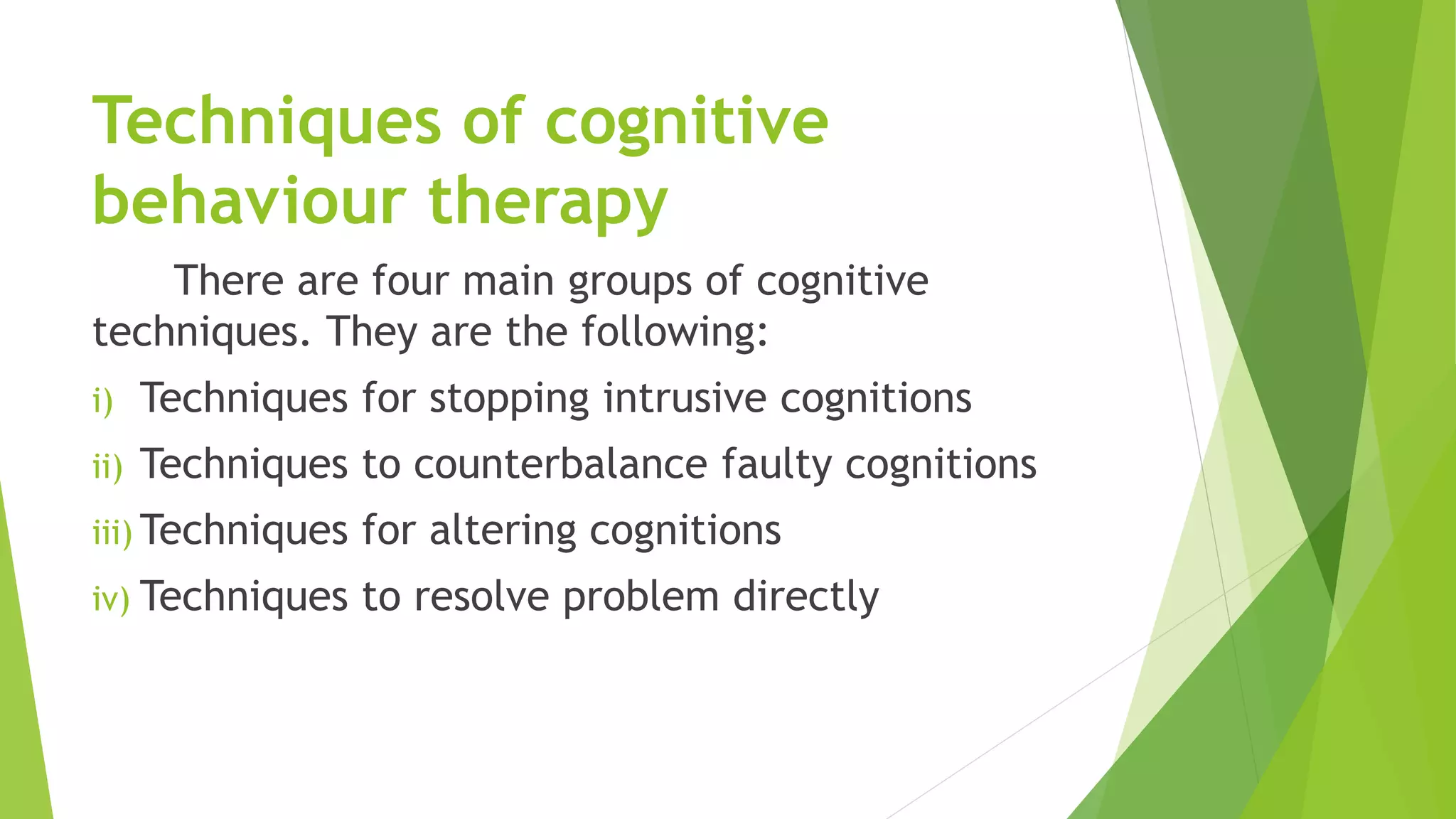
Techniques of cognitive
behaviour therapy
There are four main groups of cognitive
techniques. They are the following:
i) Techniques for stopping intrusive cognitions
ii) Techniques to counterbalance faulty cognitions
iii) Techniques for altering cognitions
iv) Techniques to resolve problem directly
i. Techniques for stopping intrusive
cognitions
These methods aims at stopping intruding
thoughts through distraction.
Alteration is directed to another mental
act like doing mental arithmetic or copying a
figure.
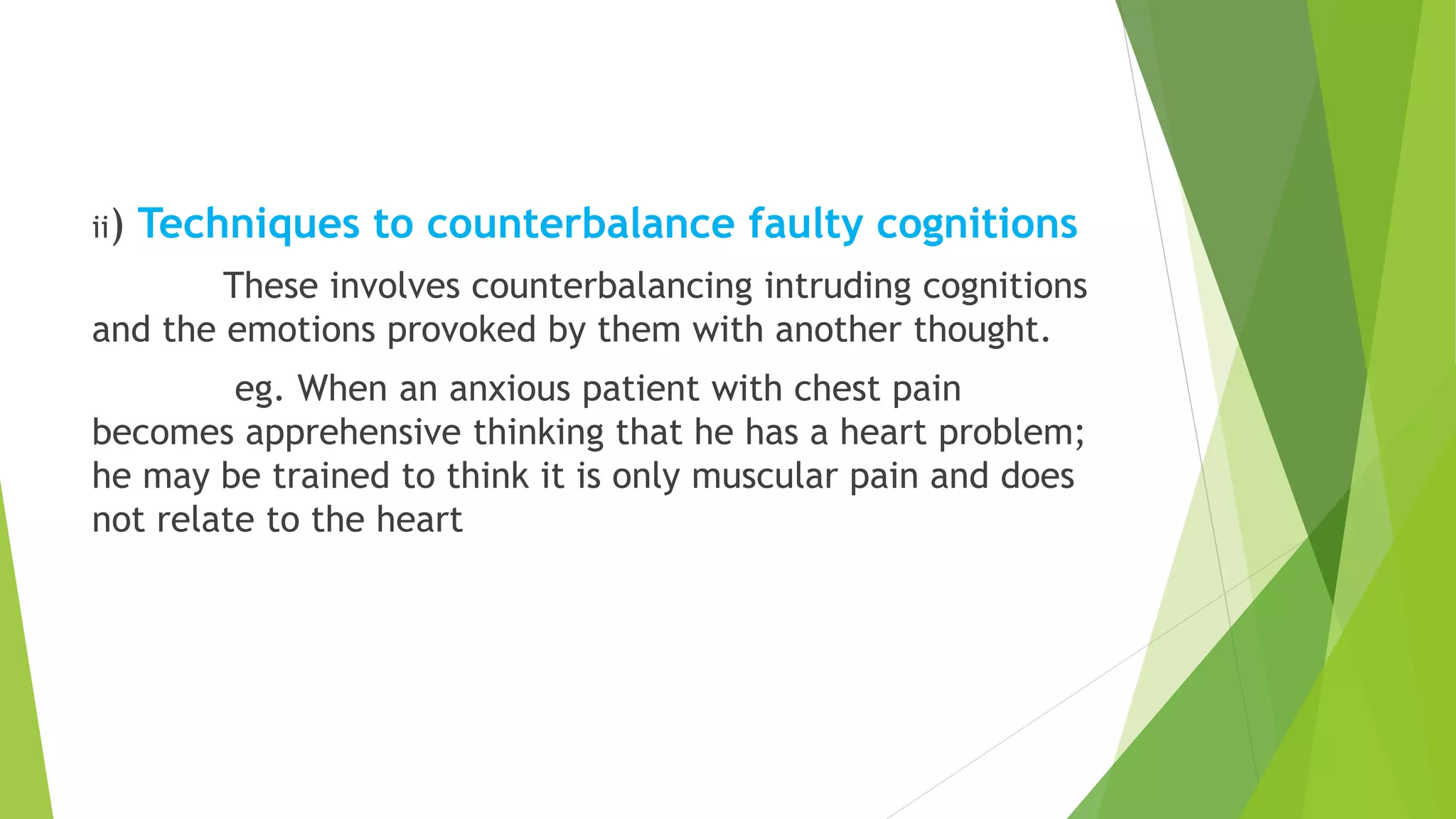
ii) Techniques to counterbalance faulty cognitions
These involves counterbalancing intruding cognitions
and the emotions provoked by them with another thought.
eg. When an anxious patient with chest pain
becomes apprehensive thinking that he has a heart problem;
he may be trained to think it is only muscular pain and does
not relate to the heart
iii) Techniques for altering cognitions
These are aimed at changing the nature of
cognitions. The patient is helped to identify “maladaptive
cognitions” and their “logical errors”.
Some errors which are not mutually exclusive and
which occur in depression are given below:
 Faulty inference
 Overgeneralization
 Magnification or minimization
 Unrealistic assumptions
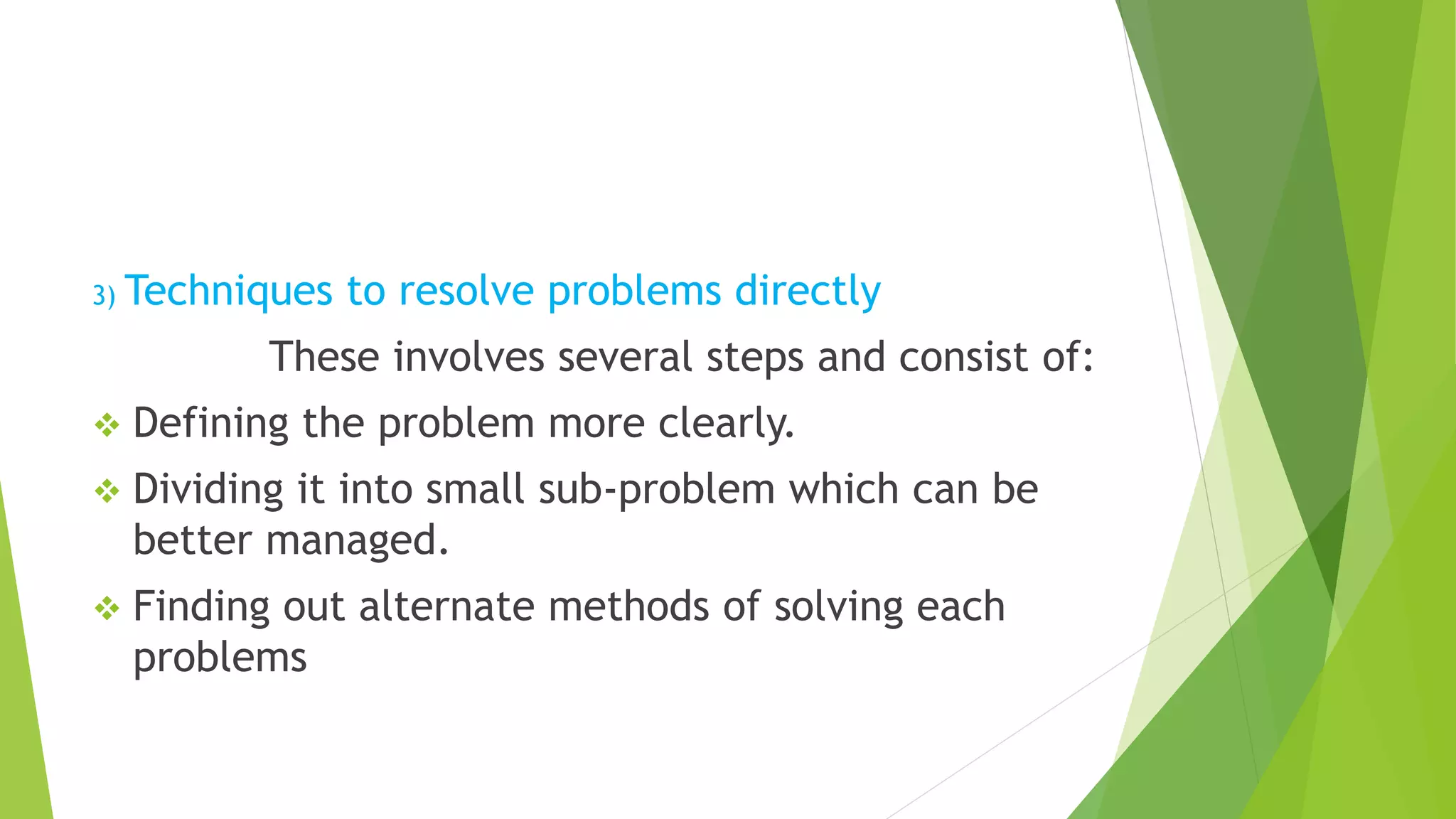
3) Techniques to resolve problems directly
These involves several steps and consist of:
 Defining the problem more clearly.
 Dividing it into small sub-problem which can be
better managed.
 Finding out alternate methods of solving each
problems
 Considering the merits and demerits of each
method and
 Selecting one method which is the most
advantageous at their instance
Therapy process
Therapy is result oriented and defines goals so that
progress towards them can be monitored. The therapist is a
coach and teacher for the patients learning new skills.
Therapist may help the patient identify situations in which
thoughts and actions occur and then assist with the
development of alternatives.
Its overall goal is to increase self-efficacy or
proficiency and sense of control over the patient must
participate actively and be committed to the decision for
change. The patient-therapist interaction is a goal oriented
collaborative partnership with a beginning middle and on end.
Cognitive behaviour therapy

Cognitive behaviour therapy

  • 1.
  • 2.
    CONTENT  Introduction  Definition Fundamental assumption  Duration of cognitive therapy  Indications  Techniques of cognitive behaviour therapy  Therapy Process
  • 3.
    INTRODUCTION  Cognitive therapyis a relatively new mode of short-term psychotherapy.  It is developed for treatment of depression and anxiety is now widely applied to a broad range of mental disorders.  It is based on the premise that our moods and feelings are influenced by our thoughts.
  • 4.
     To improvepatient’s abilities to function in the world  By correcting the distorted ways of thinking the cognitive therapist restructures patients views of themselves, the world, and future.  More realistic thoughts are substituted to reduce painful feelings such as anxiety, guilt, and hopelessness.
  • 5.
    DEFIFNITION Cognitive therapy isa psychotherapy approach based on the idea that behaviour is secondary to thinking.
  • 6.
    Fundamental Assumptions  Itis based on the premise that the way a person perceives an event rather than the event itself, determines its relevance and the response to it.  It is time limited, attempting to cause change rapidly and often within an established tine frame.  Therapeutic change can be effected through an alteration of idiopathic, dysfunctional modes of thinking, leading to cognitive change.  .
  • 7.
     These therapiesare based on the belief that patient’s are the architects of their own misfortune and have control over their thoughts and actions.  They also help the patient learn something about the process of therapy and develop therapeutic skills applicable to other problems.
  • 8.
     It aimsat altering the cognitions for effecting a change in behaviour.  It implies that all psychiatric disorders have some amount of cognition and an improvement in this enhances the patient’s recovery
  • 9.
    Duration of cognitivetherapy Atypical cognitive therapy schedule consist of about 15 visits over a three month period.
  • 10.
    Indications  Depression  Anxietydisorder  Panic disorder  Phobias  Anticipatory anxiety  For teaching problem solving methods some centres also use cognitive behaviour therapy (CBT) for management of psychotic symptoms such as delusions and hallucination.
  • 11.
    Techniques of cognitive behaviourtherapy There are four main groups of cognitive techniques. They are the following: i) Techniques for stopping intrusive cognitions ii) Techniques to counterbalance faulty cognitions iii) Techniques for altering cognitions iv) Techniques to resolve problem directly
  • 12.
    i. Techniques forstopping intrusive cognitions These methods aims at stopping intruding thoughts through distraction. Alteration is directed to another mental act like doing mental arithmetic or copying a figure.
  • 13.
    ii) Techniques tocounterbalance faulty cognitions These involves counterbalancing intruding cognitions and the emotions provoked by them with another thought. eg. When an anxious patient with chest pain becomes apprehensive thinking that he has a heart problem; he may be trained to think it is only muscular pain and does not relate to the heart
  • 14.
    iii) Techniques foraltering cognitions These are aimed at changing the nature of cognitions. The patient is helped to identify “maladaptive cognitions” and their “logical errors”.
  • 15.
    Some errors whichare not mutually exclusive and which occur in depression are given below:  Faulty inference  Overgeneralization  Magnification or minimization  Unrealistic assumptions
  • 16.
    3) Techniques toresolve problems directly These involves several steps and consist of:  Defining the problem more clearly.  Dividing it into small sub-problem which can be better managed.  Finding out alternate methods of solving each problems
  • 17.
     Considering themerits and demerits of each method and  Selecting one method which is the most advantageous at their instance
  • 18.
    Therapy process Therapy isresult oriented and defines goals so that progress towards them can be monitored. The therapist is a coach and teacher for the patients learning new skills. Therapist may help the patient identify situations in which thoughts and actions occur and then assist with the development of alternatives. Its overall goal is to increase self-efficacy or proficiency and sense of control over the patient must participate actively and be committed to the decision for change. The patient-therapist interaction is a goal oriented collaborative partnership with a beginning middle and on end.