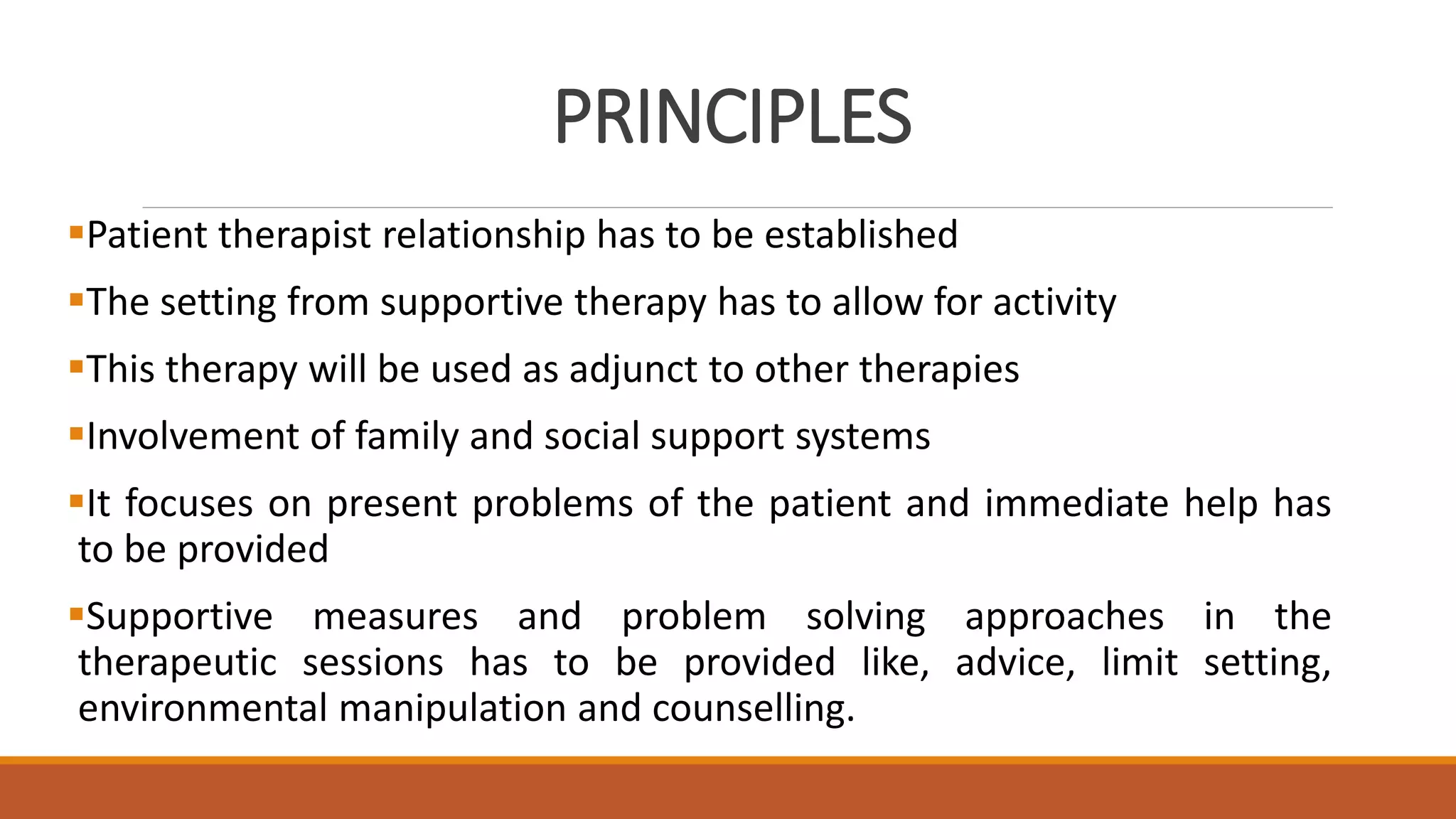
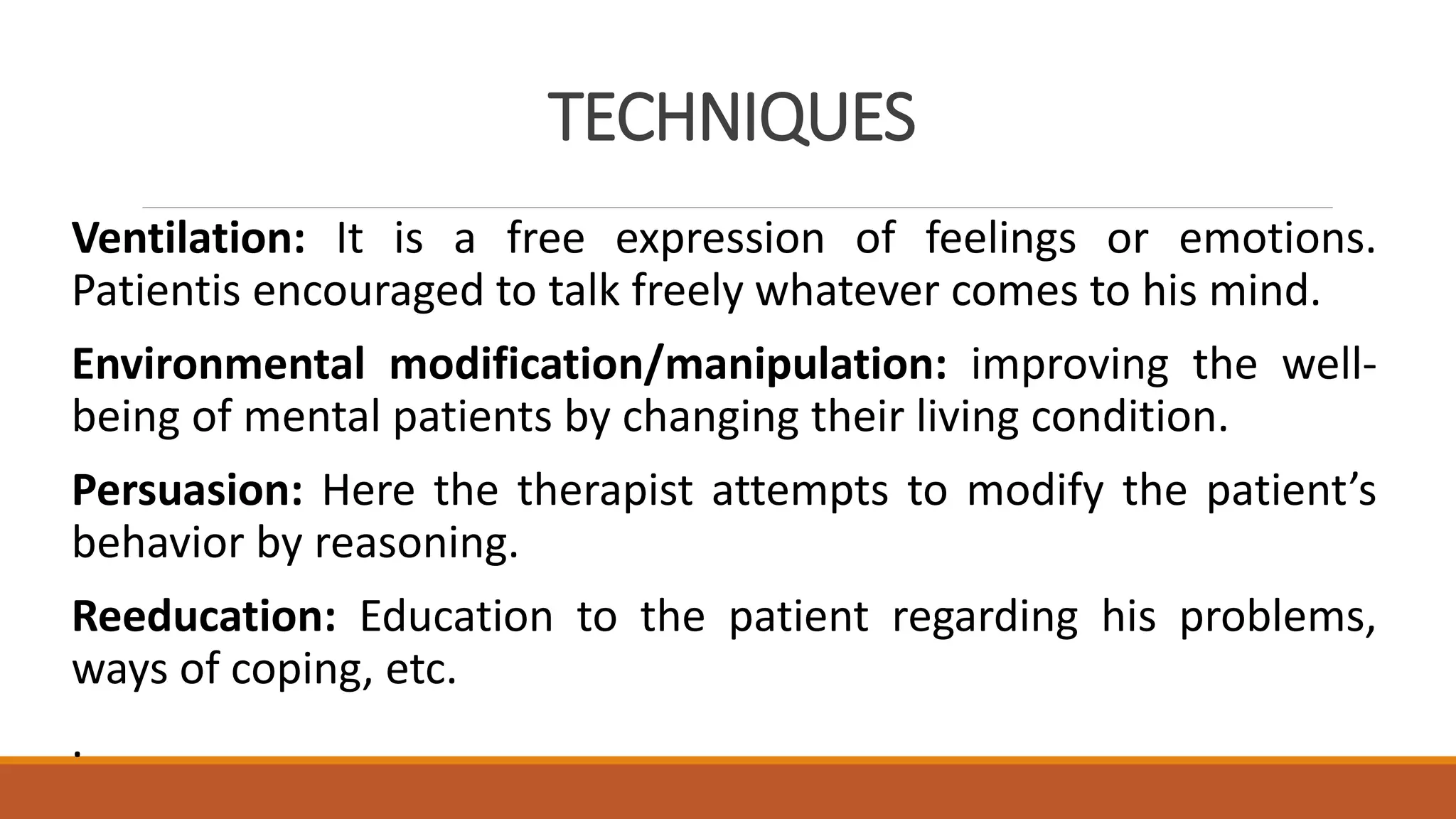
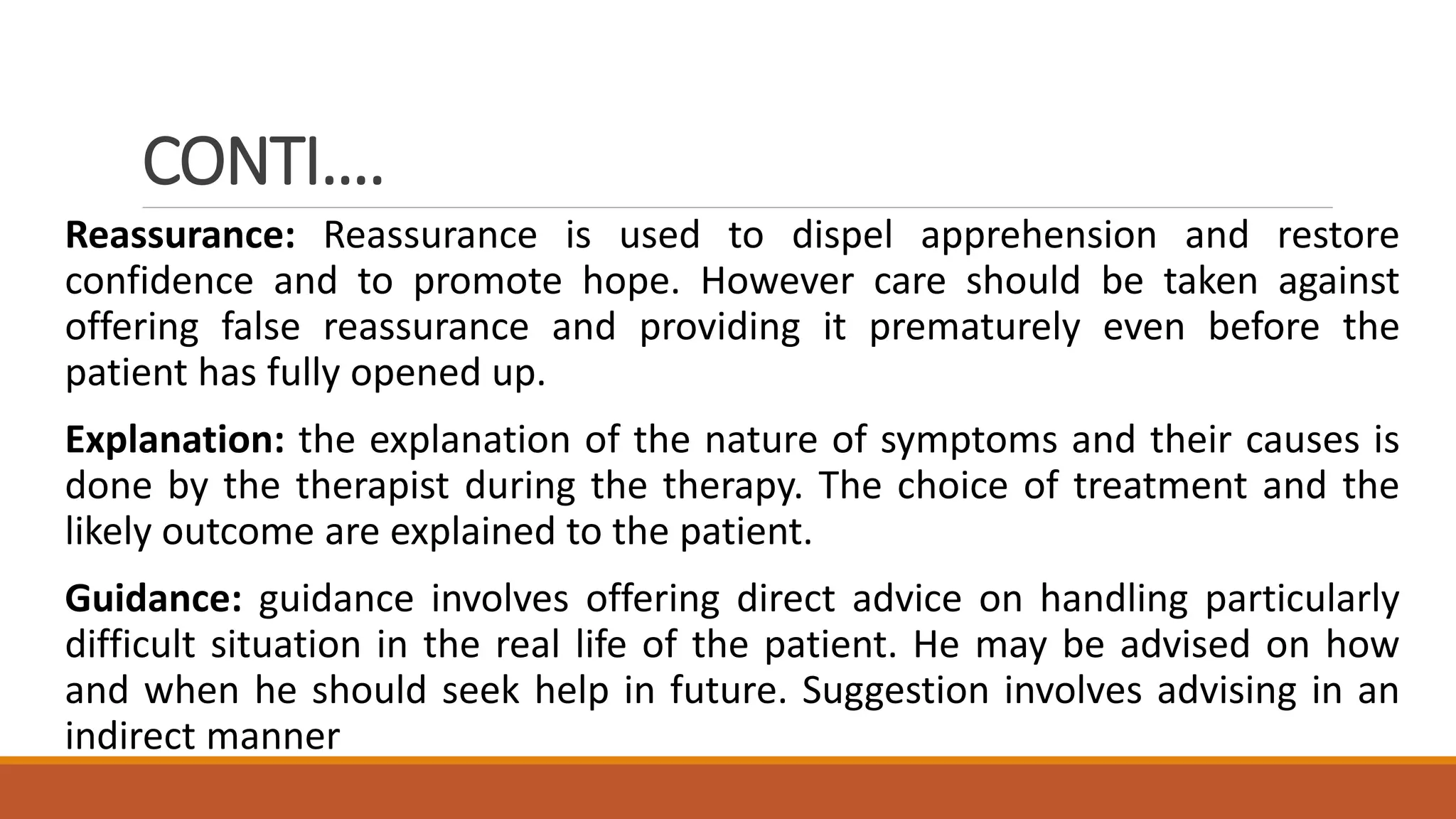
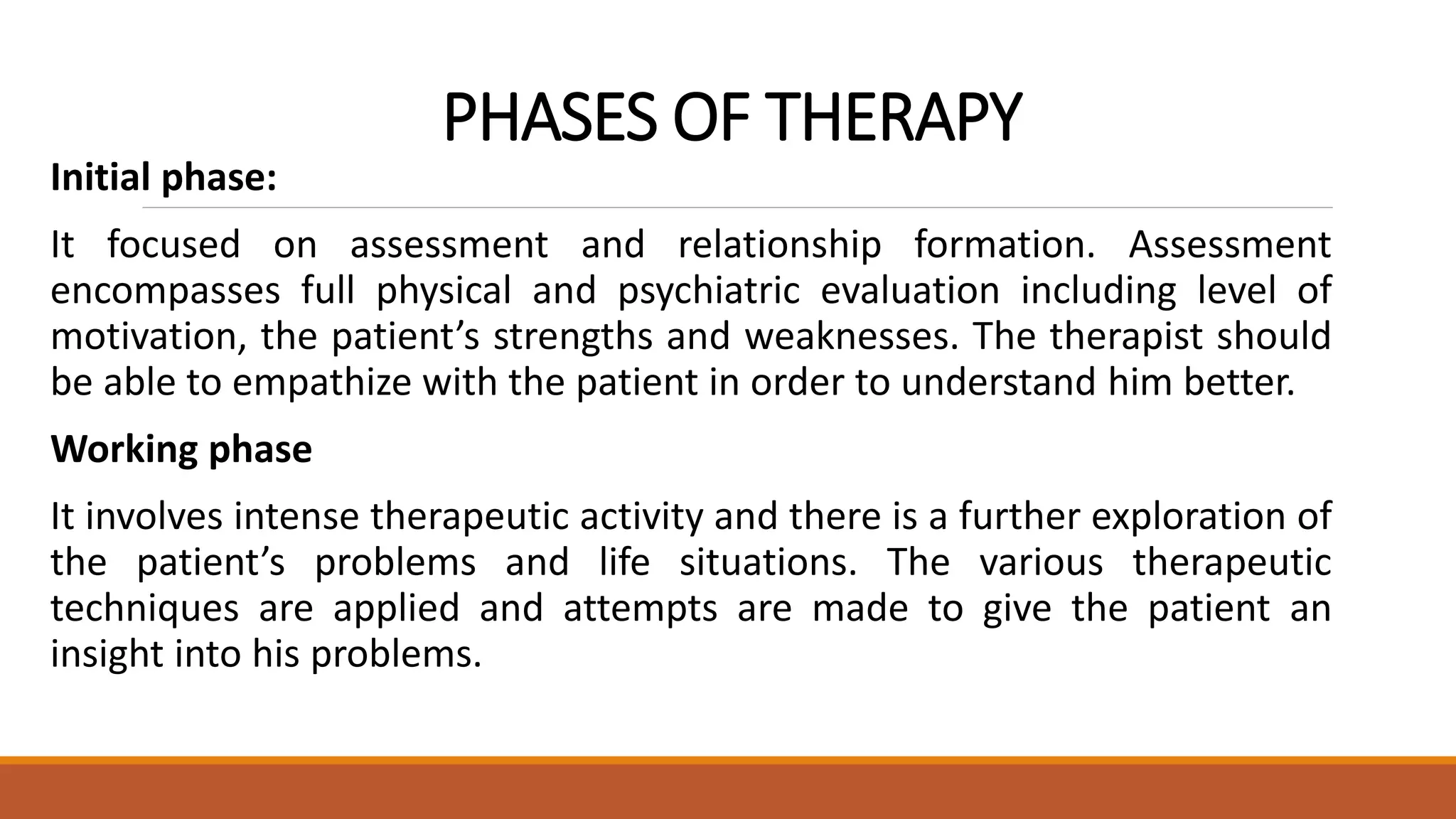
This document provides an overview of supportive therapy. Supportive therapy helps patients relieve emotional distress and symptoms without delving into past issues or personality changes. It is used to treat conditions like schizophrenia, personality disorders, anxiety, PTSD, eating disorders, substance abuse, and psychosis. The therapist establishes a relationship with the patient and uses techniques like ventilation, environmental manipulation, persuasion, and reassurance. Supportive therapy involves assessment, relationship building, working through problems, and preparing the patient to end treatment. Family and marital therapy views individual symptoms as related to family issues and aims to treat the family system. It uses assessment, skills training, and various models like individual, conjoint, couples, group, and network therapy.