




Subhash Khatri
Goal of Clinical Physiotherapy education is to produce the
PT we would like to see if we were sick!
Overview
 Clinical environment
 Focused on patient
 Problems, Diagnosis & Management
 Real life situations
 Decision making on time
 Apply theoretical & practical knowledge
 Acquire clinical skills
Challenges of Clinical Teaching
1. Time constraints
2. Work demands : clinical, research or administrative
3. Often unpredictable and difficult to prepare for
4. Engaging multiple levels of learners(PG/Interns/IV/III/II/I)
5. Patient related challenges: short hospital stays; patients
too sick or unwilling to participate in a teaching encounter
6. Lack of incentives and rewards for teaching
7. Physical clinical environment not comfortable for teaching
Skills that make a excellent clinical teacher
1. Share a passion for teaching
2. Are clear, organized, accessible, supportive and compassionate;
3. Are able to establish rapport; provide direction and feedback; exhibit
4. Integrity and respect for others
5. Demonstrate clinical competence
6. Utilize planning and orienting strategies
7. Possess a broad repertoire of teaching methods and scripts
8. Engage in self-evaluation and reflection
9. Draw upon multiple forms of knowledge, they target their teaching to
the learners’ level of knowledge.
Challenges in outpatient teaching
1. Busy clinical setting
2. Teaching time often short, no time for elaborate teaching
3. No control over distribution and organization of time
4. Attending to several patients at the same time with multiple learners
5. Brief teacher-trainee interactions
6. Patient care demands usually take priority and must be addressed
7. Multiple patient problems must be addressed simultaneously, so
8. teachers cannot focus on one problem to teach
9. Learning and service take place concurrently
10. Organic and psychosocial problems are intertwined
11. Diagnostic questions often settled by follow up of empiric treatment
12. Teacher should be a guide and facilitator than information provider
Challenges of inpatient teaching
 Difficult to set teaching goals, unanticipated events occur frequently
 Ward team usually composed of varying levels of learners
 Patients too sick or unwilling to participate in the teaching encounter
 Patient stays are too short to follow natural history of disease
 Teachers could compromise trainee-patient relationship if they dominate the
encounter
 Trainees and teachers feel insecure about admitting errors in front of the patient and
the rest of the medical team
 Tendency by many clinical teachers to lecture rather than practice interactive
teaching
 Engaging all learners simultaneously can be difficult
 Teachers need to pay close attention to learner fatigue, boredom and workload
Education is not teaching what learners doesn’t know but
making them to behave as they don’t behave!
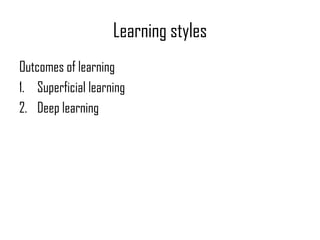
Learning styles
Cognitive approach
1. Pragmatists
2. Reflectors
3. Theorists
4. Activists
Learning styles
VAK model
1. Visual
2. Auditory
3. Kinesthetic
Learning styles
Outcomes of learning
1. Superficial learning
2. Deep learning
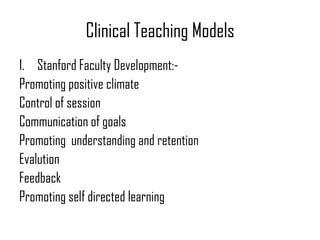
Clinical Teaching Models
1. Stanford Faculty Development:-
Promoting positive climate
Control of session
Communication of goals
Promoting understanding and retention
Evalution
Feedback
Promoting self directed learning
2. Micro skills of Teaching(One-minute preceptor)
Five-step approach
Getting commitment
Probing for supportive evidence
Teaching general rules
Reinforcement
Correcting mistakes
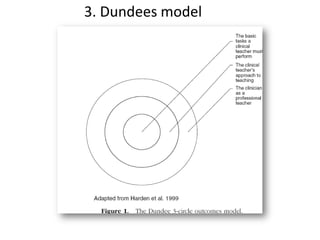
3. Dundees model
Problems with Clinical Teaching
 Lack of clear objectives and expectations
 Teaching pitched at the wrong level
 Focus on recall of facts rather than problem solving
 Lack of active participation by learners
Don’ts
1. Leave the student alone until asked to supervise
2. Correct the student's mistakes in front of patient
3. Fails to set time limit for clinical teaching activities
4. Give general answers to a specific question
5. Not approachable
6. Difficult person to summon for consultation/help
7. Fail to adhere to teaching schedule
8. Ask questions in threatening manner
9. Put down them(you don’t know this?)
10. Insecurity about up to date knowledge
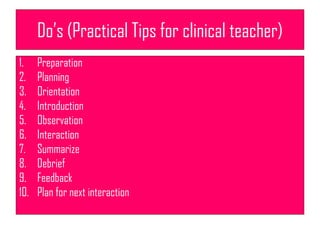
Do’s (Practical Tips for clinical teacher)
1. Preparation
2. Planning
3. Orientation
4. Introduction
5. Observation
6. Interaction
7. Summarize
8. Debrief
9. Feedback
10. Plan for next interaction
We will wrap up here!

Clinical teaching

  • 1.
  • 2.
    Goal of ClinicalPhysiotherapy education is to produce the PT we would like to see if we were sick!
  • 8.
    Overview  Clinical environment Focused on patient  Problems, Diagnosis & Management  Real life situations  Decision making on time  Apply theoretical & practical knowledge  Acquire clinical skills
  • 11.
    Challenges of ClinicalTeaching 1. Time constraints 2. Work demands : clinical, research or administrative 3. Often unpredictable and difficult to prepare for 4. Engaging multiple levels of learners(PG/Interns/IV/III/II/I) 5. Patient related challenges: short hospital stays; patients too sick or unwilling to participate in a teaching encounter 6. Lack of incentives and rewards for teaching 7. Physical clinical environment not comfortable for teaching
  • 15.
    Skills that makea excellent clinical teacher 1. Share a passion for teaching 2. Are clear, organized, accessible, supportive and compassionate; 3. Are able to establish rapport; provide direction and feedback; exhibit 4. Integrity and respect for others 5. Demonstrate clinical competence 6. Utilize planning and orienting strategies 7. Possess a broad repertoire of teaching methods and scripts 8. Engage in self-evaluation and reflection 9. Draw upon multiple forms of knowledge, they target their teaching to the learners’ level of knowledge.
  • 17.
    Challenges in outpatientteaching 1. Busy clinical setting 2. Teaching time often short, no time for elaborate teaching 3. No control over distribution and organization of time 4. Attending to several patients at the same time with multiple learners 5. Brief teacher-trainee interactions 6. Patient care demands usually take priority and must be addressed 7. Multiple patient problems must be addressed simultaneously, so 8. teachers cannot focus on one problem to teach 9. Learning and service take place concurrently 10. Organic and psychosocial problems are intertwined 11. Diagnostic questions often settled by follow up of empiric treatment 12. Teacher should be a guide and facilitator than information provider
  • 19.
    Challenges of inpatientteaching  Difficult to set teaching goals, unanticipated events occur frequently  Ward team usually composed of varying levels of learners  Patients too sick or unwilling to participate in the teaching encounter  Patient stays are too short to follow natural history of disease  Teachers could compromise trainee-patient relationship if they dominate the encounter  Trainees and teachers feel insecure about admitting errors in front of the patient and the rest of the medical team  Tendency by many clinical teachers to lecture rather than practice interactive teaching  Engaging all learners simultaneously can be difficult  Teachers need to pay close attention to learner fatigue, boredom and workload
  • 21.
    Education is notteaching what learners doesn’t know but making them to behave as they don’t behave!
  • 29.
    Learning styles Cognitive approach 1.Pragmatists 2. Reflectors 3. Theorists 4. Activists
  • 31.
    Learning styles VAK model 1.Visual 2. Auditory 3. Kinesthetic
  • 33.
    Learning styles Outcomes oflearning 1. Superficial learning 2. Deep learning
  • 35.
    Clinical Teaching Models 1.Stanford Faculty Development:- Promoting positive climate Control of session Communication of goals Promoting understanding and retention Evalution Feedback Promoting self directed learning
  • 36.
    2. Micro skillsof Teaching(One-minute preceptor) Five-step approach Getting commitment Probing for supportive evidence Teaching general rules Reinforcement Correcting mistakes
  • 37.
  • 39.
    Problems with ClinicalTeaching  Lack of clear objectives and expectations  Teaching pitched at the wrong level  Focus on recall of facts rather than problem solving  Lack of active participation by learners
  • 42.
    Don’ts 1. Leave thestudent alone until asked to supervise 2. Correct the student's mistakes in front of patient 3. Fails to set time limit for clinical teaching activities 4. Give general answers to a specific question 5. Not approachable 6. Difficult person to summon for consultation/help 7. Fail to adhere to teaching schedule 8. Ask questions in threatening manner 9. Put down them(you don’t know this?) 10. Insecurity about up to date knowledge
  • 44.
    Do’s (Practical Tipsfor clinical teacher) 1. Preparation 2. Planning 3. Orientation 4. Introduction 5. Observation 6. Interaction 7. Summarize 8. Debrief 9. Feedback 10. Plan for next interaction
  • 45.
    We will wrapup here!

Editor's Notes

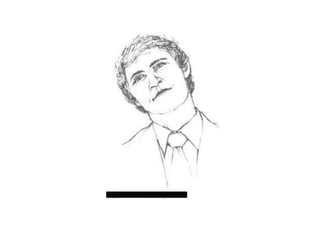
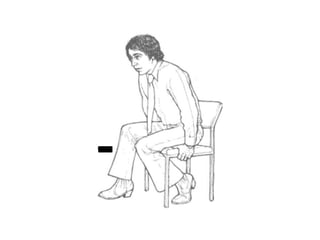
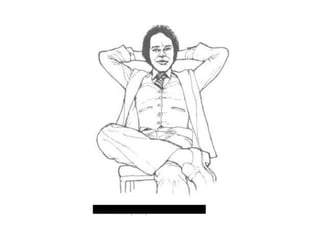
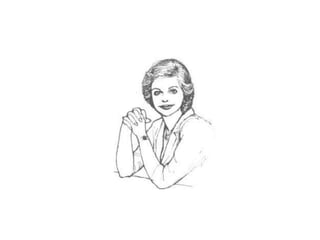
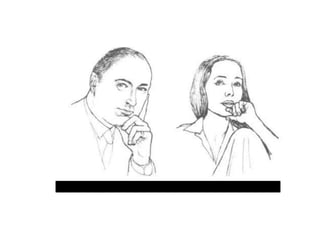
  • #4 This person has interest in listening you- head tilts to one side
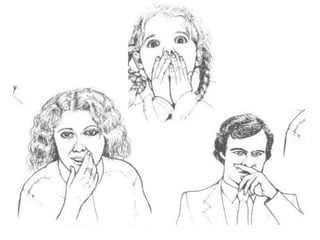
  • #6 Child, teenager & adult telling lie
  • #8 Telling big lie
  • #9 Hospital, ward, community
  • #11 Get, set and go, he is going to ask you something
  • #13 Pulling the earlobe- I heard enough, now let me speak
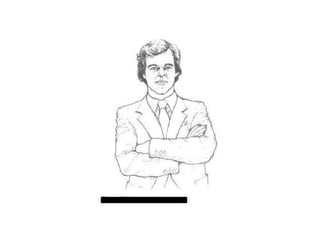
  • #15 I know it
  • #17 He knows everything, I have all the answers
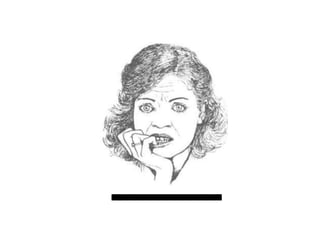
  • #19 Person is under pressure-fingers in mouth
  • #21 Critical evaluation
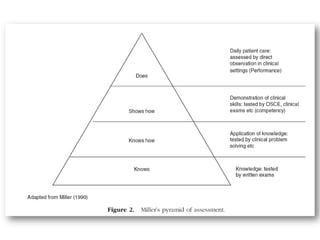
  • #23 Work based assessment of learner
  • #24 Politician hand shake(not trustworthy)
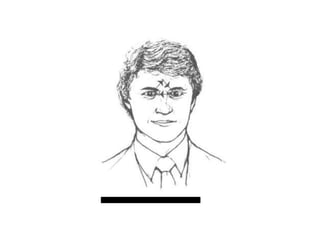
  • #26 Frustrated gesture
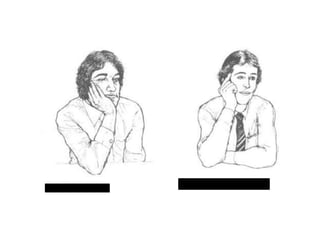
  • #27 Showing boredom
  • #29 Negative thoughts about speaker
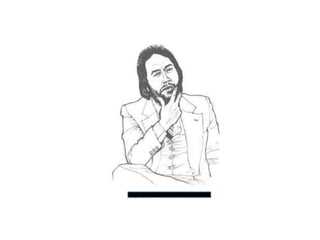
  • #31 Making a decision- its in your favour
  • #33 Wants to hide from situation, defensive negative gesture
  • #35 I mean business, come to the point!
  • #39 Agreement
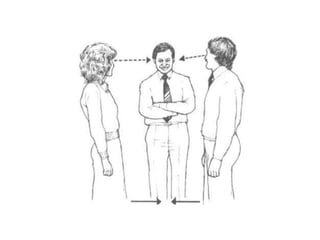
  • #41 Third person not accepted by other two
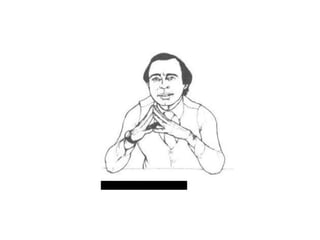
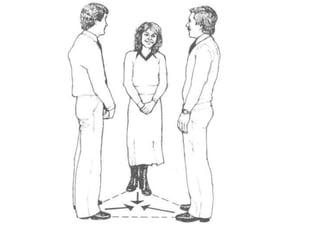
  • #44 Open triangular position signaling acceptance