+
Chapter 1: Overview of Education in Healthcare
+
AGENDA
Lecture (60 minutes)
Break (10 minutes)
In-Class Activity (30 minutes)
Break (10 minutes)
Quiz Completion and Grading ( 25 minutes)
+
OBJECTIVES
1) Student will have an understanding of the teaching role of
health professionals and be able to identify the purposes,
goals, benefits of clients and staff/student
2) Student will be able to demonstrate an understanding of
health literacy through discussion
3) Students will be able to demonstrate the ability to educate the
client, caregiver, family, and significant others to facilitate
skills on areas of occupation as well as prevention, health
maintenance, and safety through the ability to compare the
education process to healthcare practice with a brief
education write-up plan for an adaptive device
+
Think, Pair, Share!
#1
Think of a time when you or a family member
received education from a healthcare
professional?
What was it and how did it impact and/or benefit
you?
Think about your answer (or write it down) and
share with a partner!
+
Purpose of the
Chapter
 Historical Evolution of teaching as part of the health
professional’s role
 Offer a perspective on the current trends in health care that
make the teaching of clients a highly visible and required
function of healthcare delivery
 Addresses the continuing education effort required to ensure
ongoing practice competencies of health personnel
 Addresses the learning process, identifies barriers to teaching
and obstacles to learning and research
+
Historical Foundations
To:
Inform
Encourage
Caution
+
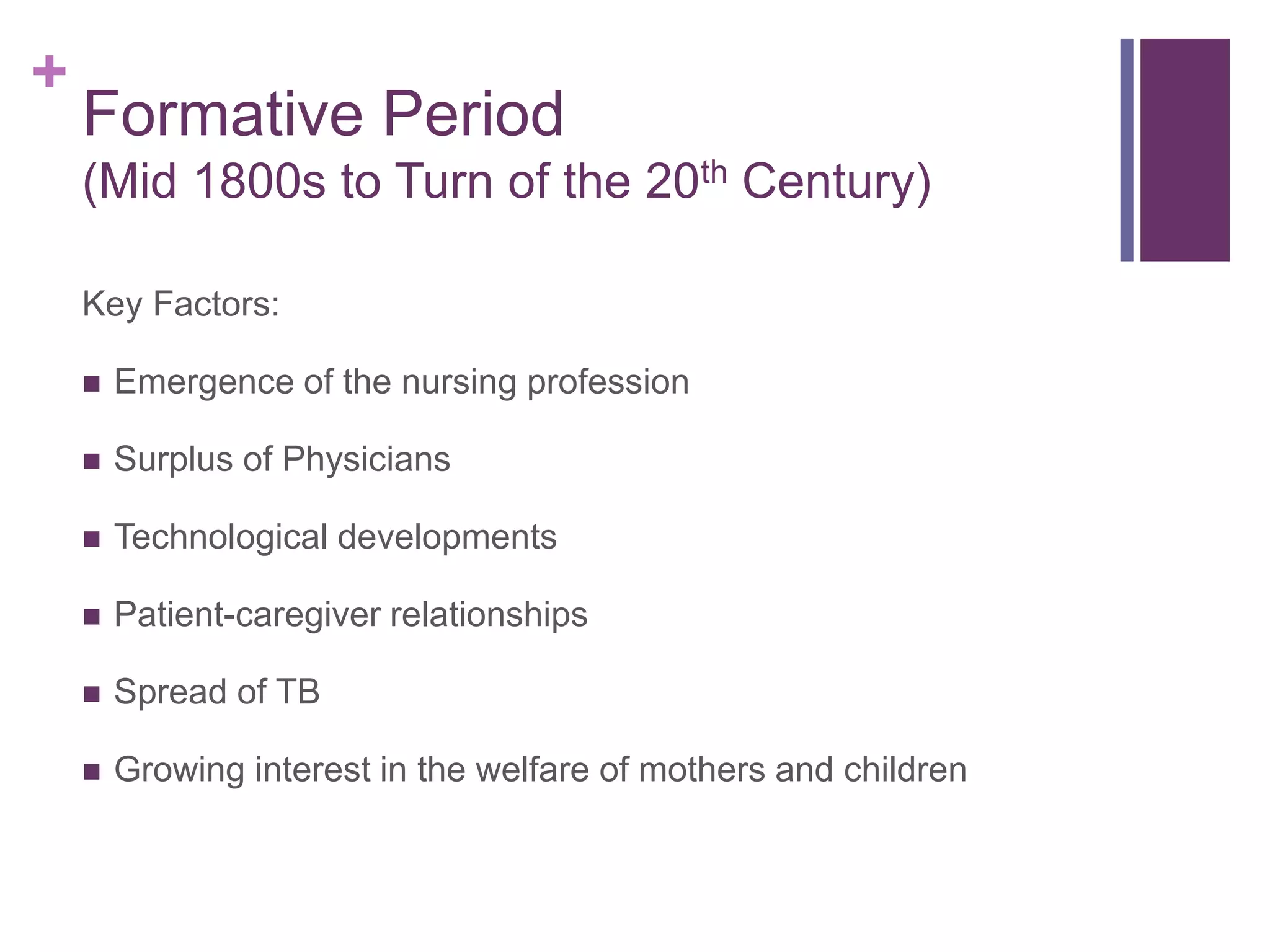
Formative Period
(Mid 1800s to Turn of the 20th Century)
Key Factors:
 Emergence of the nursing profession
 Surplus of Physicians
 Technological developments
 Patient-caregiver relationships
 Spread of TB
 Growing interest in the welfare of mothers and children
+
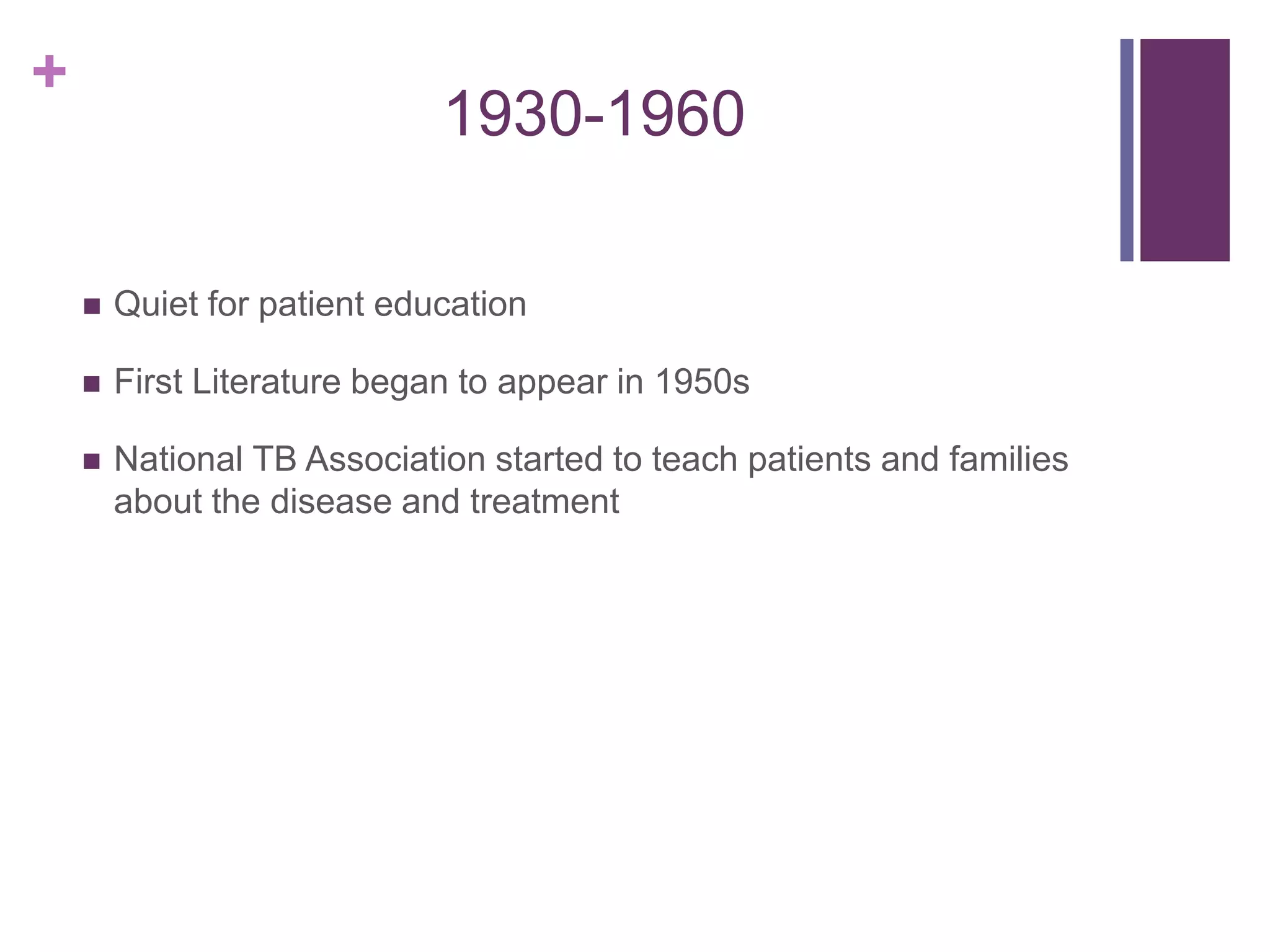
1930-1960
 Quiet for patient education
 First Literature began to appear in 1950s
 National TB Association started to teach patients and families
about the disease and treatment
+
+
1960-1970s
 Education was seen as specific to individual patients rather
than providing general public health education
 Civil Rights Movement, Women’s Rights Movements,
Consumer and self-help movement
 Public Health Service funded several patient and family
education projects
 1964- American Medical Association held first National
Conference on Health Education Goals
 1971- President Nixon appointed a committee that recommended
hospitals offer health education to families of patients
 1973- Patient’s Bill of Rights published
+
1990s-Present Day
 Accreditation Manual for hospitals published by the Joint
Commission on Accreditation of healthcare organizations
 Healthy People 2000, 2010
 New Definition of Teaching Role
 Embrace a personal ethic of social responsibility
 Evidence based clinically competent care
 Preventative health care
 2006- 5 Million Lived Campaign
+
Paradigm Shift of Education
Approaches
Disease Oriented (DOPE)
TO
Prevention Oriented (POPE)
TO
Health Oriented (HOPE)
+
Trends Affecting Health Care
 Healthy People 2020
 Community, school, workplace outreach
 Political Emphasis on productivity, competitiveness in the
marketplace, and cost-containment measures
 Malpractice claims and disciplinary action for incompetence
 Demand for health information is expected to intensify
+
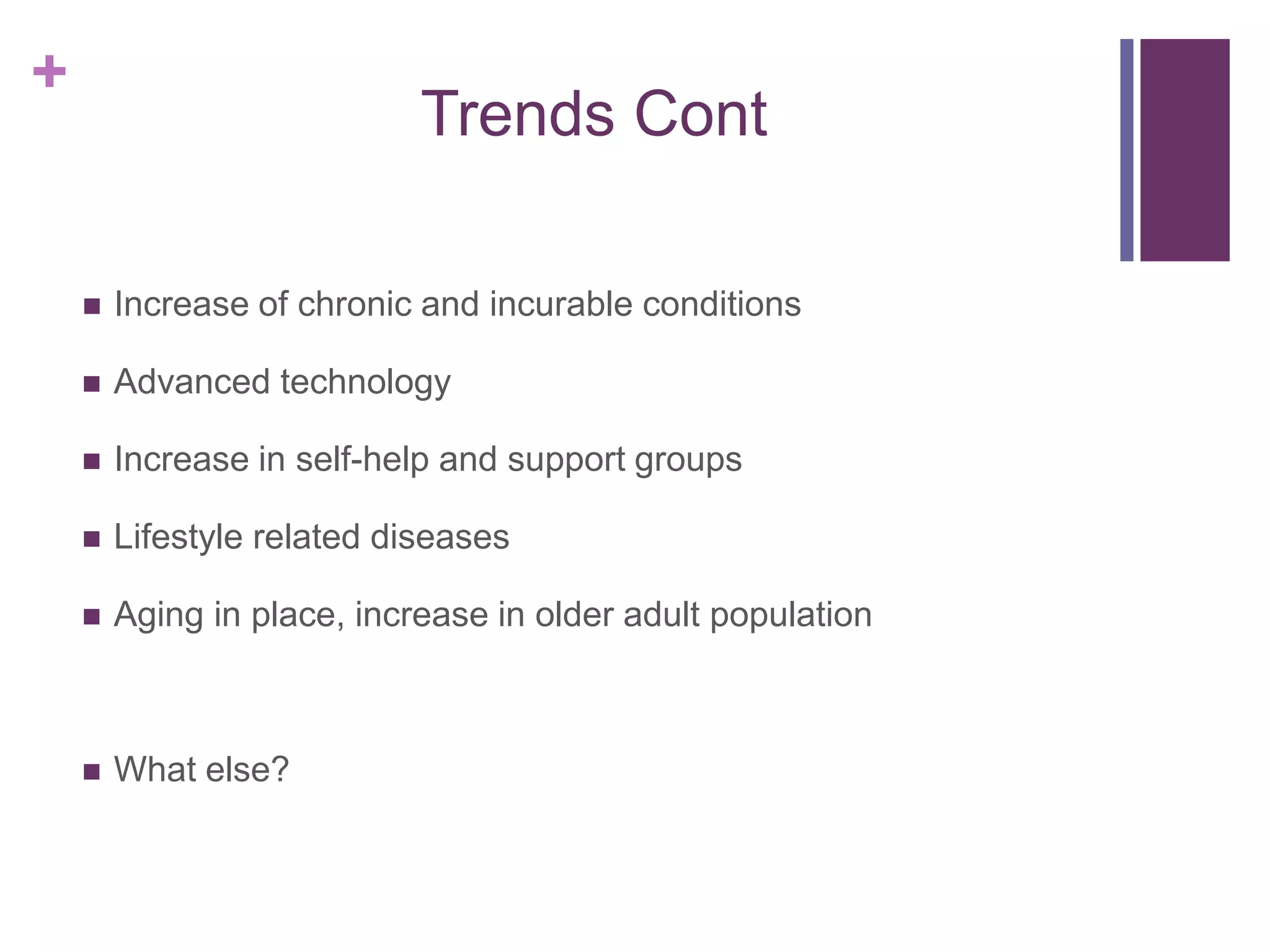
Trends Cont
 Increase of chronic and incurable conditions
 Advanced technology
 Increase in self-help and support groups
 Lifestyle related diseases
 Aging in place, increase in older adult population
 What else?
+
Purpose, Goals, Benefits of Client
and Staff Education
 Increase competence and confidence of clients for self-management
 Increase consumer satisfaction
 Improve quality of life
 Ensure continuity of care
 Decrease client anxiety
 Effectively reduce the complications of illness and the incidence of disease
 Promote adherence to treatment plans
 Maximize independence of ADL’s
 Energize and empower consumers to be actively involved in their health
+
“Illness is a natural life process, but so is humankind’s
ability to learn therefore illness can become an
educational opportunity a “teachable moment” when ill
health suddenly encourages patients to take a more
active role in their care”
+
The Education Process
Assessment
Planning
Implementation
 Evaluation
 Ascertain learning needs, readiness
to learn, and learning styles
 Develop a teaching plan based on
mutually predetermined behavioral
outcomes to meet individual needs
 Perform the act of teaching using
specific instructional methods and
tools
 Determine behavior changes in
knowledge, attitudes, and skills
Healthcare Practice Education Process
+
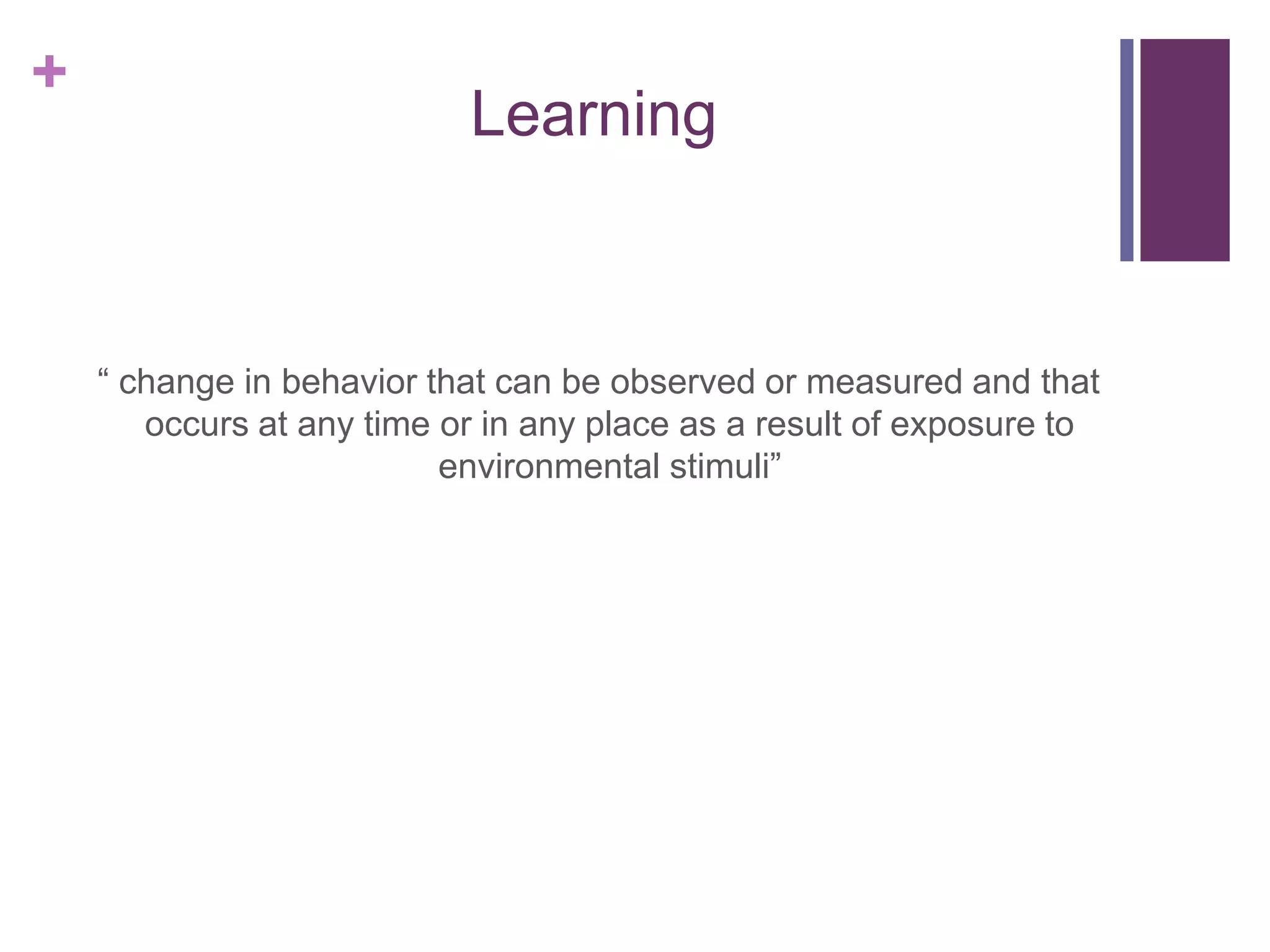
Learning
“ change in behavior that can be observed or measured and that
occurs at any time or in any place as a result of exposure to
environmental stimuli”
+
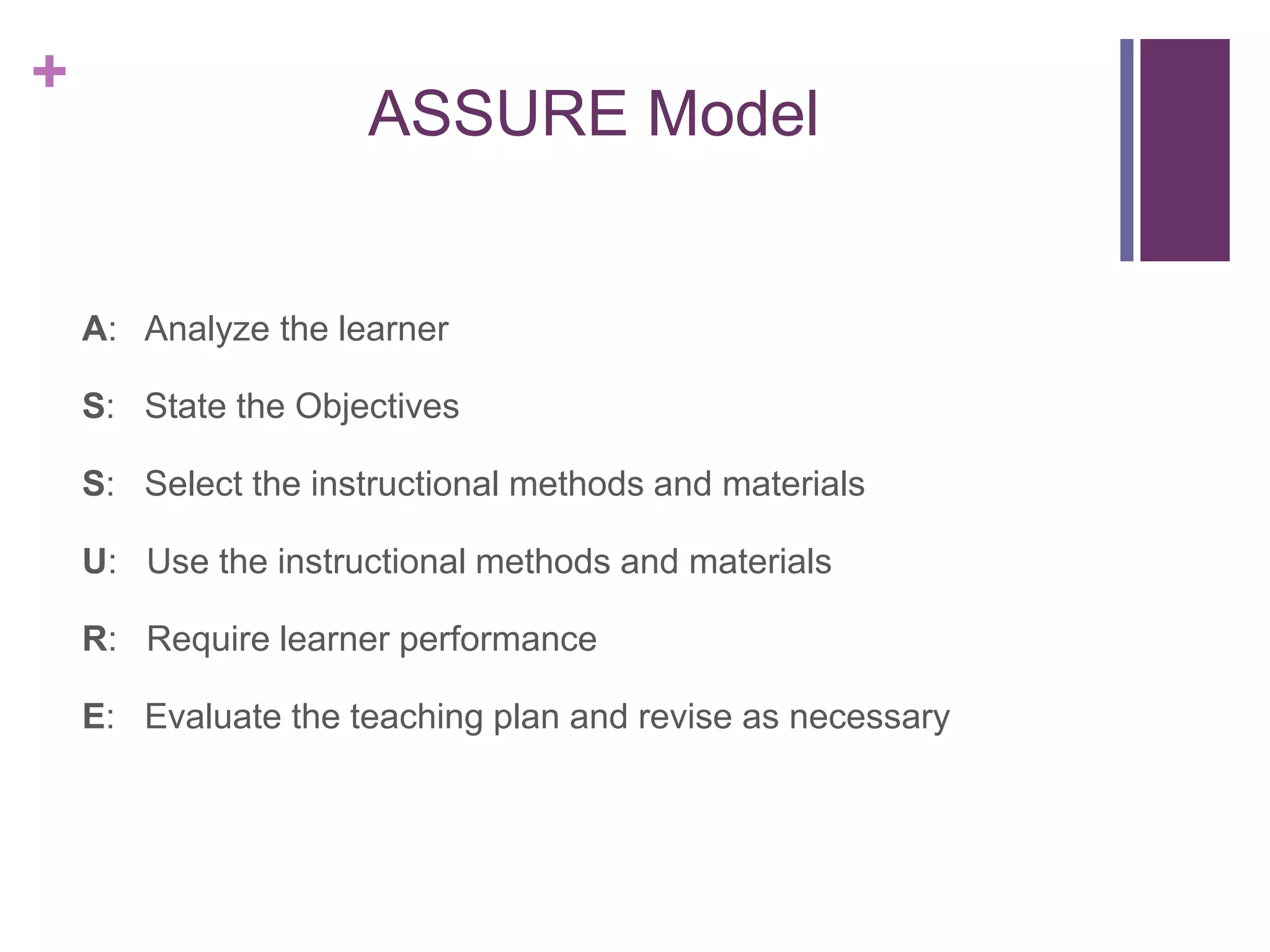
ASSURE Model
A: Analyze the learner
S: State the Objectives
S: Select the instructional methods and materials
U: Use the instructional methods and materials
R: Require learner performance
E: Evaluate the teaching plan and revise as necessary
+
“A health professional needs a great deal of knowledge and skill
to carry out the role as educator with efficiency and
effectiveness.”
–Bastable, Gramet, Jacobs, & Sopczyk, 2011
+
Paradigm Shift
 Role of educator has shifted from the traditional position of
being the giver of information to that of a process designer and
coordinator
 Emphasis on facilitation of learning from a nondirective rather
than a didactic teaching approach
 Move away from teacher teaching and focus on the learner
learning
 Clients must be actively involved in order to increase
comprehension, recall, and application of information
+
Think, Pair, Share!
#2
Think of some barriers an educator may
face to teaching?
Ex: Student doesn’t want to learn
Think of some obstacles a student or patient
might face to learning?
Ex: Lack of resources
+
Obstacles That Interfere with
Learning
 Health professionals must
confront many barriers when
educating others
 Barriers to teaching: impede
the health professional’s
ability to deliver educational
services
 Obstacles to learning:
negatively affect the ability of
the learner to pay attention to
and process information
+
Barriers to Teaching
 Lack of time
 Lack of motivation and skill
 What else?
+
Obstacles to Learning Cont.
 Lack of time
 Stress of illness
 What else?
+
What is OT doing about Client
Education?
 Technology!
 61% of people use the internet for medical information
 17% of adults use mobile devices for this (Weaver, Lindsay, &
Gitelman, 2012).
 Out of 1,434 health care–related blogs, only 297 were written by
health care professionals (Kim, 2012).
 90% of 1,040 young adults who share health information on social
networks trust the information they find on online (Weaver et al.,
2012).
+
In-Class Activity: ASSURE Model
 Break up into groups no more than 5 people
 Choose an adaptive device
 Complete the worksheet and create an education plan
regarding ASSURE model
 You can choose a demographic of patient!
 Be prepared to share to class!
+
ASSURE EXAMPLE
 Adaptive Device: Weighted Cup
 A: Clients with Early stage Parkinson's
 S: To successfully drink out of a cup without spilling
 S: Weighted cup and handout on how it works
 U: Demonstrate first and then supervise practice without liquid
and then with liquid
 R: Continue with the practice and get a feel of comfort level
 E: Add other weighted utensils to education plan as well
+
Break Time!
+
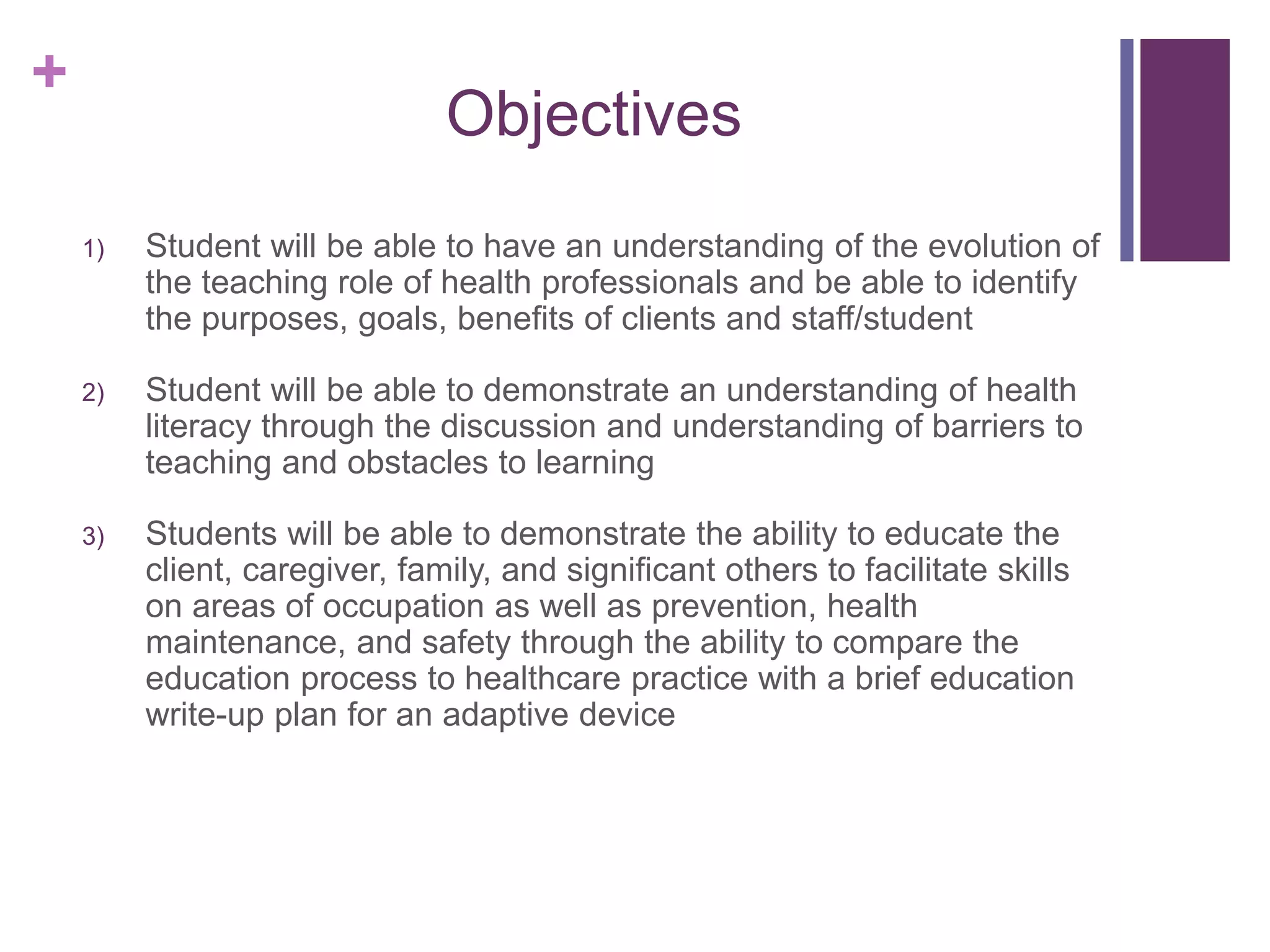
Objectives
1) Student will be able to have an understanding of the evolution of
the teaching role of health professionals and be able to identify
the purposes, goals, benefits of clients and staff/student
2) Student will be able to demonstrate an understanding of health
literacy through the discussion and understanding of barriers to
teaching and obstacles to learning
3) Students will be able to demonstrate the ability to educate the
client, caregiver, family, and significant others to facilitate skills
on areas of occupation as well as prevention, health
maintenance, and safety through the ability to compare the
education process to healthcare practice with a brief education
write-up plan for an adaptive device
+
The End!
Quick Review for quiz!
+
References
 Bastable, B., S, Gramet, P., Jacobs, P., Sopczyk, L. (2011).
Health professional as educator; principles of teaching and
learning. Sudbury, MA: Jones & Bartlett Learning.
 Alger, B., Farr, L., Fink, C., McCarthy, M., Milazzotto, C.,
Goodman, G., & DeMarco, J. (2015). Client education: Using
strategies and technologies to improve practice. OT Practice
(20)1, 7–10. - See more at: http://www.aota.org/publications-
news/otp/archive/2015/01-19-15/client-
education.aspx#sthash.1mNbi6OT.dpuf

Education week 1 chapter 1

  • 1.
    + Chapter 1: Overviewof Education in Healthcare
  • 2.
    + AGENDA Lecture (60 minutes) Break(10 minutes) In-Class Activity (30 minutes) Break (10 minutes) Quiz Completion and Grading ( 25 minutes)
  • 3.
    + OBJECTIVES 1) Student willhave an understanding of the teaching role of health professionals and be able to identify the purposes, goals, benefits of clients and staff/student 2) Student will be able to demonstrate an understanding of health literacy through discussion 3) Students will be able to demonstrate the ability to educate the client, caregiver, family, and significant others to facilitate skills on areas of occupation as well as prevention, health maintenance, and safety through the ability to compare the education process to healthcare practice with a brief education write-up plan for an adaptive device
  • 4.
    + Think, Pair, Share! #1 Thinkof a time when you or a family member received education from a healthcare professional? What was it and how did it impact and/or benefit you? Think about your answer (or write it down) and share with a partner!
  • 5.
    + Purpose of the Chapter Historical Evolution of teaching as part of the health professional’s role  Offer a perspective on the current trends in health care that make the teaching of clients a highly visible and required function of healthcare delivery  Addresses the continuing education effort required to ensure ongoing practice competencies of health personnel  Addresses the learning process, identifies barriers to teaching and obstacles to learning and research
  • 6.
  • 7.
    + Formative Period (Mid 1800sto Turn of the 20th Century) Key Factors:  Emergence of the nursing profession  Surplus of Physicians  Technological developments  Patient-caregiver relationships  Spread of TB  Growing interest in the welfare of mothers and children
  • 8.
    + 1930-1960  Quiet forpatient education  First Literature began to appear in 1950s  National TB Association started to teach patients and families about the disease and treatment
  • 9.
  • 10.
    + 1960-1970s  Education wasseen as specific to individual patients rather than providing general public health education  Civil Rights Movement, Women’s Rights Movements, Consumer and self-help movement  Public Health Service funded several patient and family education projects  1964- American Medical Association held first National Conference on Health Education Goals  1971- President Nixon appointed a committee that recommended hospitals offer health education to families of patients  1973- Patient’s Bill of Rights published
  • 11.
    + 1990s-Present Day  AccreditationManual for hospitals published by the Joint Commission on Accreditation of healthcare organizations  Healthy People 2000, 2010  New Definition of Teaching Role  Embrace a personal ethic of social responsibility  Evidence based clinically competent care  Preventative health care  2006- 5 Million Lived Campaign
  • 12.
    + Paradigm Shift ofEducation Approaches Disease Oriented (DOPE) TO Prevention Oriented (POPE) TO Health Oriented (HOPE)
  • 13.
    + Trends Affecting HealthCare  Healthy People 2020  Community, school, workplace outreach  Political Emphasis on productivity, competitiveness in the marketplace, and cost-containment measures  Malpractice claims and disciplinary action for incompetence  Demand for health information is expected to intensify
  • 14.
    + Trends Cont  Increaseof chronic and incurable conditions  Advanced technology  Increase in self-help and support groups  Lifestyle related diseases  Aging in place, increase in older adult population  What else?
  • 15.
    + Purpose, Goals, Benefitsof Client and Staff Education  Increase competence and confidence of clients for self-management  Increase consumer satisfaction  Improve quality of life  Ensure continuity of care  Decrease client anxiety  Effectively reduce the complications of illness and the incidence of disease  Promote adherence to treatment plans  Maximize independence of ADL’s  Energize and empower consumers to be actively involved in their health
  • 16.
    + “Illness is anatural life process, but so is humankind’s ability to learn therefore illness can become an educational opportunity a “teachable moment” when ill health suddenly encourages patients to take a more active role in their care”
  • 17.
    + The Education Process Assessment Planning Implementation Evaluation  Ascertain learning needs, readiness to learn, and learning styles  Develop a teaching plan based on mutually predetermined behavioral outcomes to meet individual needs  Perform the act of teaching using specific instructional methods and tools  Determine behavior changes in knowledge, attitudes, and skills Healthcare Practice Education Process
  • 18.
    + Learning “ change inbehavior that can be observed or measured and that occurs at any time or in any place as a result of exposure to environmental stimuli”
  • 19.
    + ASSURE Model A: Analyzethe learner S: State the Objectives S: Select the instructional methods and materials U: Use the instructional methods and materials R: Require learner performance E: Evaluate the teaching plan and revise as necessary
  • 20.
    + “A health professionalneeds a great deal of knowledge and skill to carry out the role as educator with efficiency and effectiveness.” –Bastable, Gramet, Jacobs, & Sopczyk, 2011
  • 21.
    + Paradigm Shift  Roleof educator has shifted from the traditional position of being the giver of information to that of a process designer and coordinator  Emphasis on facilitation of learning from a nondirective rather than a didactic teaching approach  Move away from teacher teaching and focus on the learner learning  Clients must be actively involved in order to increase comprehension, recall, and application of information
  • 22.
    + Think, Pair, Share! #2 Thinkof some barriers an educator may face to teaching? Ex: Student doesn’t want to learn Think of some obstacles a student or patient might face to learning? Ex: Lack of resources
  • 23.
    + Obstacles That Interferewith Learning  Health professionals must confront many barriers when educating others  Barriers to teaching: impede the health professional’s ability to deliver educational services  Obstacles to learning: negatively affect the ability of the learner to pay attention to and process information
  • 24.
    + Barriers to Teaching Lack of time  Lack of motivation and skill  What else?
  • 25.
    + Obstacles to LearningCont.  Lack of time  Stress of illness  What else?
  • 26.
    + What is OTdoing about Client Education?  Technology!  61% of people use the internet for medical information  17% of adults use mobile devices for this (Weaver, Lindsay, & Gitelman, 2012).  Out of 1,434 health care–related blogs, only 297 were written by health care professionals (Kim, 2012).  90% of 1,040 young adults who share health information on social networks trust the information they find on online (Weaver et al., 2012).
  • 27.
    + In-Class Activity: ASSUREModel  Break up into groups no more than 5 people  Choose an adaptive device  Complete the worksheet and create an education plan regarding ASSURE model  You can choose a demographic of patient!  Be prepared to share to class!
  • 28.
    + ASSURE EXAMPLE  AdaptiveDevice: Weighted Cup  A: Clients with Early stage Parkinson's  S: To successfully drink out of a cup without spilling  S: Weighted cup and handout on how it works  U: Demonstrate first and then supervise practice without liquid and then with liquid  R: Continue with the practice and get a feel of comfort level  E: Add other weighted utensils to education plan as well
  • 29.
  • 30.
    + Objectives 1) Student willbe able to have an understanding of the evolution of the teaching role of health professionals and be able to identify the purposes, goals, benefits of clients and staff/student 2) Student will be able to demonstrate an understanding of health literacy through the discussion and understanding of barriers to teaching and obstacles to learning 3) Students will be able to demonstrate the ability to educate the client, caregiver, family, and significant others to facilitate skills on areas of occupation as well as prevention, health maintenance, and safety through the ability to compare the education process to healthcare practice with a brief education write-up plan for an adaptive device
  • 31.
  • 32.
    + References  Bastable, B.,S, Gramet, P., Jacobs, P., Sopczyk, L. (2011). Health professional as educator; principles of teaching and learning. Sudbury, MA: Jones & Bartlett Learning.  Alger, B., Farr, L., Fink, C., McCarthy, M., Milazzotto, C., Goodman, G., & DeMarco, J. (2015). Client education: Using strategies and technologies to improve practice. OT Practice (20)1, 7–10. - See more at: http://www.aota.org/publications- news/otp/archive/2015/01-19-15/client- education.aspx#sthash.1mNbi6OT.dpuf

Editor's Notes

  • #5 EXAMPLE: When I had my first cavity, I received a pamphlet about what to expect after receiving one and how to avoid it? 5 Minutes to complete, get about 2-3 responses As we can see we have all received some sort of education from a healthcare professional and it benefitted us in some way shape or form…we can all agree that it is extremely important to be able to effectively educate our clients
  • #7  It is likely that education was one of the first most common interventions
  • #8 Emergence of nursing profession Surplus of physicians Surplus was made worse by urbanization and development of the automobile and telephone Led to the decreased amount of time physicians spent making house calls to rural patients, fewer physicians were needed Technological developments Invention of the stethoscope etc. Patient-caregiver relationship Spread of TB Required patients to take medication over time so education took on an important role Society for the Prevention of TB strongly emphasized education Spiraled into a support for women and children with the Division of Child Hygiene (NY 1908), nurses provided education to women with infants Growing interest in the welfare of mothers and children *Really important to know these
  • #9 VA, 1953 Technical bulletin “Patient education and the hospital program”
  • #11 All of these movements affected patient education Congestive hearth failure, stroke, cancer, and renal failure 1964- Where a noteworthy outcome was the focus on educating individuals to have better accountability for maintaining their own health, required to be put in patients chart 1971 1973- Documented patient’s rights to receive current information about diagnosis, tx, and prognosis in understandable terms, enables them to make informed decisions about their healthcare, guaranteed a patient right to respectful and considerate care
  • #12 National Health promotion and disease prevention, establishing educational and community based programs, two over arching goals increasing the quality and years of a healthy life and eliminating health disparities 5 Million Lives Campaign Reduce 15 Million Incidents of medical Harm that occur in the US Hospitals per year Increased the quality and amount of education provided by healthcare workers Education is a part of OUR professional responsibility Physicians, nurses, dieticians, etc. Encourages the team effort when it comes to education Continuing education to maintain and improve clinical skills
  • #13 Empowering patients to use their potentials, abilities, and resources to the fullest Balance between patient-provider therapeutic relationship and the increasing productivity expectations and time-constraints Good to know!
  • #14 Healthy People 2020: setting forth national health goals and objectives Importance of reaching out to communities, schools, and workplaces to provide education for disease prevention and health promotion -Provide education for disease prevention and health promotion -To restrain health services expenses -
  • #15 -requires that individuals and families become informed participants to manage their own illnesses -More outpatient procedures being done -lifestyle disease: type 2 diabetes, COPD, Obesity, Can you think of any lifestyle related diseases?
  • #18 Education Process: systematic, sequential, scientifically based, planned course of action consisting of two major interdependent operations, teaching and learning
  • #19 What is your definition of learning?
  • #20 Star this!! We Useful paradigm originally developed to assist nurses to organize and carry out the education process will come back to it for our in-class activity
  • #25 Low priority status of client education Lack of confidence and competence Negative influence of environment Absence of third-party reimbursement Documentation difficulties Questionable effectiveness of client education
  • #26 Similarities Lack of time Stress of illness Literacy problems Negative influence of environment Readiness to learn issues Extent of needed behavior changes Complexity, fragmentation, and inconvenience of healthcare system Lack of support from health professionals or significant others Denial of learning needs
  • #27 As many as 61% of people use the Internet for medical information, and 17% of adults use mobile devices for this (Weaver, Lindsay, & Gitelman, 2012). Unfortunately, much of the “medical information” available online is inaccurate. One study found that out of 1,434 health care–related blogs, only 297 were written by health care professionals (Kim, 2012). Yet individuals who use social networking often trust these sources. According to a recent survey, 90% of 1,040 young adults who share health information on social networks trust the information they find on online (Weaver et al., 2012).