INTRODUCTION
• Clinical teaching may be given by any faculty
member that is clinical instructor or tutor or
ward staff and will concentrate on a particular
patient’s needs as a person and how the
doctor’s treatment orders can be met by the
right understanding and nursing care.
ESSENTIALS FOR GOOD CLINICAL
INSTRUCTIONS
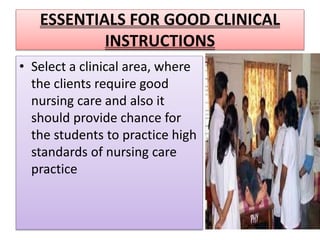
• Select a clinical area, where
the clients require good
nursing care and also it
should provide chance for
the students to practice high
standards of nursing care
practice
Consider the needs
of students to develop
the individuals at a
higher level of
functioning
Identify the nursing
personnel who are
interested in attending
and sharing the
discussion in nursing
care conferences
PRINCIPLES
• Establishing of a definite purpose and specific
issues to be covered.
• Knowledge of the students.
• Provide privacy.
• Establish good rapport.
• Provide sufficient time.
• Good listening.
• Positive effect.
• Recording of data
FUNCTIONS OF THE CLINICAL
INSTRUCTOR
• Set the objectives, standards for practice.
• Develop evaluation tools.
• Prepare master rotation plan.
• Set up the clinical area in an ideal manner.
• Keeps ready equipment in working condition
to provide nursing care.
Assist in patient care and role model
Develop an understanding of research for better
patient care.
Analyze the difficulties and guiding the students
accordingly.
Maintain high standards of patient care.
Encourage, motivate and inspire students
QUALITIES OF A CLINICAL
INSTRUCTOR
• Enjoy bedside nursing
• Be an expert in bedside nursing
• Have good communication skills
• Must know methods of delivering the care
• Confidence has to be maintained since success in clinical nursing
rests upon her ability to win the co-operation of doctors, head nurse,
staff nurse, other professional colleagues.
• Should possess adequate theoretical background
• Should enjoy in teaching the students in hospital situation
• Should be appointed on the basis of outstanding skills
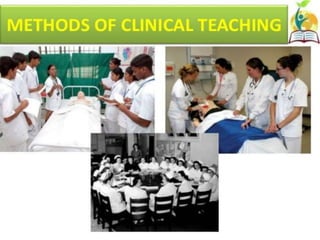
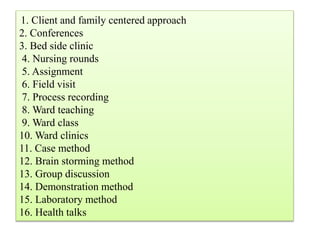
1. Client and family centered approach
2. Conferences
3. Bed side clinic
4. Nursing rounds
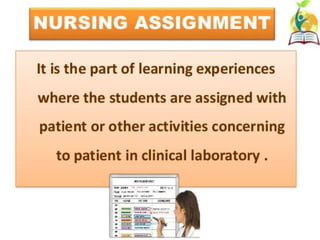
5. Assignment
6. Field visit
7. Process recording
8. Ward teaching
9. Ward class
10. Ward clinics
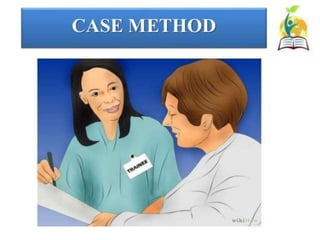
11. Case method
12. Brain storming method
13. Group discussion
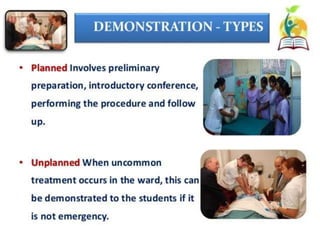
14. Demonstration method
15. Laboratory method
16. Health talks
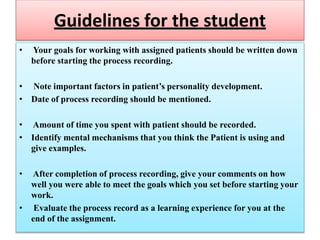
Guidelines for the student
• Your goals for working with assigned patients should be written down
before starting the process recording.
• Note important factors in patient’s personality development.
• Date of process recording should be mentioned.
• Amount of time you spent with patient should be recorded.
• Identify mental mechanisms that you think the Patient is using and
give examples.
• After completion of process recording, give your comments on how
well you were able to meet the goals which you set before starting your
work.
• Evaluate the process record as a learning experience for you at the
end of the assignment.
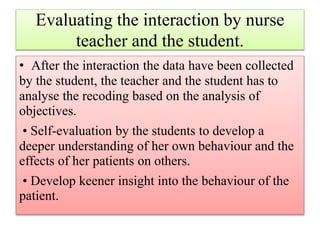
Evaluating the interaction by nurse
teacher and the student.
• After the interaction the data have been collected
by the student, the teacher and the student has to
analyse the recoding based on the analysis of
objectives.
• Self-evaluation by the students to develop a
deeper understanding of her own behaviour and the
effects of her patients on others.
• Develop keener insight into the behaviour of the
patient.
PURPOSES
1.To provide a learning experience for the nursing student to
collect the information about the patient with tact and skill.
2.To improve the students ability to solve nursing problems
by detailed study and analyses of nursing situation.
3.To realise the need for understanding each patient as an
individual in order to appreciate his problems and outlook.
4.It help the students to do observation in an organized
systematic way.
5.To be able to recognize opportunities for health teaching in
the hospital
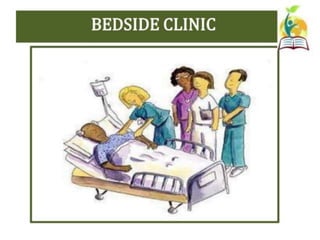
CONDUCTING BEDSIDE CLINIC:
• After pre plan the next step is conducting actual clinic.
• The clinic should be conducted in the ward or in a
classroom, which is adjacent to the ward. If such conveniences
are not there, the clinic should be conducted apart from other
patients providing him sufficient privacy in a corner of the
ward.
• Physical and mental support is provided to the patients.
• Patient is kept at ease.
• The clinic usually last for 30 minutes.
• The number of student should not exceed 10-15 in number.
Definition
• program instruction method of teaching is
an autocratic and individualized strategy. It
is based on psychological principles of
operant condition. The response of the
learner are strictly controlled by the
programmer.
Types of Programmed Instruction
There are three types of this teaching strategy
Linear Programming. It is being used for teaching all subjects. In
programed teaching strategy progressive chain elements are
presented. Last step is at the mastery level. It is based on five
fundamental principles.
Small steps
Active responding
Immediate confirmation
Self-pace
Student testing
Branched Programming. It is generally used in mechanical fields.
Mathematics. Retrogressive chain of elements is presented. First
step is the master level while the last step is the simplest element.
Advantages of Programmed
Instruction
• The main emphasis is on individual differences and
students’ involvement.
• There is not fixed time interval for learning. Students may
learn at their own pace.
• Learning by doing maxim of teaching is followed to involve
learners in the learning process.
• Students are exposed only to correct responses, therefore,
possibility to commit errors in reduced.
• Immediate confirmation of the results provides
reinforcement to the learners and encourages the learners
to proceed further. Feedback is provided to wrong
answers, so that learner is able to develop mastery over the
content.
Disadvantages of Programmed
Instruction
• It is very difficult to develop an instructional programme
• Only cognitive objectives can be achieved
• Due to tight schedule of time table, students cannot be left to learn
at their own pace. It would be very difficult to learn the content the
subject matter in a limited period of time.
• There is no chance for students’ creativity, their responses are
highly structured.
• Development of programme is not economical in terms of cost and
time
• In absence of the teacher, students may spoil the disciplinary tone
of the class, or they will be helpless when any problem arises.
• It cannot be applied at primary level of education or at higher
education
THANK YOU

Program instruction and modes of clinical teaching

  • 3.
    INTRODUCTION • Clinical teachingmay be given by any faculty member that is clinical instructor or tutor or ward staff and will concentrate on a particular patient’s needs as a person and how the doctor’s treatment orders can be met by the right understanding and nursing care.
  • 11.
    ESSENTIALS FOR GOODCLINICAL INSTRUCTIONS • Select a clinical area, where the clients require good nursing care and also it should provide chance for the students to practice high standards of nursing care practice
  • 12.
    Consider the needs ofstudents to develop the individuals at a higher level of functioning
  • 13.
    Identify the nursing personnelwho are interested in attending and sharing the discussion in nursing care conferences
  • 14.
    PRINCIPLES • Establishing ofa definite purpose and specific issues to be covered. • Knowledge of the students. • Provide privacy. • Establish good rapport. • Provide sufficient time. • Good listening. • Positive effect. • Recording of data
  • 15.
    FUNCTIONS OF THECLINICAL INSTRUCTOR • Set the objectives, standards for practice. • Develop evaluation tools. • Prepare master rotation plan. • Set up the clinical area in an ideal manner. • Keeps ready equipment in working condition to provide nursing care.
  • 16.
    Assist in patientcare and role model Develop an understanding of research for better patient care. Analyze the difficulties and guiding the students accordingly. Maintain high standards of patient care. Encourage, motivate and inspire students
  • 17.
    QUALITIES OF ACLINICAL INSTRUCTOR • Enjoy bedside nursing • Be an expert in bedside nursing • Have good communication skills • Must know methods of delivering the care • Confidence has to be maintained since success in clinical nursing rests upon her ability to win the co-operation of doctors, head nurse, staff nurse, other professional colleagues. • Should possess adequate theoretical background • Should enjoy in teaching the students in hospital situation • Should be appointed on the basis of outstanding skills
  • 19.
    1. Client andfamily centered approach 2. Conferences 3. Bed side clinic 4. Nursing rounds 5. Assignment 6. Field visit 7. Process recording 8. Ward teaching 9. Ward class 10. Ward clinics 11. Case method 12. Brain storming method 13. Group discussion 14. Demonstration method 15. Laboratory method 16. Health talks
  • 22.
    Guidelines for thestudent • Your goals for working with assigned patients should be written down before starting the process recording. • Note important factors in patient’s personality development. • Date of process recording should be mentioned. • Amount of time you spent with patient should be recorded. • Identify mental mechanisms that you think the Patient is using and give examples. • After completion of process recording, give your comments on how well you were able to meet the goals which you set before starting your work. • Evaluate the process record as a learning experience for you at the end of the assignment.
  • 23.
    Evaluating the interactionby nurse teacher and the student. • After the interaction the data have been collected by the student, the teacher and the student has to analyse the recoding based on the analysis of objectives. • Self-evaluation by the students to develop a deeper understanding of her own behaviour and the effects of her patients on others. • Develop keener insight into the behaviour of the patient.
  • 26.
    PURPOSES 1.To provide alearning experience for the nursing student to collect the information about the patient with tact and skill. 2.To improve the students ability to solve nursing problems by detailed study and analyses of nursing situation. 3.To realise the need for understanding each patient as an individual in order to appreciate his problems and outlook. 4.It help the students to do observation in an organized systematic way. 5.To be able to recognize opportunities for health teaching in the hospital
  • 27.
    CONDUCTING BEDSIDE CLINIC: •After pre plan the next step is conducting actual clinic. • The clinic should be conducted in the ward or in a classroom, which is adjacent to the ward. If such conveniences are not there, the clinic should be conducted apart from other patients providing him sufficient privacy in a corner of the ward. • Physical and mental support is provided to the patients. • Patient is kept at ease. • The clinic usually last for 30 minutes. • The number of student should not exceed 10-15 in number.
  • 44.
    Definition • program instructionmethod of teaching is an autocratic and individualized strategy. It is based on psychological principles of operant condition. The response of the learner are strictly controlled by the programmer.
  • 45.
    Types of ProgrammedInstruction There are three types of this teaching strategy Linear Programming. It is being used for teaching all subjects. In programed teaching strategy progressive chain elements are presented. Last step is at the mastery level. It is based on five fundamental principles. Small steps Active responding Immediate confirmation Self-pace Student testing Branched Programming. It is generally used in mechanical fields. Mathematics. Retrogressive chain of elements is presented. First step is the master level while the last step is the simplest element.
  • 46.
    Advantages of Programmed Instruction •The main emphasis is on individual differences and students’ involvement. • There is not fixed time interval for learning. Students may learn at their own pace. • Learning by doing maxim of teaching is followed to involve learners in the learning process. • Students are exposed only to correct responses, therefore, possibility to commit errors in reduced. • Immediate confirmation of the results provides reinforcement to the learners and encourages the learners to proceed further. Feedback is provided to wrong answers, so that learner is able to develop mastery over the content.
  • 47.
    Disadvantages of Programmed Instruction •It is very difficult to develop an instructional programme • Only cognitive objectives can be achieved • Due to tight schedule of time table, students cannot be left to learn at their own pace. It would be very difficult to learn the content the subject matter in a limited period of time. • There is no chance for students’ creativity, their responses are highly structured. • Development of programme is not economical in terms of cost and time • In absence of the teacher, students may spoil the disciplinary tone of the class, or they will be helpless when any problem arises. • It cannot be applied at primary level of education or at higher education
  • 48.