Global Warming  and Water
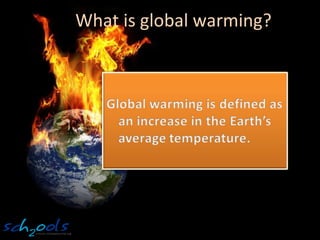
What is global warming?
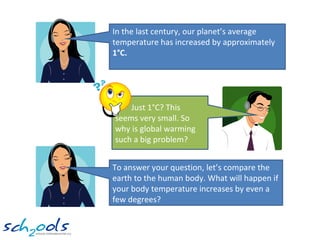
In the last century, our planet’s average temperature has increased by approximately  1°C. Just 1°C? This  seems very small. So why is global warming such a big problem?  To answer your question, let’s compare the earth to the human body. What will happen if your body temperature increases by even a few degrees?
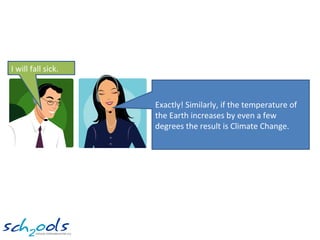
I will fall sick. Exactly! Similarly, if the temperature of the Earth increases by even a few degrees the result is Climate Change.
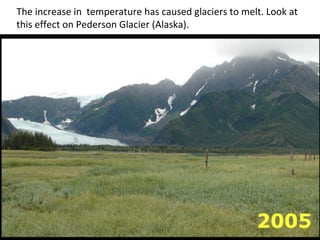
The increase in  temperature has caused glaciers to melt. Look at this effect on Pederson Glacier (Alaska).
 
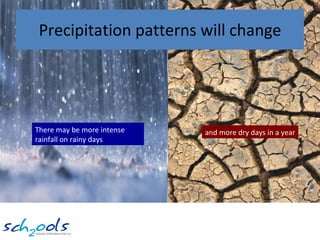
Precipitation patterns will change There may be more intense rainfall on rainy days and more dry days in a year


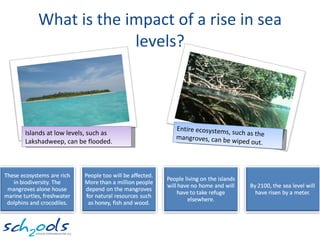
What is the impact of a rise in sea levels? Islands at low levels, such as Lakshadweep, can be flooded. Entire ecosystems, such as the mangroves, can be wiped out.
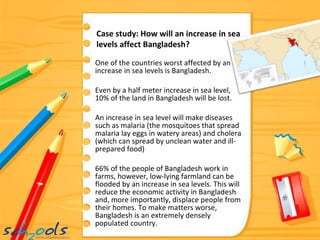
One of the countries worst affected by an increase in sea levels is Bangladesh. Even by a half meter increase in sea level, 10% of the land in Bangladesh will be lost. An increase in sea level will make diseases such as malaria (the mosquitoes that spread malaria lay eggs in watery areas) and cholera (which can spread by unclean water and ill-prepared food) 66% of the people of Bangladesh work in farms, however, low-lying farmland can be flooded by an increase in sea levels. This will reduce the economic activity in Bangladesh and, more importantly, displace people from their homes. To make matters worse, Bangladesh is an extremely densely populated country. Case study: How will an increase in sea levels affect Bangladesh?
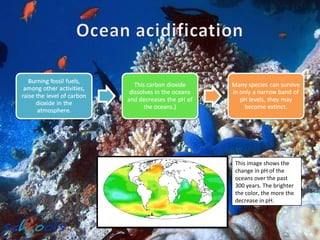
This image shows the change in pH of the oceans over the past 300 years. The brighter the color, the more the decrease in pH.
 
The solution is in our hands
Let’s take action Before it’s too late
Acknowledgements http://www.germanwatch.org/klak/fb-ms-e.htm http:// www.who.int/water_sanitation_health/diseases/cholera/en / http://www.wrm.org.uy/bulletin/132/Mangroves.html http://news.nationalgeographic.com/news/2004/04/0420_040420_earthday.html http://news.nationalgeographic.com/news/2006/03/0323_060323_global_warming.html http:// en.wikipedia.org/wiki/Ocean_acidification http:// en.wikipedia.org / http://www.sustainabilityforum.com/forum/climate-change/3364-sea-level-rise-inundation-coastal-india.html http://garamut.wordpress.com/2009/02/06/rainforest-politics-the-carbon-credit-trade-in-png-an-essential-introduction/ http://www.flickr.com/photos/hypergurl/514534462/

Climate change - Its impacts on Water resources

  • 1.
    Global Warming and Water
  • 2.
  • 3.
    In the lastcentury, our planet’s average temperature has increased by approximately 1°C. Just 1°C? This seems very small. So why is global warming such a big problem? To answer your question, let’s compare the earth to the human body. What will happen if your body temperature increases by even a few degrees?
  • 4.
    I will fallsick. Exactly! Similarly, if the temperature of the Earth increases by even a few degrees the result is Climate Change.
  • 5.
    The increase in temperature has caused glaciers to melt. Look at this effect on Pederson Glacier (Alaska).
  • 6.
  • 7.
    Precipitation patterns willchange There may be more intense rainfall on rainy days and more dry days in a year
  • 8.
  • 9.
  • 10.
  • 11.
    What is theimpact of a rise in sea levels? Islands at low levels, such as Lakshadweep, can be flooded. Entire ecosystems, such as the mangroves, can be wiped out.
  • 12.
    One of thecountries worst affected by an increase in sea levels is Bangladesh. Even by a half meter increase in sea level, 10% of the land in Bangladesh will be lost. An increase in sea level will make diseases such as malaria (the mosquitoes that spread malaria lay eggs in watery areas) and cholera (which can spread by unclean water and ill-prepared food) 66% of the people of Bangladesh work in farms, however, low-lying farmland can be flooded by an increase in sea levels. This will reduce the economic activity in Bangladesh and, more importantly, displace people from their homes. To make matters worse, Bangladesh is an extremely densely populated country. Case study: How will an increase in sea levels affect Bangladesh?
  • 13.
    This image showsthe change in pH of the oceans over the past 300 years. The brighter the color, the more the decrease in pH.
  • 14.
  • 15.
    The solution isin our hands
  • 16.
    Let’s take actionBefore it’s too late
  • 17.
    Acknowledgements http://www.germanwatch.org/klak/fb-ms-e.htm http://www.who.int/water_sanitation_health/diseases/cholera/en / http://www.wrm.org.uy/bulletin/132/Mangroves.html http://news.nationalgeographic.com/news/2004/04/0420_040420_earthday.html http://news.nationalgeographic.com/news/2006/03/0323_060323_global_warming.html http:// en.wikipedia.org/wiki/Ocean_acidification http:// en.wikipedia.org / http://www.sustainabilityforum.com/forum/climate-change/3364-sea-level-rise-inundation-coastal-india.html http://garamut.wordpress.com/2009/02/06/rainforest-politics-the-carbon-credit-trade-in-png-an-essential-introduction/ http://www.flickr.com/photos/hypergurl/514534462/