Aquifers
Aquifers
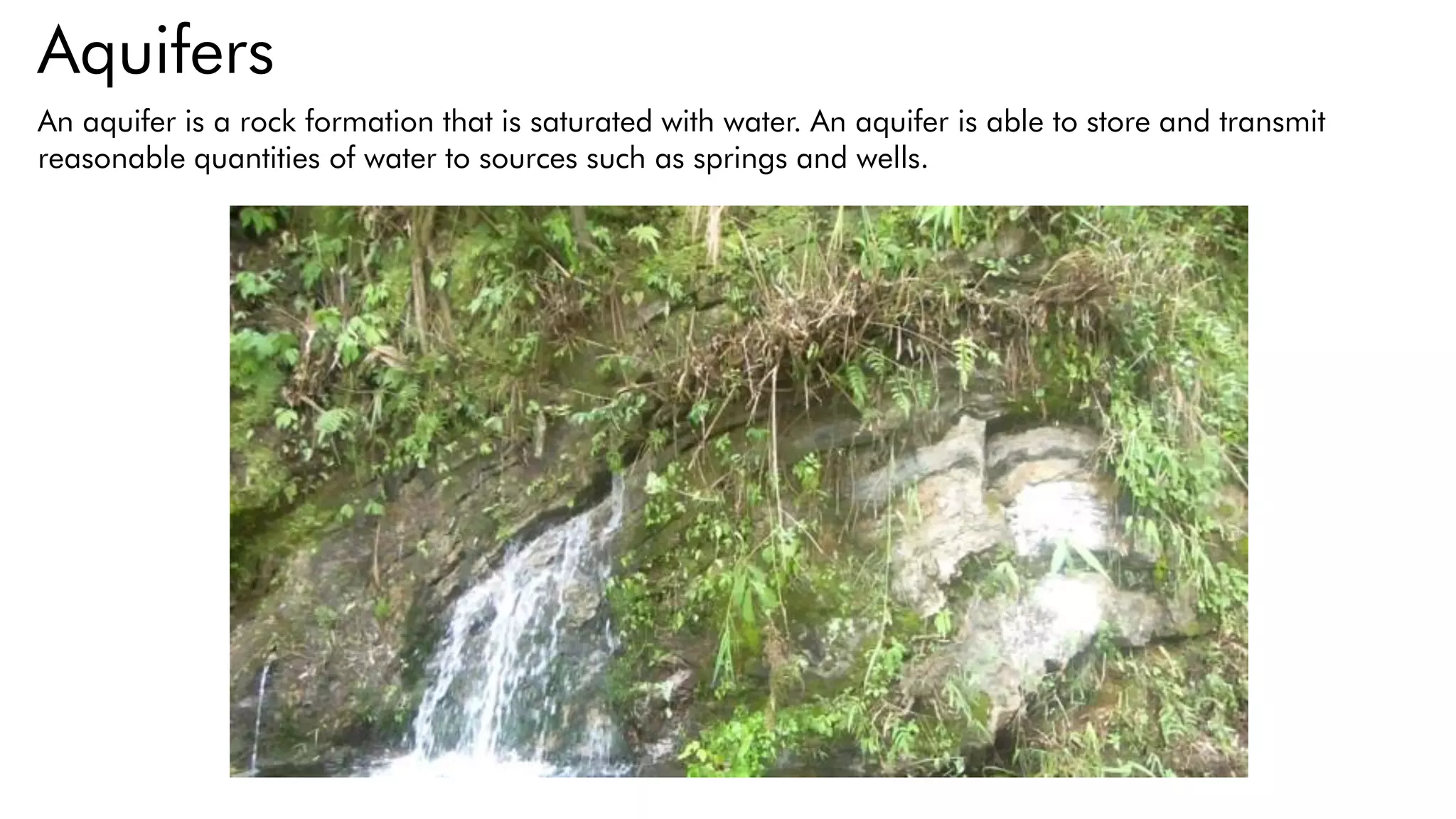
An aquifer is a rock formation that is saturated with water. An aquifer is able to store and transmit
reasonable quantities of water to sources such as springs and wells.
• Material that contains
voids or openings is said to
be porous.
• The property is called
POROSITY.
Porosity
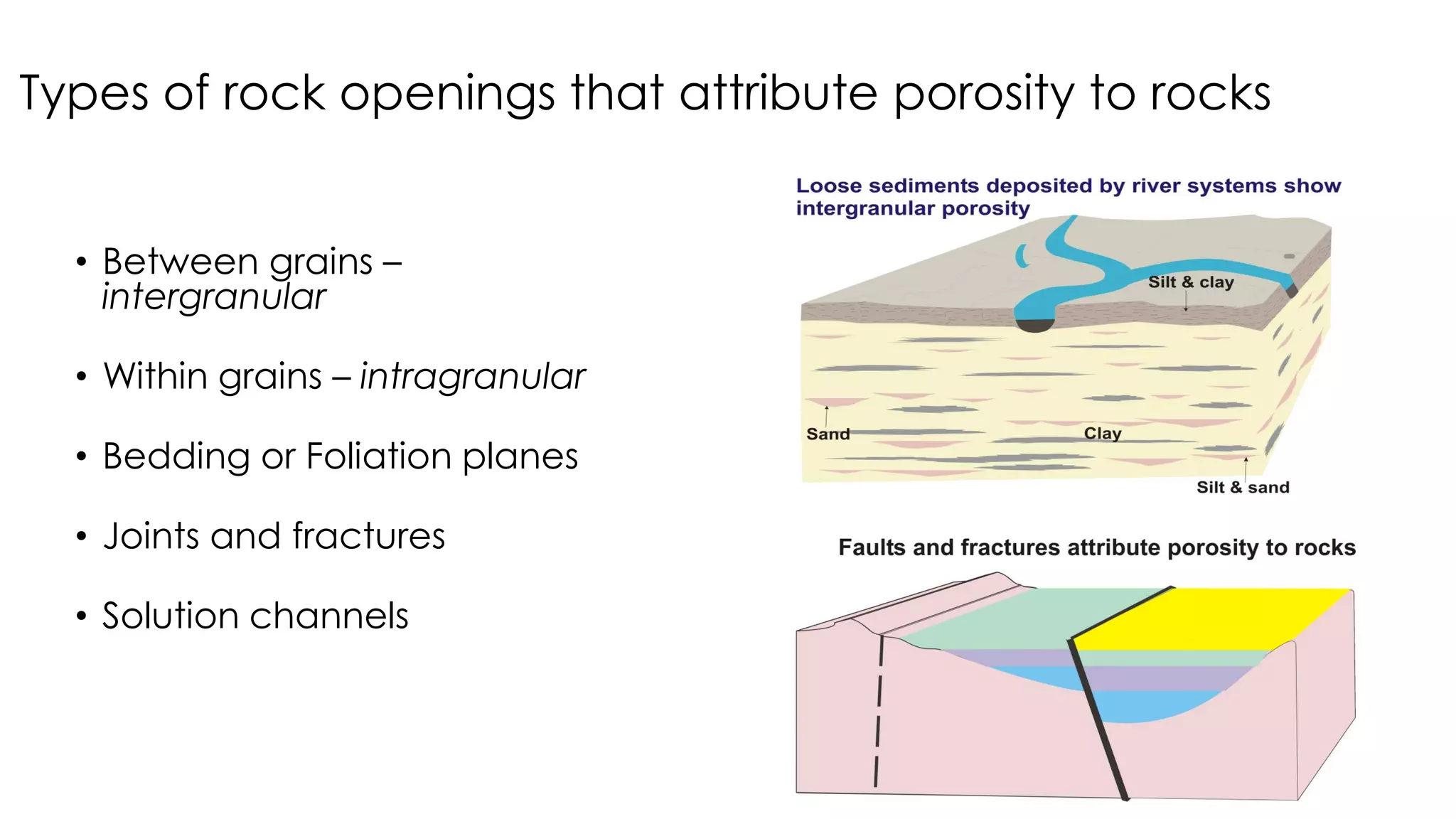
Types of rock openings that attribute porosity to rocks
• Between grains –
intergranular
• Within grains – intragranular
• Bedding or Foliation planes
• Joints and fractures
• Solution channels
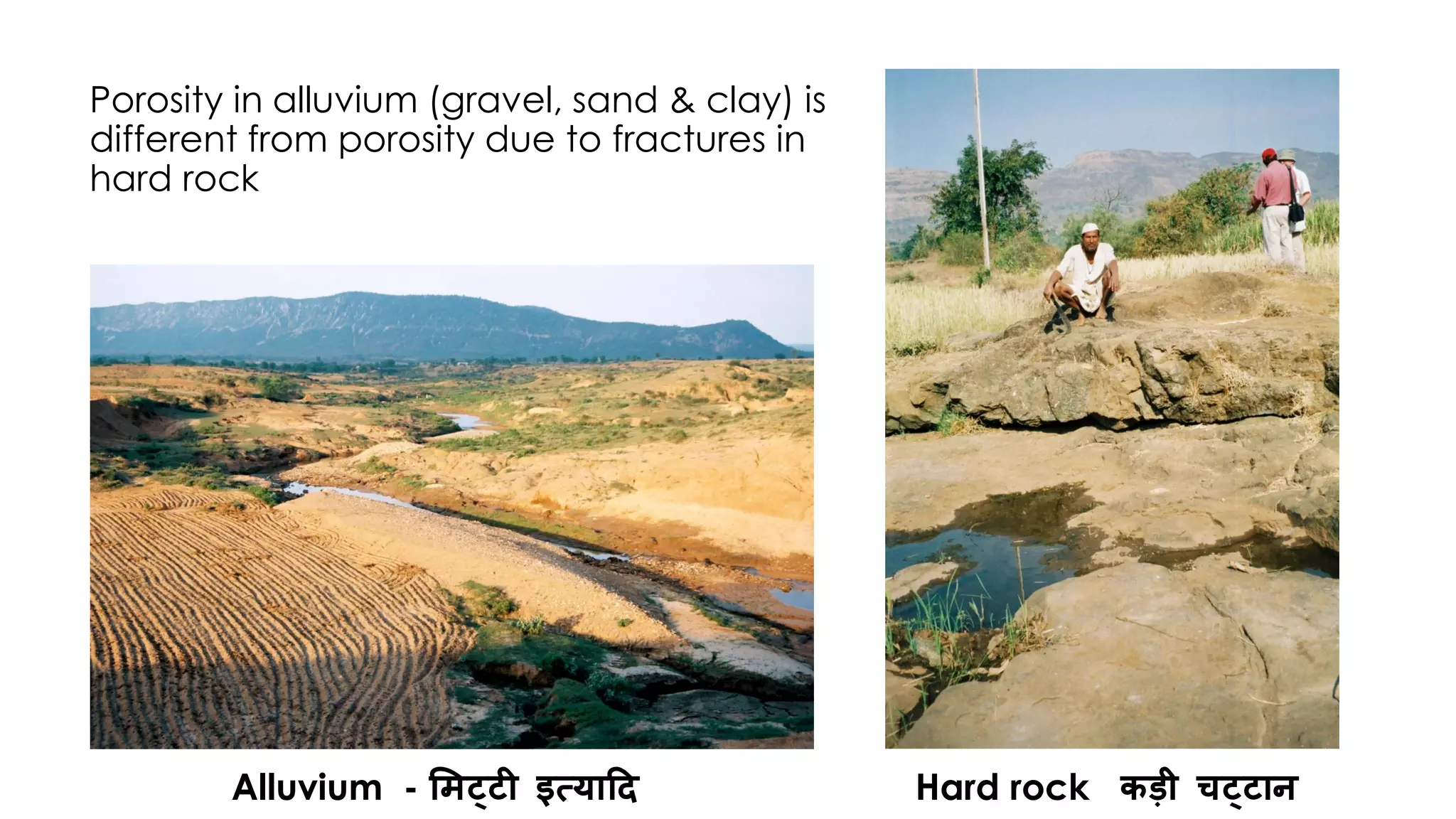
Porosity in alluvium (gravel, sand & clay) is
different from porosity due to fractures in
hard rock
Alluvium - मिट्टी इत्यादि Hard rock कड़ी चट्टान
Porosity….from a more practical angle
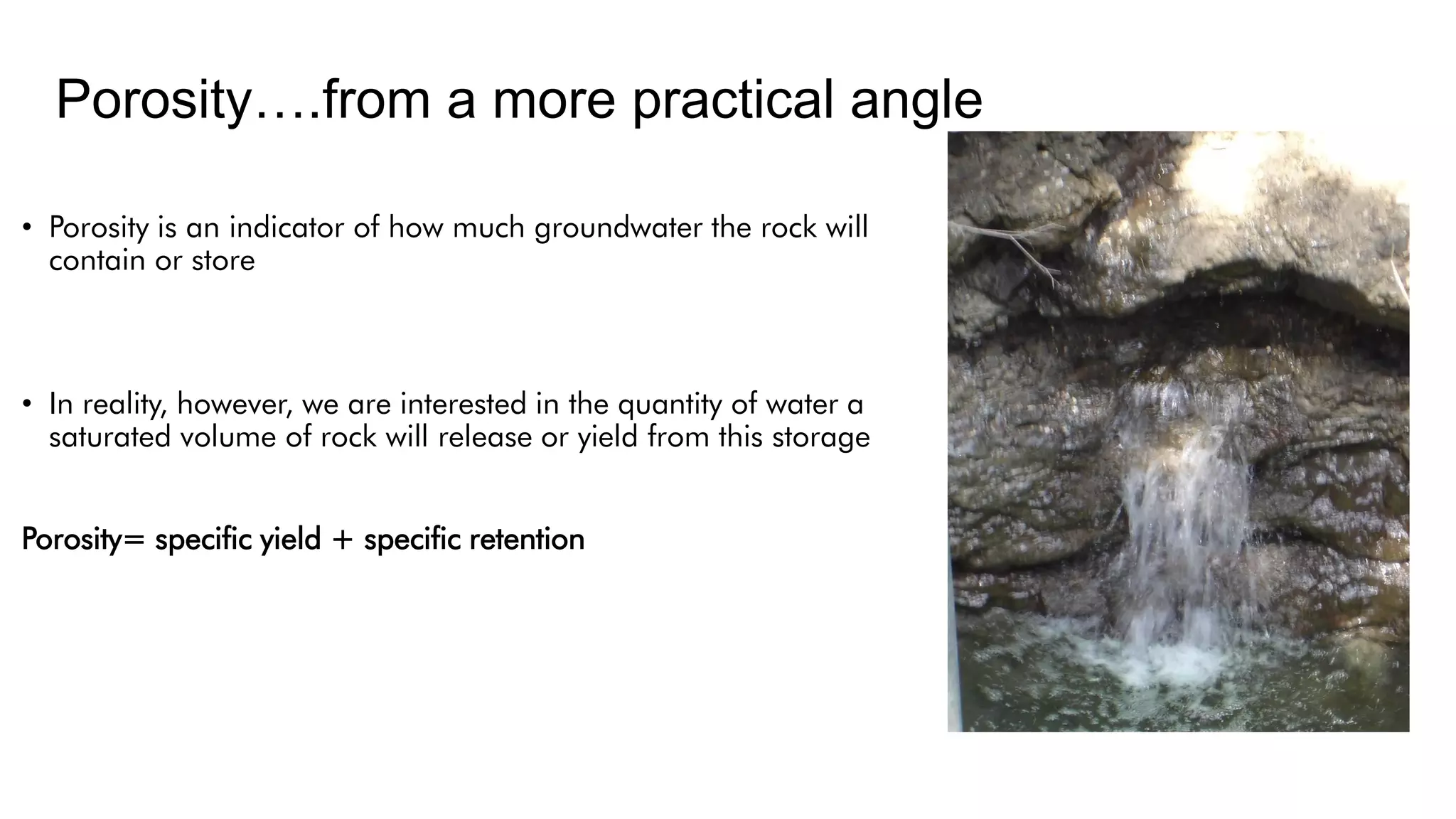
• Porosity is an indicator of how much groundwater the rock will
contain or store
• In reality, however, we are interested in the quantity of water a
saturated volume of rock will release or yield from this storage
Porosity= specific yield + specific retention
Some typical values of porosity
clay 45-55 %
sand 30-40 %
sandstone 10-20 %
shale 10-20 %
limestone 1-10 % (or larger)
45-55 %
30-40 %
10-20 %
10-20 %
1-10 % (or larger)
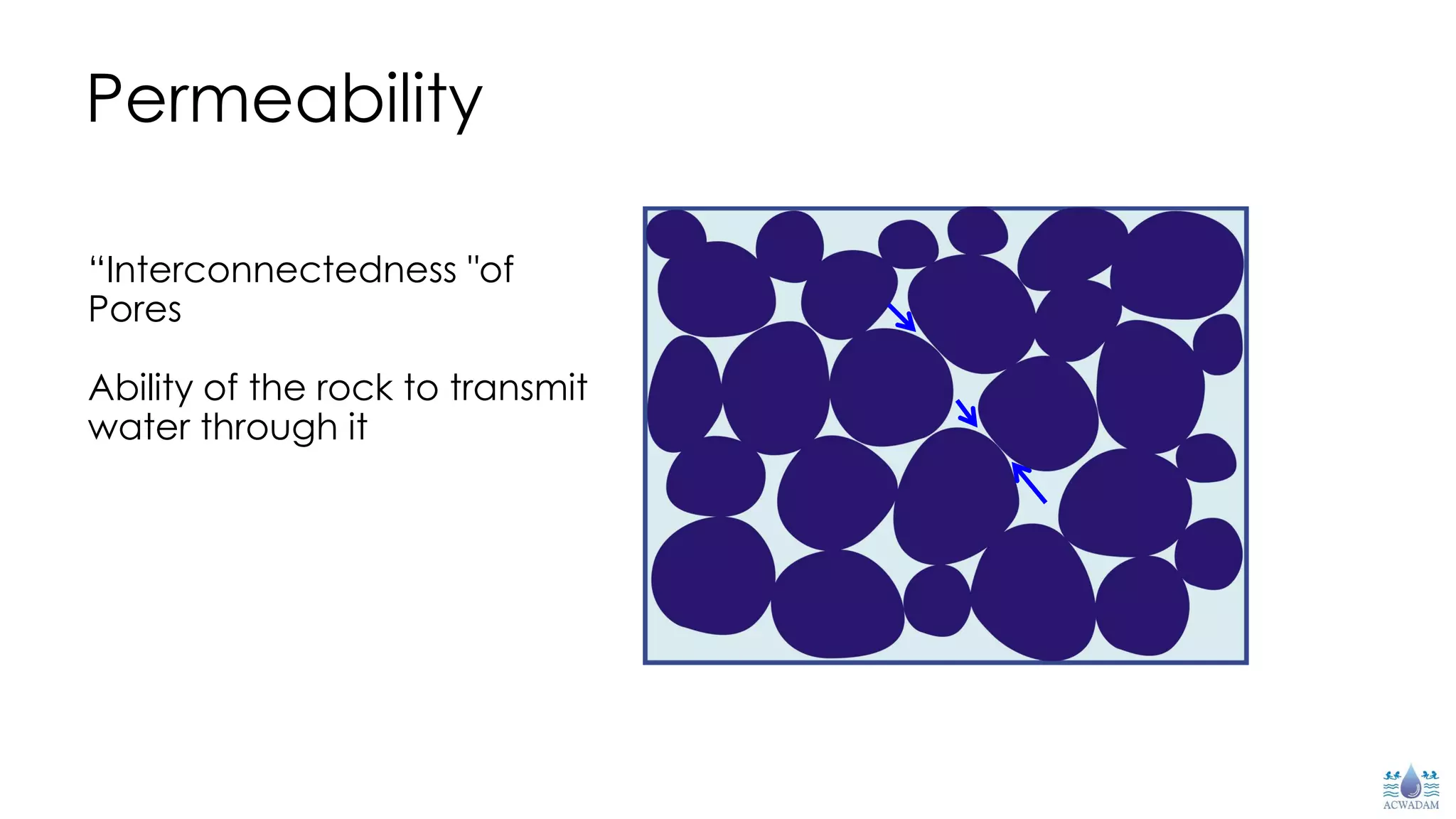
“Interconnectedness "of
Pores
Ability of the rock to transmit
water through it
Permeability
What is Permeability?
A rock with good hydraulic conductivity allows
groundwater to easily flow through it.
A rock with poor hydraulic conductivity does not
allow easy movement of groundwater.
Surface water
catchment
Understanding surface catchment
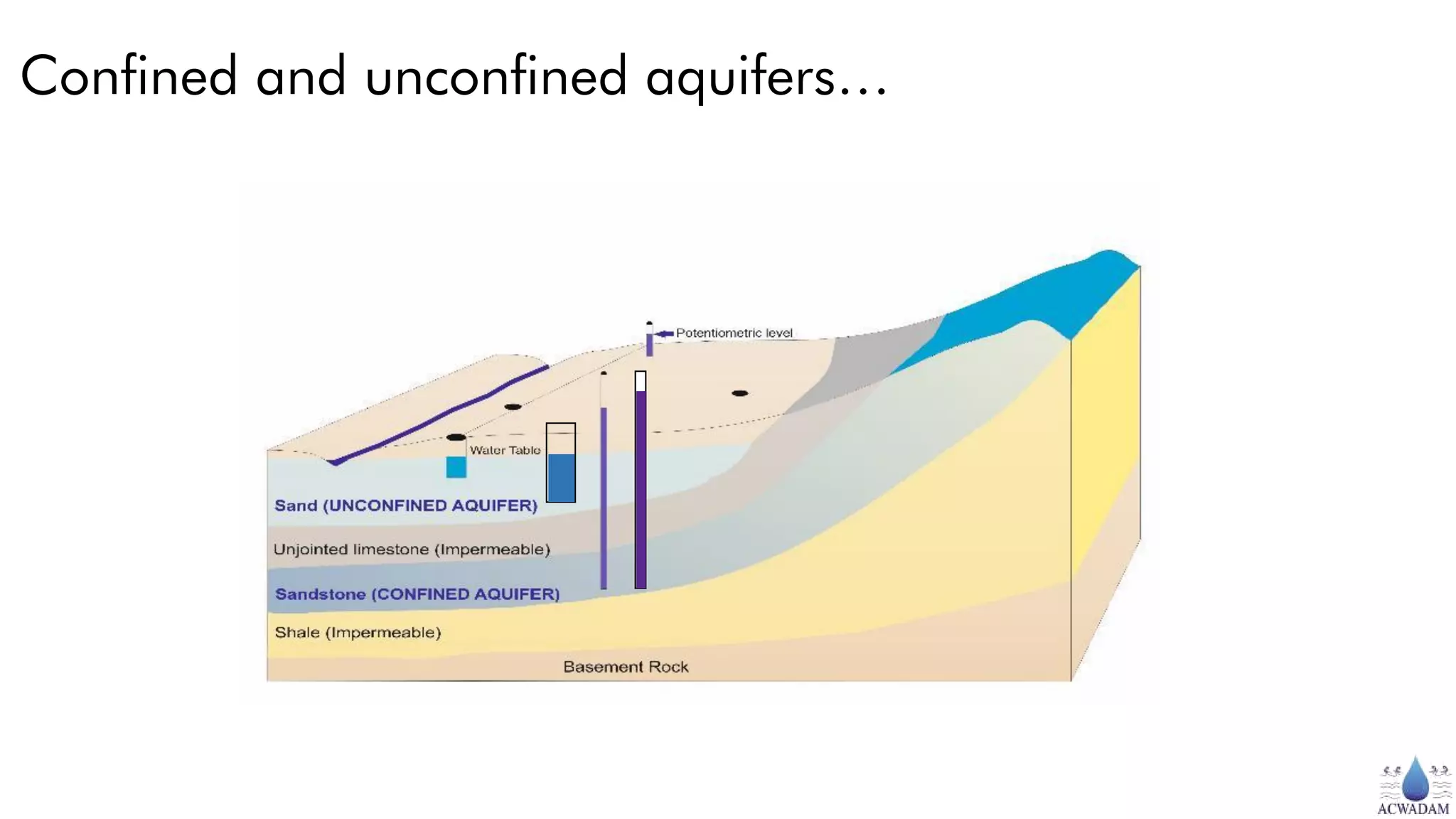
Confined and unconfined aquifers…
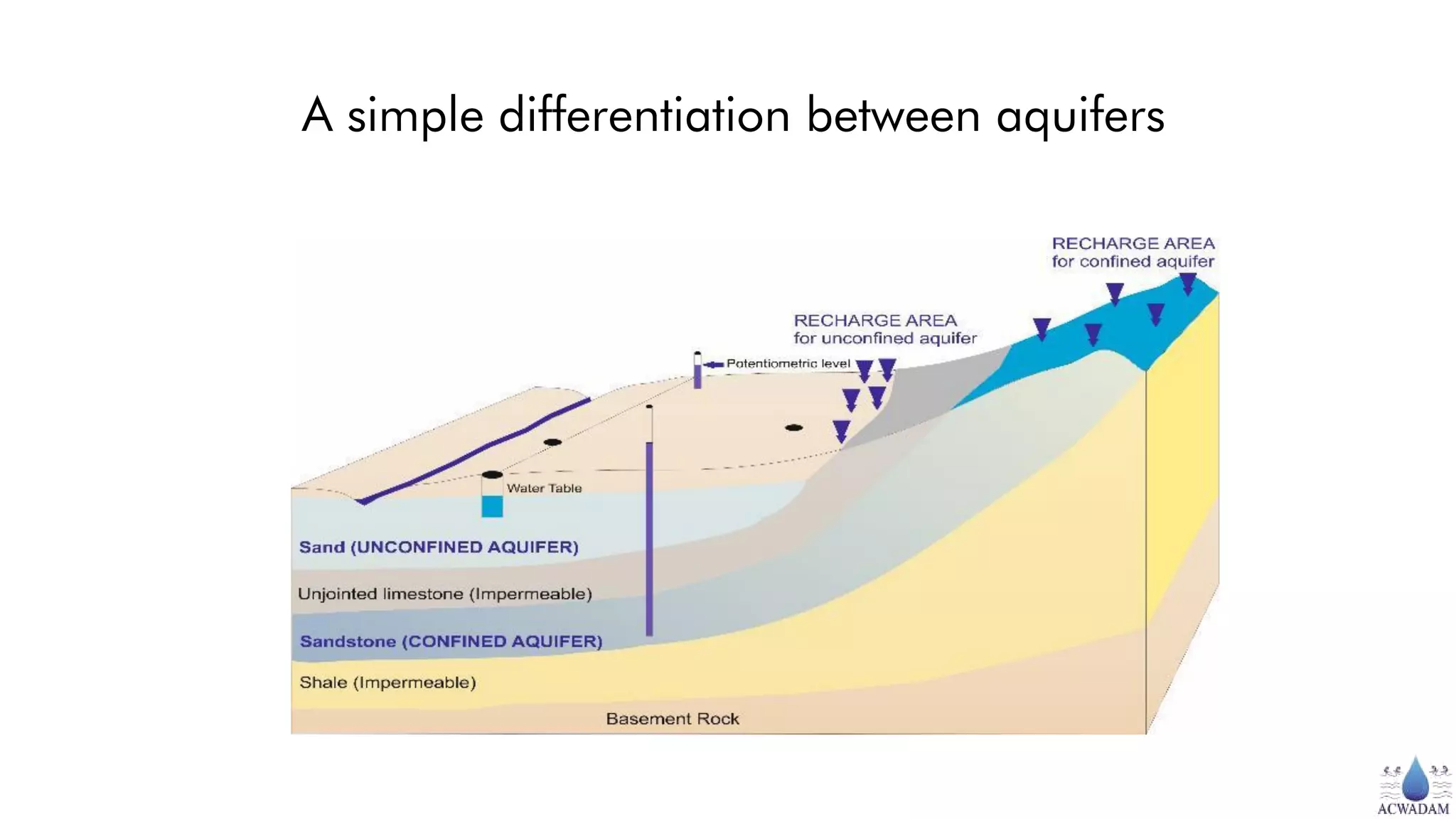
A simple differentiation between aquifers
Perched aquifer
Recharge areas to Aquifers
A comparison of geology and hydrogeology of Meghalaya
The status of a aquifer with is decided by its porosity (specific yield, more
practically) and its permeability
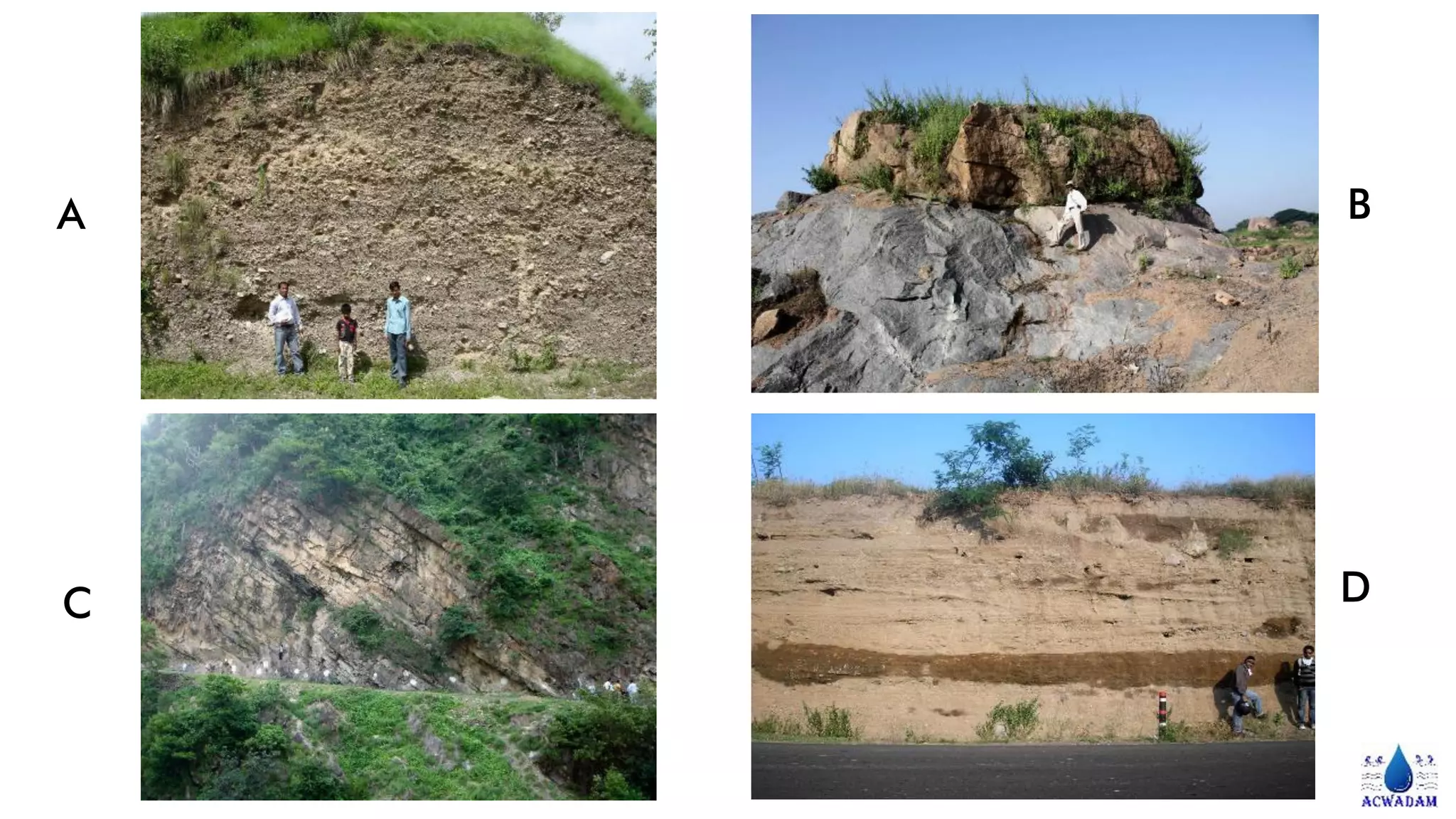
A B
C D
Thank you

Introduction to aquifers

  • 1.
  • 2.
    Aquifers An aquifer isa rock formation that is saturated with water. An aquifer is able to store and transmit reasonable quantities of water to sources such as springs and wells.
  • 3.
    • Material thatcontains voids or openings is said to be porous. • The property is called POROSITY. Porosity
  • 4.
    Types of rockopenings that attribute porosity to rocks • Between grains – intergranular • Within grains – intragranular • Bedding or Foliation planes • Joints and fractures • Solution channels
  • 5.
    Porosity in alluvium(gravel, sand & clay) is different from porosity due to fractures in hard rock Alluvium - मिट्टी इत्यादि Hard rock कड़ी चट्टान
  • 6.
    Porosity….from a morepractical angle • Porosity is an indicator of how much groundwater the rock will contain or store • In reality, however, we are interested in the quantity of water a saturated volume of rock will release or yield from this storage Porosity= specific yield + specific retention
  • 7.
    Some typical valuesof porosity clay 45-55 % sand 30-40 % sandstone 10-20 % shale 10-20 % limestone 1-10 % (or larger) 45-55 % 30-40 % 10-20 % 10-20 % 1-10 % (or larger)
  • 8.
    “Interconnectedness "of Pores Ability ofthe rock to transmit water through it Permeability
  • 9.
    What is Permeability? Arock with good hydraulic conductivity allows groundwater to easily flow through it. A rock with poor hydraulic conductivity does not allow easy movement of groundwater.
  • 10.
  • 11.
  • 12.
    A simple differentiationbetween aquifers
  • 13.
  • 14.
  • 15.
    A comparison ofgeology and hydrogeology of Meghalaya
  • 16.
    The status ofa aquifer with is decided by its porosity (specific yield, more practically) and its permeability
  • 17.
  • 18.