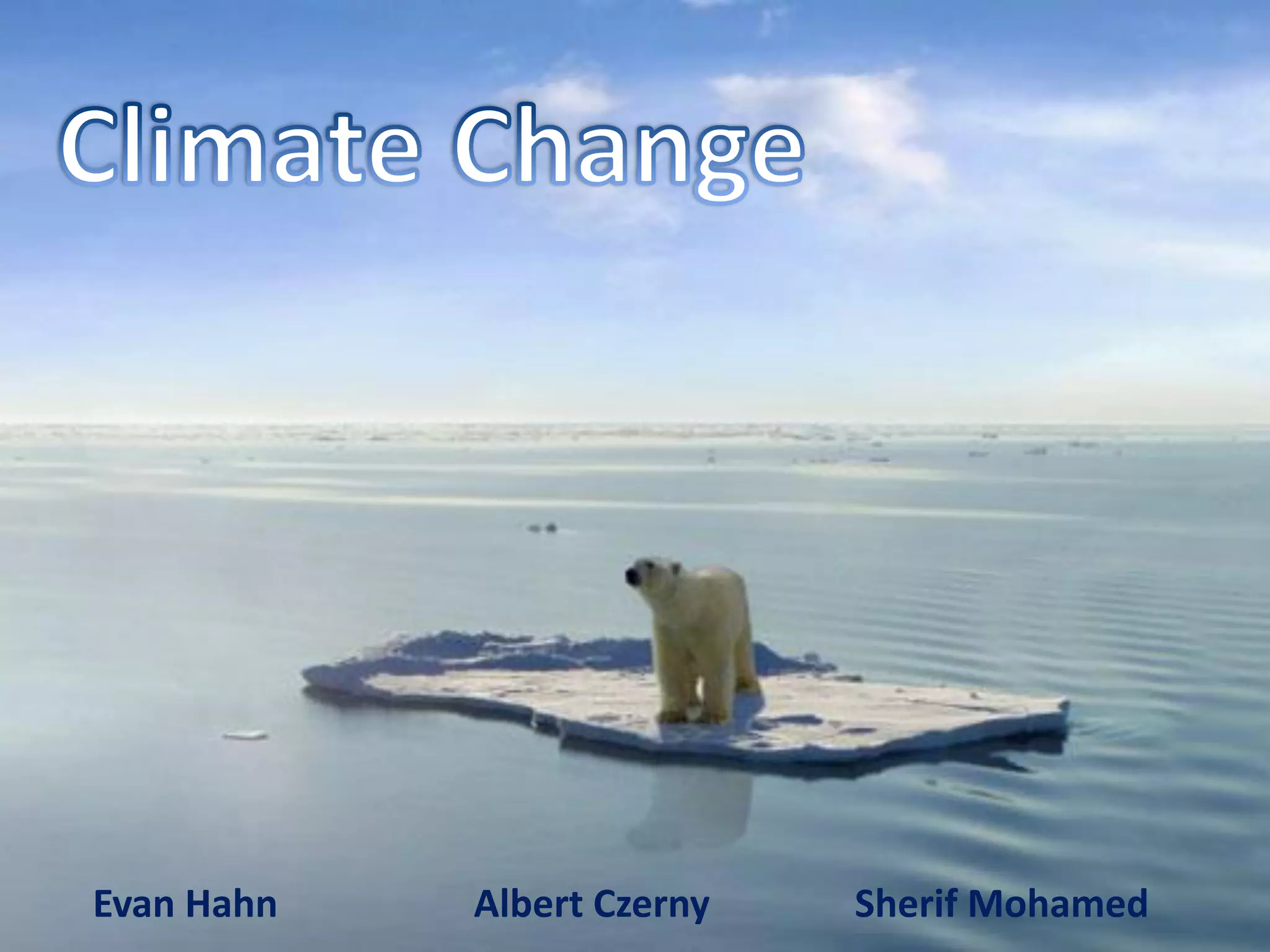
Evan Hahn   Albert Czerny   Sherif Mohamed
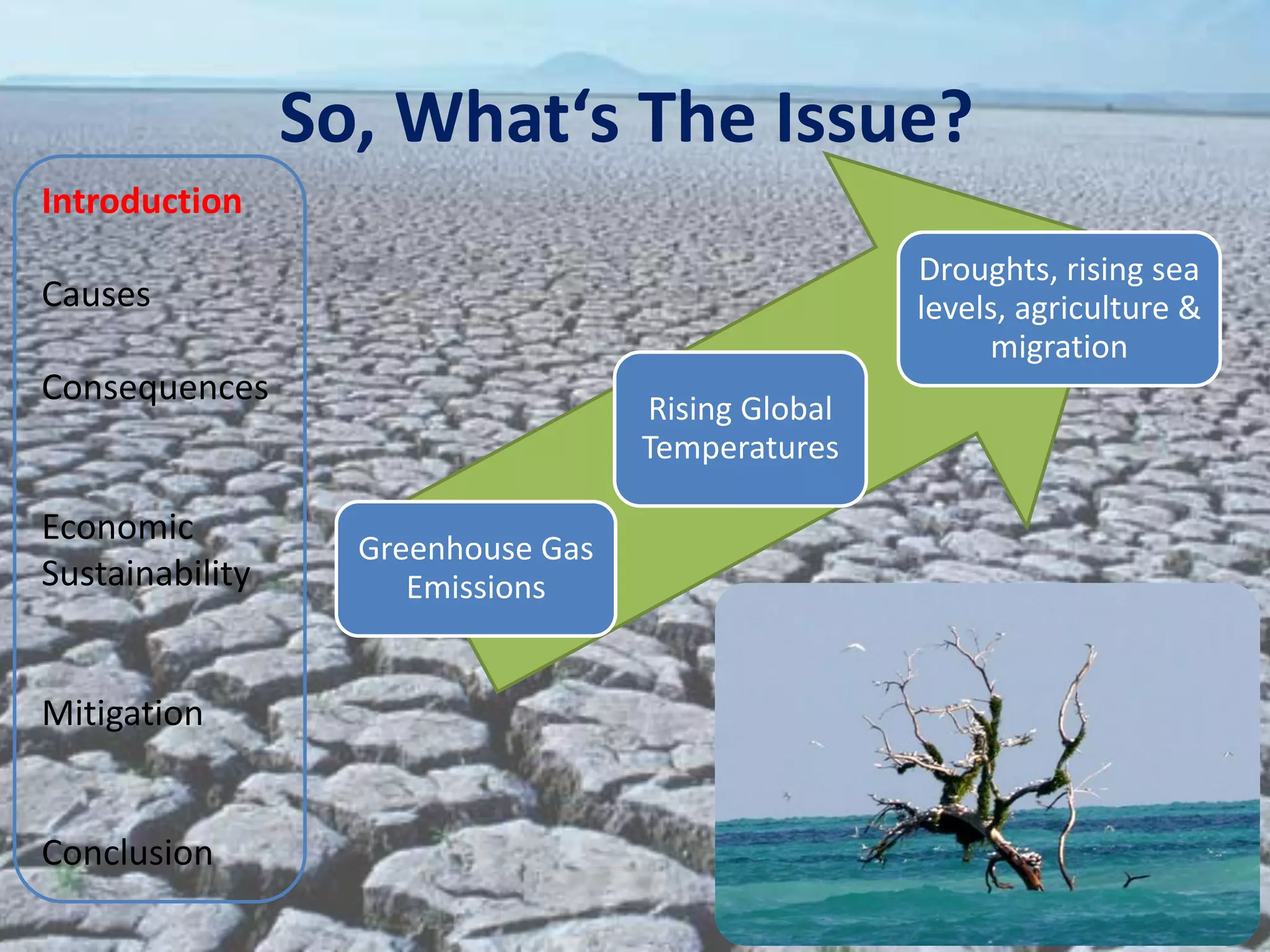
So, What‘s The Issue?
Introduction
                                                    Droughts, rising sea
Causes                                              levels, agriculture &
                                                         migration
Consequences
                                    Rising Global
                                    Temperatures

Economic
                   Greenhouse Gas
Sustainability        Emissions


Mitigation


Conclusion
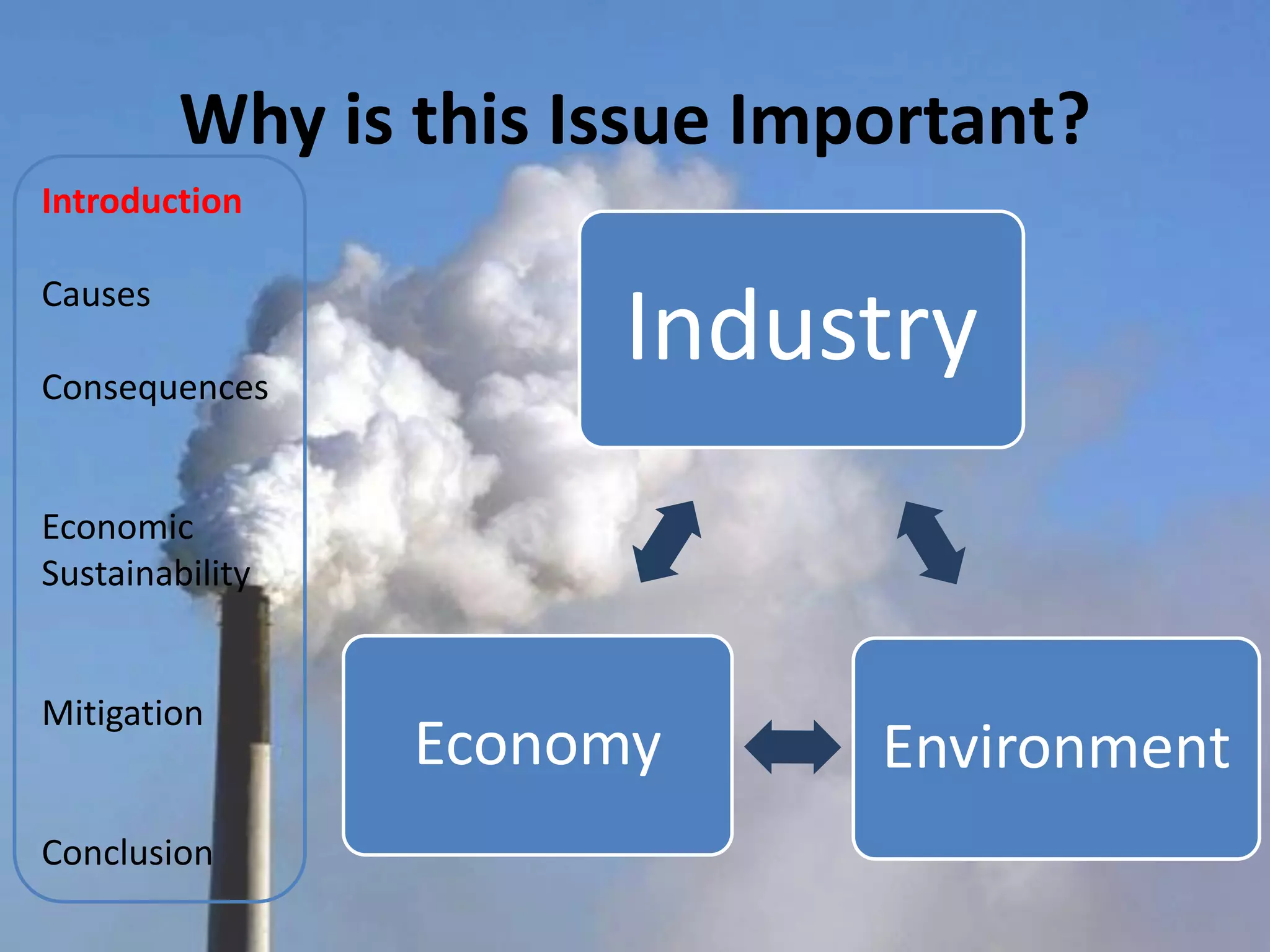
Why is this Issue Important?
Introduction

Causes

Consequences
                      Industry
Economic
Sustainability


Mitigation
                 Economy      Environment
Conclusion
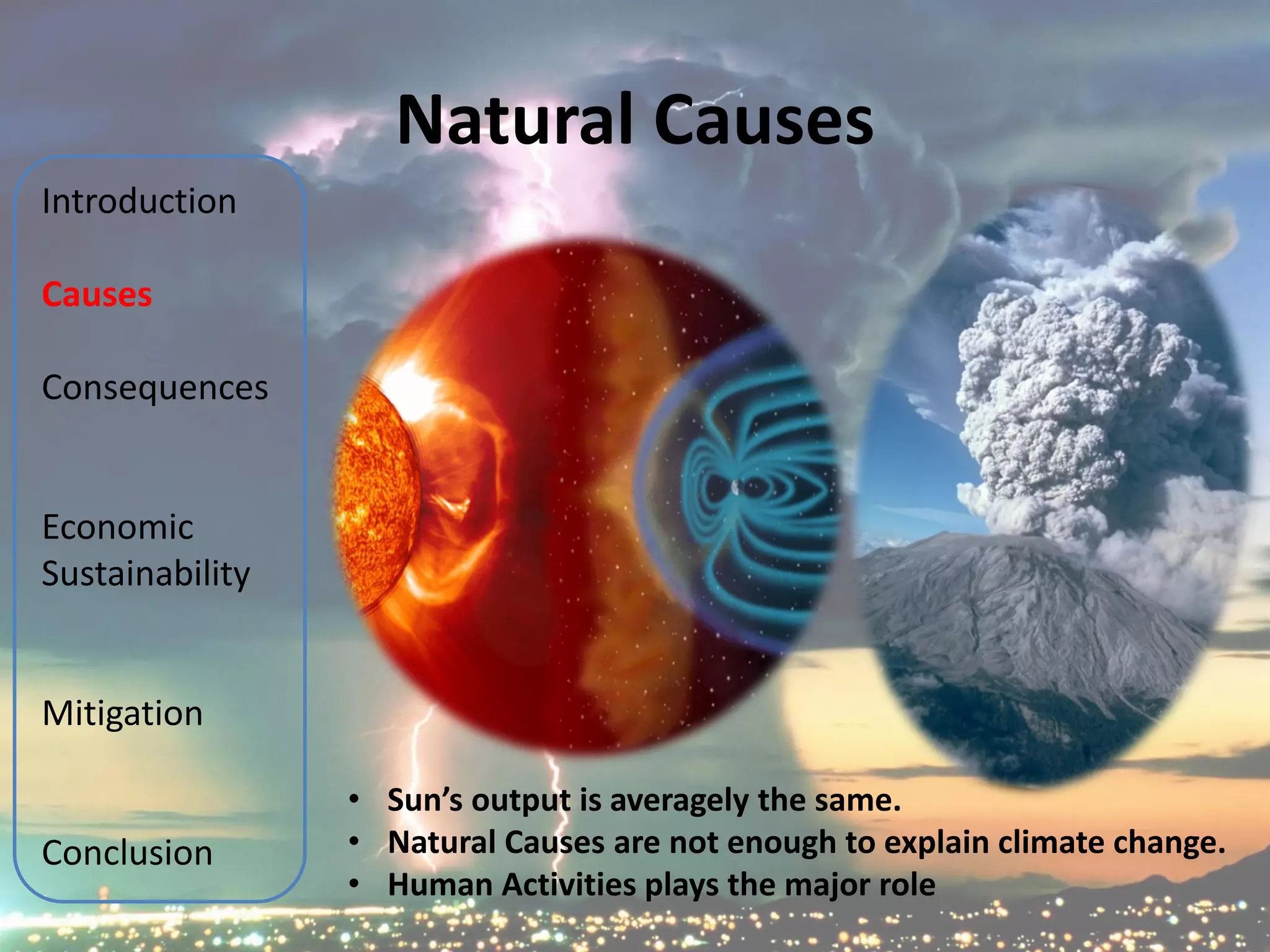
Natural Causes
Introduction

Causes

Consequences


Economic
Sustainability


Mitigation

                 • Sun’s output is averagely the same.
Conclusion       • Natural Causes are not enough to explain climate change.
                 • Human Activities plays the major role
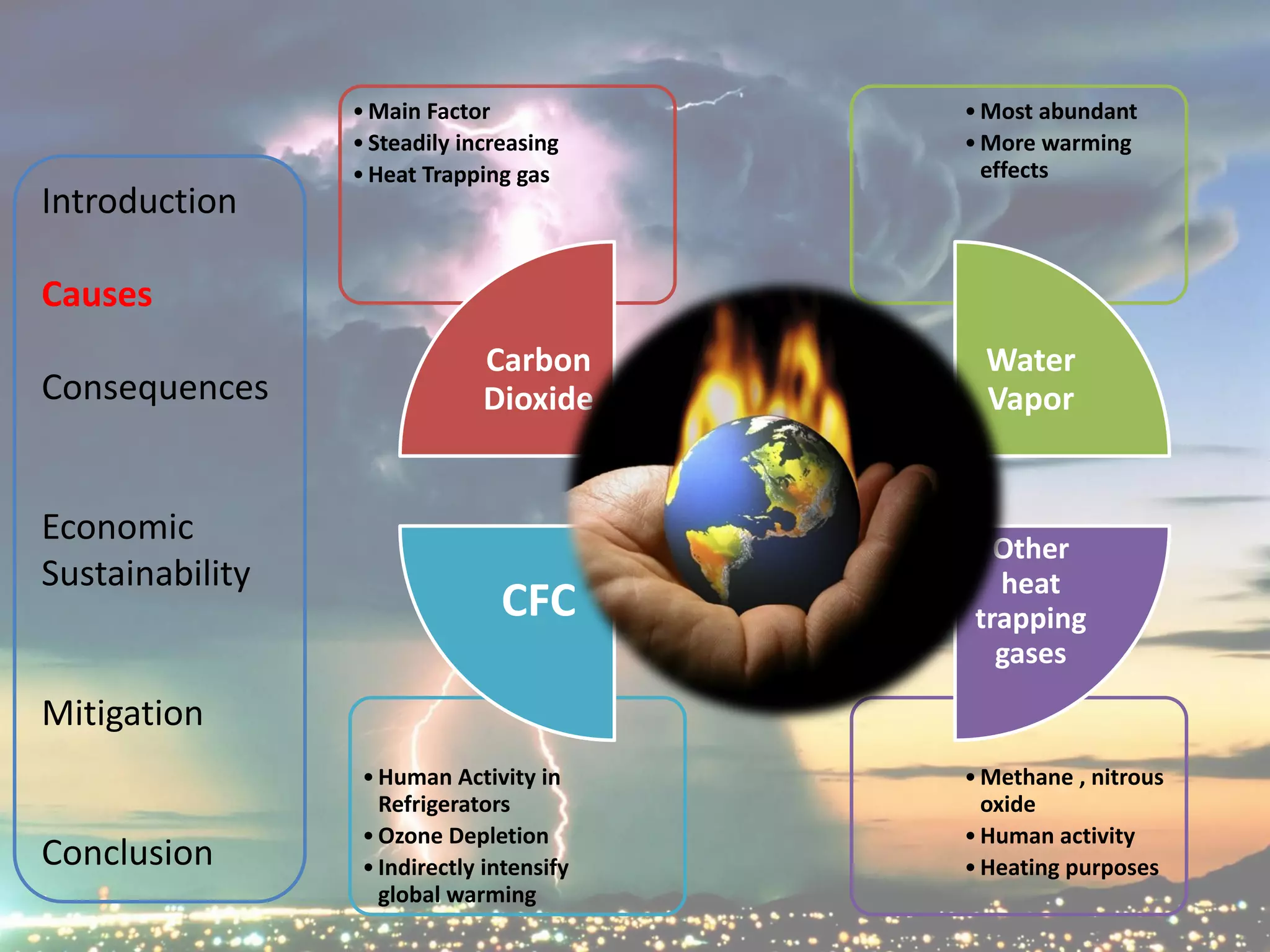
• Main Factor             • Most abundant
                 • Steadily increasing     • More warming
                 • Heat Trapping gas         effects
Introduction

Causes
                              Carbon         Water
Consequences                  Dioxide        Vapor


Economic
                                              Other
Sustainability                                heat
                                CFC         trapping
                                              gases
Mitigation
                  • Human Activity in      • Methane , nitrous
                    Refrigerators            oxide
                  • Ozone Depletion        • Human activity
Conclusion        • Indirectly intensify   • Heating purposes
                    global warming
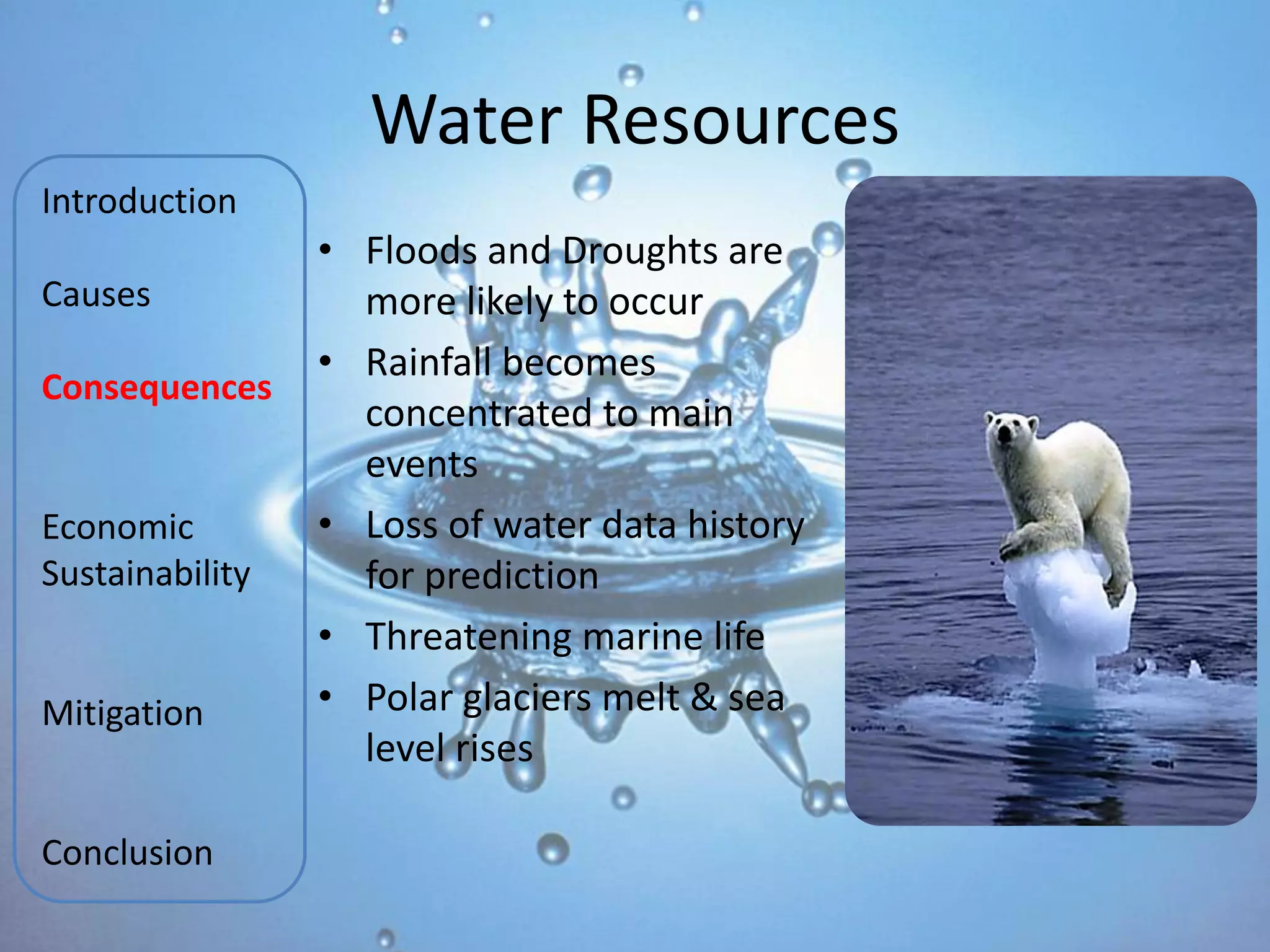
Water Resources
Introduction
                 • Floods and Droughts are
Causes             more likely to occur
                 • Rainfall becomes
Consequences
                   concentrated to main
                   events
Economic         • Loss of water data history
Sustainability     for prediction
                 • Threatening marine life
Mitigation       • Polar glaciers melt & sea
                   level rises

Conclusion
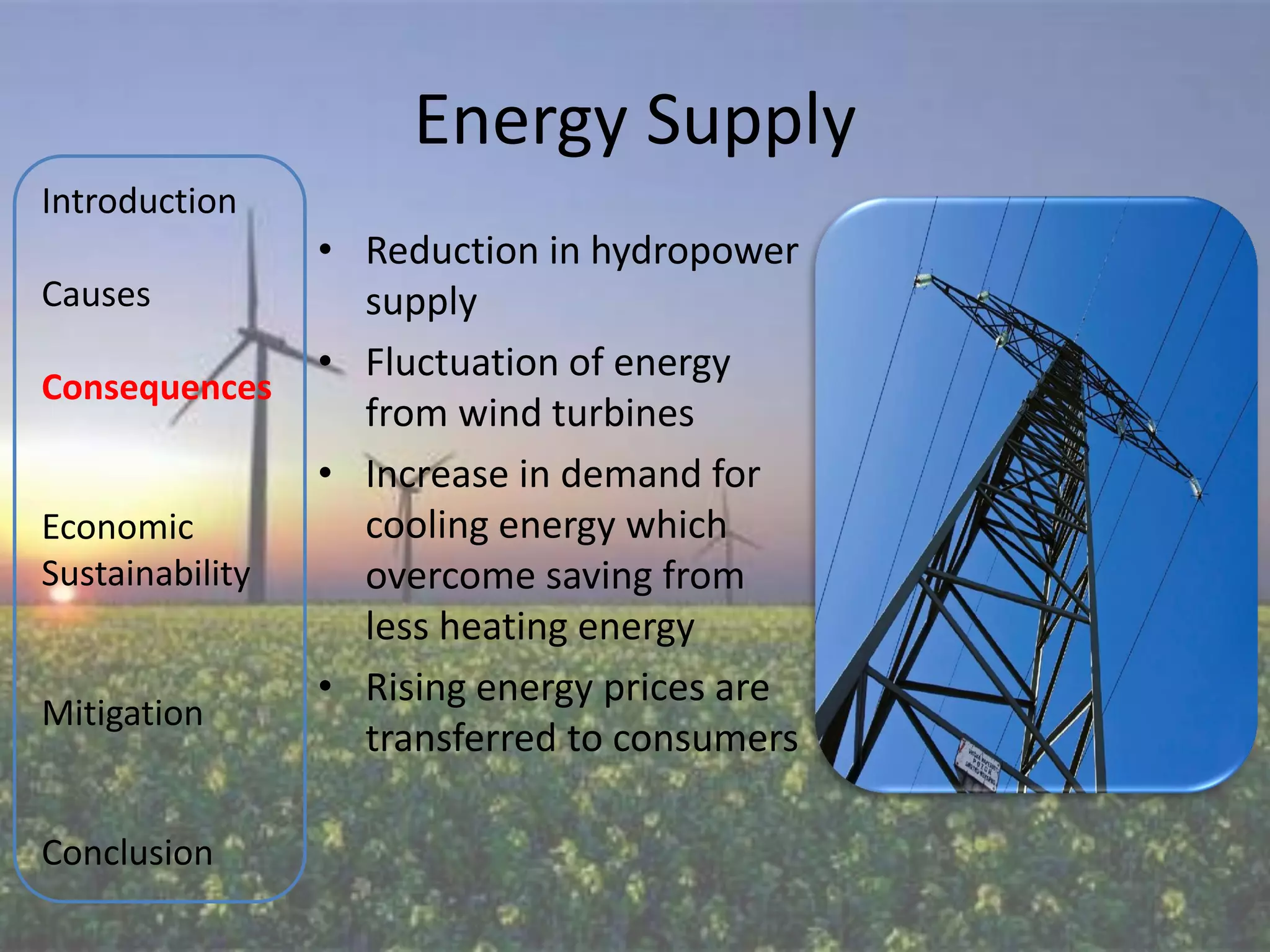
Energy Supply
Introduction
                 • Reduction in hydropower
Causes             supply
                 • Fluctuation of energy
Consequences
                   from wind turbines
                 • Increase in demand for
Economic           cooling energy which
Sustainability     overcome saving from
                   less heating energy
                 • Rising energy prices are
Mitigation
                   transferred to consumers

Conclusion
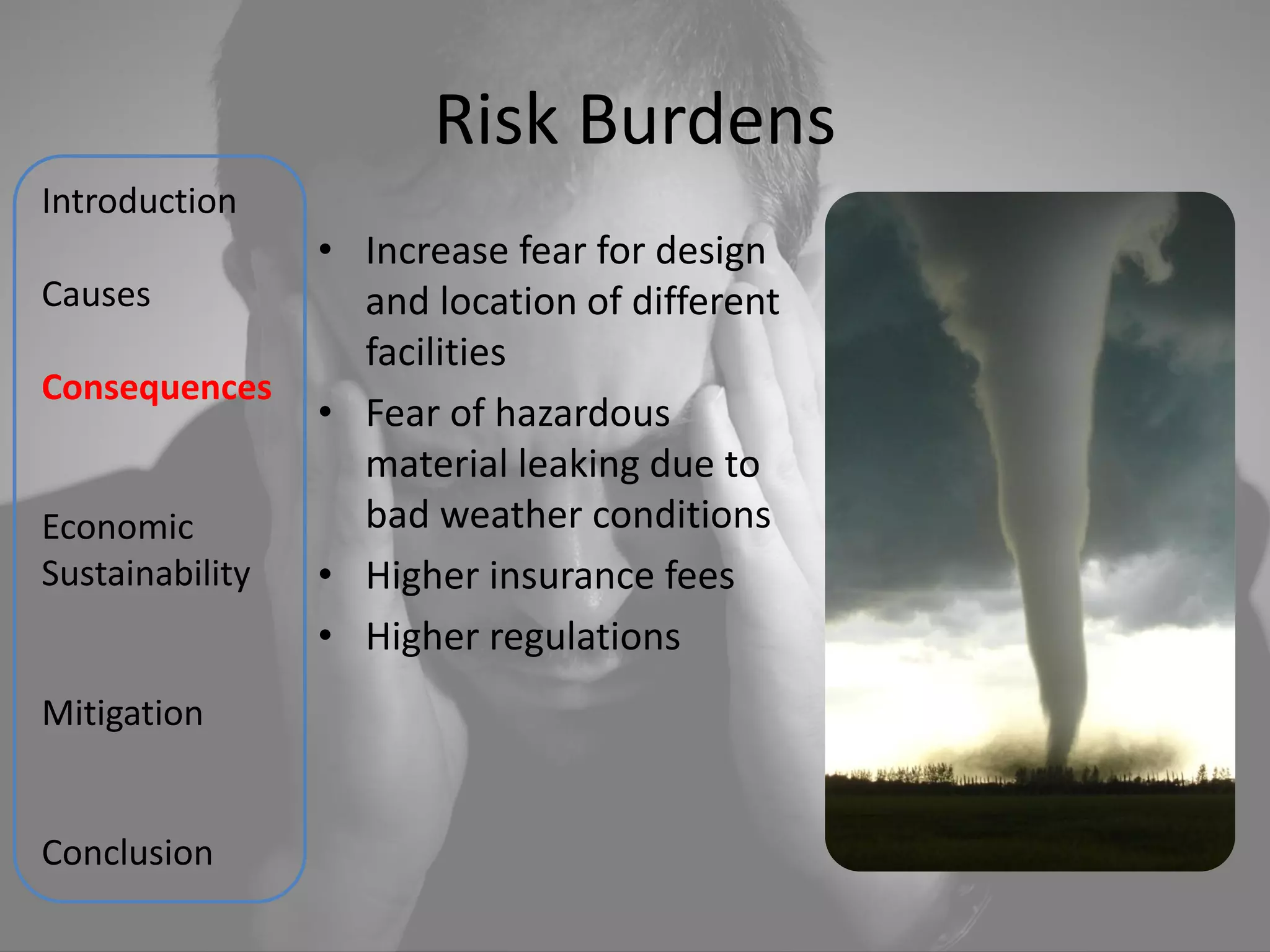
Risk Burdens
Introduction
                 • Increase fear for design
Causes             and location of different
                   facilities
Consequences
                 • Fear of hazardous
                   material leaking due to
Economic           bad weather conditions
Sustainability   • Higher insurance fees
                 • Higher regulations
Mitigation


Conclusion
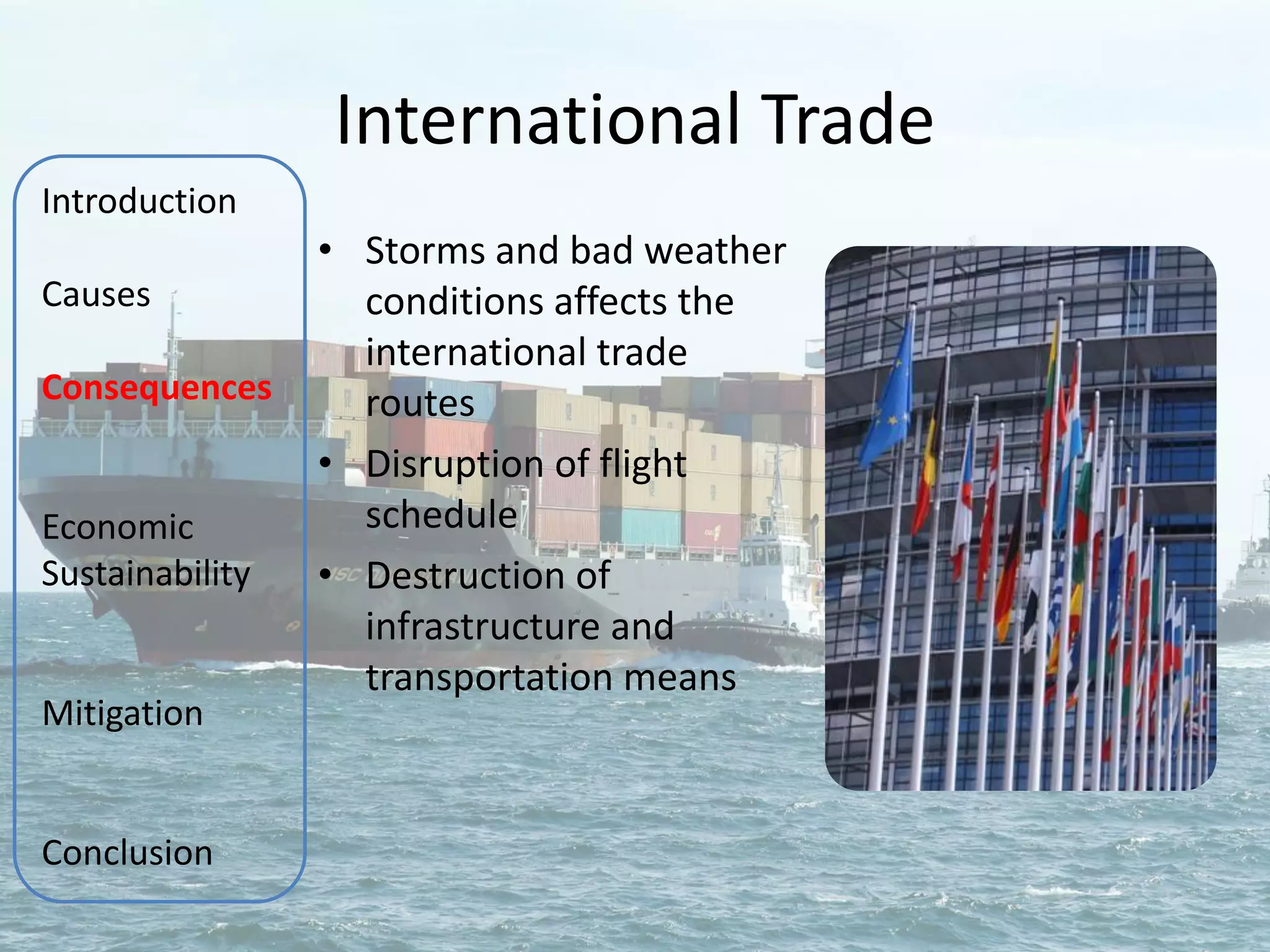
International Trade
Introduction
                 • Storms and bad weather
Causes             conditions affects the
                   international trade
Consequences       routes
                 • Disruption of flight
Economic           schedule
Sustainability   • Destruction of
                   infrastructure and
                   transportation means
Mitigation


Conclusion
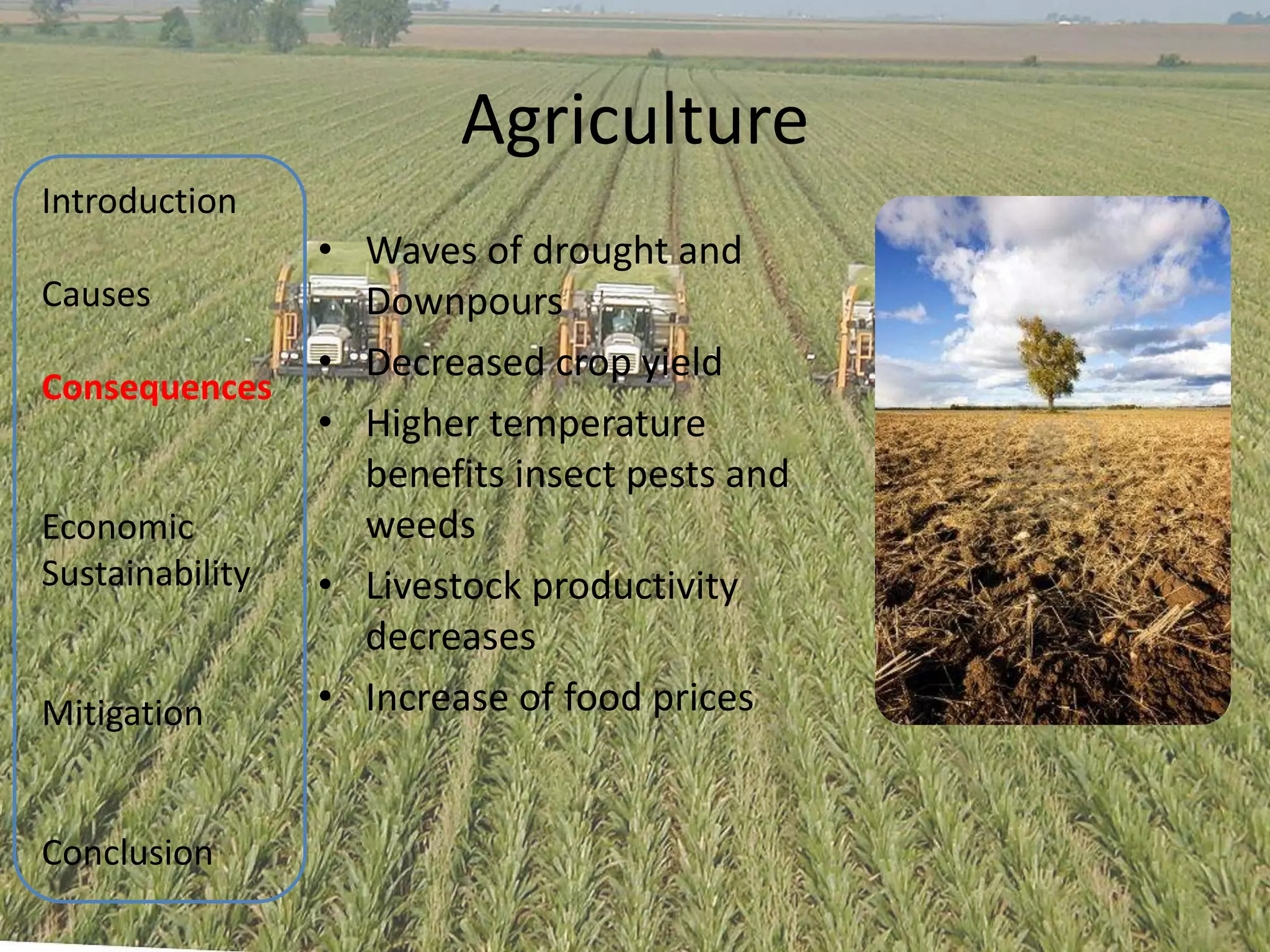
Agriculture
Introduction
                 • Waves of drought and
Causes             Downpours
                 • Decreased crop yield
Consequences
                 • Higher temperature
                   benefits insect pests and
Economic           weeds
Sustainability   • Livestock productivity
                   decreases
Mitigation       • Increase of food prices


Conclusion
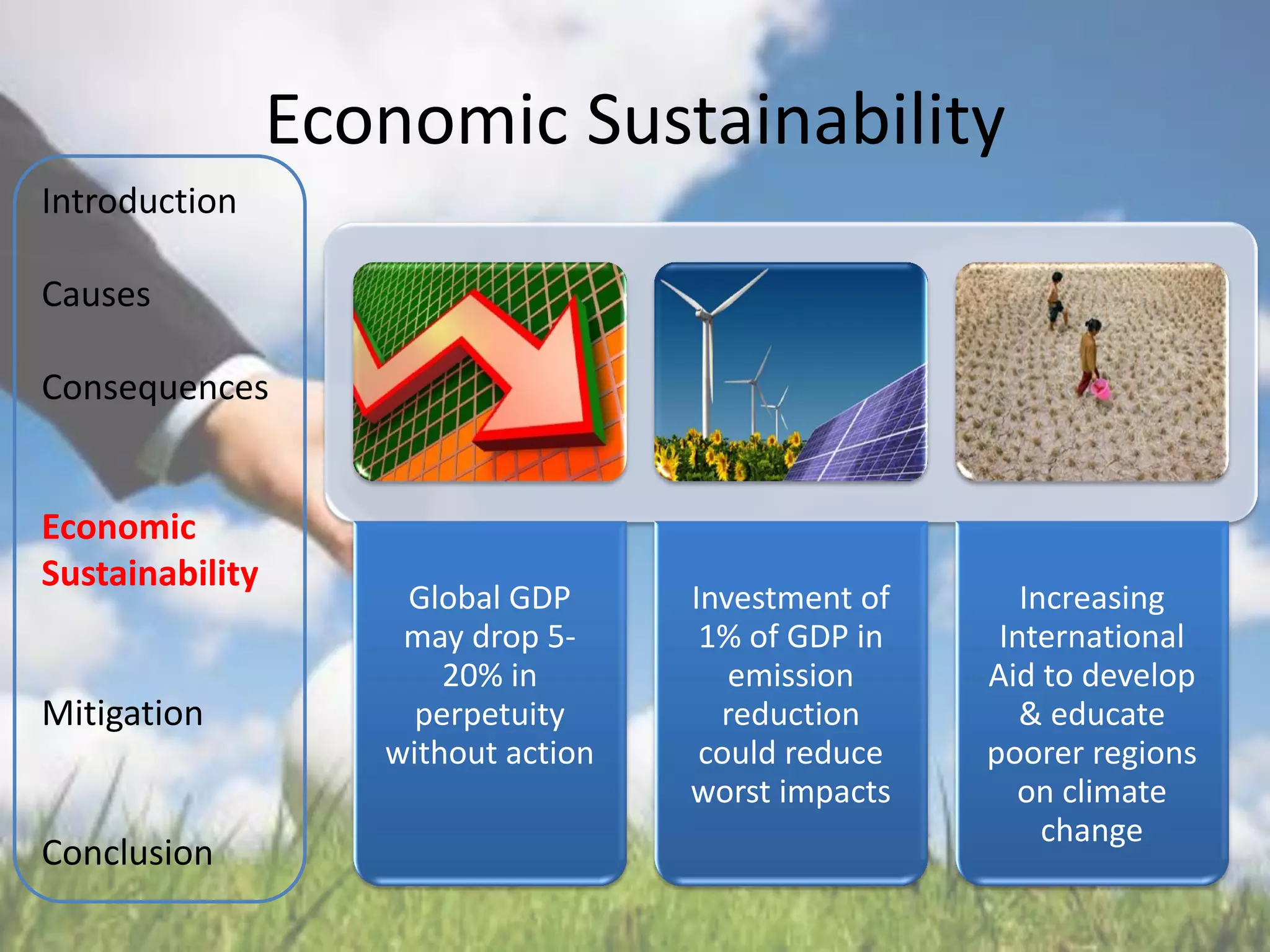
Economic Sustainability
Introduction

Causes

Consequences


Economic
Sustainability
                     Global GDP      Investment of      Increasing
                     may drop 5-      1% of GDP in    International
                        20% in          emission     Aid to develop
Mitigation            perpetuity       reduction        & educate
                    without action    could reduce   poorer regions
                                     worst impacts     on climate
                                                          change
Conclusion
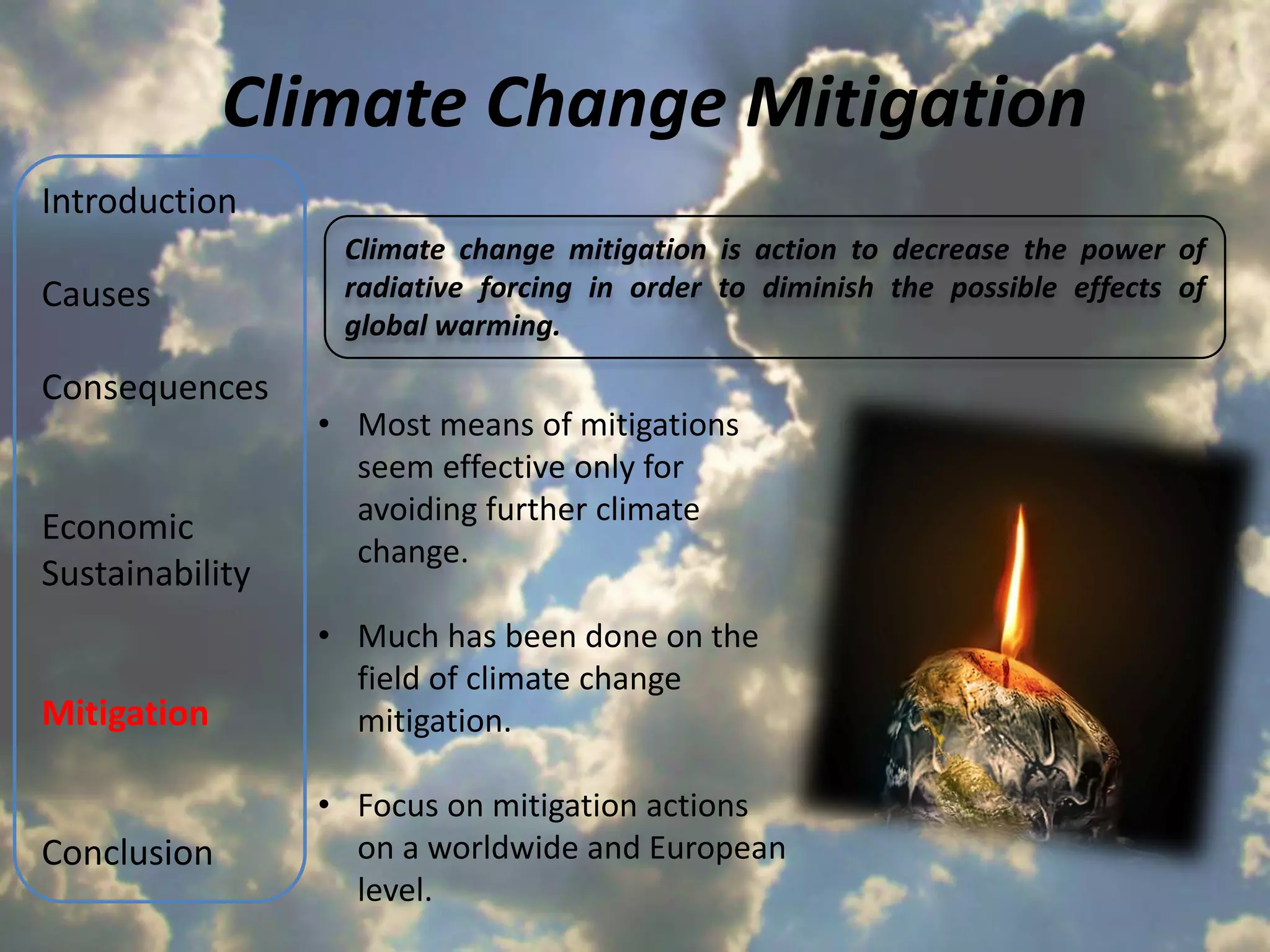
Climate Change Mitigation
Introduction
                  Climate change mitigation is action to decrease the power of
Causes            radiative forcing in order to diminish the possible effects of
                  global warming.

Consequences
                 • Most means of mitigations
                   seem effective only for
                   avoiding further climate
Economic
                   change.
Sustainability
                 • Much has been done on the
                   field of climate change
Mitigation         mitigation.

                 • Focus on mitigation actions
Conclusion         on a worldwide and European
                   level.
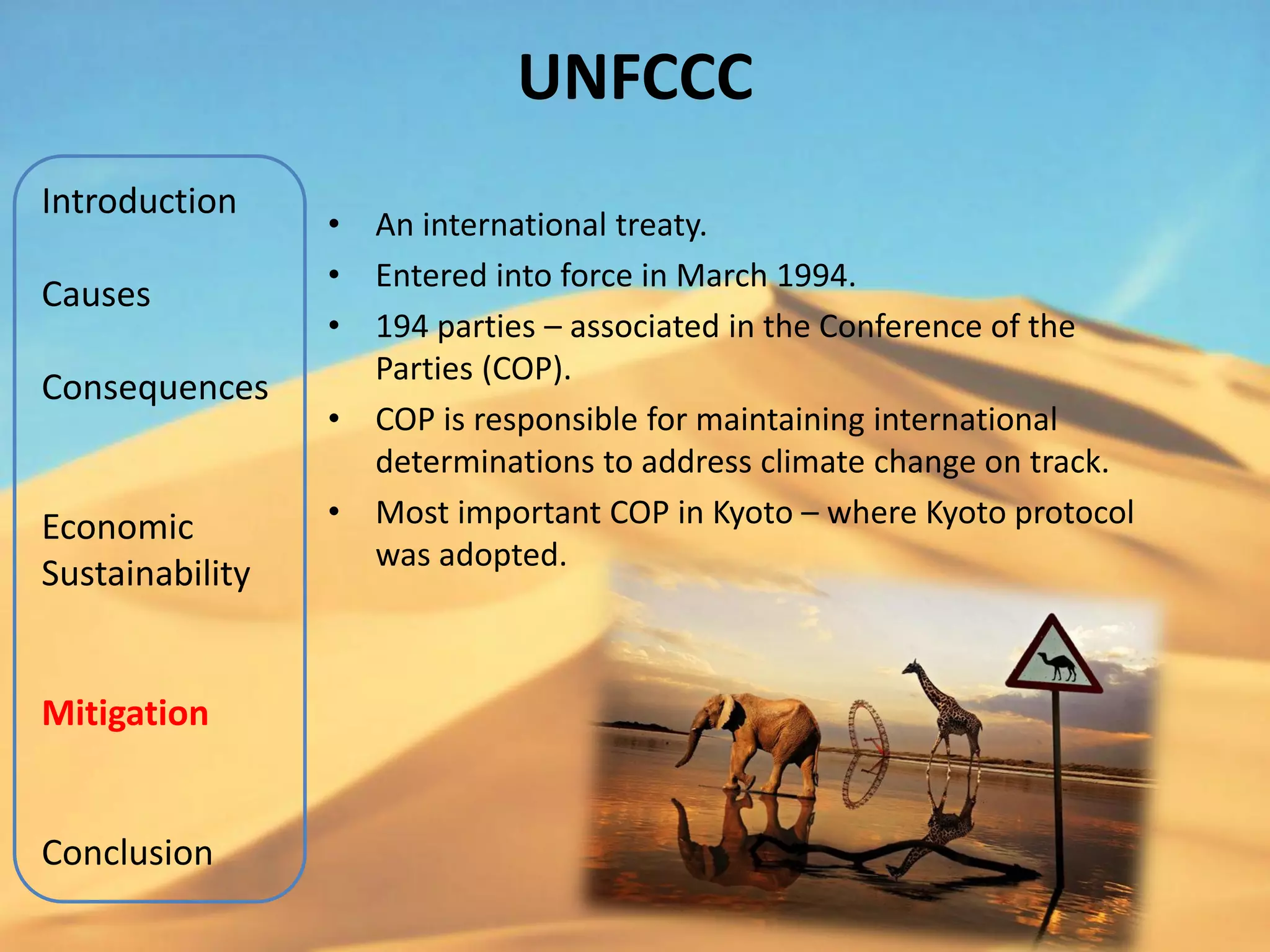
UNFCCC
Introduction
                 •   An international treaty.
                 •   Entered into force in March 1994.
Causes
                 •   194 parties – associated in the Conference of the
                     Parties (COP).
Consequences
                 •   COP is responsible for maintaining international
                     determinations to address climate change on track.
Economic         •   Most important COP in Kyoto – where Kyoto protocol
                     was adopted.
Sustainability


Mitigation


Conclusion
UNFCCC – Kyoto Protocol
Introduction
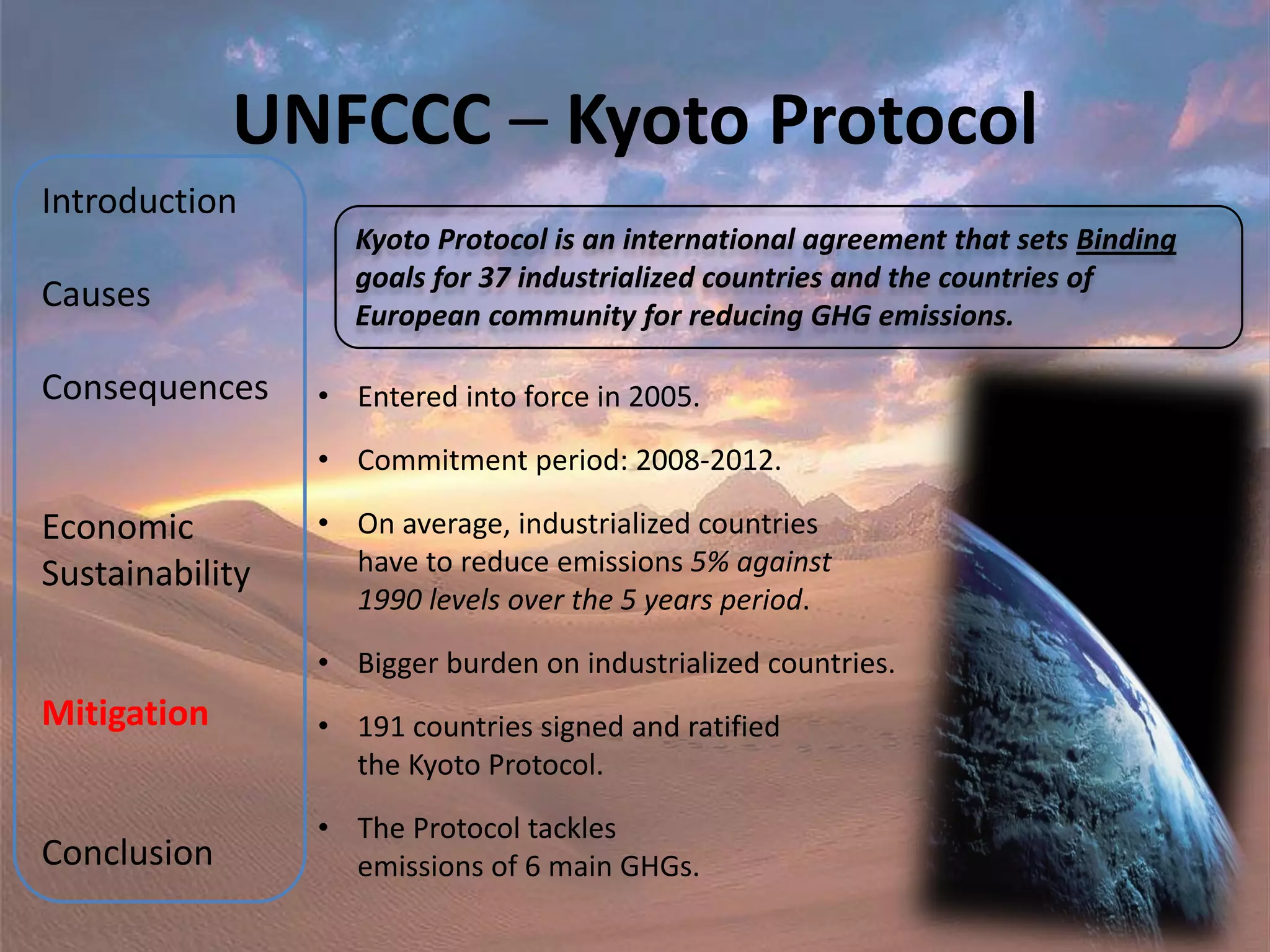
                   Kyoto Protocol is an international agreement that sets Binding
                   goals for 37 industrialized countries and the countries of
Causes             European community for reducing GHG emissions.

Consequences     • Entered into force in 2005.

                 • Commitment period: 2008-2012.

Economic         • On average, industrialized countries
Sustainability     have to reduce emissions 5% against
                   1990 levels over the 5 years period.

                 • Bigger burden on industrialized countries.
Mitigation       • 191 countries signed and ratified
                   the Kyoto Protocol.

                 • The Protocol tackles
Conclusion         emissions of 6 main GHGs.
Post-Kyoto Regime
Introduction

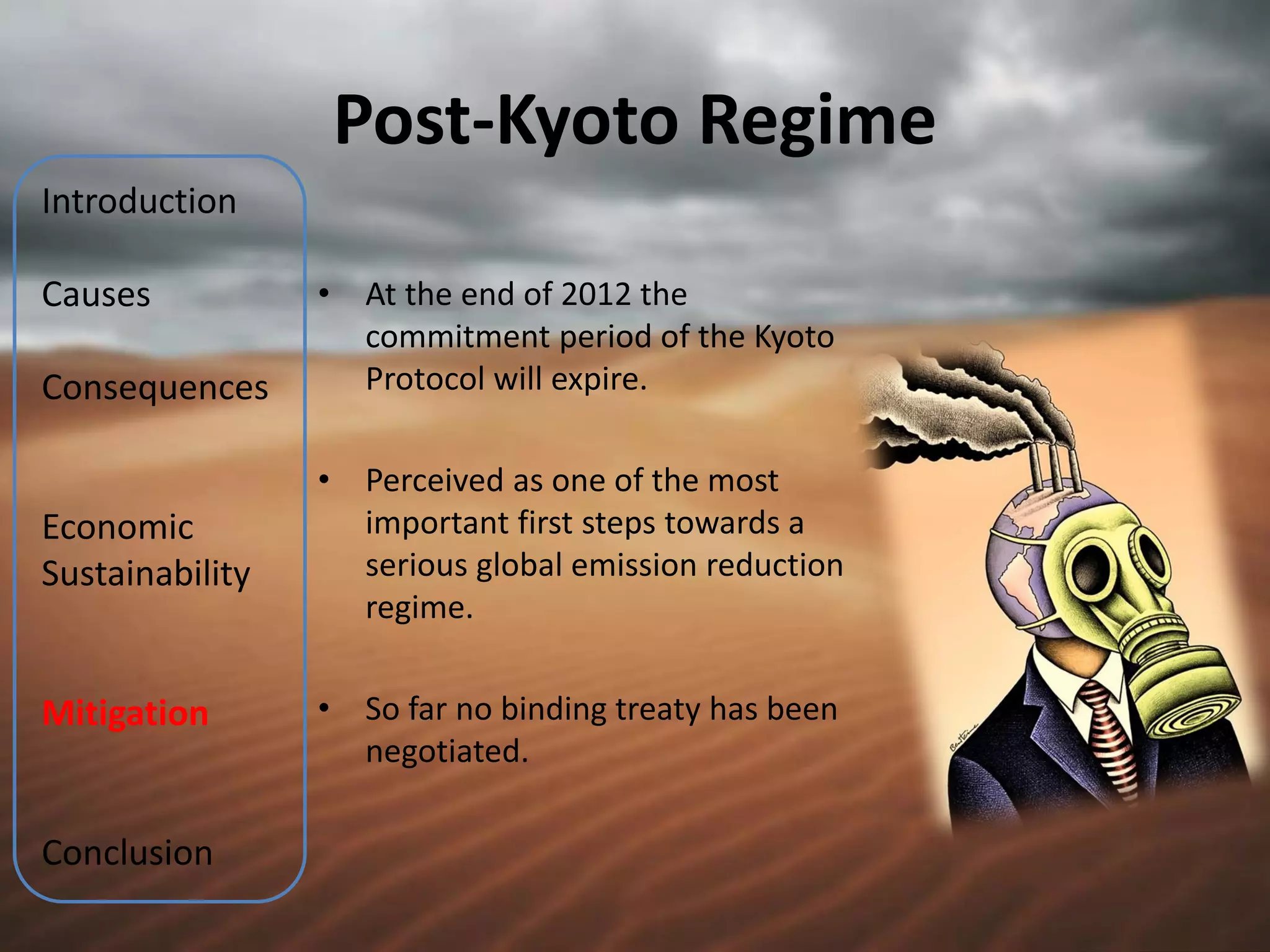
Causes           •   At the end of 2012 the
                     commitment period of the Kyoto
Consequences         Protocol will expire.

                 •   Perceived as one of the most
Economic             important first steps towards a
Sustainability       serious global emission reduction
                     regime.


Mitigation       •   So far no binding treaty has been
                     negotiated.

Conclusion
European Union Emissions Trading
                 Scheme – EU ETS
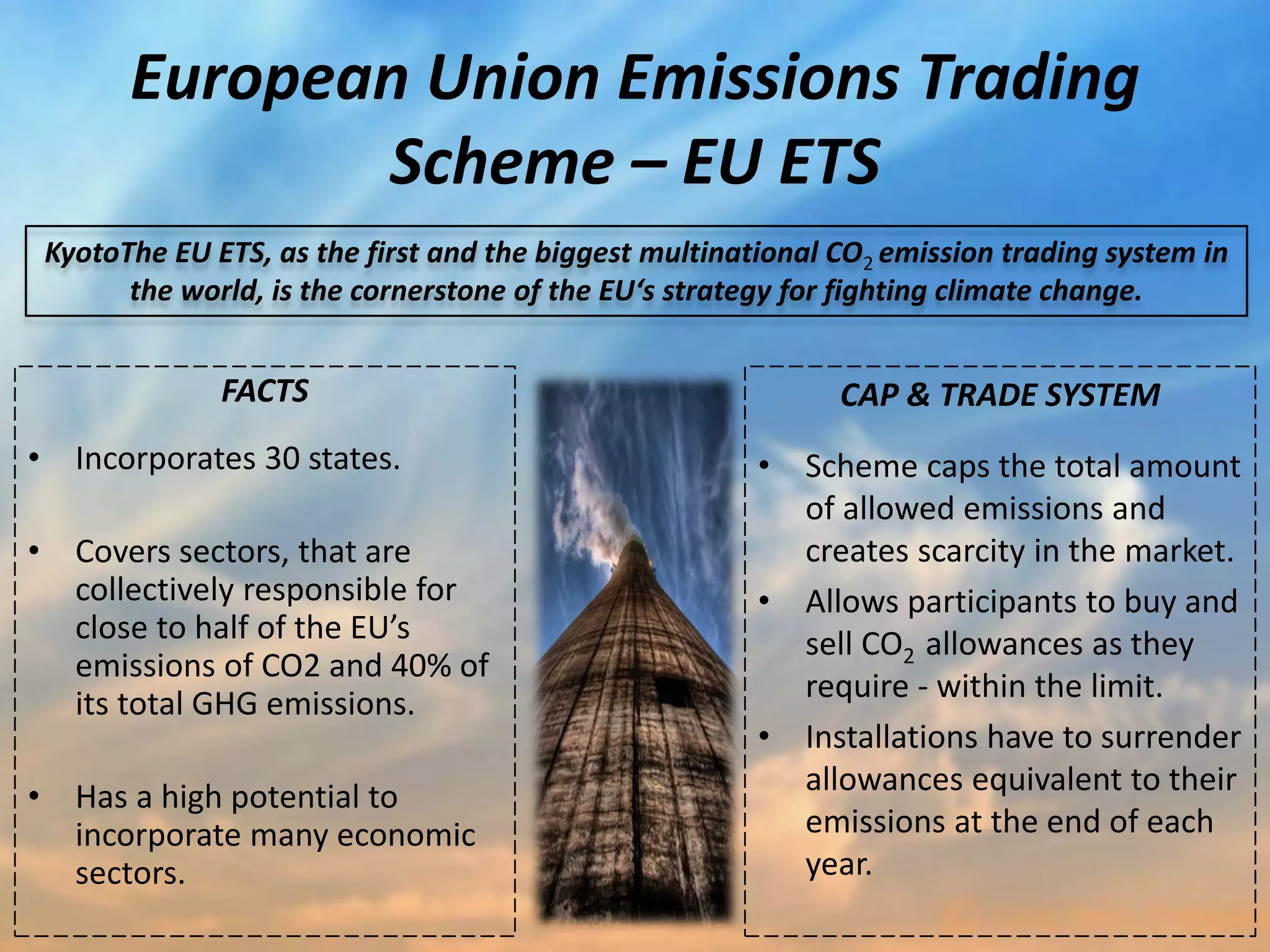
    KyotoThe EU ETS, as the first and the biggest multinational CO2 emission trading system in
          the world, is the cornerstone of the EU‘s strategy for fighting climate change.


                 FACTS                                          CAP & TRADE SYSTEM
•     Incorporates 30 states.                             •   Scheme caps the total amount
                                                              of allowed emissions and
•     Covers sectors, that are                                creates scarcity in the market.
      collectively responsible for                        •   Allows participants to buy and
      close to half of the EU’s                               sell CO2 allowances as they
      emissions of CO2 and 40% of
      its total GHG emissions.                                require - within the limit.
                                                          •   Installations have to surrender
•     Has a high potential to                                 allowances equivalent to their
      incorporate many economic                               emissions at the end of each
      sectors.                                                year.
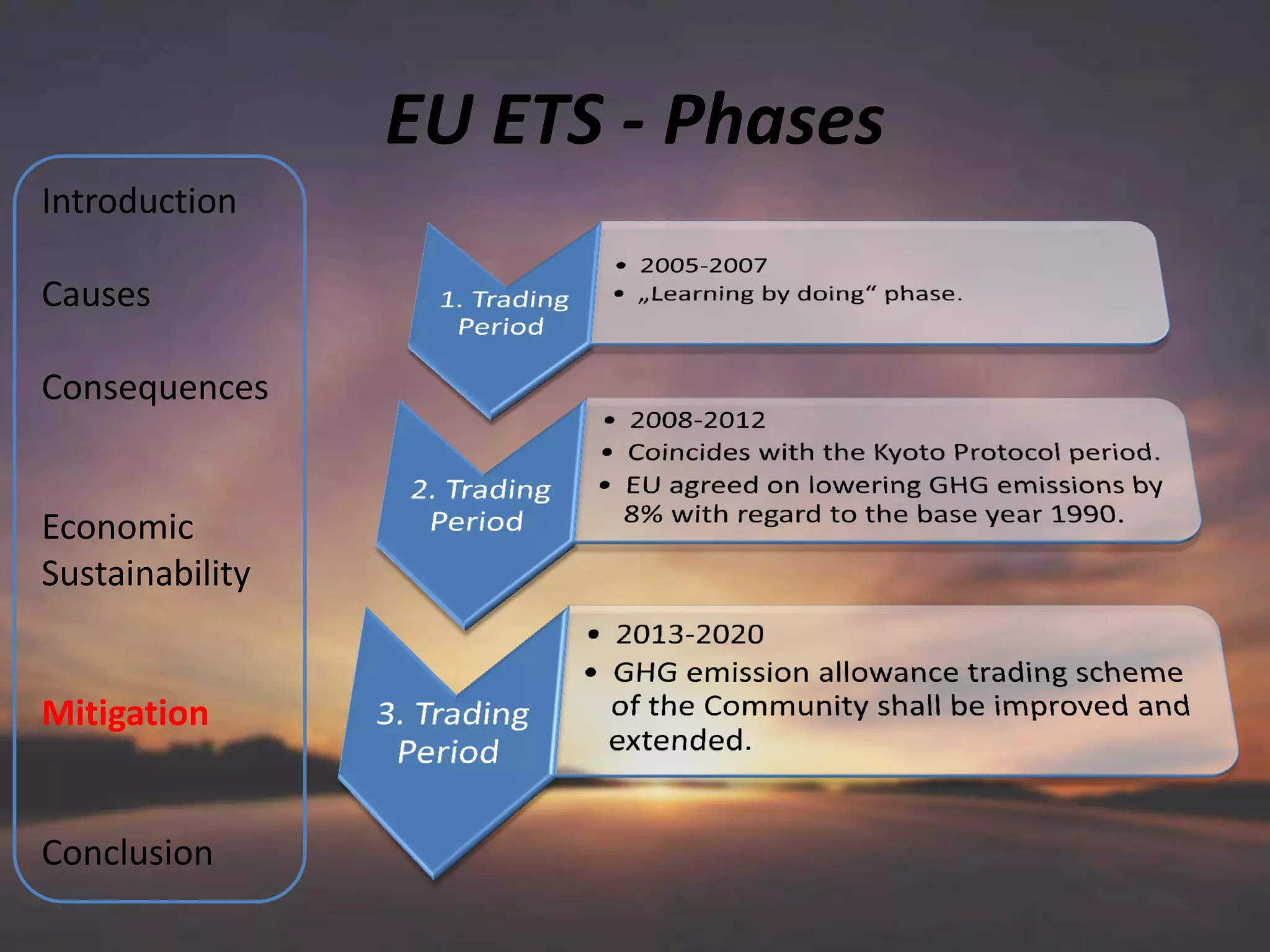
EU ETS - Phases
Introduction

Causes

Consequences


Economic
Sustainability


Mitigation


Conclusion
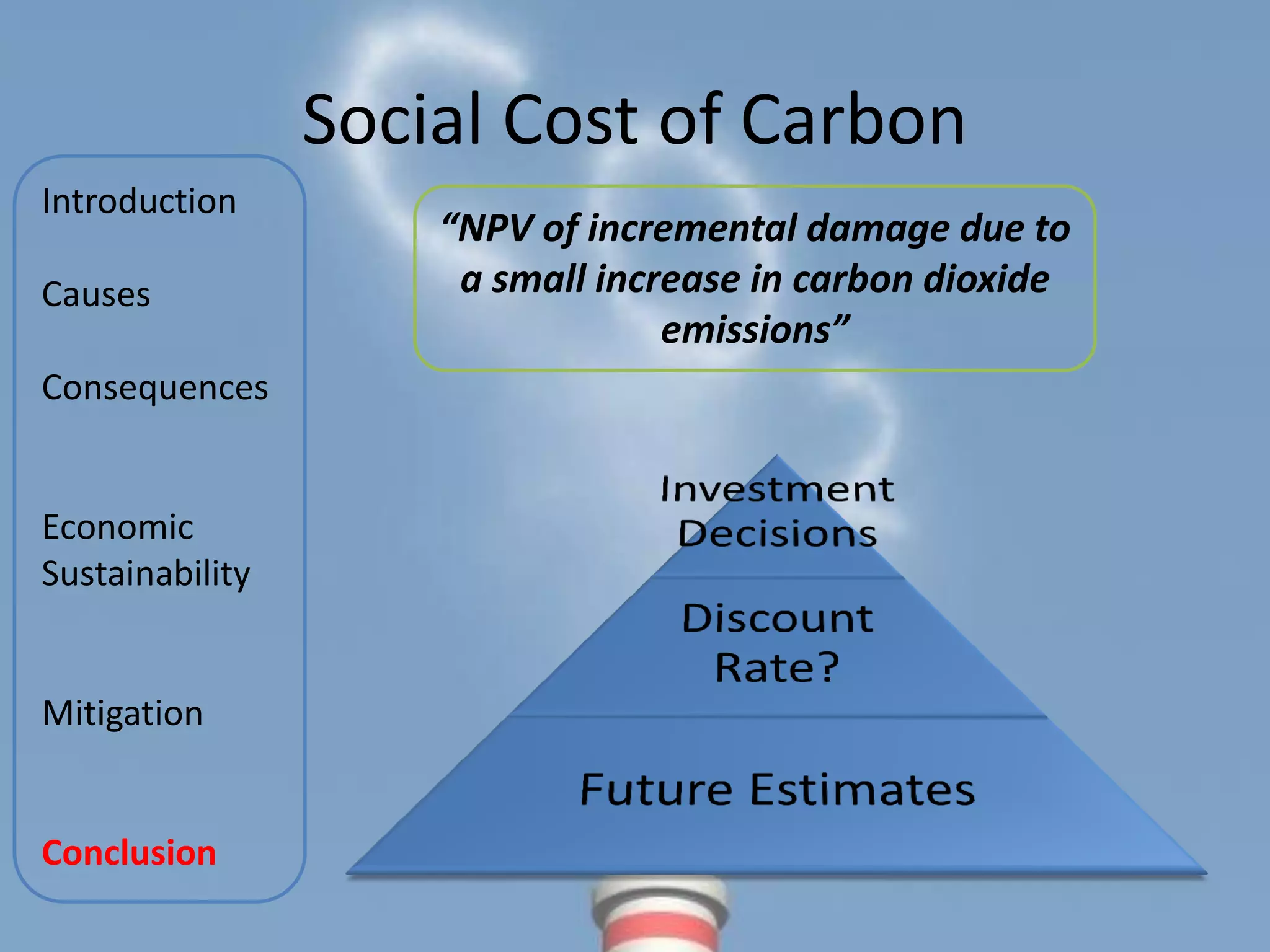
Social Cost of Carbon
Introduction
                     “NPV of incremental damage due to
Causes                a small increase in carbon dioxide
                                  emissions”
Consequences


Economic
Sustainability


Mitigation


Conclusion
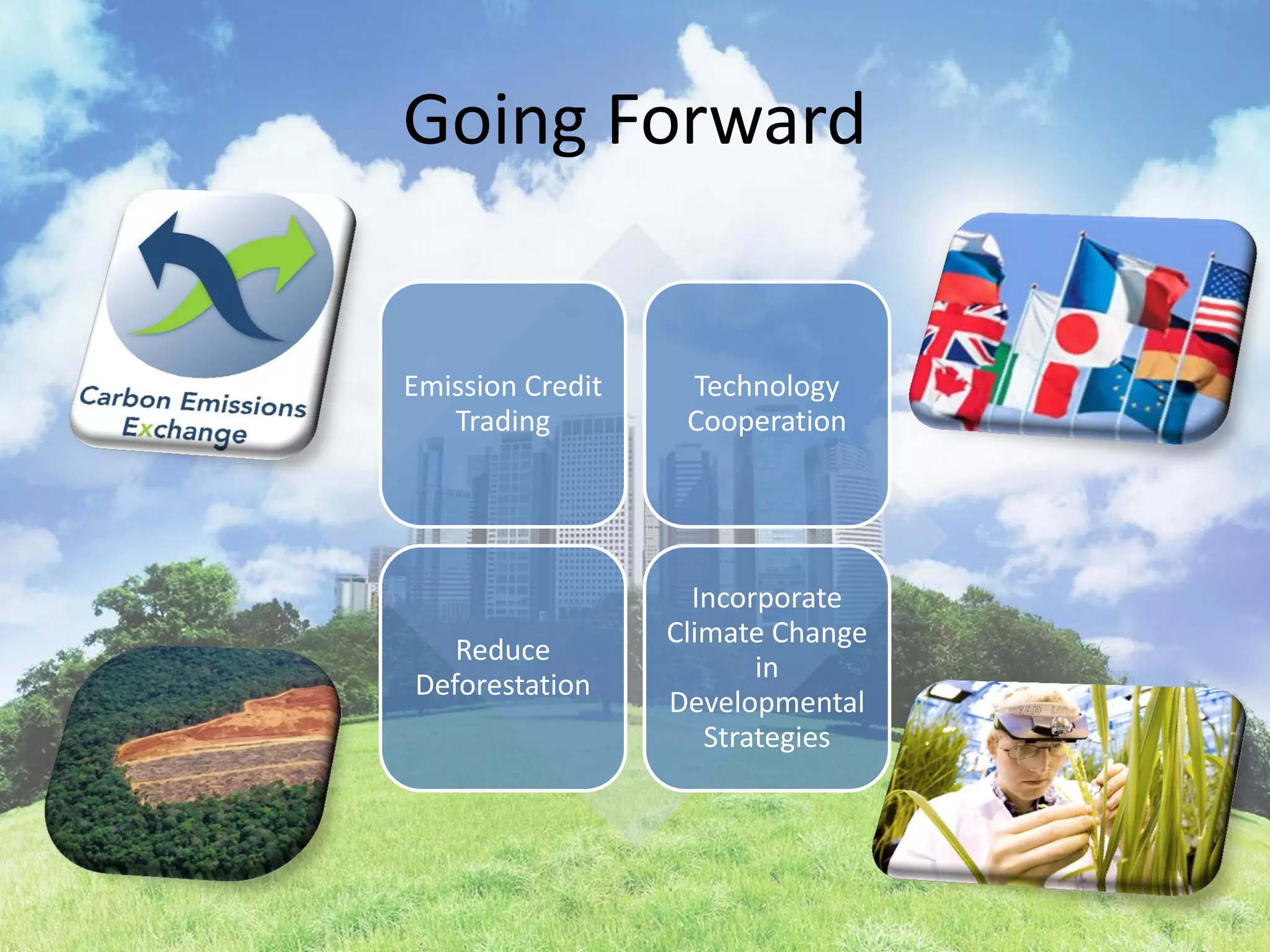
Going Forward


Emission Credit    Technology
   Trading         Cooperation


                    Incorporate
                  Climate Change
   Reduce
                         in
Deforestation
                  Developmental
                     Strategies
Climate change, Corporate Social Responsibility

Climate change, Corporate Social Responsibility

  • 1.
    Evan Hahn Albert Czerny Sherif Mohamed
  • 2.
    So, What‘s TheIssue? Introduction Droughts, rising sea Causes levels, agriculture & migration Consequences Rising Global Temperatures Economic Greenhouse Gas Sustainability Emissions Mitigation Conclusion
  • 3.
    Why is thisIssue Important? Introduction Causes Consequences Industry Economic Sustainability Mitigation Economy Environment Conclusion
  • 4.
    Natural Causes Introduction Causes Consequences Economic Sustainability Mitigation • Sun’s output is averagely the same. Conclusion • Natural Causes are not enough to explain climate change. • Human Activities plays the major role
  • 5.
    • Main Factor • Most abundant • Steadily increasing • More warming • Heat Trapping gas effects Introduction Causes Carbon Water Consequences Dioxide Vapor Economic Other Sustainability heat CFC trapping gases Mitigation • Human Activity in • Methane , nitrous Refrigerators oxide • Ozone Depletion • Human activity Conclusion • Indirectly intensify • Heating purposes global warming
  • 6.
    Water Resources Introduction • Floods and Droughts are Causes more likely to occur • Rainfall becomes Consequences concentrated to main events Economic • Loss of water data history Sustainability for prediction • Threatening marine life Mitigation • Polar glaciers melt & sea level rises Conclusion
  • 7.
    Energy Supply Introduction • Reduction in hydropower Causes supply • Fluctuation of energy Consequences from wind turbines • Increase in demand for Economic cooling energy which Sustainability overcome saving from less heating energy • Rising energy prices are Mitigation transferred to consumers Conclusion
  • 8.
    Risk Burdens Introduction • Increase fear for design Causes and location of different facilities Consequences • Fear of hazardous material leaking due to Economic bad weather conditions Sustainability • Higher insurance fees • Higher regulations Mitigation Conclusion
  • 9.
    International Trade Introduction • Storms and bad weather Causes conditions affects the international trade Consequences routes • Disruption of flight Economic schedule Sustainability • Destruction of infrastructure and transportation means Mitigation Conclusion
  • 10.
    Agriculture Introduction • Waves of drought and Causes Downpours • Decreased crop yield Consequences • Higher temperature benefits insect pests and Economic weeds Sustainability • Livestock productivity decreases Mitigation • Increase of food prices Conclusion
  • 11.
    Economic Sustainability Introduction Causes Consequences Economic Sustainability Global GDP Investment of Increasing may drop 5- 1% of GDP in International 20% in emission Aid to develop Mitigation perpetuity reduction & educate without action could reduce poorer regions worst impacts on climate change Conclusion
  • 12.
    Climate Change Mitigation Introduction Climate change mitigation is action to decrease the power of Causes radiative forcing in order to diminish the possible effects of global warming. Consequences • Most means of mitigations seem effective only for avoiding further climate Economic change. Sustainability • Much has been done on the field of climate change Mitigation mitigation. • Focus on mitigation actions Conclusion on a worldwide and European level.
  • 13.
    UNFCCC Introduction • An international treaty. • Entered into force in March 1994. Causes • 194 parties – associated in the Conference of the Parties (COP). Consequences • COP is responsible for maintaining international determinations to address climate change on track. Economic • Most important COP in Kyoto – where Kyoto protocol was adopted. Sustainability Mitigation Conclusion
  • 14.
    UNFCCC – KyotoProtocol Introduction Kyoto Protocol is an international agreement that sets Binding goals for 37 industrialized countries and the countries of Causes European community for reducing GHG emissions. Consequences • Entered into force in 2005. • Commitment period: 2008-2012. Economic • On average, industrialized countries Sustainability have to reduce emissions 5% against 1990 levels over the 5 years period. • Bigger burden on industrialized countries. Mitigation • 191 countries signed and ratified the Kyoto Protocol. • The Protocol tackles Conclusion emissions of 6 main GHGs.
  • 15.
    Post-Kyoto Regime Introduction Causes • At the end of 2012 the commitment period of the Kyoto Consequences Protocol will expire. • Perceived as one of the most Economic important first steps towards a Sustainability serious global emission reduction regime. Mitigation • So far no binding treaty has been negotiated. Conclusion
  • 16.
    European Union EmissionsTrading Scheme – EU ETS KyotoThe EU ETS, as the first and the biggest multinational CO2 emission trading system in the world, is the cornerstone of the EU‘s strategy for fighting climate change. FACTS CAP & TRADE SYSTEM • Incorporates 30 states. • Scheme caps the total amount of allowed emissions and • Covers sectors, that are creates scarcity in the market. collectively responsible for • Allows participants to buy and close to half of the EU’s sell CO2 allowances as they emissions of CO2 and 40% of its total GHG emissions. require - within the limit. • Installations have to surrender • Has a high potential to allowances equivalent to their incorporate many economic emissions at the end of each sectors. year.
  • 17.
    EU ETS -Phases Introduction Causes Consequences Economic Sustainability Mitigation Conclusion
  • 18.
    Social Cost ofCarbon Introduction “NPV of incremental damage due to Causes a small increase in carbon dioxide emissions” Consequences Economic Sustainability Mitigation Conclusion
  • 19.
    Going Forward Emission Credit Technology Trading Cooperation Incorporate Climate Change Reduce in Deforestation Developmental Strategies