![In this chapter, we begin with how to build a classroom community. [Using a continuum of strategies to respond to inappropriate behavior will be addressed in subsequent chapters.]](https://image.slidesharecdn.com/ch7-090910145358-phpapp02/85/Classroom-wide-Positive-Behavior-Support-6-320.jpg)
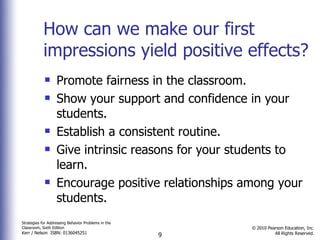
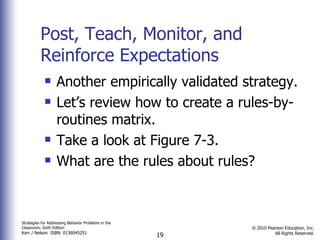
![Precorrection as a way to teach expectations When does precorrection take place? Why do you think it works? [Hint: using precorrection involves thinking ahead to the problems, conditions, or contexts in which stimulus control is not yet firmly established.] How could a rules by routines matrix posted on the classroom wall help with precorrection?](https://image.slidesharecdn.com/ch7-090910145358-phpapp02/85/Classroom-wide-Positive-Behavior-Support-20-320.jpg)
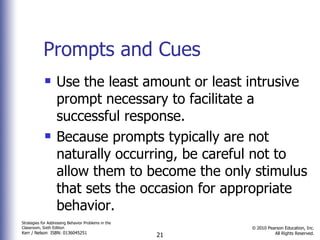
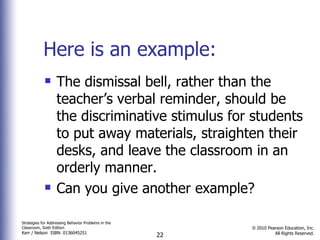
![How did Mr. Williams develop and use: classroom rules precorrection prompts, and cues [Come Into My Classroom Case Study, Part 3]](https://image.slidesharecdn.com/ch7-090910145358-phpapp02/85/Classroom-wide-Positive-Behavior-Support-25-320.jpg)
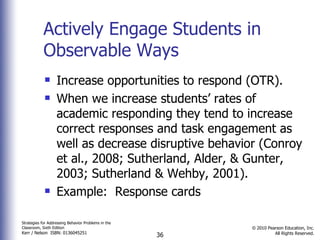
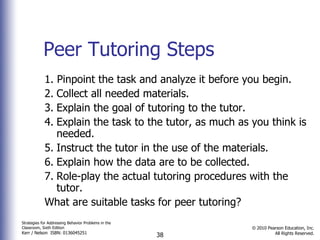
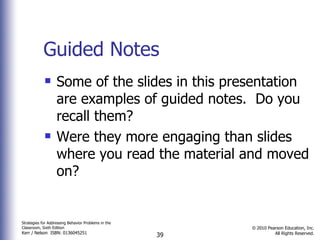

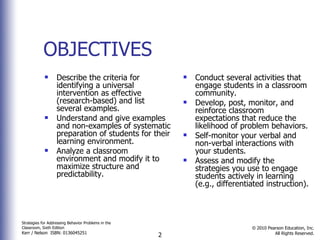
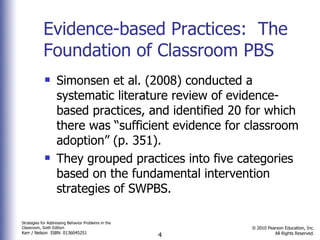
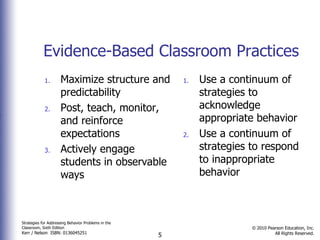
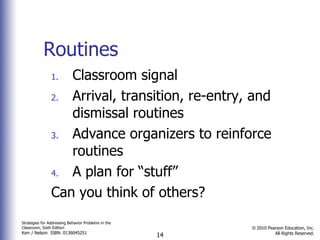
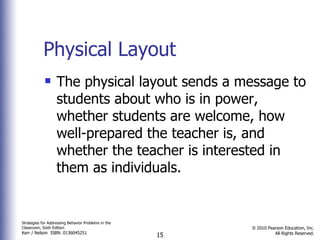
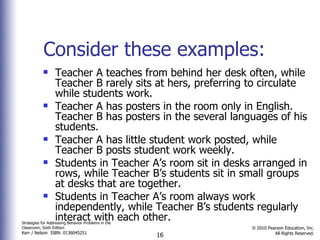
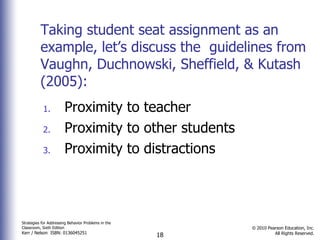
This document discusses strategies for implementing positive behavior support in the classroom, including maximizing structure and predictability, posting and teaching clear expectations, actively engaging students, and using specific praise and reinforcement. Some key evidence-based practices covered are developing routines, organizing the physical layout, using precorrection, and increasing opportunities for student response and interaction through techniques like guided notes, peer tutoring, and differentiated instruction. These practices help create a well-managed learning environment that supports all students, including those with challenging behaviors.


