OBJECTIVES
◻ Discuss some internal and external
factors/issues that could have
impact on classroom management
◻ Recognize common classroom
management struggles
◻ Create action plans with strategies
to cope with classroom
management issues
Let’s go to your own experience…
If you have teaching experience what
Classroom Management strategies do you
usually use?
If not….
Do you remember how teachers you had in
school coped with classroom management
challenges? Were those practices effective?
1. Watch the following class.
2. What classroom management
problems can you observe?
3. What strategies would you use to
have control of the class?
• Let’s watch another video.
• Notice what went well.
• What differences can you identify
between both classes?
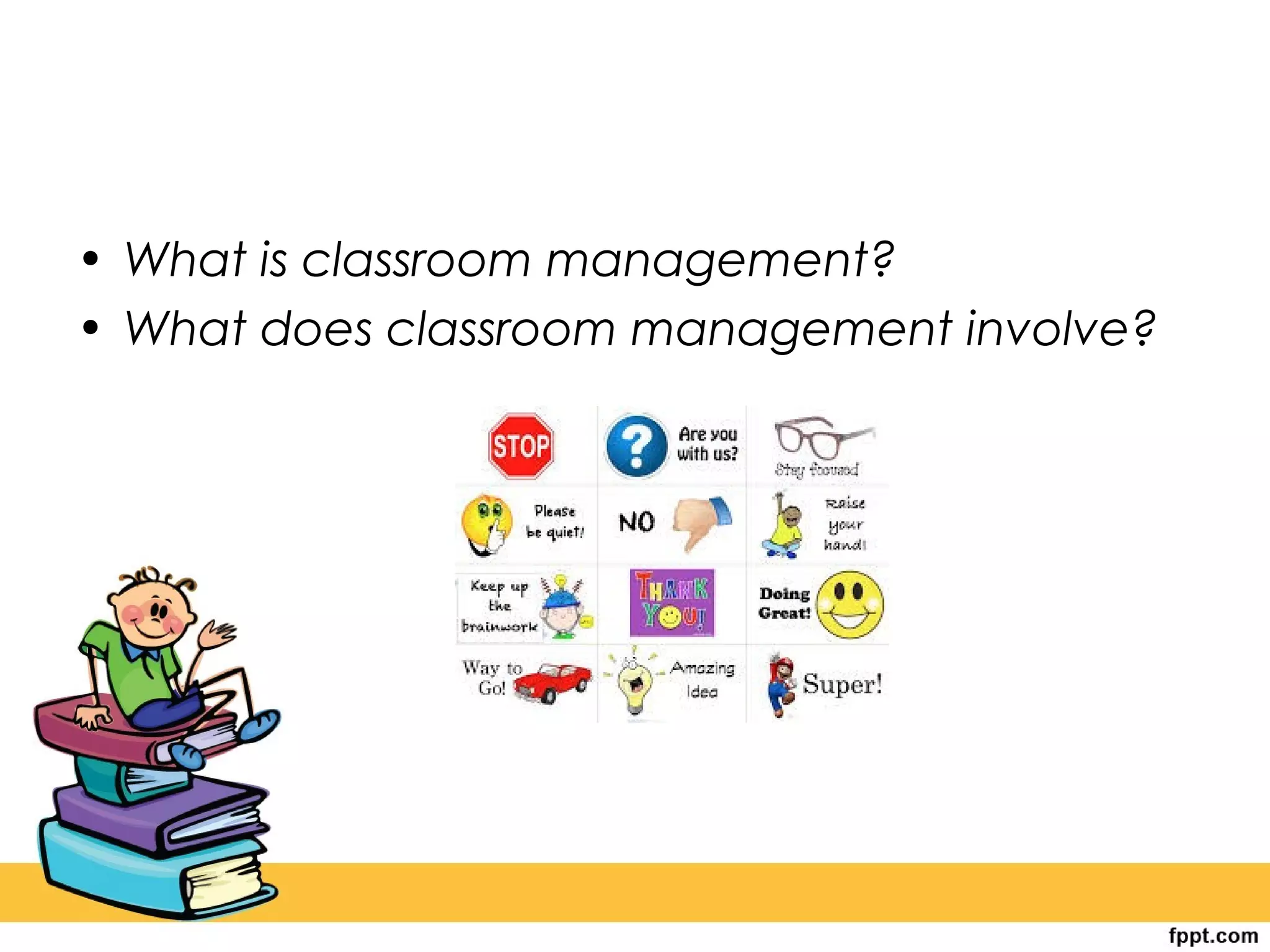
• What is classroom management?
• What does classroom management involve?
What classroom
management means..
- Creating a safe, inclusive
environment for all students
- Building strong, positive
relationships with students
- Understanding the unique
adolescent body and mindset
- Understanding the multi-cultural
and individual differences within a
classroom
- Promoting love for learning and
success
- Presenting engaging instruction
- Consistent and fair discipline
- Well-practiced routines
- Stating simple and clear
expectations for rules
- Staging appropriate interventions
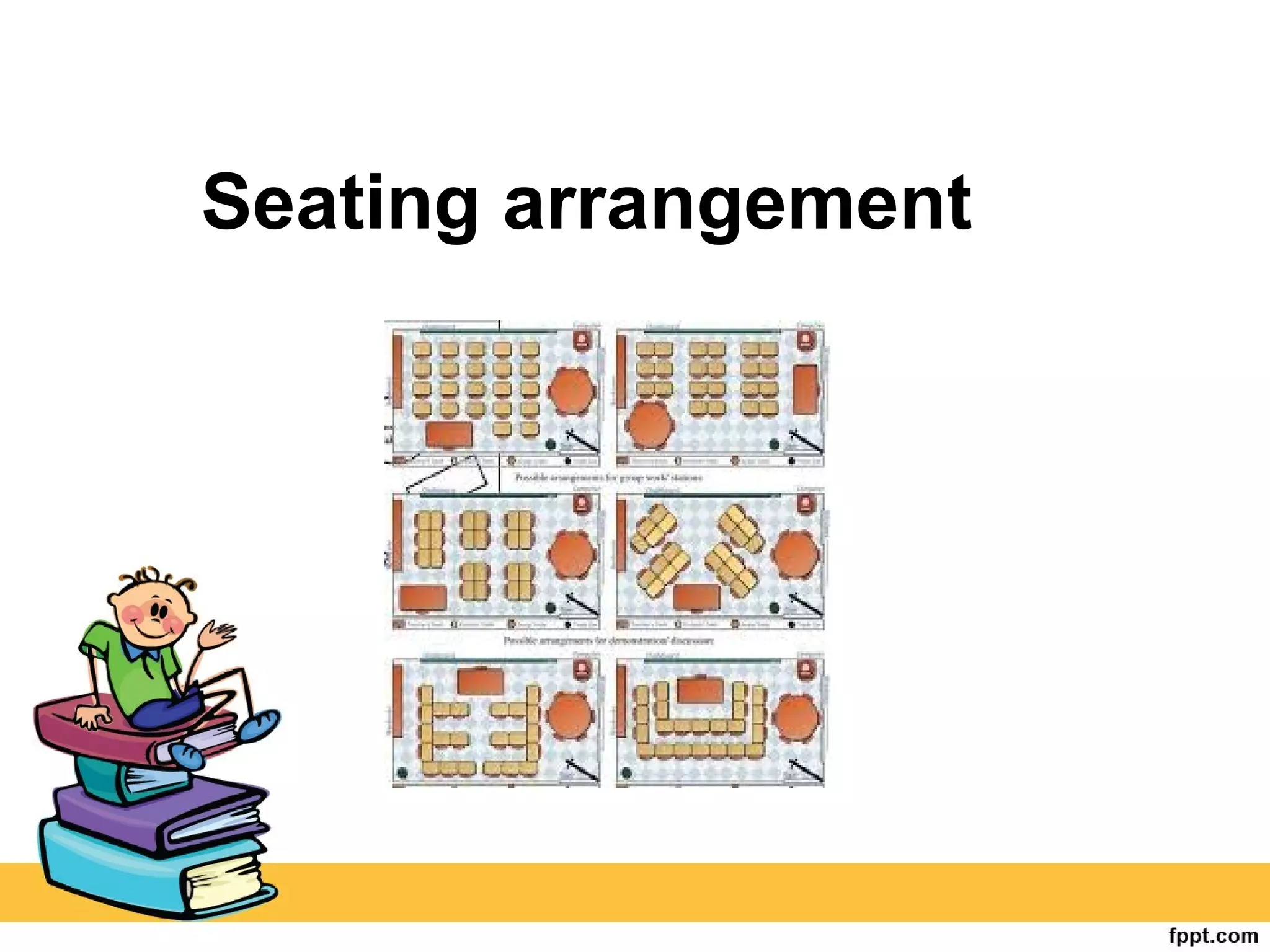
Seating arrangement
Discipline
• Classroom routines
• Tone of voice
• Catch students’ attention
• Change activities, pace
• Non-verbal language
• Eye contact
• Monitoring
• Clear instructions
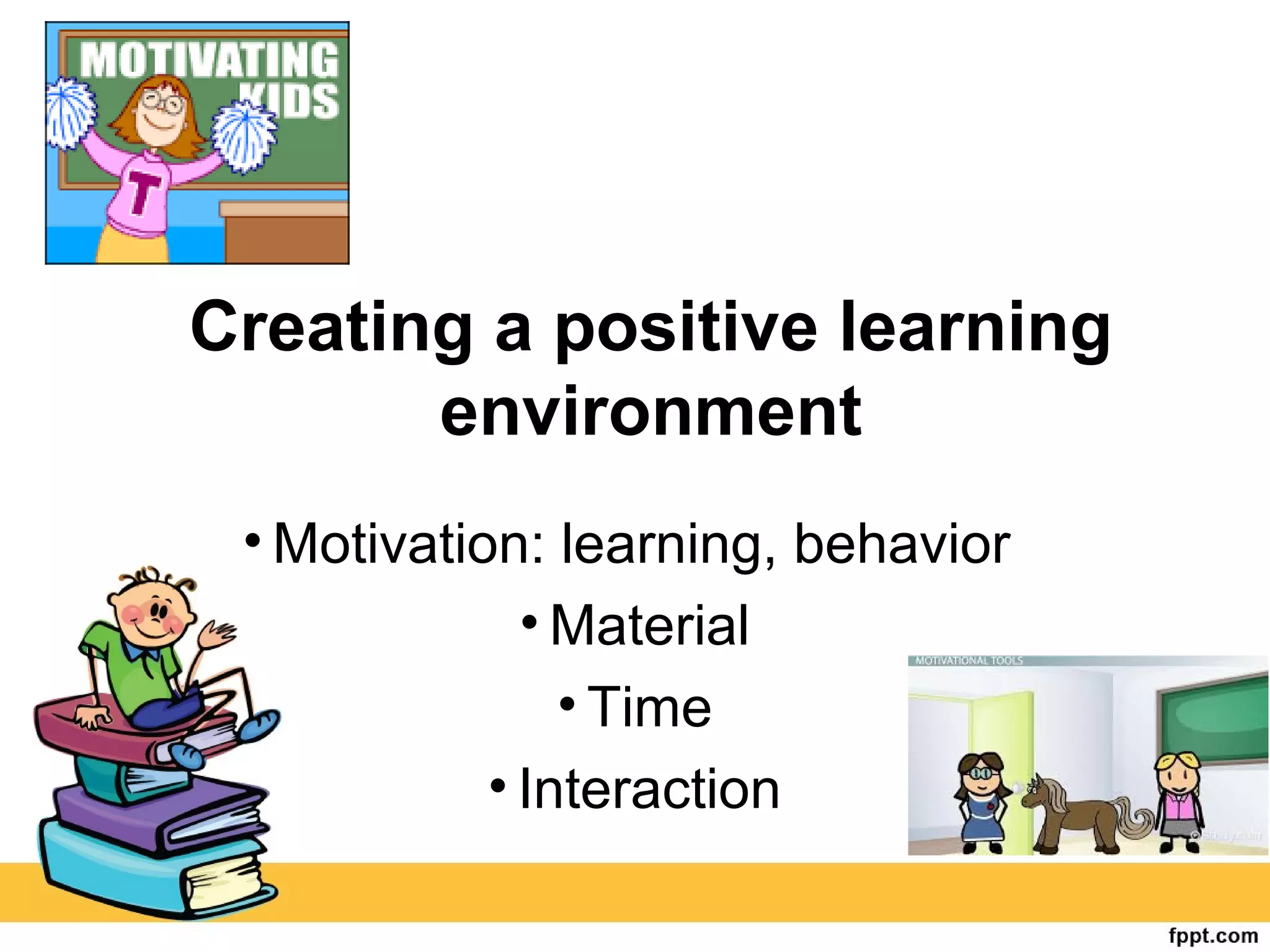
Creating a positive learning
environment
• Motivation: learning, behavior
• Material
• Time
• Interaction
Actions that could work…
• Developing a plan
• Reflect on actions
• Brainstorm ways to avoid repeat disruptions
• Develop a working plan to help students to actively
follow behavior standards
• Work on problem-solving form
Set the boundaries
• According to the context, establish
the commitments with your students
in terms of:
 Time
 Use of electronical devices in class
 Attendance and what to do when
a student cannot attend to class
 Class assignments
 Deliverables
 Participation in class
 Expectations
 Do’s and Don’ts
ACTIVITY
• Work in pairs. Read the cases and
develop the workshop.
• Then, share your answers.
NEXT CLASS
• Prepare for the first exam. Read the
material again
• Observation task 1
• Continue working on the project

Classroom management

  • 2.
    OBJECTIVES ◻ Discuss someinternal and external factors/issues that could have impact on classroom management ◻ Recognize common classroom management struggles ◻ Create action plans with strategies to cope with classroom management issues
  • 3.
    Let’s go toyour own experience… If you have teaching experience what Classroom Management strategies do you usually use? If not…. Do you remember how teachers you had in school coped with classroom management challenges? Were those practices effective?
  • 4.
    1. Watch thefollowing class. 2. What classroom management problems can you observe? 3. What strategies would you use to have control of the class?
  • 6.
    • Let’s watchanother video. • Notice what went well. • What differences can you identify between both classes?
  • 8.
    • What isclassroom management? • What does classroom management involve?
  • 10.
    What classroom management means.. -Creating a safe, inclusive environment for all students - Building strong, positive relationships with students - Understanding the unique adolescent body and mindset - Understanding the multi-cultural and individual differences within a classroom - Promoting love for learning and success - Presenting engaging instruction - Consistent and fair discipline - Well-practiced routines - Stating simple and clear expectations for rules - Staging appropriate interventions
  • 11.
  • 12.
    Discipline • Classroom routines •Tone of voice • Catch students’ attention • Change activities, pace • Non-verbal language • Eye contact • Monitoring • Clear instructions
  • 13.
    Creating a positivelearning environment • Motivation: learning, behavior • Material • Time • Interaction
  • 14.
    Actions that couldwork… • Developing a plan • Reflect on actions • Brainstorm ways to avoid repeat disruptions • Develop a working plan to help students to actively follow behavior standards • Work on problem-solving form
  • 15.
    Set the boundaries •According to the context, establish the commitments with your students in terms of:  Time  Use of electronical devices in class  Attendance and what to do when a student cannot attend to class  Class assignments  Deliverables  Participation in class  Expectations  Do’s and Don’ts
  • 16.
    ACTIVITY • Work inpairs. Read the cases and develop the workshop. • Then, share your answers.
  • 17.
    NEXT CLASS • Preparefor the first exam. Read the material again • Observation task 1 • Continue working on the project