Classroom Management
Tawanda C. Smallwood
Bertie High School
Administrative Intern
What is Classroom Management?
 It’s effective discipline
 It’s being prepared for class
 It’s motivating your students
 It’s providing a safe, comfortable learning environment
 It’s building your students’ self esteem
 It’s being creative and imaginative in daily lessons
 And…
…It’s different for EVERYONE!!
 Why
 Teaching Styles
 Personality/Attitudes
 Student Population
 Not all management strategies are effective for every
teacher
 Try different strategies to see if they work for you
Why is Classroom
Management Important?
 Satisfaction and enjoyment in teaching
 Highest concern for beginning teachers
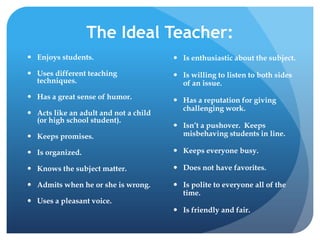
The Ideal Teacher:
 Enjoys students.
 Uses different teaching
techniques.
 Has a great sense of humor.
 Acts like an adult and not a child
(or high school student).
 Keeps promises.
 Is organized.
 Knows the subject matter.
 Admits when he or she is wrong.
 Uses a pleasant voice.
 Is enthusiastic about the subject.
 Is willing to listen to both sides
of an issue.
 Has a reputation for giving
challenging work.
 Isn’t a pushover. Keeps
misbehaving students in line.
 Keeps everyone busy.
 Does not have favorites.
 Is polite to everyone all of the
time.
 Is friendly and fair.
Dressing Appropriately
 According to Harry
Wong, “We are
walking, talking
advertisements for
who we are.”
 Educators should
dress for respect,
credibility,
acceptance, and
authority.
Ideas for the Beginning of Class
 It is ESSENTIAL that
the students have an
activity to complete as
soon as the bell rings.
 Take roll while the
students are working
on the assignment.
 Have your students:
 Create a test question.
 Illustrate important
information.
 Scan the day’s reading
assignment.
 Take a mini-quiz.
 Draw a cartoon.
 Summarize the previous
day’s topic.
According to Julia G. Thompson, author of Discipline
Survival Kit for the Secondary Teacher
Managing Transitions
 Julia G. Thompson suggests the following techniques:
 Time students between transitions.
 Provide students with a checklist of the day’s
activities.
 Give students activities to “sponge” any dead time.
• List ten words associated with the lesson today.
• Defend your position on…
• Make flashcards for this unit.
• Circle the key words from yesterday’s notes.
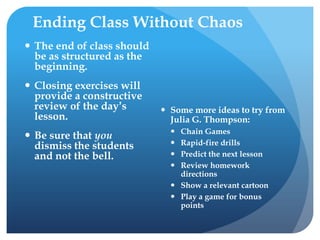
Ending Class Without Chaos
 The end of class should
be as structured as the
beginning.
 Closing exercises will
provide a constructive
review of the day’s
lesson.
 Be sure that you
dismiss the students
and not the bell.
 Some more ideas to try from
Julia G. Thompson:
 Chain Games
 Rapid-fire drills
 Predict the next lesson
 Review homework
directions
 Show a relevant cartoon
 Play a game for bonus
points
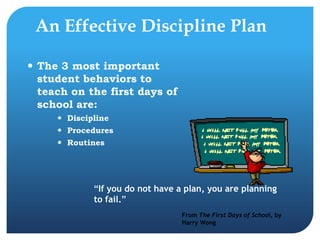
An Effective Discipline Plan
 The 3 most important
student behaviors to
teach on the first days of
school are:
 Discipline
 Procedures
 Routines
“If you do not have a plan, you are planning
to fail.”
From The First Days of School, by
Harry Wong
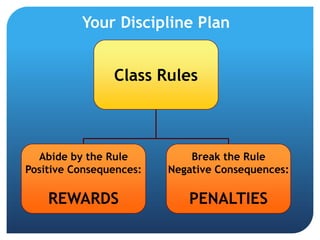
Class Rules
Abide by the Rule
Positive Consequences:
REWARDS
Break the Rule
Negative Consequences:
PENALTIES
Your Discipline Plan
Creating Your Class Rules
 Only have 3 to 5 rules
 State rules positively.
 Make the rules easy for you and your students to
remember.
 Be able to enforce the rules consistently.
 Remember:
 Rules deal with behavior, not procedures.
Rewards
 Harry Wong emphasizes,“The best reward
is the satisfaction of a job well done.”
 Some examples include:
 Praise
 A note home (Good News Cards)
 Student of the day, week, or month
 Tangible rewards
 Work posted
 Certificates of Honor
 Coupons
Penalties
 Time out
 Demerit or fine
 Detention
 Assignment to write ways to correct
problem
 Being last to leave
 Loss of reward
 Exclusion of class participation
Enlist Parent Support
 Be sure to send a copy of your discipline plan
home to parents the first day of school.
 Make positive parent contact before you need their
assistance with a problem.
 Contact parents as soon as you see a change in
their child’s behavior patterns.
 Parents can be one of your biggest allies in
managing the student’s behavior.
Procedures and Routines
 Harry Wong writes in The First Days of School, “The
number one problem in the classroom is not discipline;
it is the lack of procedures and routines.”
 Wong also states, “A procedure is simply a method or
process for how things are to be done in a classroom.”
 Procedures answer the question, “What do I do
when…?”
Classroom management ppt

Classroom management ppt

  • 1.
    Classroom Management Tawanda C.Smallwood Bertie High School Administrative Intern
  • 2.
    What is ClassroomManagement?  It’s effective discipline  It’s being prepared for class  It’s motivating your students  It’s providing a safe, comfortable learning environment  It’s building your students’ self esteem  It’s being creative and imaginative in daily lessons  And…
  • 3.
    …It’s different forEVERYONE!!  Why  Teaching Styles  Personality/Attitudes  Student Population  Not all management strategies are effective for every teacher  Try different strategies to see if they work for you
  • 4.
    Why is Classroom ManagementImportant?  Satisfaction and enjoyment in teaching  Highest concern for beginning teachers
  • 5.
    The Ideal Teacher: Enjoys students.  Uses different teaching techniques.  Has a great sense of humor.  Acts like an adult and not a child (or high school student).  Keeps promises.  Is organized.  Knows the subject matter.  Admits when he or she is wrong.  Uses a pleasant voice.  Is enthusiastic about the subject.  Is willing to listen to both sides of an issue.  Has a reputation for giving challenging work.  Isn’t a pushover. Keeps misbehaving students in line.  Keeps everyone busy.  Does not have favorites.  Is polite to everyone all of the time.  Is friendly and fair.
  • 6.
    Dressing Appropriately  Accordingto Harry Wong, “We are walking, talking advertisements for who we are.”  Educators should dress for respect, credibility, acceptance, and authority.
  • 7.
    Ideas for theBeginning of Class  It is ESSENTIAL that the students have an activity to complete as soon as the bell rings.  Take roll while the students are working on the assignment.  Have your students:  Create a test question.  Illustrate important information.  Scan the day’s reading assignment.  Take a mini-quiz.  Draw a cartoon.  Summarize the previous day’s topic. According to Julia G. Thompson, author of Discipline Survival Kit for the Secondary Teacher
  • 8.
    Managing Transitions  JuliaG. Thompson suggests the following techniques:  Time students between transitions.  Provide students with a checklist of the day’s activities.  Give students activities to “sponge” any dead time. • List ten words associated with the lesson today. • Defend your position on… • Make flashcards for this unit. • Circle the key words from yesterday’s notes.
  • 9.
    Ending Class WithoutChaos  The end of class should be as structured as the beginning.  Closing exercises will provide a constructive review of the day’s lesson.  Be sure that you dismiss the students and not the bell.  Some more ideas to try from Julia G. Thompson:  Chain Games  Rapid-fire drills  Predict the next lesson  Review homework directions  Show a relevant cartoon  Play a game for bonus points
  • 10.
    An Effective DisciplinePlan  The 3 most important student behaviors to teach on the first days of school are:  Discipline  Procedures  Routines “If you do not have a plan, you are planning to fail.” From The First Days of School, by Harry Wong
  • 11.
    Class Rules Abide bythe Rule Positive Consequences: REWARDS Break the Rule Negative Consequences: PENALTIES Your Discipline Plan
  • 12.
    Creating Your ClassRules  Only have 3 to 5 rules  State rules positively.  Make the rules easy for you and your students to remember.  Be able to enforce the rules consistently.  Remember:  Rules deal with behavior, not procedures.
  • 13.
    Rewards  Harry Wongemphasizes,“The best reward is the satisfaction of a job well done.”  Some examples include:  Praise  A note home (Good News Cards)  Student of the day, week, or month  Tangible rewards  Work posted  Certificates of Honor  Coupons
  • 14.
    Penalties  Time out Demerit or fine  Detention  Assignment to write ways to correct problem  Being last to leave  Loss of reward  Exclusion of class participation
  • 15.
    Enlist Parent Support Be sure to send a copy of your discipline plan home to parents the first day of school.  Make positive parent contact before you need their assistance with a problem.  Contact parents as soon as you see a change in their child’s behavior patterns.  Parents can be one of your biggest allies in managing the student’s behavior.
  • 16.
    Procedures and Routines Harry Wong writes in The First Days of School, “The number one problem in the classroom is not discipline; it is the lack of procedures and routines.”  Wong also states, “A procedure is simply a method or process for how things are to be done in a classroom.”  Procedures answer the question, “What do I do when…?”