CLASS BS BOTANY
SEMESTER 3rd FINAL TERM
COURSE TITLE DIVERSITY OF
ANIMALS.(VERTEBRATE)
COURSE CODE. ZOOL-604
TEACHER’S NAME MS SHAHIDA AZIZ
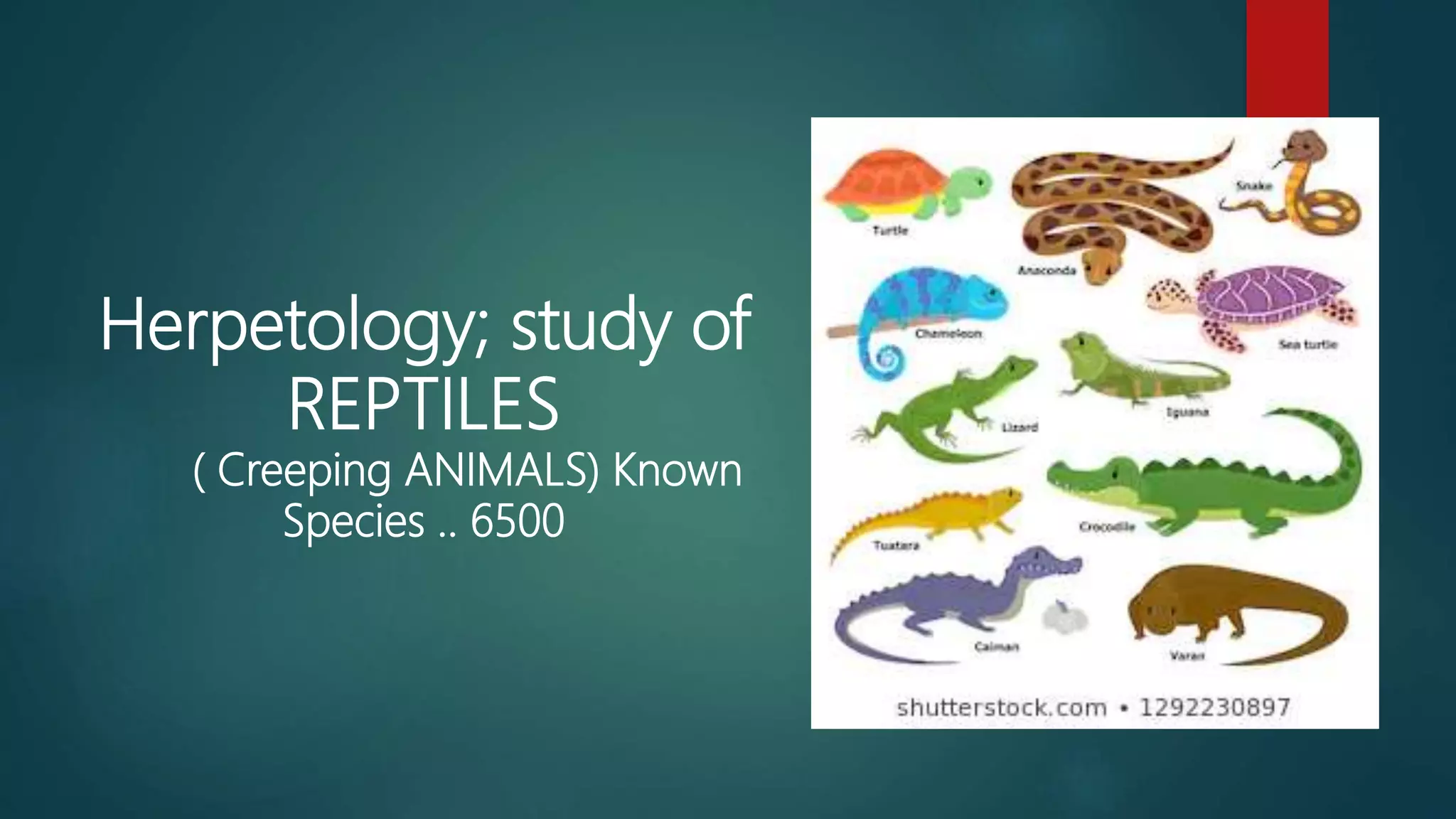
Herpetology; study of
REPTILES
( Creeping ANIMALS) Known
Species .. 6500
REPTILES The FIRST AMNIOTES
EVOLUTIONARY PRESPECTIVE
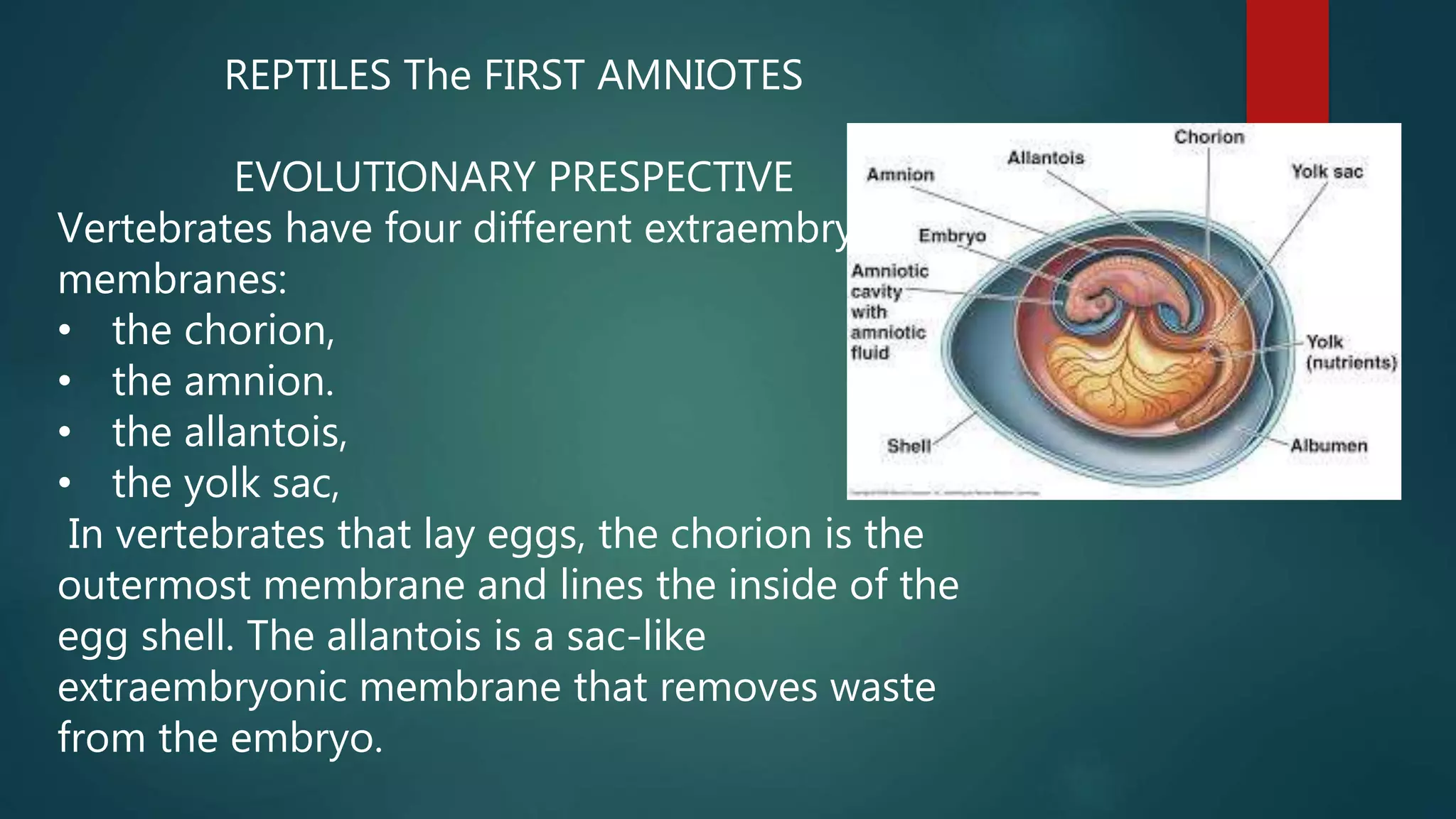
Vertebrates have four different extraembryonic
membranes:
• the chorion,
• the amnion.
• the allantois,
• the yolk sac,
In vertebrates that lay eggs, the chorion is the
outermost membrane and lines the inside of the
egg shell. The allantois is a sac-like
extraembryonic membrane that removes waste
from the embryo.
CLASS REPTILIAN
Familiar Living Reptiles Are Classified Into Four Orders:
• Oder Chelonia , Testudines (having a shell)
• Oder Crocodilia (Crocodiles)
• Oder Squamata (scaly) Snakes, Lizards
• Oder Rhynchocephalia Sphenodon punctatum
(Tuatara)
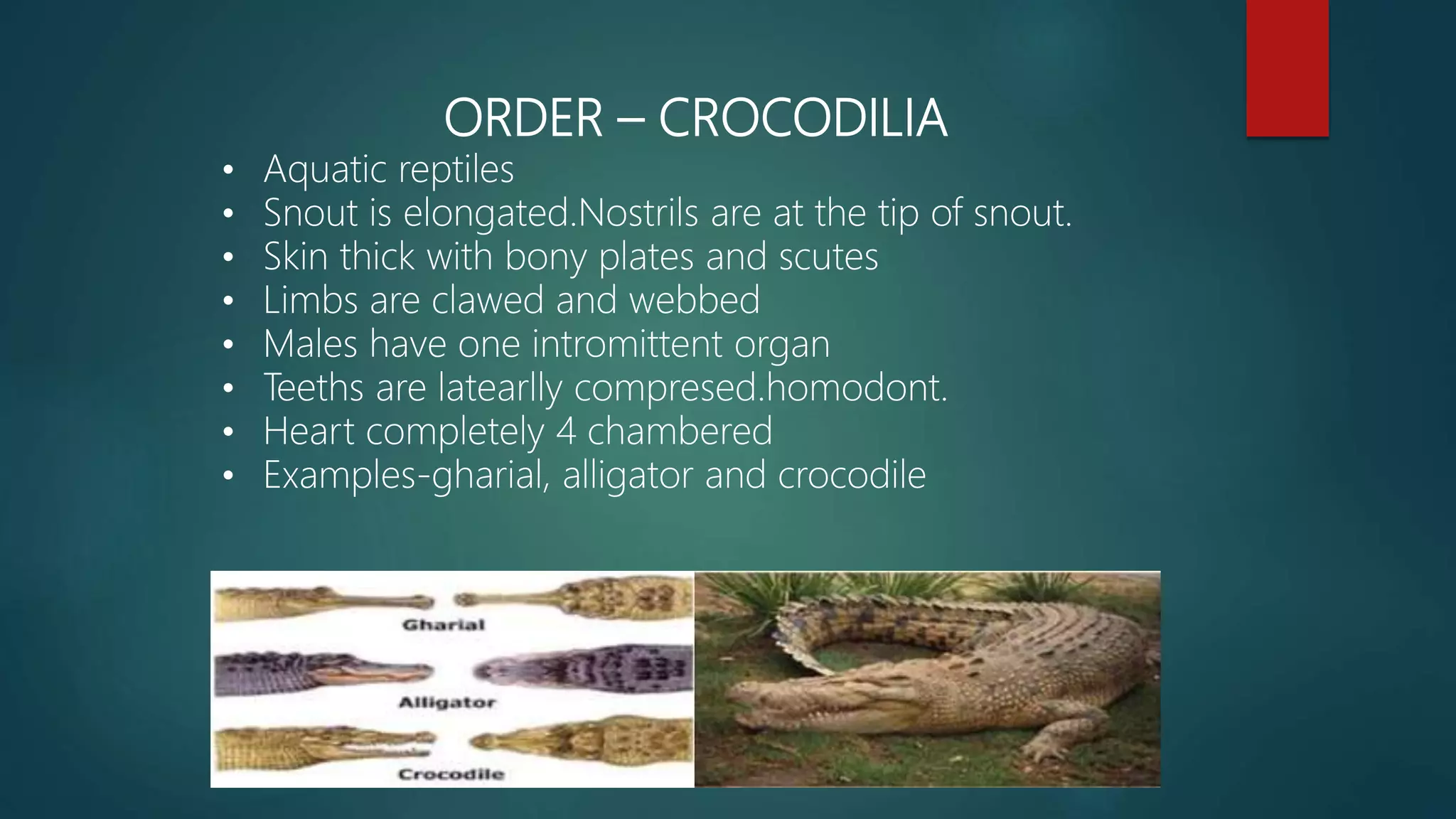
ORDER – CROCODILIA
• Aquatic reptiles
• Snout is elongated.Nostrils are at the tip of snout.
• Skin thick with bony plates and scutes
• Limbs are clawed and webbed
• Males have one intromittent organ
• Teeths are latearlly compresed.homodont.
• Heart completely 4 chambered
• Examples-gharial, alligator and crocodile
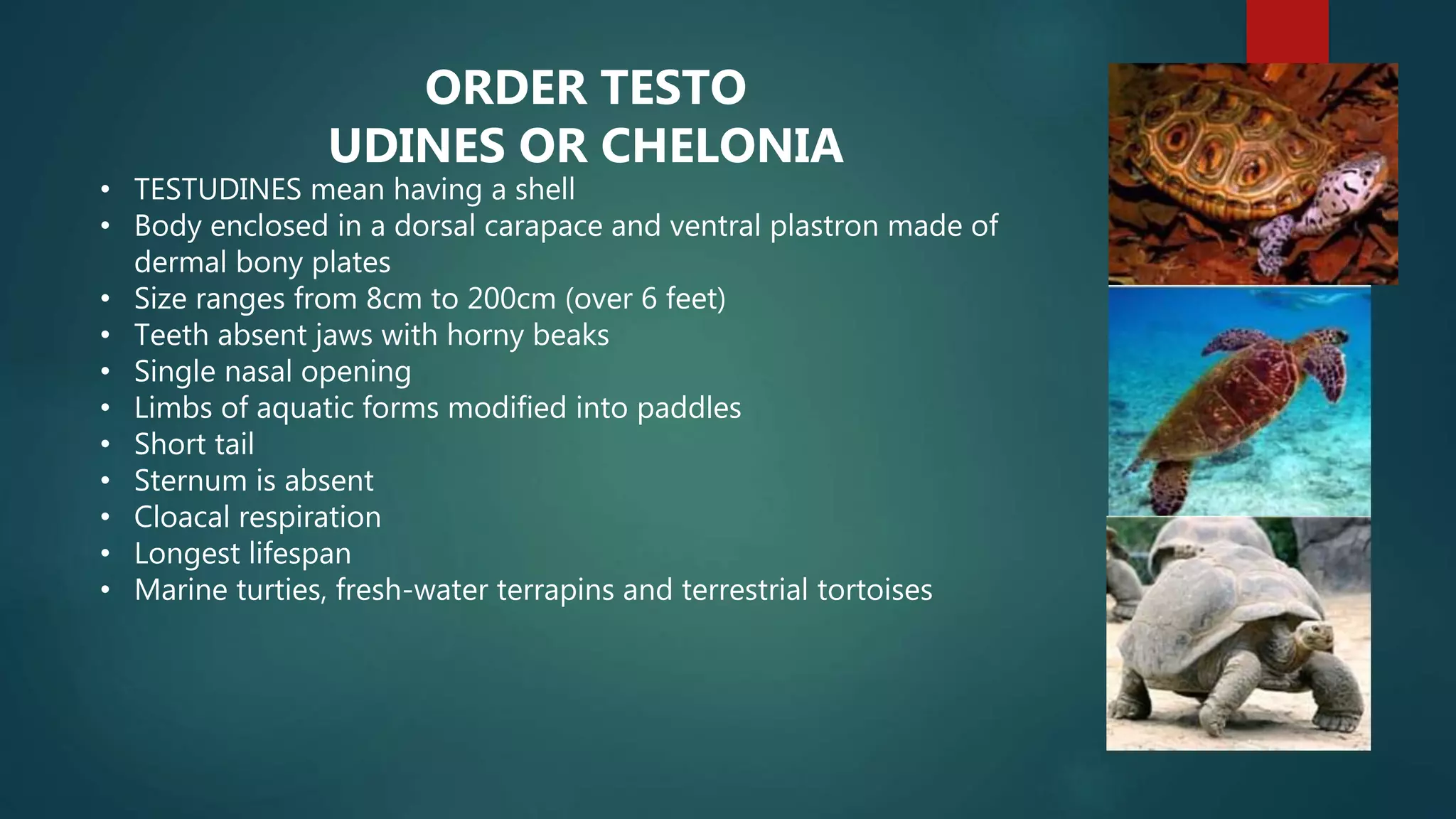
• TESTUDINES mean having a shell
• Body enclosed in a dorsal carapace and ventral plastron made of
dermal bony plates
• Size ranges from 8cm to 200cm (over 6 feet)
• Teeth absent jaws with horny beaks
• Single nasal opening
• Limbs of aquatic forms modified into paddles
• Short tail
• Sternum is absent
• Cloacal respiration
• Longest lifespan
• Marine turties, fresh-water terrapins and terrestrial tortoises
ORDER TESTO
UDINES OR CHELONIA
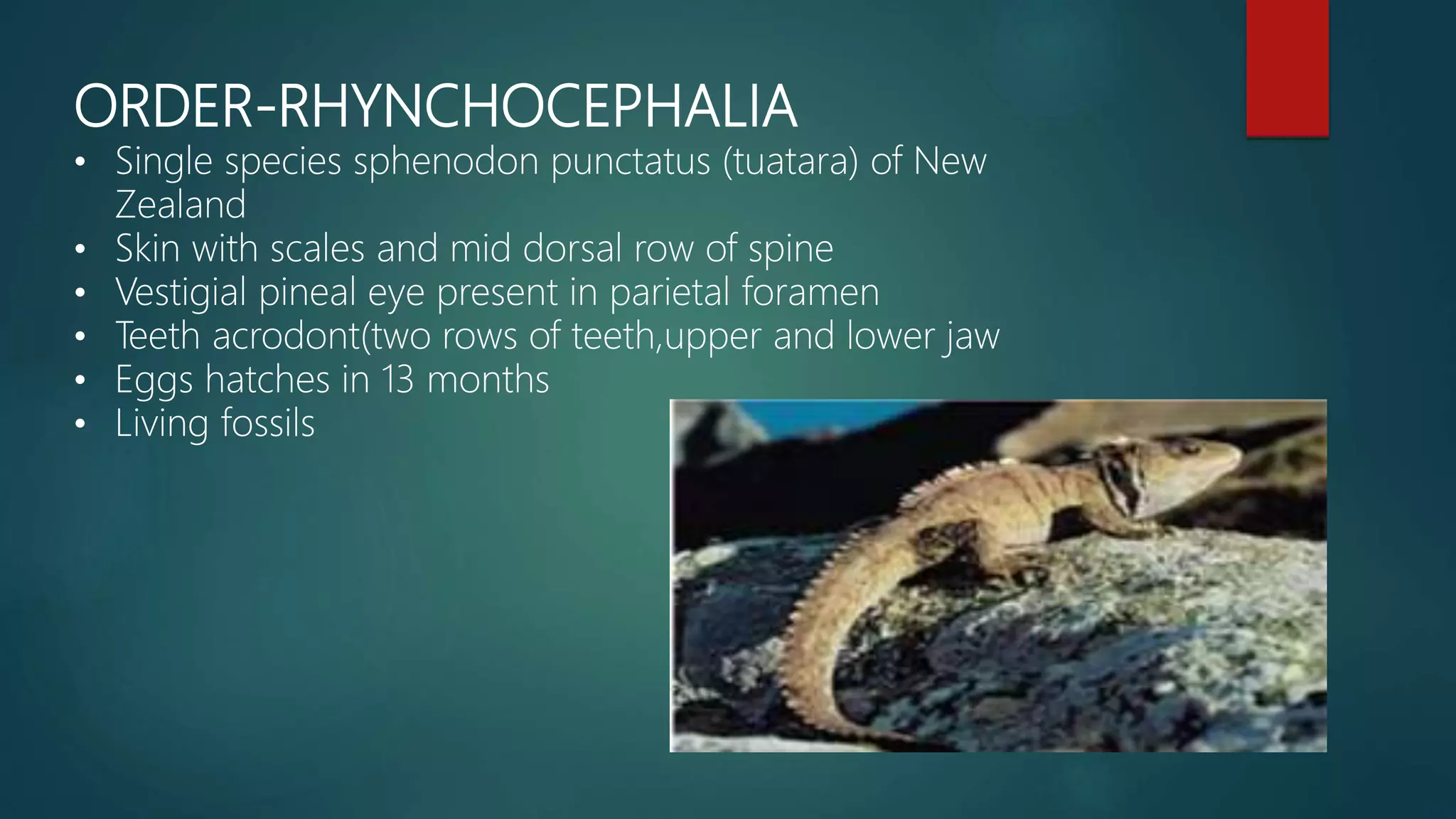
ORDER-RHYNCHOCEPHALIA
• Single species sphenodon punctatus (tuatara) of New
Zealand
• Skin with scales and mid dorsal row of spine
• Vestigial pineal eye present in parietal foramen
• Teeth acrodont(two rows of teeth,upper and lower jaw
• Eggs hatches in 13 months
• Living fossils
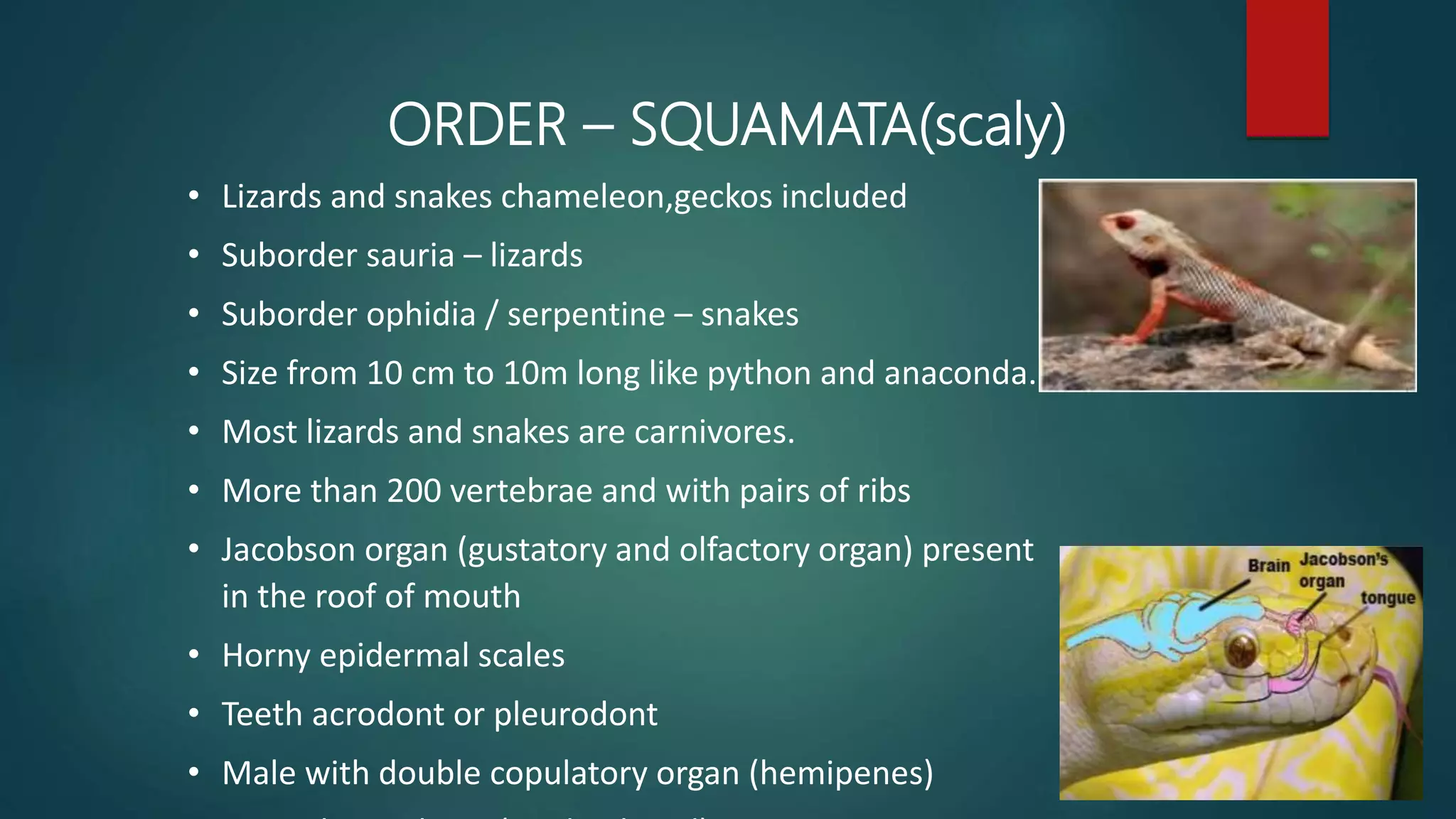
• Lizards and snakes chameleon,geckos included
• Suborder sauria – lizards
• Suborder ophidia / serpentine – snakes
• Size from 10 cm to 10m long like python and anaconda.
• Most lizards and snakes are carnivores.
• More than 200 vertebrae and with pairs of ribs
• Jacobson organ (gustatory and olfactory organ) present
in the roof of mouth
• Horny epidermal scales
• Teeth acrodont or pleurodont
• Male with double copulatory organ (hemipenes)
ORDER – SQUAMATA(scaly)

Classification of Reptiles

  • 1.
    CLASS BS BOTANY SEMESTER3rd FINAL TERM COURSE TITLE DIVERSITY OF ANIMALS.(VERTEBRATE) COURSE CODE. ZOOL-604 TEACHER’S NAME MS SHAHIDA AZIZ
  • 2.
    Herpetology; study of REPTILES (Creeping ANIMALS) Known Species .. 6500
  • 3.
    REPTILES The FIRSTAMNIOTES EVOLUTIONARY PRESPECTIVE Vertebrates have four different extraembryonic membranes: • the chorion, • the amnion. • the allantois, • the yolk sac, In vertebrates that lay eggs, the chorion is the outermost membrane and lines the inside of the egg shell. The allantois is a sac-like extraembryonic membrane that removes waste from the embryo.
  • 4.
    CLASS REPTILIAN Familiar LivingReptiles Are Classified Into Four Orders: • Oder Chelonia , Testudines (having a shell) • Oder Crocodilia (Crocodiles) • Oder Squamata (scaly) Snakes, Lizards • Oder Rhynchocephalia Sphenodon punctatum (Tuatara)
  • 5.
    ORDER – CROCODILIA •Aquatic reptiles • Snout is elongated.Nostrils are at the tip of snout. • Skin thick with bony plates and scutes • Limbs are clawed and webbed • Males have one intromittent organ • Teeths are latearlly compresed.homodont. • Heart completely 4 chambered • Examples-gharial, alligator and crocodile
  • 6.
    • TESTUDINES meanhaving a shell • Body enclosed in a dorsal carapace and ventral plastron made of dermal bony plates • Size ranges from 8cm to 200cm (over 6 feet) • Teeth absent jaws with horny beaks • Single nasal opening • Limbs of aquatic forms modified into paddles • Short tail • Sternum is absent • Cloacal respiration • Longest lifespan • Marine turties, fresh-water terrapins and terrestrial tortoises ORDER TESTO UDINES OR CHELONIA
  • 7.
    ORDER-RHYNCHOCEPHALIA • Single speciessphenodon punctatus (tuatara) of New Zealand • Skin with scales and mid dorsal row of spine • Vestigial pineal eye present in parietal foramen • Teeth acrodont(two rows of teeth,upper and lower jaw • Eggs hatches in 13 months • Living fossils
  • 8.
    • Lizards andsnakes chameleon,geckos included • Suborder sauria – lizards • Suborder ophidia / serpentine – snakes • Size from 10 cm to 10m long like python and anaconda. • Most lizards and snakes are carnivores. • More than 200 vertebrae and with pairs of ribs • Jacobson organ (gustatory and olfactory organ) present in the roof of mouth • Horny epidermal scales • Teeth acrodont or pleurodont • Male with double copulatory organ (hemipenes) ORDER – SQUAMATA(scaly)