FEATHERS
•Feathers probably arose as new structures
under and between reptile scales, not as
modified scales. Many birds have scales on
their lower legs and feet where feathers are
not developed


•Feathers originate in a skin layer deep
under the outer layer that forms scales.
• feathers did not evolve for flight. They
evolved for some other function and were
later modified for flight.

•Feathers may have evolved to aid
thermoregulation.
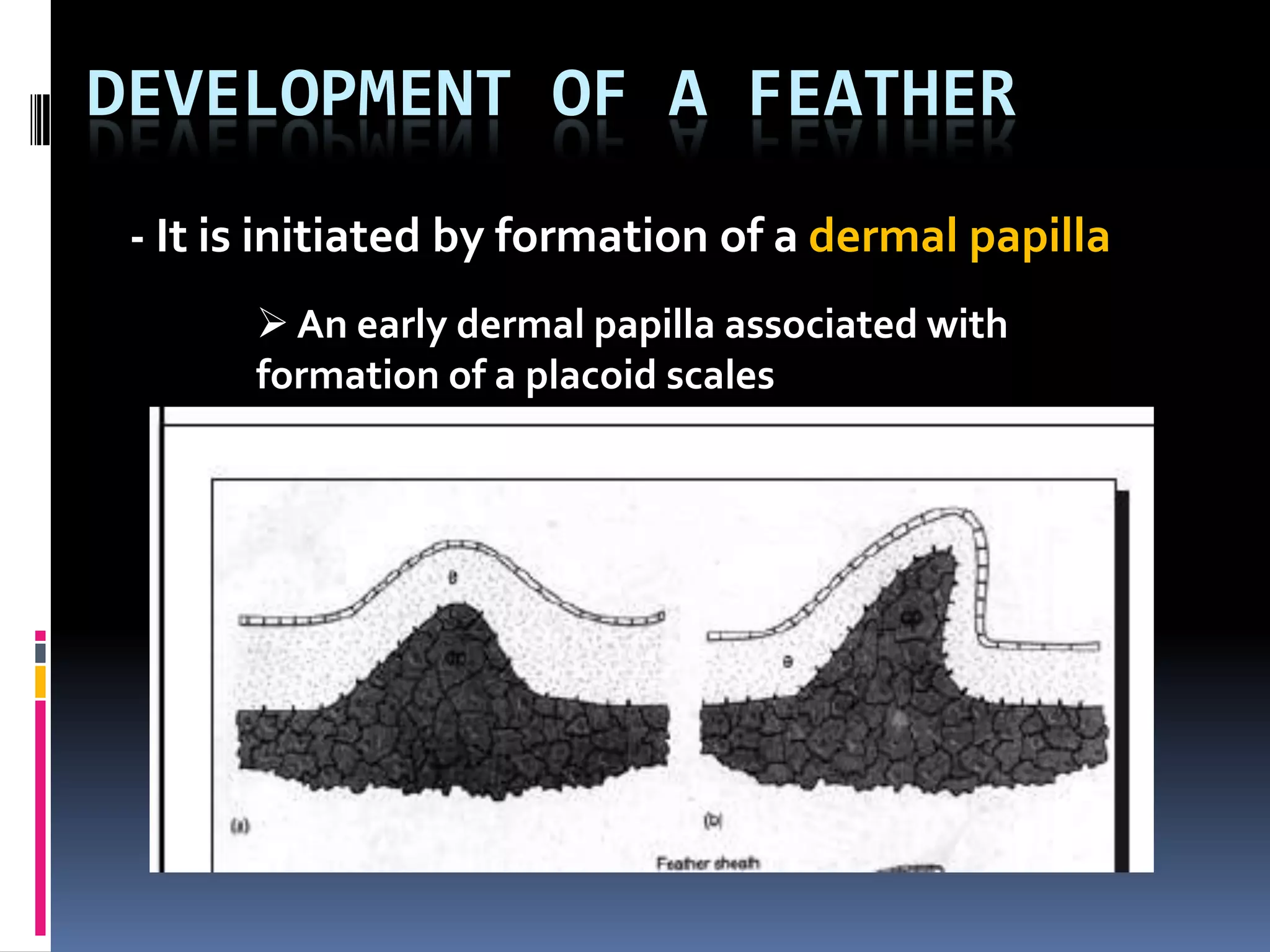
DEVELOPMENT OF A FEATHER
 - It is initiated by formation of a dermal papilla
        An early dermal papilla associated with
       formation of a placoid scales
-The growth of papilla, and its inductor effect on the
overlying epidermis, results in a pimple like elevation
---- feather primordium, on the surface of the skin.


-When the dermal papilla becomes vascularized :

it is the source of nutrients and oxygen for the
developing feather

A collecting site for metabolic wastes that are then
carried away in the blood stream
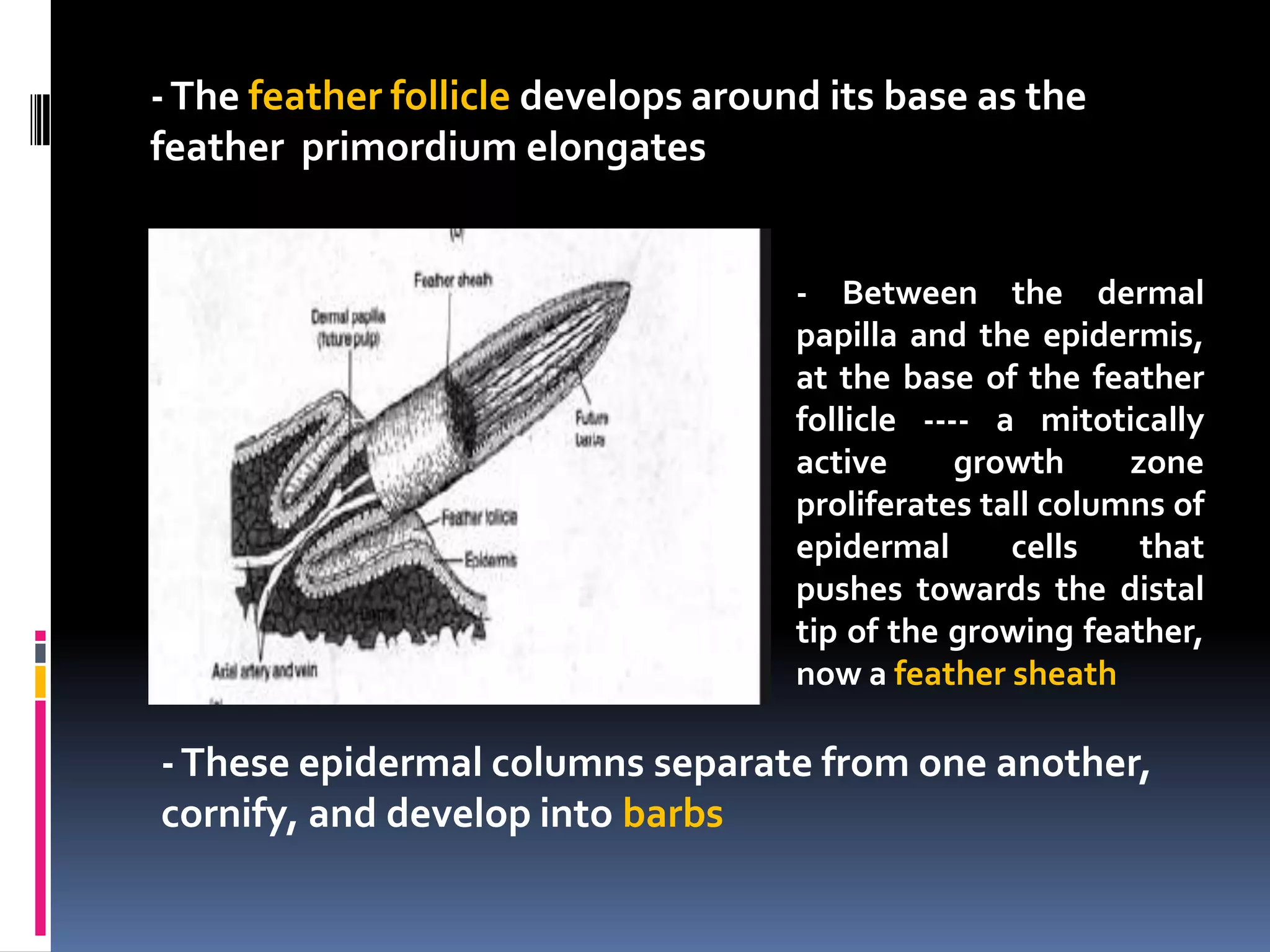
- The feather follicle develops around its base as the
feather primordium elongates


                                     - Between the dermal
                                     papilla and the epidermis,
                                     at the base of the feather
                                     follicle ---- a mitotically
                                     active      growth     zone
                                     proliferates tall columns of
                                     epidermal      cells    that
                                     pushes towards the distal
                                     tip of the growing feather,
                                     now a feather sheath

- These epidermal columns separate from one another,
cornify, and develop into barbs
-When the feather sheath splits open, the fluffy barbs
stretch out of their cramped quarters and the shaft
elongates.
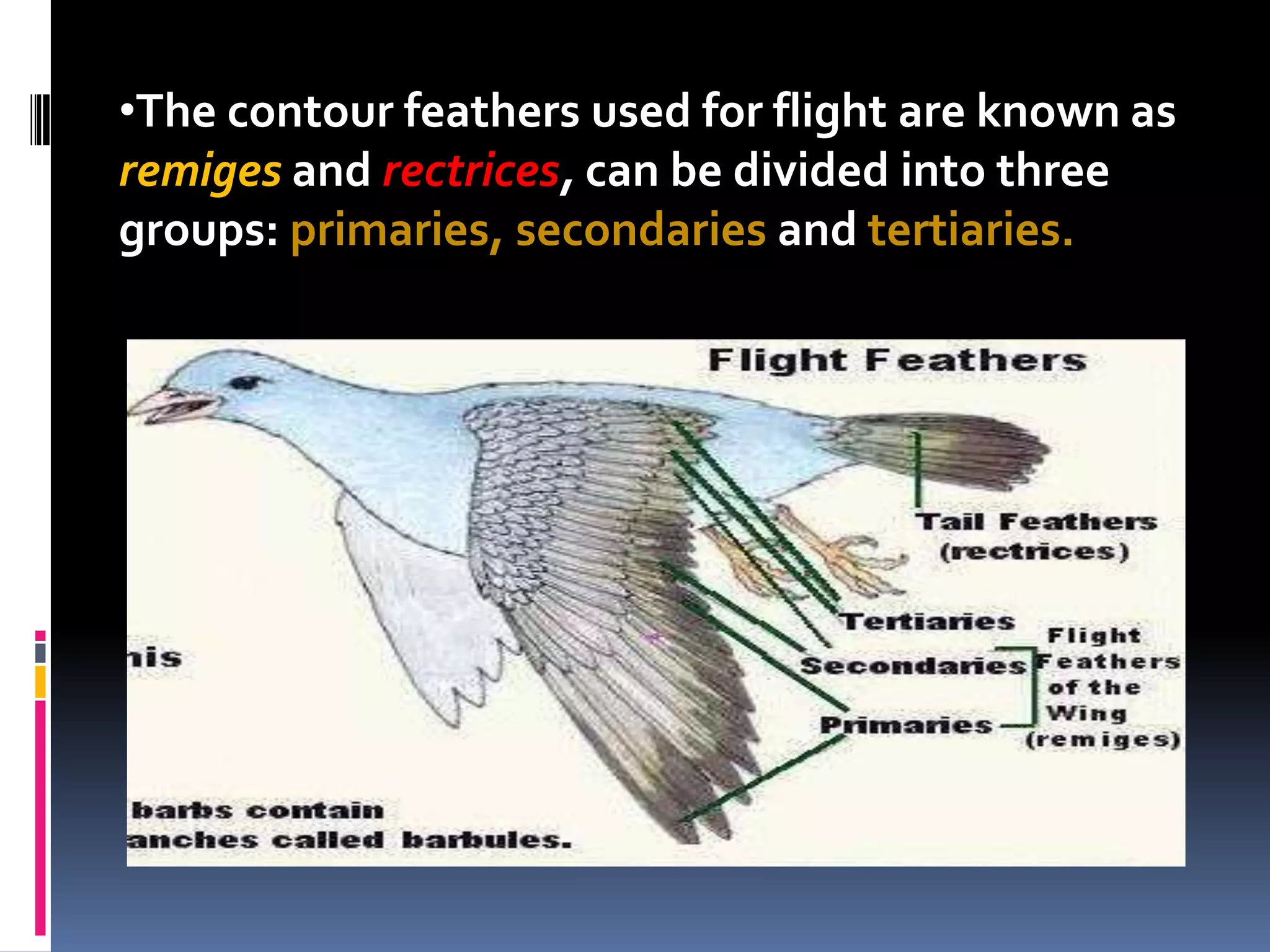
•The contour feathers used for flight are known as
remiges and rectrices, can be divided into three
groups: primaries, secondaries and tertiaries.
•The primary feathers propel the bird through the
air.

•The secondary flight feathers run along the "arm"
of the wing and sustain the bird in the air, giving it
lift.
•The Tertiaries are the few flight feathers and the
numbers vary among species.
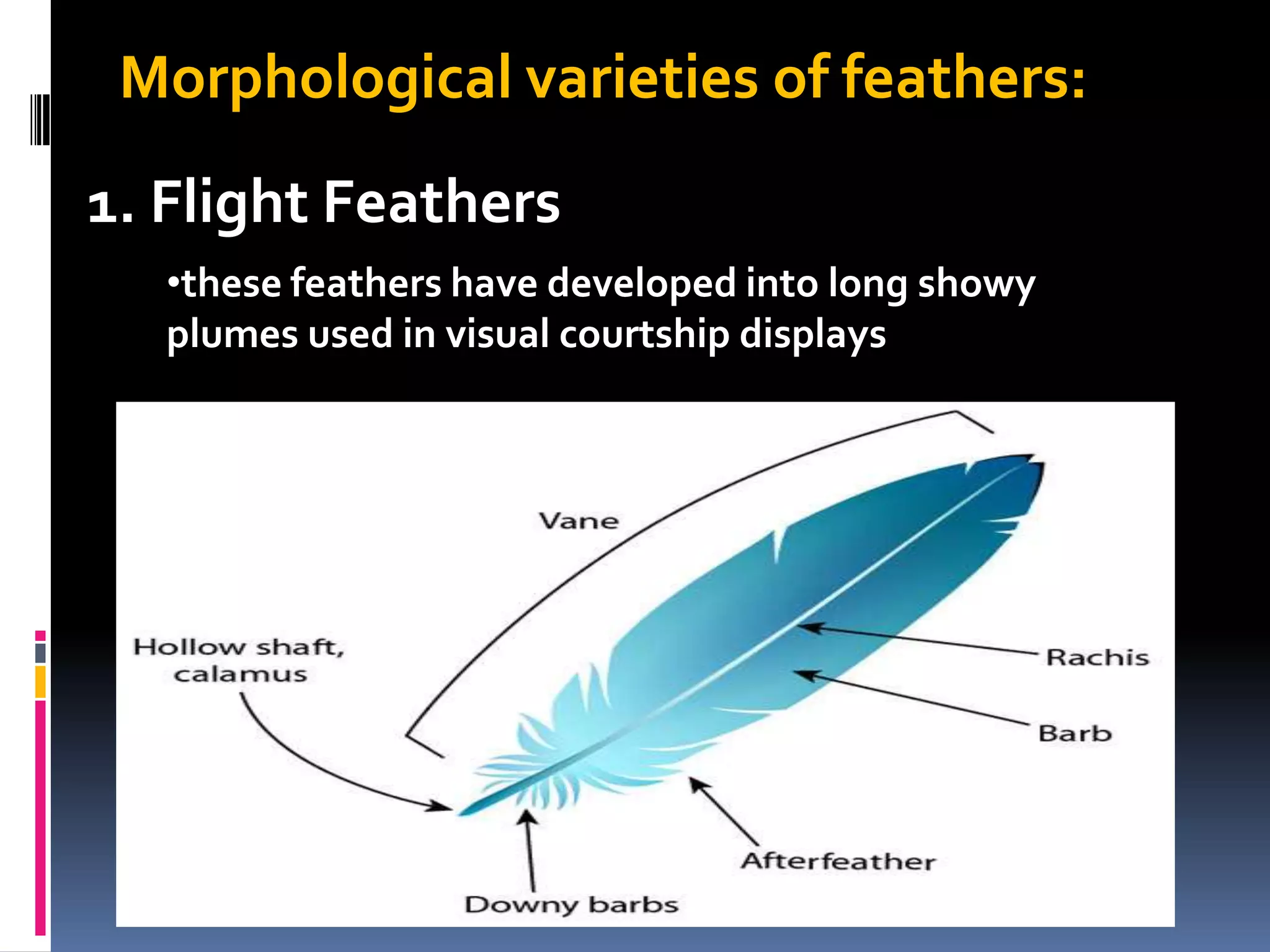
Morphological varieties of feathers:
1. Flight Feathers
   •these feathers have developed into long showy
   plumes used in visual courtship displays
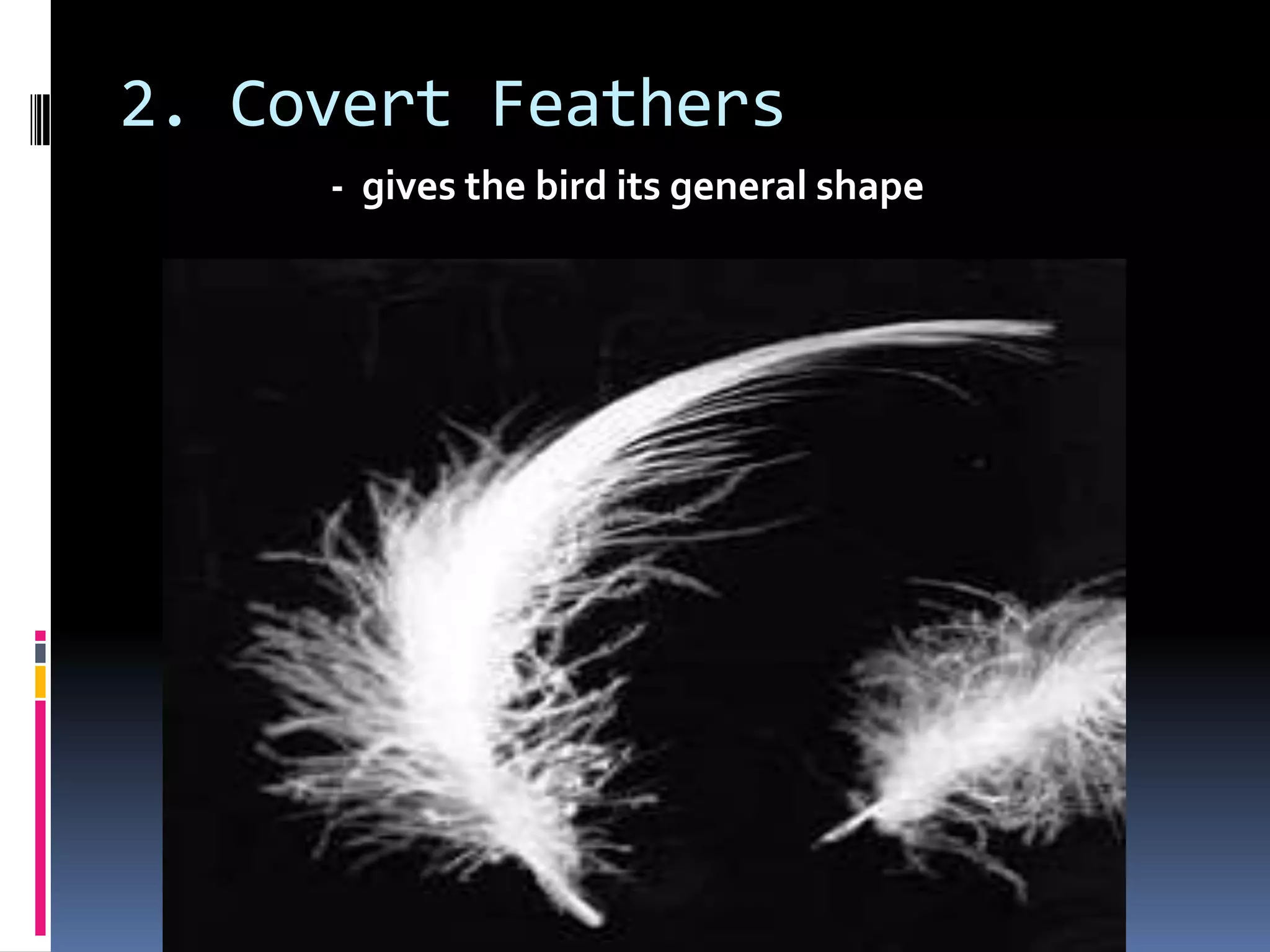
2. Covert Feathers
     - gives the bird its general shape
-Consists of a horny shaft and two flattened vanes ; the
base of the shaft is the calamus ; the vane- bearing
segment is the rachis ; each vane consists of a row of barbs
that have barbules and flanges


 -Arising from a notch, the superior umbilicus, is an
 afterfeather
       usually shorter than the main feather
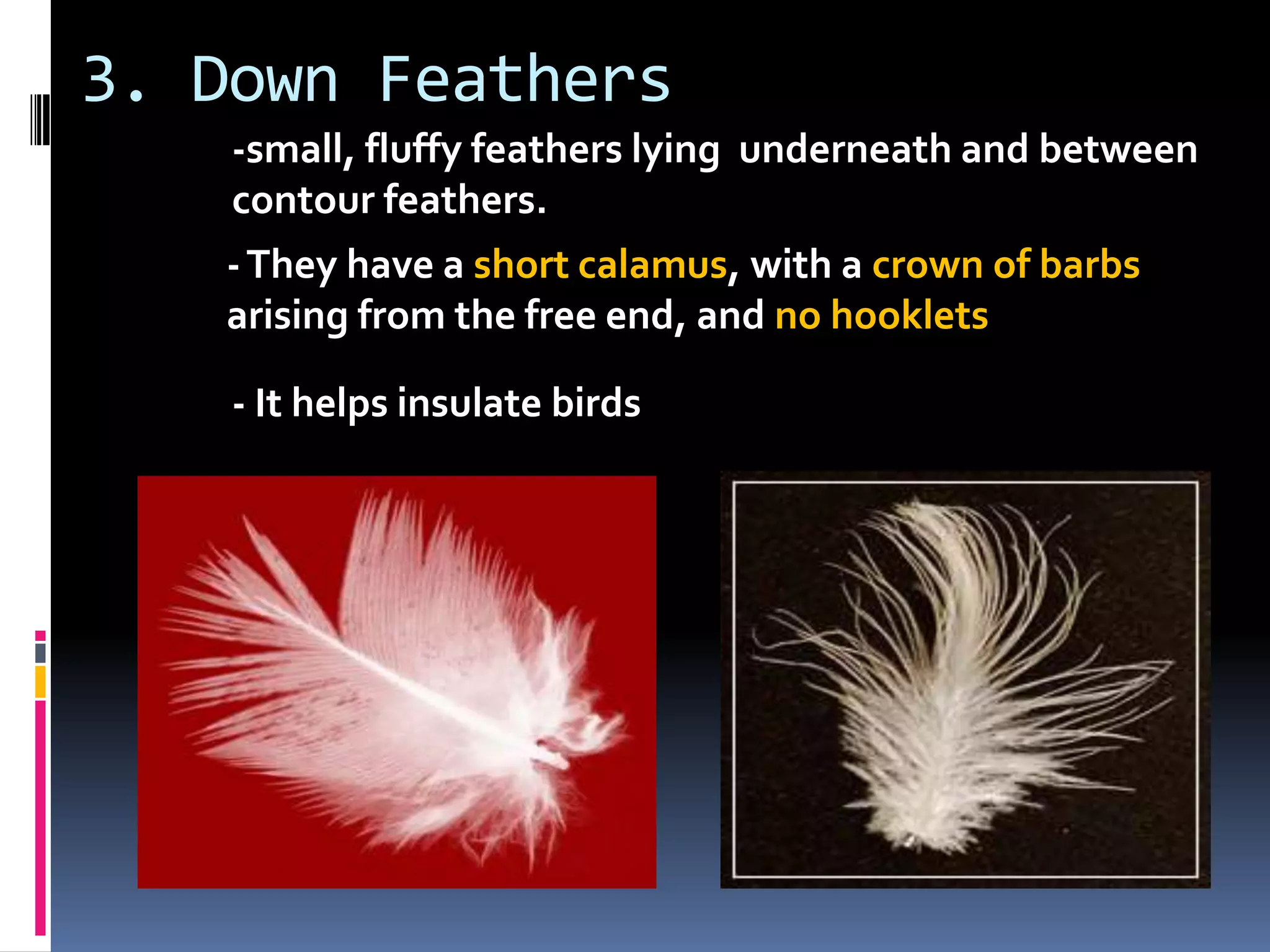
3. Down Feathers
    -small, fluffy feathers lying underneath and between
    contour feathers.
   - They have a short calamus, with a crown of barbs
   arising from the free end, and no hooklets

    - It helps insulate birds
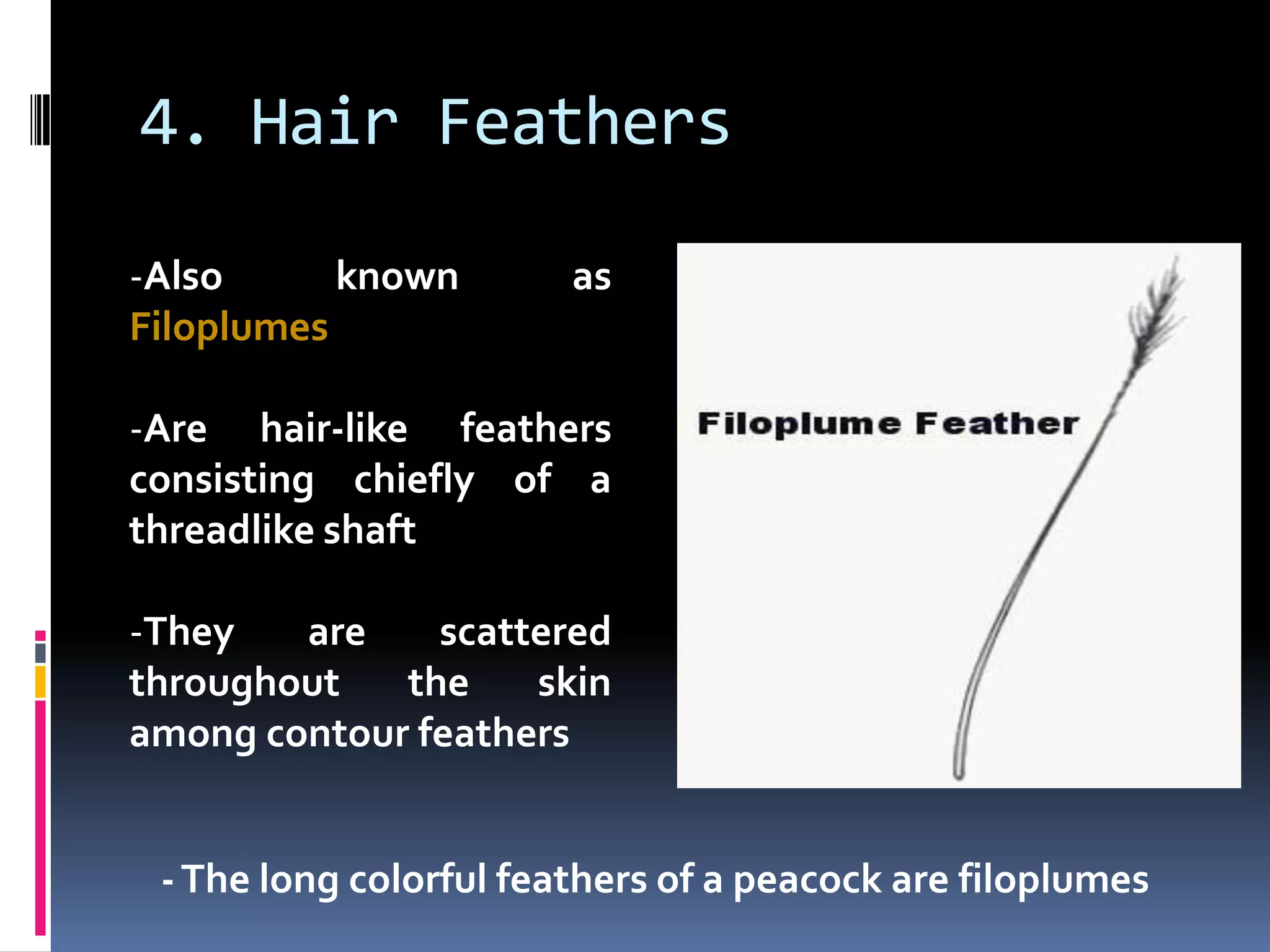
4. Hair Feathers

-Also      known        as
Filoplumes

-Are hair-like feathers
consisting chiefly of a
threadlike shaft

-They   are    scattered
throughout   the    skin
among contour feathers


 - The long colorful feathers of a peacock are filoplumes

Feathers

  • 1.
  • 2.
    •Feathers probably aroseas new structures under and between reptile scales, not as modified scales. Many birds have scales on their lower legs and feet where feathers are not developed •Feathers originate in a skin layer deep under the outer layer that forms scales.
  • 3.
    • feathers didnot evolve for flight. They evolved for some other function and were later modified for flight. •Feathers may have evolved to aid thermoregulation.
  • 4.
    DEVELOPMENT OF AFEATHER - It is initiated by formation of a dermal papilla  An early dermal papilla associated with formation of a placoid scales
  • 5.
    -The growth ofpapilla, and its inductor effect on the overlying epidermis, results in a pimple like elevation ---- feather primordium, on the surface of the skin. -When the dermal papilla becomes vascularized : it is the source of nutrients and oxygen for the developing feather A collecting site for metabolic wastes that are then carried away in the blood stream
  • 6.
    - The featherfollicle develops around its base as the feather primordium elongates - Between the dermal papilla and the epidermis, at the base of the feather follicle ---- a mitotically active growth zone proliferates tall columns of epidermal cells that pushes towards the distal tip of the growing feather, now a feather sheath - These epidermal columns separate from one another, cornify, and develop into barbs
  • 7.
    -When the feathersheath splits open, the fluffy barbs stretch out of their cramped quarters and the shaft elongates.
  • 8.
    •The contour feathersused for flight are known as remiges and rectrices, can be divided into three groups: primaries, secondaries and tertiaries.
  • 9.
    •The primary featherspropel the bird through the air. •The secondary flight feathers run along the "arm" of the wing and sustain the bird in the air, giving it lift. •The Tertiaries are the few flight feathers and the numbers vary among species.
  • 10.
    Morphological varieties offeathers: 1. Flight Feathers •these feathers have developed into long showy plumes used in visual courtship displays
  • 11.
    2. Covert Feathers - gives the bird its general shape
  • 12.
    -Consists of ahorny shaft and two flattened vanes ; the base of the shaft is the calamus ; the vane- bearing segment is the rachis ; each vane consists of a row of barbs that have barbules and flanges -Arising from a notch, the superior umbilicus, is an afterfeather  usually shorter than the main feather
  • 13.
    3. Down Feathers -small, fluffy feathers lying underneath and between contour feathers. - They have a short calamus, with a crown of barbs arising from the free end, and no hooklets - It helps insulate birds
  • 14.
    4. Hair Feathers -Also known as Filoplumes -Are hair-like feathers consisting chiefly of a threadlike shaft -They are scattered throughout the skin among contour feathers - The long colorful feathers of a peacock are filoplumes