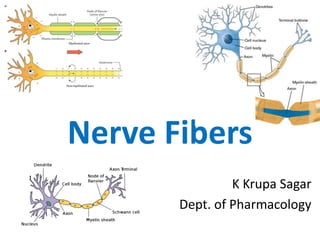
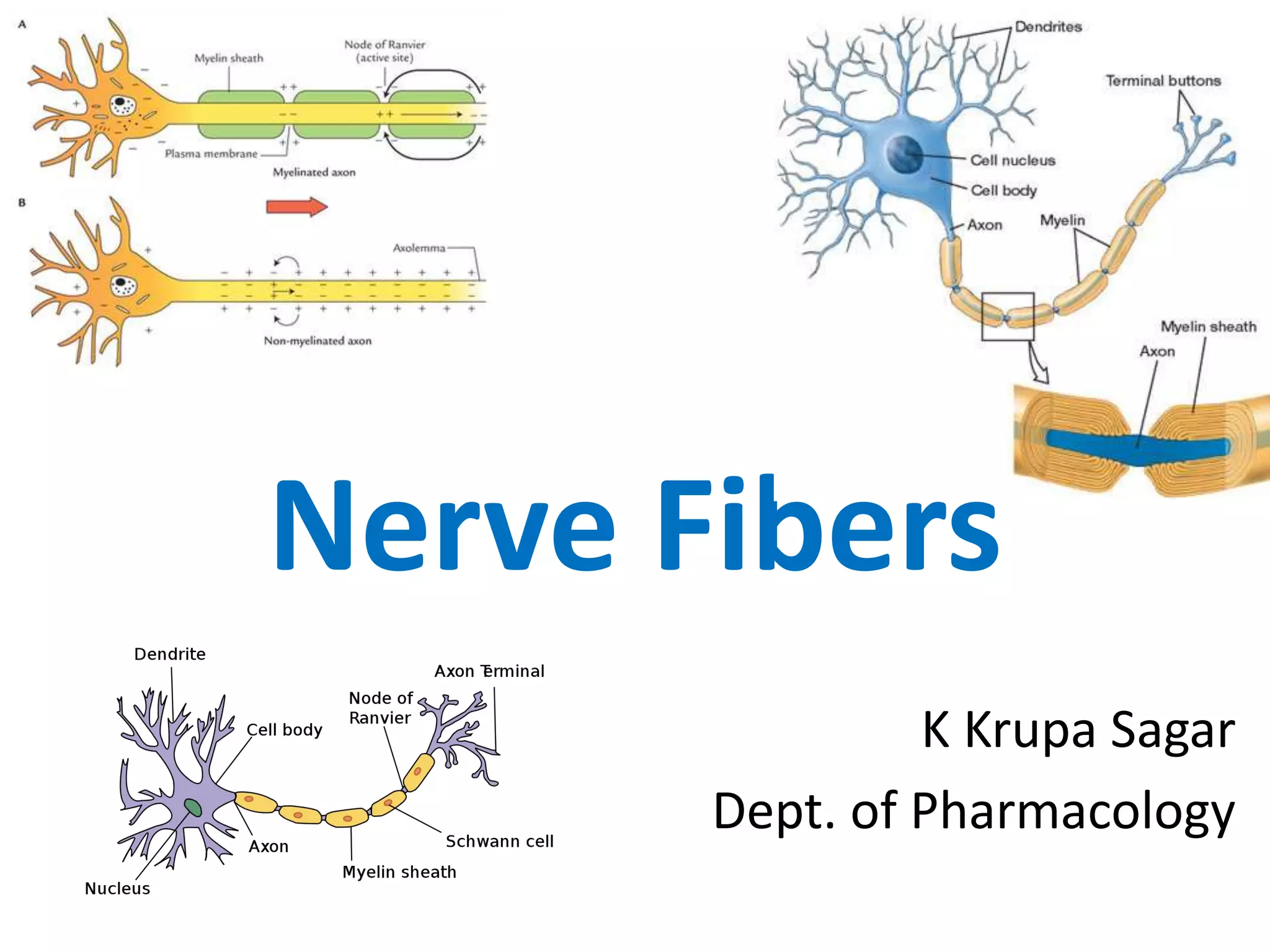


Nerve Fibers
K Krupa Sagar
Dept. of Pharmacology
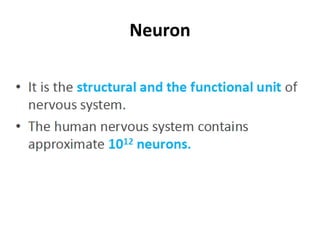
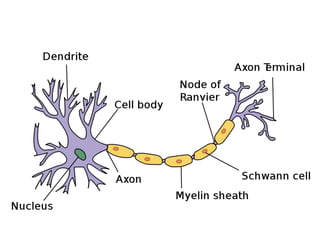
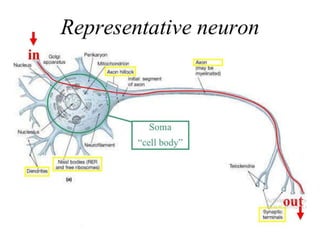
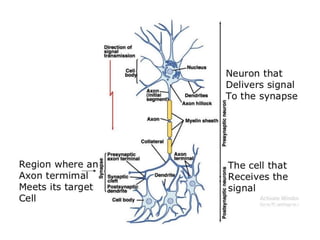
Neuron
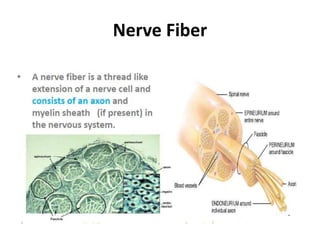
Nerve Fiber
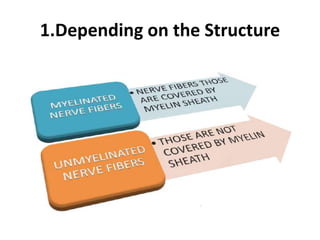
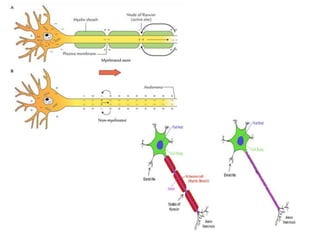
1.Depending on the Structure
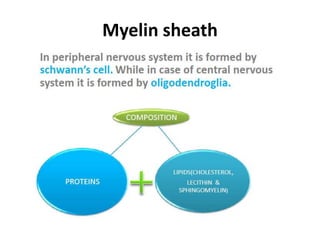
Myelin sheath
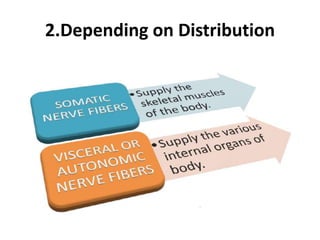
2.Depending on Distribution
Somatic nerve fibers
• These are α type motor nerve fibers.
• The neurotransmitter released at the neuron endings is
acetylcholine(Ach).
• It always leads to muscles excitation . Inhibition takes place
centrally due to participation of interneurons.
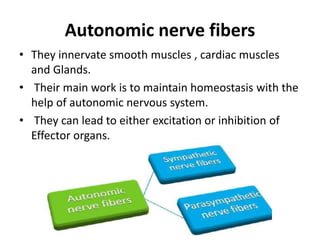
Autonomic nerve fibers
• They innervate smooth muscles , cardiac muscles
and Glands.
• Their main work is to maintain homeostasis with the
help of autonomic nervous system.
• They can lead to either excitation or inhibition of
Effector organs.
Properties of Nerve Fiber
Important Properties
• Excitability
• Conductivity
• Unfatigability
• Refractive period
• All or none response
• Summation
• Accommodation
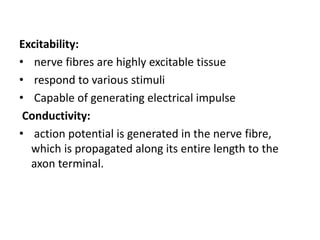
Excitability:
• nerve fibres are highly excitable tissue
• respond to various stimuli
• Capable of generating electrical impulse
Conductivity:
• action potential is generated in the nerve fibre,
which is propagated along its entire length to the
axon terminal.
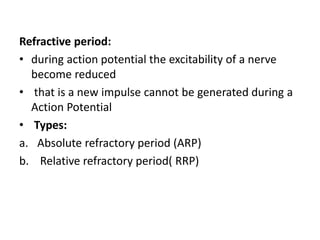
Refractive period:
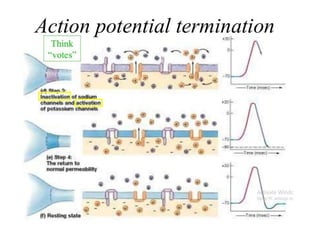
• during action potential the excitability of a nerve
become reduced
• that is a new impulse cannot be generated during a
Action Potential
• Types:
a. Absolute refractory period (ARP)
b. Relative refractory period( RRP)
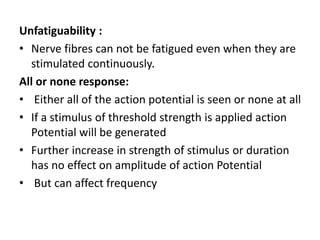
Unfatiguability :
• Nerve fibres can not be fatigued even when they are
stimulated continuously.
All or none response:
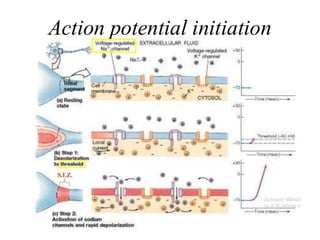
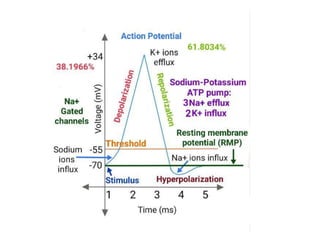
• Either all of the action potential is seen or none at all
• If a stimulus of threshold strength is applied action
Potential will be generated
• Further increase in strength of stimulus or duration
has no effect on amplitude of action Potential
• But can affect frequency
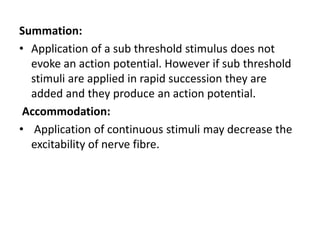
Summation:
• Application of a sub threshold stimulus does not
evoke an action potential. However if sub threshold
stimuli are applied in rapid succession they are
added and they produce an action potential.
Accommodation:
• Application of continuous stimuli may decrease the
excitability of nerve fibre.
Nerve fibers
Nerve fibers
Nerve fibers
Nerve fibers
Nerve fibers
Nerve fibers
Nerve fibers
Nerve fibers
Nerve fibers
Nerve fibers
Nerve fibers
Nerve fibers

Nerve fibers

  • 1.
    Nerve Fibers K KrupaSagar Dept. of Pharmacology
  • 2.
  • 5.
  • 9.
  • 11.
  • 13.
  • 14.
    Somatic nerve fibers •These are α type motor nerve fibers. • The neurotransmitter released at the neuron endings is acetylcholine(Ach). • It always leads to muscles excitation . Inhibition takes place centrally due to participation of interneurons.
  • 15.
    Autonomic nerve fibers •They innervate smooth muscles , cardiac muscles and Glands. • Their main work is to maintain homeostasis with the help of autonomic nervous system. • They can lead to either excitation or inhibition of Effector organs.
  • 16.
  • 17.
    Important Properties • Excitability •Conductivity • Unfatigability • Refractive period • All or none response • Summation • Accommodation
  • 18.
    Excitability: • nerve fibresare highly excitable tissue • respond to various stimuli • Capable of generating electrical impulse Conductivity: • action potential is generated in the nerve fibre, which is propagated along its entire length to the axon terminal.
  • 19.
    Refractive period: • duringaction potential the excitability of a nerve become reduced • that is a new impulse cannot be generated during a Action Potential • Types: a. Absolute refractory period (ARP) b. Relative refractory period( RRP)
  • 20.
    Unfatiguability : • Nervefibres can not be fatigued even when they are stimulated continuously. All or none response: • Either all of the action potential is seen or none at all • If a stimulus of threshold strength is applied action Potential will be generated • Further increase in strength of stimulus or duration has no effect on amplitude of action Potential • But can affect frequency
  • 21.
    Summation: • Application ofa sub threshold stimulus does not evoke an action potential. However if sub threshold stimuli are applied in rapid succession they are added and they produce an action potential. Accommodation: • Application of continuous stimuli may decrease the excitability of nerve fibre.